@poorbjorn This book made me imagine what would happen if i put even 1/4 the time i do keeping up with the kadarshians into something that beats luck, outlasts circumstance, makes motivation redundant, and scales exponentially...
@readswithravi I find the interpretations a bit out there but I suppose it's not a perfect science
That said, it's a good workout for the brain and many concepts are intuitive.
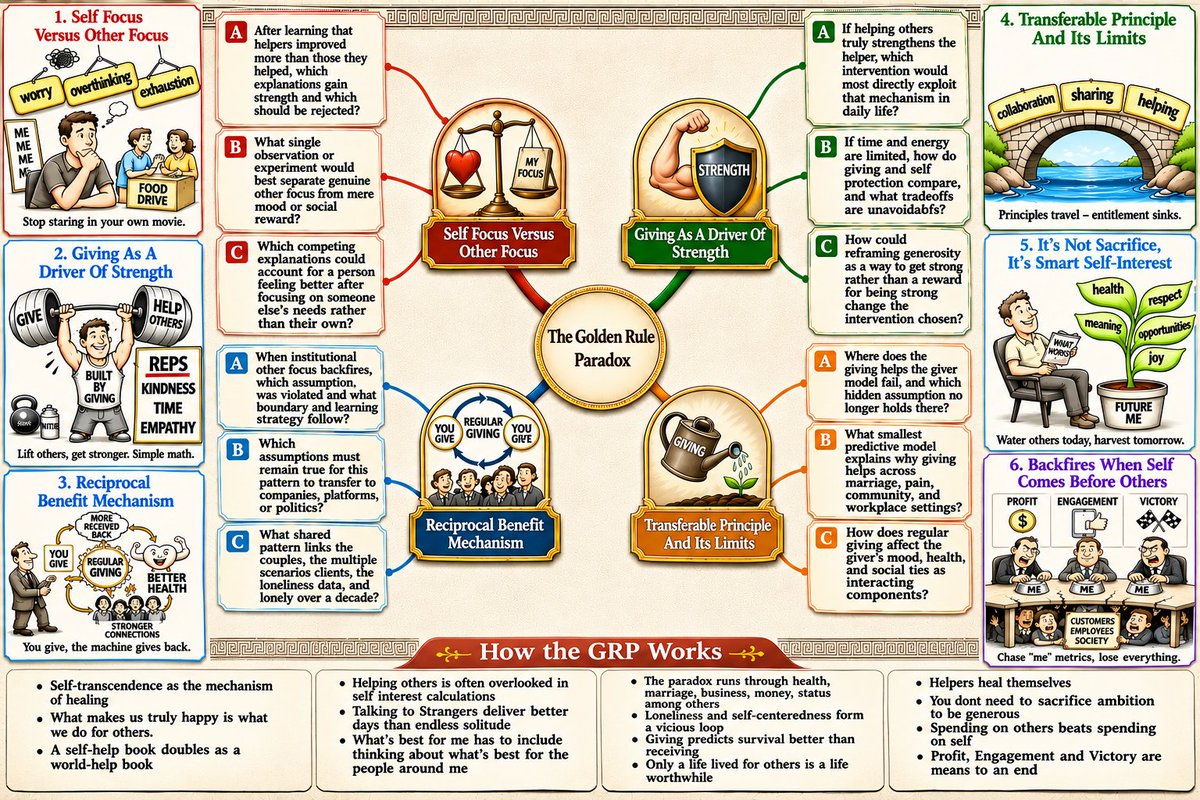
Just by answering a few of the mindmaps socratic questions can really help one introspect a lot better.
@MattKaramazov GRP + not expecting reciprocation all at once is a game changer.
Answer just 3 of the socratic questions in the mindmap and your view on self interest will u-turn.
You will recognise the patterns that connect personal happiness, stronger relationships and long-term success.
@ruchirjajoo Much needed 15 minute workout for your brain: 6 topics & 12 questions on Gribbin's Deep Simplicity. See how tiny interventions and feedback reshape systems and networks. Learn to trace patterns across systems and test whether your assumptions survive a change of context.
@poorbjorn@Powerofbooks3 Evergreen book that exposes same psychological pattern appear in tennis, parenting, leadership and learning.
Check out the Socratic questions in the mindmap that help you find patterns through your own insights.
@omgmaddie Lewis' point how good impulses get corrupted is invaluable. Pride, greed and anger all have their place. The urge to grow can become doomscrolling or can be redirected into Socratic questioning.
This mindmap helps you steer it toward growth.
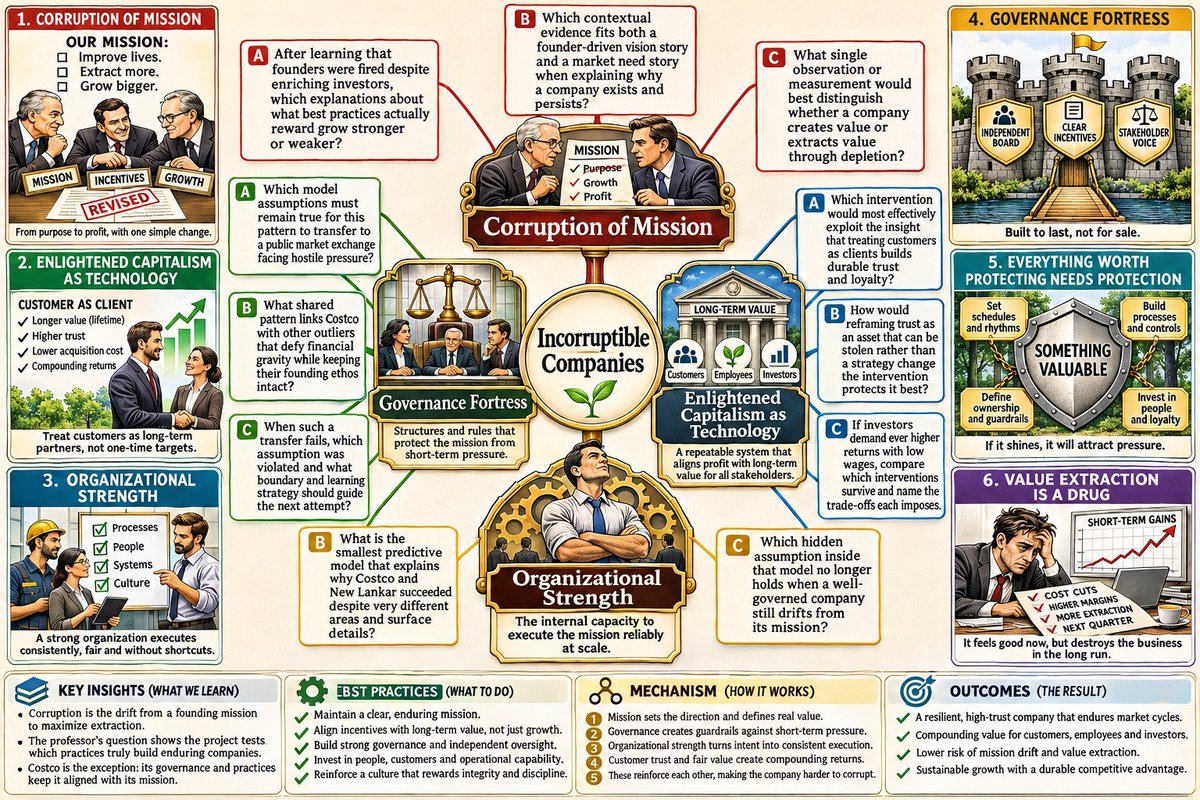
@Powerofbooks3 Replace corruption with burnout and company with person. Now apply Eric Ries's thinking to the modern obsession with maximising output at the expense of being human.
Try to work through the Socratic questions for a much-needed mental workout.
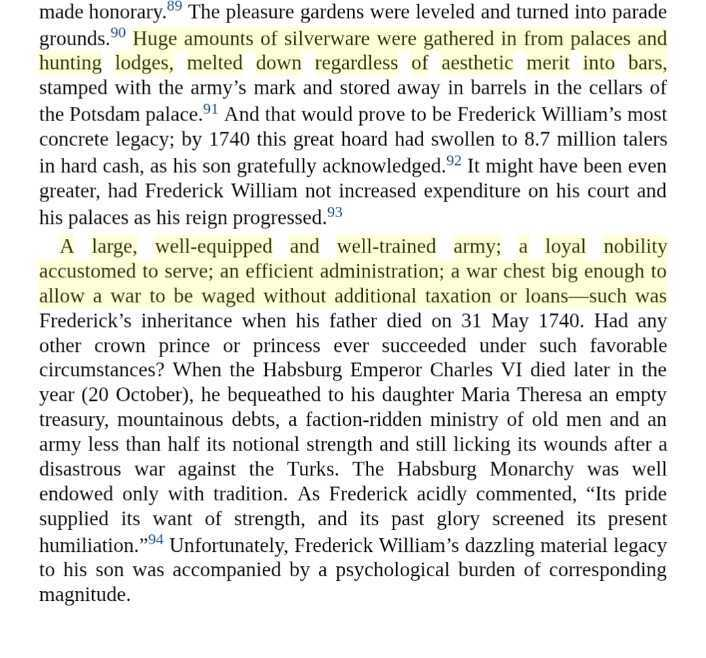
Tim Blanning's Frederick the Great: How a son turned his father's Sparta into Athens, yet, driven by "Your approval is worth more to me than of everyone else in the universe", ruled for 46 years, redrew maps and elevated Prussia into a great power. 🧵👇
Frederick William I, famed for ruthless austerity, liquidated court luxuries to fund a war chest. He stabilized and secured the empire with a standing army and efficient administration without burdening subjects with new taxes.
We skip a bunch of theoretical implications and dynamics of large numbers of participants engaging in free competition and cooperation. The section concludes with the Lausanne Theory.
Section 2 looks at rationality using the Robinson Crusoe illustration. This is why the greatest-good-for-the-greatest-number principle doesn't work: a guiding principle cannot maximize two functions at once, like maximum prices at maximum turnover.