Sacralisation Or Secularisation: Survey On Expediency In Shiite Jurisprudence
Prefaced By Dr. L. Takim
Sacralisation or Secularisation: Survey on Expediency in Shiite Jurisprudence
Author: Dr. Yahya Jahangiri
.
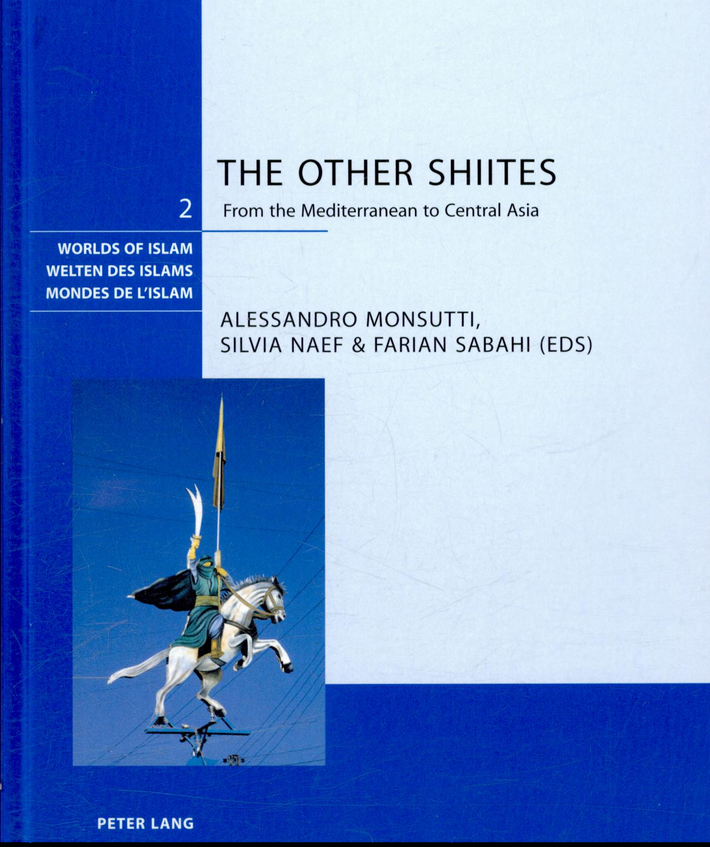
The Other Shiites: From the Mediterranean to Central Asia
ed. Farian Sabahi et al. Peter Lang, 2007
PDF 🎯
https://t.co/sE5vWuyXkV
#OpenAccess PDF on editor's Academia
https://t.co/z7UwQBdi7r
Meet Us at the Ninth Annual Conference of the European Academy of Religion (#EuARe 2026), 30 June–3 July 2026, Rome, Italy
Our delegates look forward to meeting you in person and answering any questions that you may have.
https://t.co/f7kKAgGKlV
In Aceh, Indonesia, I saw people still writing in a script similar to Persian, even though many can no longer read it. History sometimes survives not only in books, but in the memory of letters. A beautiful sign of the deep cultural ties between Iran and Indonesia.
#Iran #Indonesia #Aceh #Persian #History #Culture #Civilization #CulturalHeritage #IslamicCivilization #IranIndonesia
Sacralisation Or Secularisation: Survey On Expediency In Shiite Jurisprudence
Prefaced By Dr. L. Takim
Sacralisation or Secularisation: Survey on Expediency in Shiite Jurisprudence
Author: Dr. Yahya Jahangiri
.
Tonight, I had the honor of being invited to the red carpet of the feature film Children of Heaven; a truly wonderful and inspiring movie, full of human tenderness, especially through the brilliant performances of these three little angels.
#indonesia#iran#film#cinema
Applications for the "Peace and Conflict School," organized by the Istanbul Peace Research Center (IPRC), are now open. The program offers a multi-dimensional understanding of current global crises with the participation of experts and academics.
If you would like to learn about conflict dynamics, peace processes, and strategic solutions from the experts, do not miss the chance to apply for the Peace and Conflict School!
Link
https://t.co/Qp1Bh7AbBZ
مركزٌ عالمي يختص بتعزيز الوعي الديني والفكري بوسطية الإسلام وقيم اعتداله، في مواجهة مفاهيم التطرف والإرهاب، مستهدفا جذورها الفكرية، عبر منظومة "مبادراته " و"برامجه "
تابعنا وتعرف أكثر على مركز الحماية الفكرية!
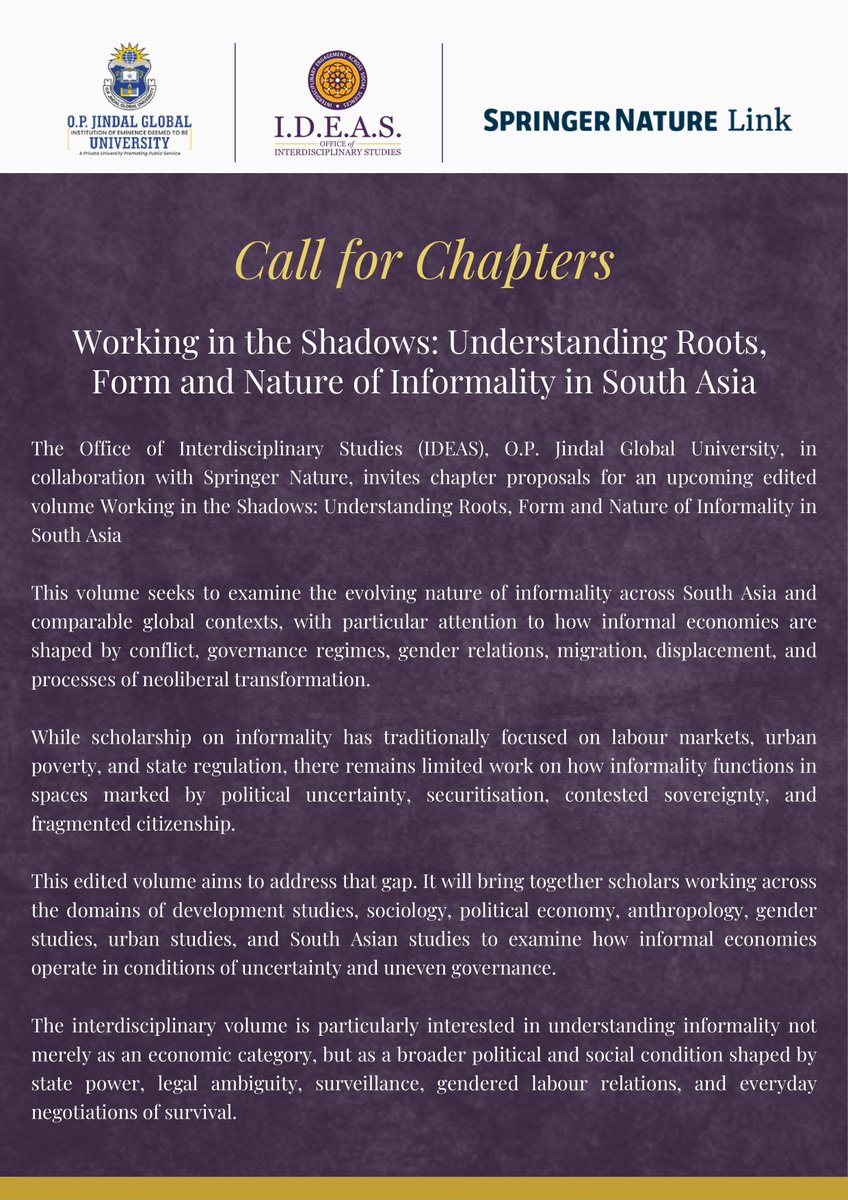
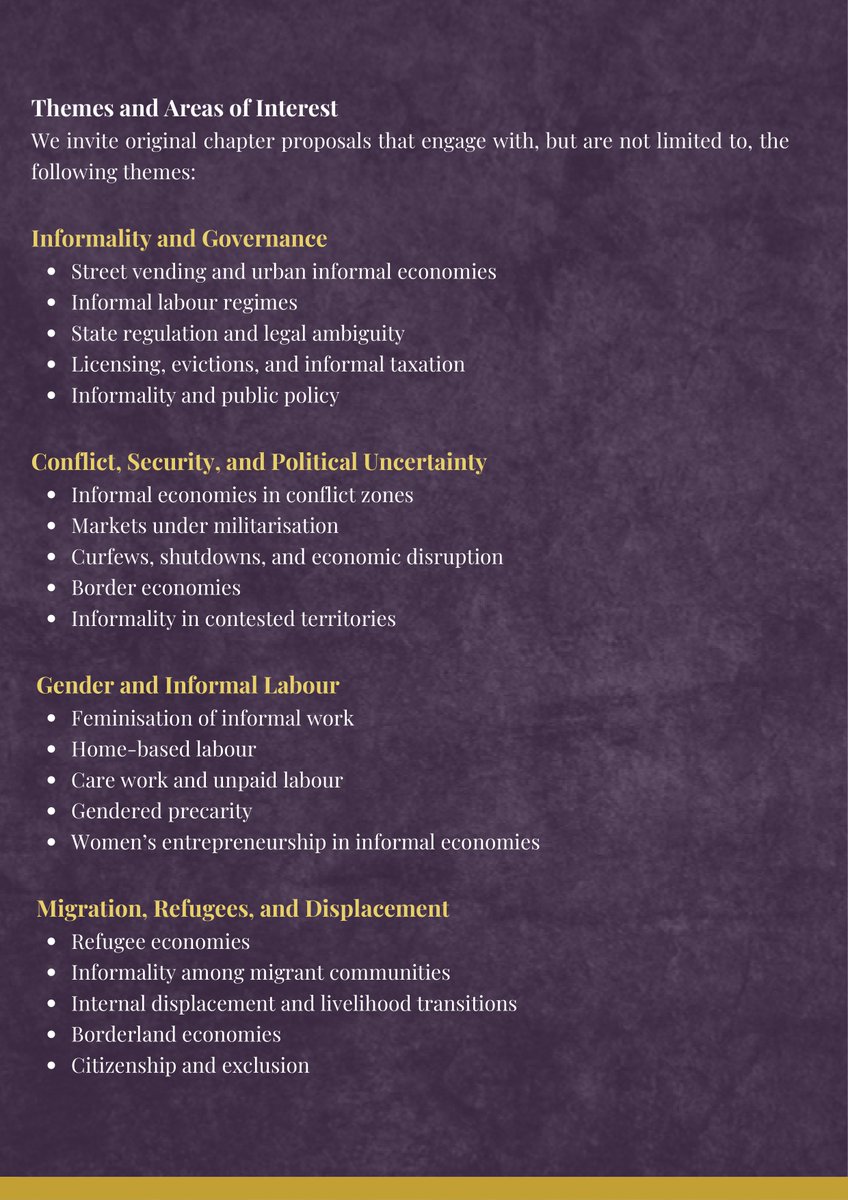
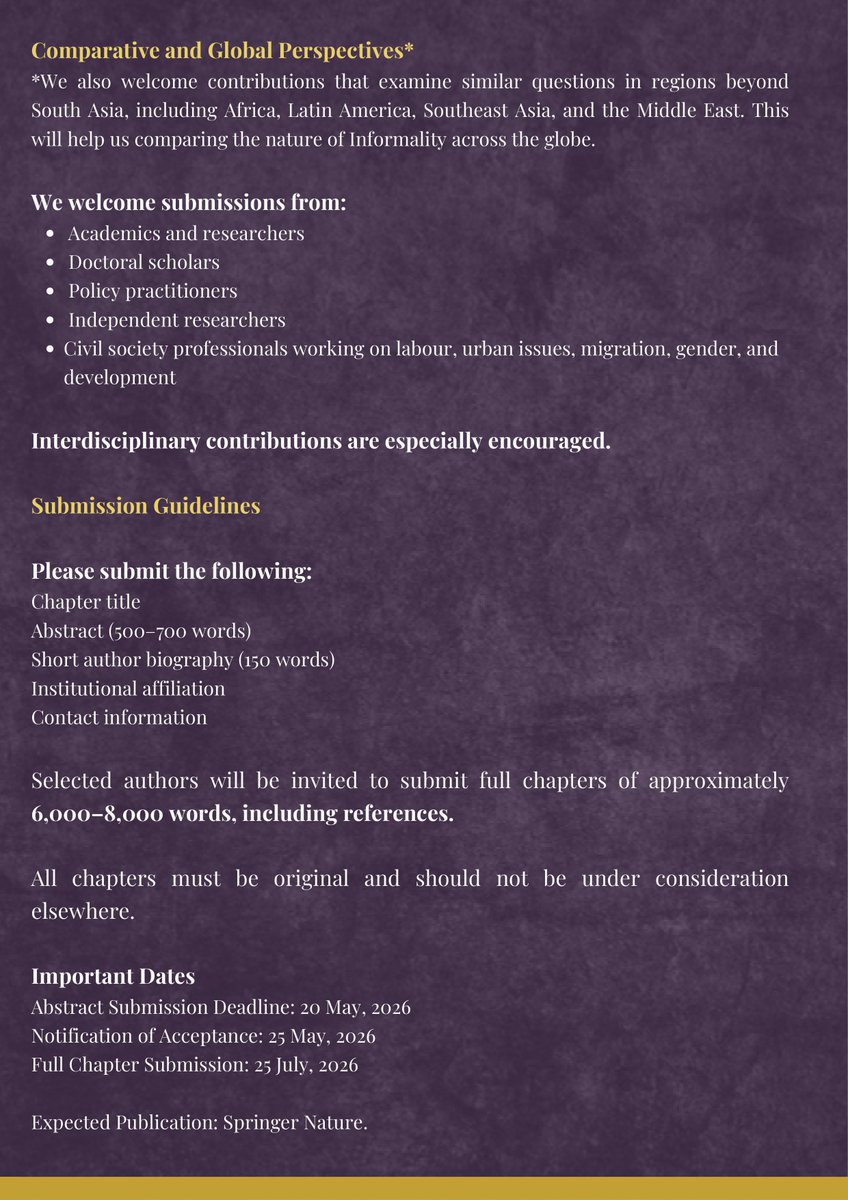
📢 Call for Chapter Proposals
The Office of Interdisciplinary Studies (IDEAS), in collaboration with Springer Nature, invites chapter proposals for the upcoming edited volume:
📘 Working in the Shadows: Understanding Roots, Form and Nature of Informality in South Asia
#CallForSubmission
CSPS launches its new biannual peer-reviewed journal ‘Politics, Culture & Society.’
We invite articles, commentaries & book reviews for the inaugural issue: “Imagining the Plural Public Sphere.”
Deadline: 15 June 2026 https://t.co/JzyZTradkM
#Journal#CSPS
The UNDP is hiring research assistants who will work remotely. Take a look & throw your hat into the ring if you are a recent graduate (within last year), a final year student, or enrolled in a Masters or PhD program. Deadline is September 30, 2026, and the link to what is a very mobile unfriendly website is provided below:
https://t.co/aImejmTuh7
A Persian scholar finished a single math book in 9th century Baghdad that quietly became the foundation for every line of code running on Earth today.
I started reading about him at midnight and could not believe how many things in my daily life trace back to one man.
His name was Muhammad ibn Musa al-Khwarizmi. The book is called The Compendious Book on Calculation by Completion and Balancing.
Every time you say the word algebra, you are saying his book title. Every time someone says the word algorithm, they are saying his name. Both English words come from him. Both are Latin transliterations of Arabic and of his own identity. The man did not just contribute to mathematics. He named it.
Here is the part almost nobody tells you.
Al-Khwarizmi was born around 780 CE in Khwarazm, in what is now Uzbekistan. He moved to Baghdad and worked at a research institution called the House of Wisdom, which during the Islamic Golden Age was the single most important center of learning on the planet. The caliph al-Mamun hired the best mathematicians, astronomers, and philosophers from across three continents and put them in one building with one job. Translate, study, and produce new knowledge.
Al-Khwarizmi finished his book on algebra around 820 CE. The Arabic title contained the word al-jabr, which referred to one of the two operations he used to solve equations. When the book was translated into Latin in the 12th century, the Latin world did not have a word for what he had built. So they kept his Arabic word. Al-jabr became algebra. The discipline was named after a single Arabic word in the title of a single book by a single man.
The deeper insight is what he actually changed about how humans think.
Before al-Khwarizmi, mathematical problems were solved geometrically. You drew shapes. You measured them. You compared areas. The Greeks had built an entire mathematical tradition on visual proofs and physical constructions. It was beautiful and limited. You could not solve a problem you could not draw.
Al-Khwarizmi did something nobody had done before him at this scale. He said you could solve any problem using abstract symbols and rules. You did not need a shape. You needed a procedure. You moved terms across the equation. You cancelled like terms on both sides. You isolated the unknown. He invented the idea that mathematics is a manipulation of symbols according to rules, not a study of physical figures.
That single shift made everything that came afterward possible. Calculus. Differential equations. Linear algebra. Quantum mechanics. None of it works if math is locked inside geometry. He pulled it out.
The second thing he did is the one that changed how the world counted forever. He took the Hindu numeral system from Indian mathematics, refined it, and wrote a book introducing it to the Arab world. That system included the concept of zero as a placeholder, and a positional notation where the value of a digit depends on its location. Roman numerals could not do complex calculation. Hindu-Arabic numerals could.
When his book on numerals was translated into Latin as Algoritmi de numero Indorum, the word Algoritmi was just the Latin spelling of his own name. Europeans started calling the new method "doing algorism," then "running an algorithm." The word for the most important concept in computer science is literally his name in Latin.
The third thing he did is the part that should haunt anyone who works in tech.
His method of solving problems was systematic. Step one, do this. Step two, check that. Step three, if condition A, then do X, otherwise do Y. He wrote down procedures that could be followed by anyone, anywhere, who knew how to read. The procedure did not depend on intuition or genius. It worked because the steps worked.
That is exactly what an algorithm is. A finite, deterministic procedure for solving a problem. He did not just give us the word. He gave us the entire concept of programming a thousand years before there was anything to program.
When Alan Turing built the first abstract model of computation in 1936, when John von Neumann designed the first stored-program computer in 1945, when every engineer at Google, OpenAI, Anthropic, and DeepMind writes code in 2026, they are working in a paradigm that started with one man in Baghdad twelve centuries ago.
The strangest part is what happens when you walk into any tech office in San Francisco or Bangalore or Lahore today. Engineers say the words algebra and algorithm hundreds of times a day. They do not know whose name they are saying. Almost nobody can spell al-Khwarizmi correctly on the first try.
His original Arabic manuscript is preserved at Oxford. His book on Hindu numerals survives only in Latin translation. The Latin version was the textbook that taught medieval Europe how to count.
The man who built the foundation of the AI revolution did not live to see a calculator. He died around 850 CE, a thousand years before the first electric current was sent through a wire. The civilization he built mathematics for collapsed. The library he wrote in burned. His own grave is unmarked.
But every algorithm running on every machine on Earth right now still answers to his name.
that some of the early figures who contributed to the theological and intellectual transformation of Islam were trained in the sciences—especially medicine—and were largely non-Arab.
Figures such as ابن سینا and ابن رشد exemplify
From مسلم بن حجاج to محمد بن یعقوب کلینی, and from ابن مقفع to ابن رشد, the intellectual elaboration of Islam was profoundly shaped by transregional, non-Arab contributions
While the first recipients of Islam were the Arabs of the Ḥijāz (Rowat al-Hadith). many of those who later reflected on, systematized, and theorized the tradition—across both Sunni and Shiʿi contexts (Doraal-Hadith)—were non-Arabs.
.