New Game Paradiso
Part 1 of 4
When I was a kid, 100-yen arcade games were for the rich.
I think I was around thirteen.
My monthly allowance was about 2,000 yen.
One play at an arcade cost 100 yen.
Simple math: twenty games, and my allowance for the month was gone.
For a commoner like me, that was out of the question.
But a little farther away, there was paradise.
Near a university was an area lined with arcades, and one of them was incredibly cheap.
The first floor charged 50 yen.
It even had relatively new games.
I think popular titles like Gradius were there too.
Fifty yen.
Cheap.
That’s what I would think now.
But back then, it was expensive.
“How many games could I play upstairs for this…?”
Because the second floor was even more amazing.
Ten yen.
Twenty yen.
Thirty yen at most.
The games were a little older.
Sasuke vs. Commander.
King & Balloon.
There was also a strange game where a gunslinger chased a train while shooting.
They weren’t the newest games.
But that didn’t matter.
There were plenty of great games.
With 500 yen, I could play all day.
To a child, this place really was paradise.
There was just one problem.
It was far away.
About three train stops.
Taking the train would have been easy.
But if I paid the round-trip fare, that meant fewer games.
Such wasteful spending was unacceptable.
So we rode our bicycles.
On Sunday mornings, my friends and I pedaled toward paradise.
Train fare: zero.
Leg strength: improved.
Perfect.
Then we played from morning until evening.
The first floor also had Atari’s Star Wars.
That cabinet.
That sound.
That brilliant vector display.
I still remember the shock of seeing it for the first time.
But popular games were expensive.
Probably 50 yen.
I wanted to play.
But for 50 yen, I could play two 20-yen games upstairs and still have 10 yen left.
As a child, I was constantly managing my finances at the arcade.
This was no longer play.
It was finance.
Then my greatest enemy arrived.
Hunger.
After playing all morning, of course I got hungry.
The arcade had a vending machine that served udon for about 100 yen.
One hundred yen.
That was the problem.
That was five plays at 20 yen each.
In front of me: udon.
In my head: five games.
Eat?
Or play?
It was one of the biggest decisions of my life.
I held out as long as I could.
Only when I could no longer stand the hunger did I put in the 100 yen.
Then I ate the hot udon that came out.
It was delicious.
Incredibly delicious.
Of course it was.
It was udon I had sacrificed five games to eat.
There was no way it could taste bad.
In the evening, my friends and I rode our bicycles home.
We were tired.
Our wallets were lighter.
But we carried home the immense satisfaction of having played games all day.
Now I spend 100 yen without giving it much thought.
But back then, 100 yen was worth five games.
I gave up the train.
I even hesitated over lunch.
And still, I wanted to play.
Maybe that was why it was so much fun.
Back then,
paradise really did exist.
But—
you couldn’t get there by train.
Continued in Part 2:
“A Video Game Brought Me Three Friends”
Day 82 / 180
Today’s Famicom Collection from Japan
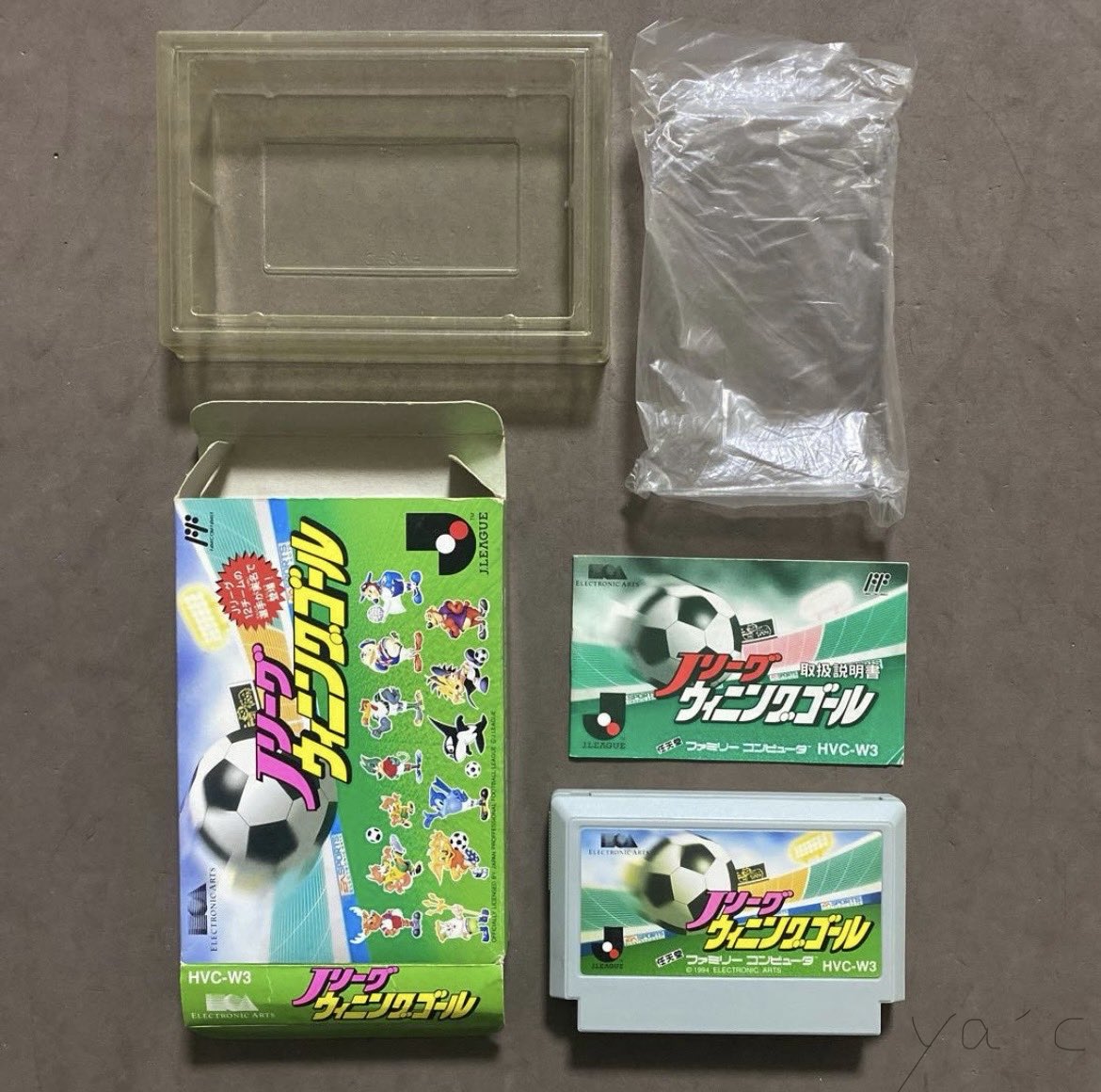
J.League Winning Goal (1994)
I could never join the excitement around me.
Whenever a festival sprang up around me,
I never knew how to take part.
In 1993, the J.League began.
Turn on the television: football.
Open a newspaper: football.
At work, everyone discussed yesterday’s match.
I smiled and let it pass me by.
It seemed all of Japan had been swept up in the excitement.
I was about twenty-four,
in my second year at a bank.
Work was relentless.
I didn’t watch football.
I hardly watched television at all.
So it wasn’t only footballers I didn’t know.
I didn’t even know celebrities.
Whenever everyone started asking,
“Did you see that last night?”
I felt as though I alone
had lived through a different yesterday.
How could everyone watch the same thing,
laugh at the same moments,
and become so excited about the same match?
Were they really watching football?
Or were they watching
because everyone else was watching?
It wasn’t only about the match.
Watching the same thing,
celebrating at the same moment,
and talking about it the next day—
that, too, was part of the festival.
But back then, I couldn’t do it.
I didn’t hate or oppose it.
It simply didn’t move me.
I didn’t know how to become excited about something
just because everyone around me was.
Sometimes I wondered
if there was something wrong with me.
So was I pouring all that passion
into video games instead?
Unfortunately, no.
Work kept me so busy
that I didn’t even have time to play.
Everyone around me had a festival.
I didn’t even have one of my own.
In my early thirties,
things at work stopped going well.
People tend to miss the past
when they feel defeated.
At least, I did.
When looking forward became difficult,
I remembered the games I had played as a child.
Back then, I hadn’t played them
to have something in common with anyone.
I played simply because I loved them.
By my late thirties,
I had fallen deeply into retro gaming.
As I collected old games,
perhaps I was also gathering up
the pieces of myself I had left behind with them.
Recently,
I acquired J.League Winning Goal.
I never played this game in 1994.
It holds no football memories for me.
I didn’t buy it out of nostalgia.
Yet this cartridge contains
a time I unquestionably lived through.
All of Japan seemed captivated
by the new J.League.
Meanwhile, after eleven years,
the Famicom was quietly nearing its end.
A game filled with a new national festival
became the second-to-last release
for an old console.
More than thirty years later,
the festival I never joined
came to me as a single cartridge.
Eventually, I understood.
There had always been others like me.
We simply couldn’t find one another.
People swept up in excitement
gather and raise their voices.
Those who aren’t interested
remain silent, scattered in different places.
And yet these days,
I’m happy whenever Shohei Ohtani hits a home run.
Nobody asks me to,
but I go online
and search for the video and articles.
The man once puzzled by collective excitement
now refreshes the screen whenever Ohtani steps up to bat.
Human beings aren’t all that consistent.
I had always been capable
of sharing joy with other people.
My heart simply didn’t run
on the same timetable as everyone else.
P.S.
J.League Winning Goal was released by Electronic Arts Victor on May 27, 1994.
It features all 12 J.League clubs that season—including new arrivals Jubilo Iwata and Bellmare Hiratsuka—and real player names.
It arrived 21 days before the 1994 World Cup began in the United States, and one release before Adventure Island IV, the final Famicom game. It was the second-to-last Famicom title ever released.
The copy in today’s photograph joined my collection only recently.
Even a game I never played then can look nostalgic now.
Human memory is remarkably convenient.
God it is so damn quiet up here.
The fire is keeping me warm and I am just sitting here under God's creation & and all of HIS splendor.
Life is good. 🌠
#saturdayvibez
Day 81 / 180
Today’s Famicom Collection from Japan
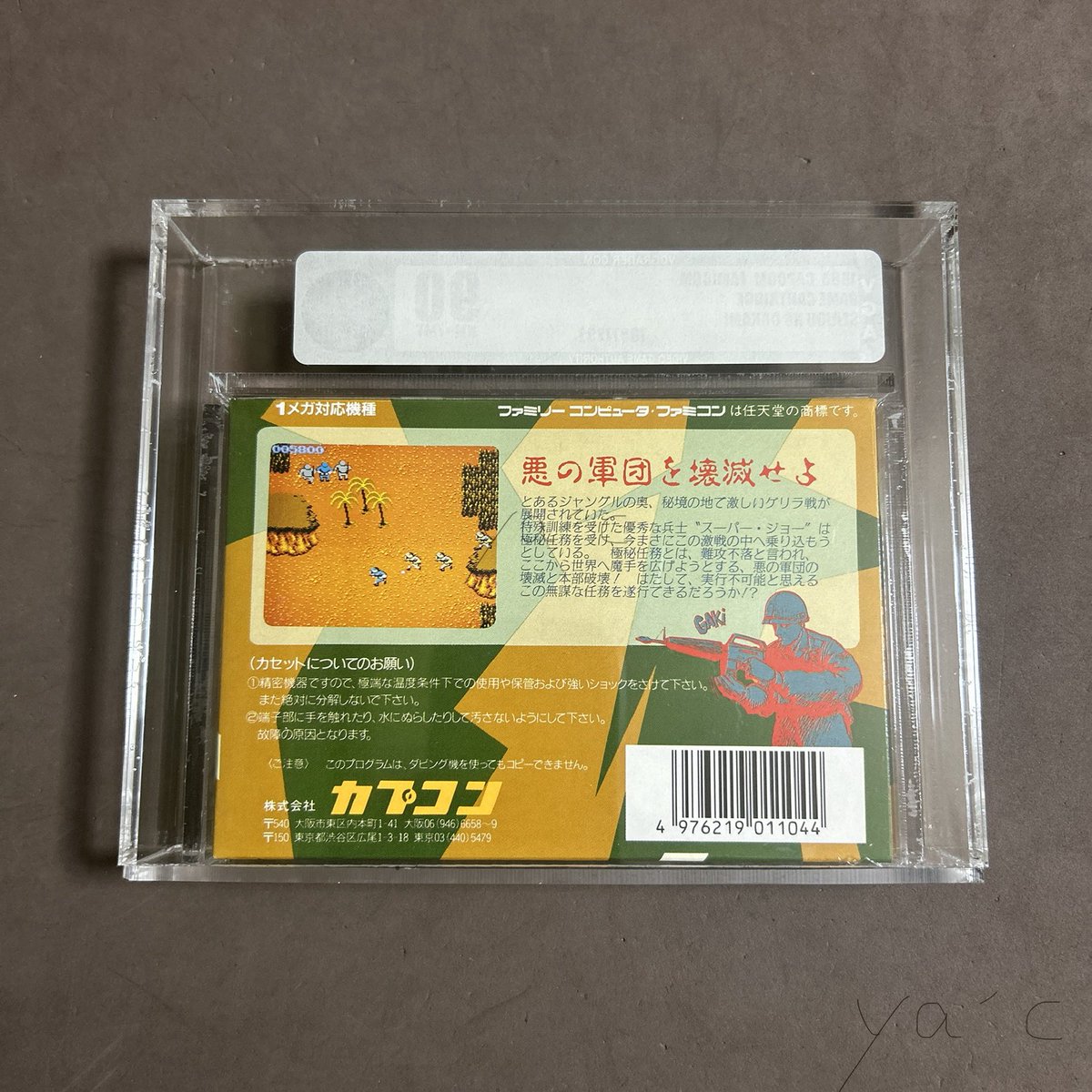
Commando / Senjō no Ōkami (1986)
My name is Eric.
I’m a special operative who survived Operation Cross Fire.
Ever since that mission, headquarters has started inviting me to strategy meetings.
Apparently, the higher-ups have finally decided to listen to someone with actual field experience.
Good.
Today, they placed a photograph in front of me.
A tough-looking soldier.
“Super Joe. One of our finest, specially trained soldiers.”
Good.
“We’re sending him into enemy territory.”
Good.
“His objective is to destroy the enemy headquarters.”
Good.
“Along the way, he’ll also rescue our captured soldiers.”
Good.
A busy assignment, but nothing too unusual for a special operative.
I’ve done similar work myself.
“Any questions?”
“How many men are on the infiltration team?”
“One.”
No.
Not good.
I put the file down.
“Wait. He’s destroying the enemy headquarters and rescuing prisoners, right?”
“Correct.”
“By himself?”
“Correct.”
“Reinforcements?”
“None.”
“Air support?”
“None.”
“…Equipment?”
“An automatic rifle and hand grenades.”
I folded my arms.
“Can I ask one thing?”
“What?”
“Is this actually a plan?”
“It’s a top-secret operation.”
That wasn’t the question.
“What does Super Joe himself think about this operation?”
“He’s already on his way.”
…
I stood up.
Apparently, headquarters hadn’t invited me because they wanted the opinion of someone with field experience.
They had invited me
just to show me what they were doing.
And at that moment, I became certain of one thing.
Super Joe.
You truly are—
the Wolf of the Battlefield.
But let me tell you one thing.
Even wolves
usually hunt in packs.
P.S.
Commando first appeared in arcades in 1985 and came to the Famicom in Japan the following year.
Super Joe just keeps moving upward.
No matter how many enemies are waiting for him, he goes alone.
…Yeah.
This was never a one-man job.
Day 80 / 180
Today’s Famicom Collection from Japan
SPY vs. SPY (1986)
I love spy stories.
I also love stories about kunoichi—female ninjas.
In the stories I watch, supposedly elite female spies and kunoichi somehow always get caught during an infiltration.
The plot is usually the same.
And yet, I keep watching.
So, as a spy fan, let me recommend the greatest spy game ever made.
SPY vs. SPY.
However, this game has no female spies or kunoichi.
Instead, it stars two long-nosed men.
The White Spy and the Black Spy.
And both of them are mean.
They are more interested in trapping each other than completing their mission.
A spring hidden in the furniture.
A bucket of water balanced above a door.
If that still does not settle things, they simply beat each other up.
They are less like spies and more like two neighbors who hate each other.
The traps do not care which spy set them.
Forget where you set one, and you are the one who goes flying.
This is not a game won by the smarter spy.
It is won by whoever is slightly meaner than their friend—and remembers all of their own dirty tricks.
This friendship-destroying game was ported to computers and consoles around the world.
The series reached several million copies worldwide.
People around the world paid money to set traps for their friends.
The truth is, I am bad at this game.
Perhaps it is not suited to a saint like me.
As it turns out, I prefer watching spies get caught to controlling them myself.
Day 79 / 180
🇯🇵 Today’s Famicom Collection
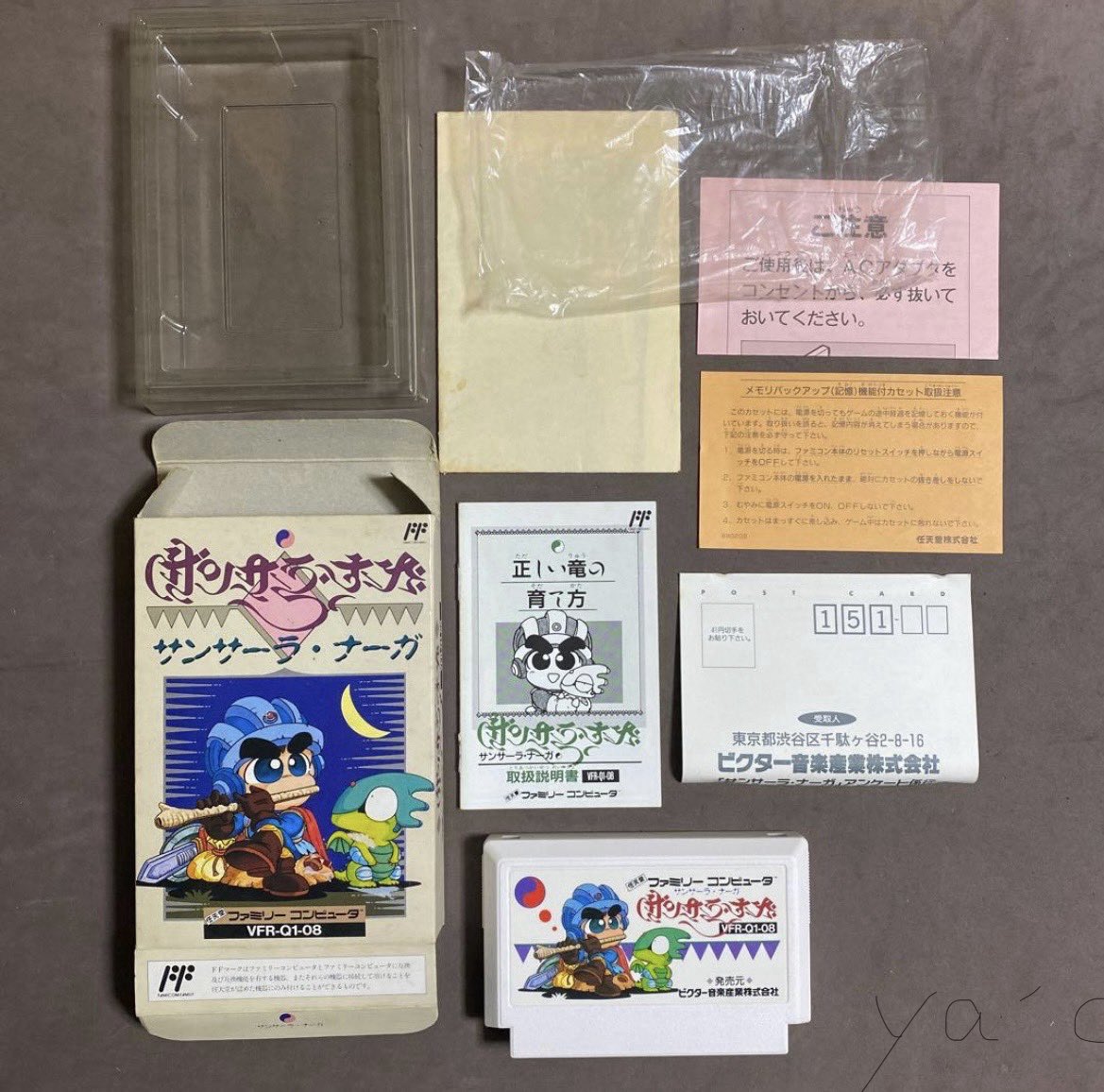
Sansara Naga (1990)
Six years before Tamagotchi was released, the Famicom already had a dragon whose personality changed not only by what you fed it, but by how its owner behaved.
In this game, the protagonist never levels up.
The one who grows is the dragon beside you.
What you feed it—and how you treat it—changes both its abilities and personality.
Keep running from battles, and your dragon becomes timid.
Attack people in town, and its morality falls.
Raise it without affection, and it may stop listening to you.
Even before it hatches, your dragon is watching you.
So the question is not:
“What kind of dragon do you want to raise?”
It is:
“What kind of parent are you?”
When I was a child, I had a pet.
His name was Opa-Opa.
I hadn’t planned on getting a pet.
We met at a Japanese festival.
Back then, Japanese festivals had stalls that would be almost unimaginable today.
One was called:
“Chick Fishing.”
Tiny chicks had been dyed bright colors—red, green, and others.
You used bait to catch one.
If you succeeded, you got to take the chick home.
Looking back,
it was the kind of game that seemed to have misplaced the entire concept of animal welfare.
But as a child, I wasn’t thinking about that.
I just wanted to try it.
And somehow,
I caught a brilliantly green chick.
I proudly brought him home.
My parents must have had one thought:
“…What are you going to do with that?”
But they could hardly tell me,
“Go throw it away.”
And so our family gained an unexpected member.
At first, I made a little enclosure on my bedroom floor.
But chicks grow.
Obviously.
The tiny fence soon became useless.
He jumped over it.
He crashed through it.
Then he disappeared somewhere in my room.
So I spread newspapers on top of a bookshelf and made that Opa-Opa’s new home.
At first, he was too scared to come down.
Problem solved.
…Or so I thought.
Then, one night—
FLAP FLAP FLAP!
THUD.
Something landed on me while I was asleep.
I woke up thinking there had been an earthquake.
It was Opa-Opa.
He had grown proper wings
and flown straight from the bookshelf onto me.
So much for the bookshelf.
And that was how I ended up
keeping a chicken inside my closet.
Even now, I can’t say this was the right solution.
But as a child, I had no idea what else to do.
Eventually, Opa-Opa grew a magnificent comb.
He was a rooster.
And roosters have one major problem.
They crow.
Cock-a-doodle-doo.
Perhaps because he had been living inside a closet,
his sense of time became questionable.
5 a.m.
Cock-a-doodle-doo.
Afternoon.
Cock-a-doodle-doo.
2 a.m.
Cock-a-doodle-doo.
He was a free spirit.
My parents finally gave up and built him a little coop in the garage.
I took Opa-Opa outside almost every day.
To my surprise, he would actually follow me.
I walked.
Behind me came Opa-Opa,
step by step.
A child taking a rooster for a walk was unusual enough that the neighborhood kids would gather around us.
There was just one problem.
Opa-Opa pecked pretty hard.
If he pecked a child in the eye, it could be serious.
And more importantly,
this was a residential neighborhood.
At four or five in the morning:
Cock-a-doodle-doo.
Eventually, the neighbors complained.
My parents had reached their limit too.
One day, I came home from school,
and Opa-Opa was gone.
My parents said a poultry farm in Kyushu had taken him in.
He was a fine rooster,
so they said he would be kept for breeding.
I believed them.
No—
I still believe them.
Opa-Opa went to a poultry farm in Kyushu
and lived there, happy and healthy.
…He did not become chicken hot pot.
That is the version I choose to believe.
There is just one thing I sometimes wonder.
If I had been raising a dragon instead of a rooster—
the neighbors would never have complained.
Probably.
@Uxio Thank you so much! I had no idea dyed chicks were sold in Spain too. I’m glad they were banned.
And yes—Opa-opa definitely went to live happily on a farm. That’s what I choose to believe too 😭
That Zelda image is perfect 😂 Thank you for reading my story so carefully!
@losalfajores The characters were big and expressive, and their comical movements made the game so much fun 😊
Now I kind of wish I’d seen that awful cartoon too 🤣
Day 78 / 180
Today’s Famicom Collection from Japan
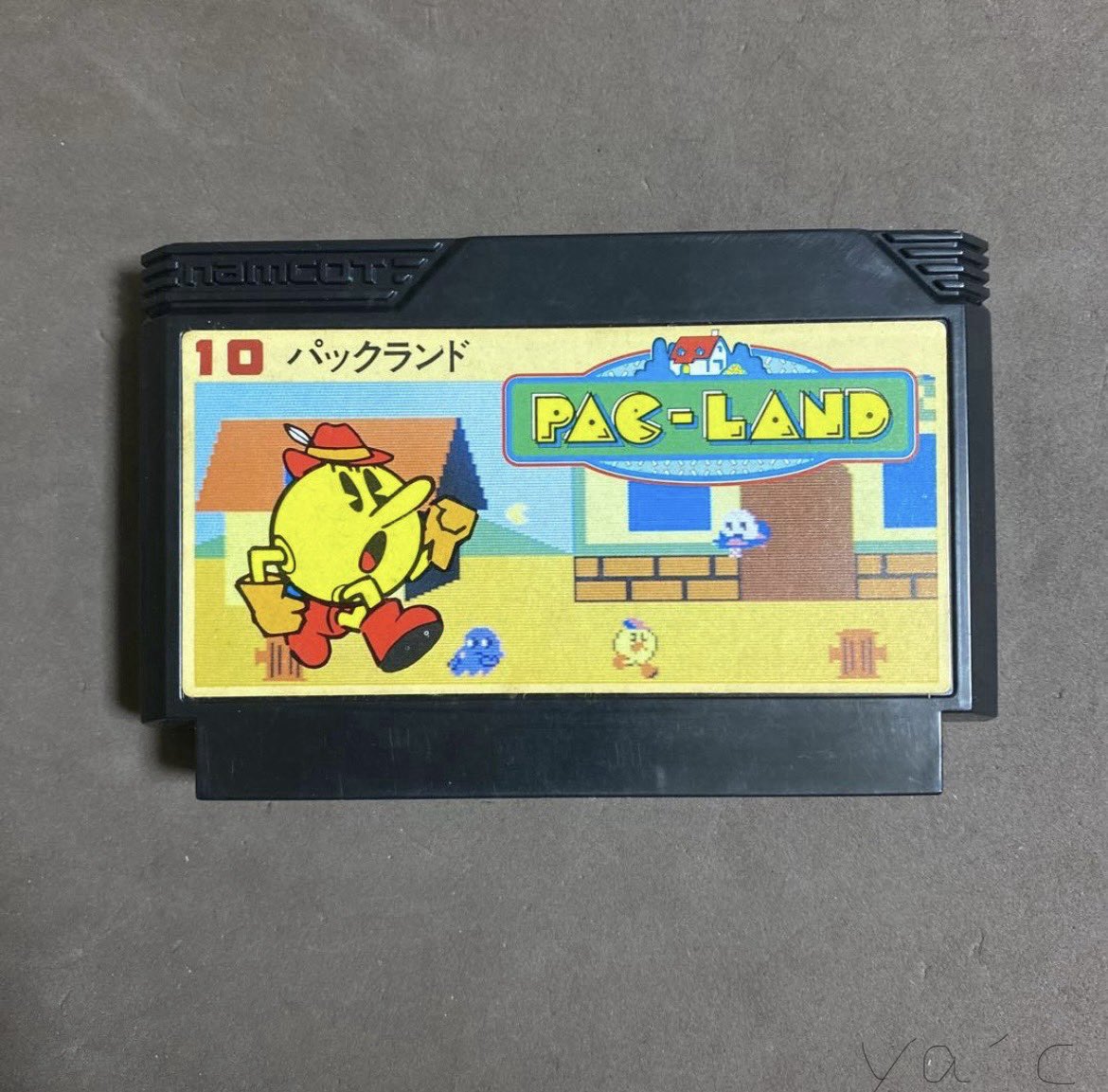
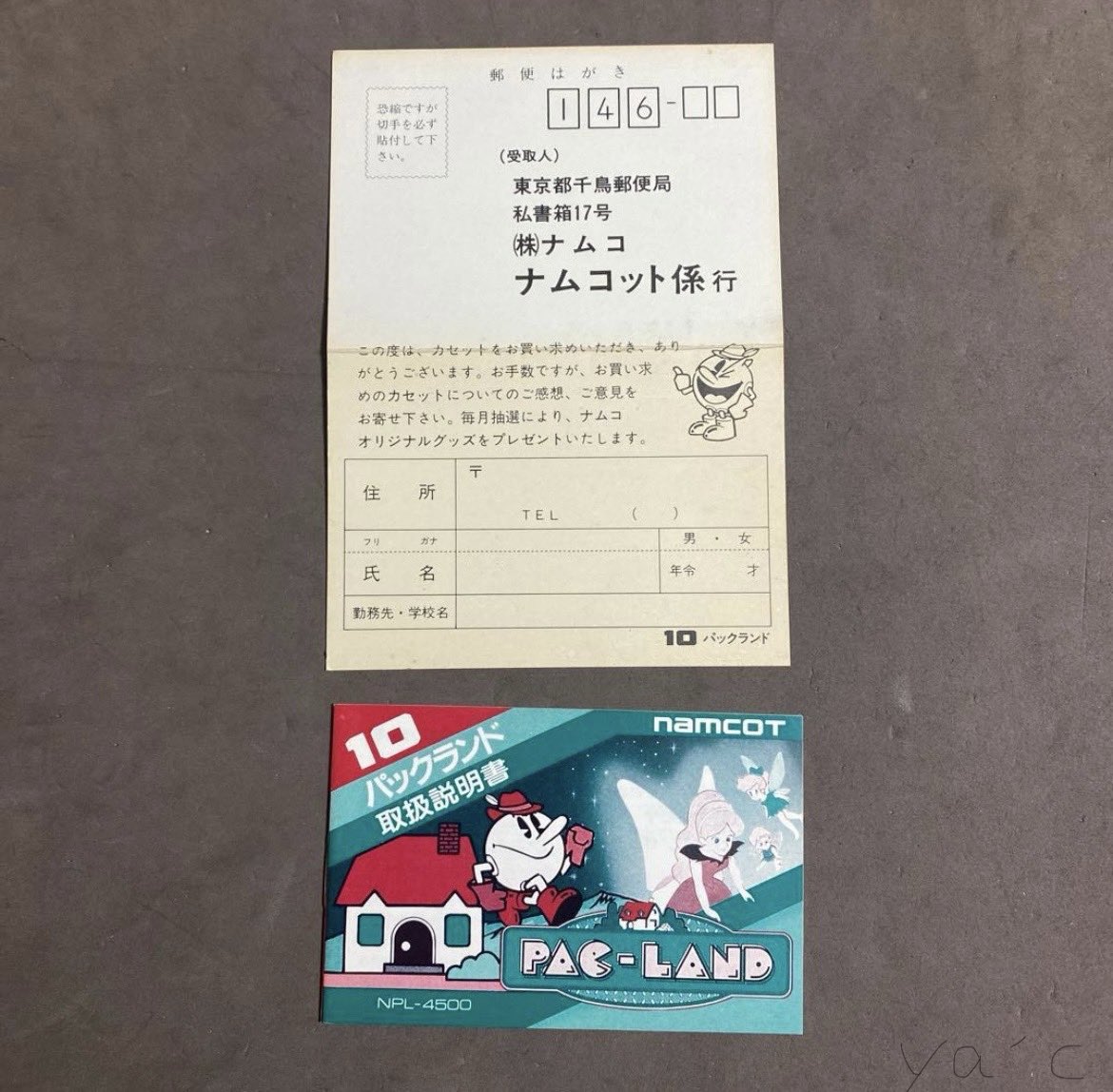
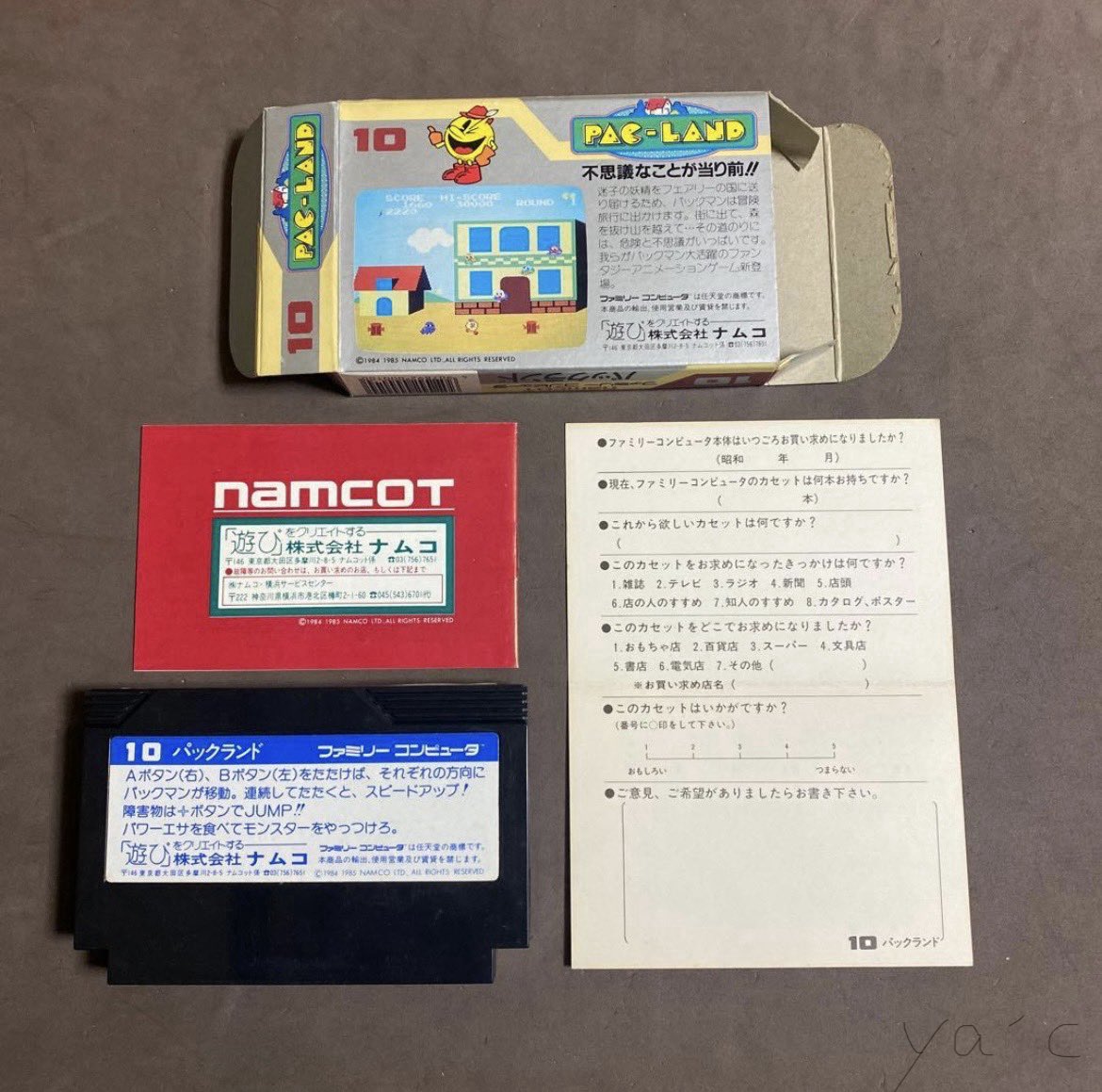
Pac-Land (1985)
I’m probably oblivious.
No.
I’m very oblivious.
I’m confident I wouldn’t notice if someone in my family changed their hairstyle.
Of course, I’d notice if they got a mohawk.
“Huh? You look different.
Did your personality change too?”
There was no way little-kid me, with powers of observation like that, was going to notice the many mysteries hidden in this game.
I first played Pac-Land at an arcade.
I knew none of its secrets.
Even so, it only took three buttons to play.
And the big, cartoon-like Pac-Man and ghosts were fun just to watch.
Run to the right.
Jump over obstacles.
Reach the goal.
That was all I thought there was to it.
But Pac-Land hid surprises everywhere.
Push certain fire hydrants or tree stumps in the opposite direction and something might appear.
Helmets, fruit, balloons, invincibility, even warps—
the timing of your final jump could change your bonus too.
I noticed none of it.
Of course I didn’t.
In games and in life, I thought obstacles were things to avoid.
Who would think to stop in front of one and push it backward?
But there was one thing I did notice.
Pac-Land looked like a television cartoon.
Pac-Man didn’t just move across the screen.
He ran, jumped, stumbled, and reacted.
The ghosts chased him with expressions that made them feel like characters, not just enemies.
Years later, while researching this article, I learned that Pac-Land’s world and visual style were based on the American Pac-Man animated television series.
So the one thing little-kid me noticed was actually right.
I didn’t notice a single mystery hidden in this game.
But—
I did notice that it looked like a cartoon.
And I did notice that it was fun.
P.S.
The arcade version of Pac-Land debuted in 1984, and the Famicom version was released in Japan on November 21, 1985.
It was the first side-scrolling action game in the Pac-Man franchise.
I discovered its hidden secrets while researching this article—about forty years late.
It seems I really am very oblivious.