A serious website was long overdue.
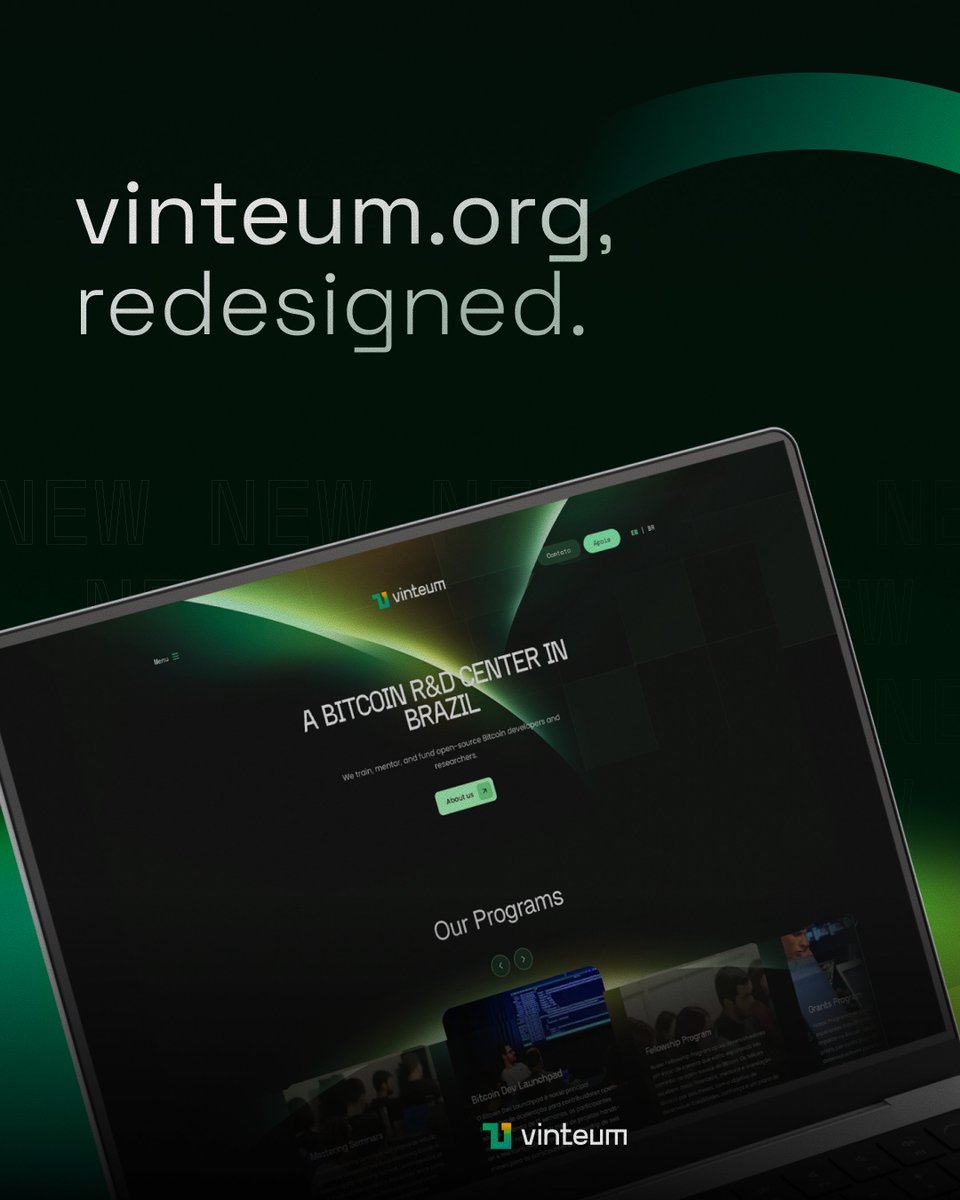
We redesigned https://t.co/q7nXuMqsnI to better tell the story of what we’ve been building: funding, training, and supporting open-source Bitcoin developers and researchers in Brazil.
Check it out: https://t.co/q7nXuMqsnI
Did you know some of the first Bitcoin taproot transactions were made by Brazilians? Check this blog post from our dev advocate and zbd engineer @jaoNoctus to learn more!
I made a new blog post: what Bitcoin Core does when a peer sends a TX message tracing the full path from message to the mempool.
https://t.co/J94ahpbjOA
Our fellow Vinicius has been exploring Bitcoin Core internals and just published a deep dive on what happens from the moment a transaction message reaches a node to when it enters the mempool.
If you’ve ever wanted to better understand transaction relay, validation, and mempool acceptance in Bitcoin Core, this is a great read:
From TX message to mempool
Our fellow Isaque has been diving deep into libsecp256k1 internals and wrote a deep dive on sipa’s very first commit to the project.
The post walks through the original C++ implementation of field element operations in the earliest days of libsecp256k1, unpacking how the code worked and the tradeoffs involved at the time.
If Bitcoin cryptography internals are your thing, this is a great read!
Wallet implementations: please take a look at the Electrum Protocol 1.7 proposal (link bellow).
It incorporates several cool new features, but the one I'm most interested in is the `blockchain.scriptpubkey.*`. I've proposed those endpoints so personal electrum server such as...
Dr. Edil Medeiros (@edil_medeiros), an associate professor at the University of Brasília, teaches a Bitcoin Protocol course, now in its second edition, with a third planned for 2026. The course combines low-level protocol mechanics with conceptual discussions, comparing Bitcoin to other cryptocurrencies. About 50 undergraduate students from engineering and computer science programs participate each year, covering topics from transaction semantics to cryptography, blocks, and proof-of-work.
Students engage through weekly lectures over 32 weeks, four homework/programming assignments, and a final project. Dr. Medeiros emphasizes understanding why Bitcoin works, not just how it works, preparing students for real-world technical challenges. The course is available online in Portuguese and English, including lecture recordings and MIT DCI materials.
Dr. Medeiros also serves as Head of Research at Vinteum, a nonprofit supporting open-source Bitcoin developers. He aims to build a Bitcoin protocol education pathway and establish a network monitoring lab to support global research initiatives. His teaching bridges practical development, research, and the open-source Bitcoin ecosystem.
Dr. Medeiros has agreed to speak at the BEI Annual Conference in Washington, DC, on July 31st. Register for the conference here: https://t.co/mNaHR1KNnd
O GALILEU é um proxy reverso que faz um MITM na sua máquina para interceptar pacotes TCP enviados por LLMs e inspecionar o payload em busca de dados sensíveis.
Se liga nessa demonstração de uso