Could the United States feed the United States without glyphosate?
Short answer: obviously yes
The main problem with our food system is that it’s being run out of Washington.
That’s why we have vast swaths of farmland doing stupid things that make no sense except to bureaucrats in D.C. — maxing out soybean exports, subsidizing domestic sugar production, growing the majority of corn for ethanol (something that’s bad for cars but good for the egos of D.C. politicos), etc.
We got to this point through the usual way: the cost of business ia slowly driven up, via regulations & the rest of it, until most farmers can only afford to sell out to Tyson, etc. Then lobbyists convince lawmakers monocropping & pesticides are the only way to affordably feed Americans, and laws are enacted exempting manufacturers from liability, only quickening these trends.
In the past 8 years, we’ve lost up to 170,000 farms — 1 in 15. Meanwhile, only 10 percent of U.S. corn feeds humans; the rest feeds animals or cars. On the other side of the equation, 85 percent of farmers have to work off-farm. Yet 80 percent of the Farm Bill is SNAP. It’s like a self perpetuating cyclone of bad decision making & worse consequences.
As long as things are being run out of bureaucracies, we could at least do so through the prism of enabling local communities to feed local communities.
Easy layups:
— SNAP benefits double for whole foods, and/or can only be redeemed for foods with less than ~5 ingredients.
— Farmers get low-interest loans
— No more subsidies for monocropping
— USDA lets farmers slaughter their own meat
— Monsanto-style liability indemnity is removed so everyone’s competing on a level playing field
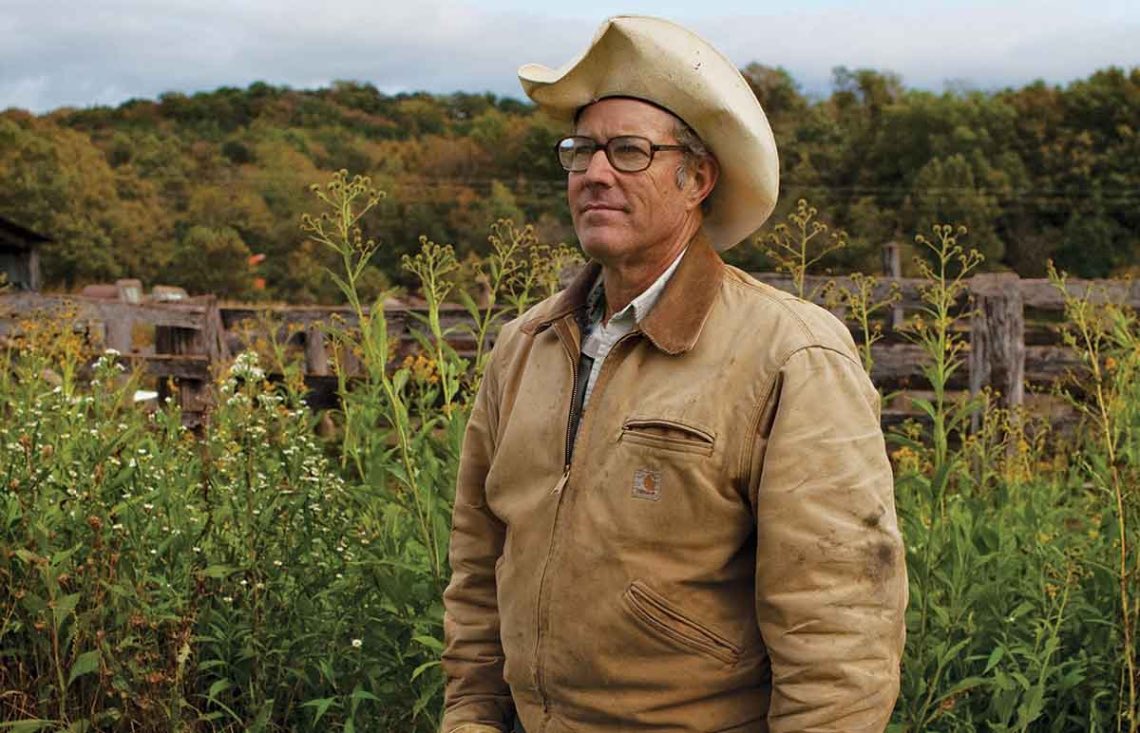
People here probably already know about Joel Salatin and his Virginia-based regenerative/permaculture farm, Polyface, as it appeared Michael Pollen’s popular documentary, The Onnivore’s Dilemma.
Salatin & other regenerative farmers have written dozens of books showing how farms that replicate patterns we find in nature — herbivores graze before chickens scavenge, before the land transitions from pasture to agriculture te animals again, all of which increases the fertility of the land year after year.
Salatin: “Plants and animals should be provided a habitat that allows them to express their physiological distinctiveness. Respecting and honouring the pigness of the pig is a foundation for societal health."
Practicing farming as God intended wouldn’t only be good for the planet, but could also expand supply.
Market summaries report that diversified regenerative farms can match or exceed conventional yields and even increase total productivity over time — with one dataset claiming regenerative systems can yield ~78% more food per acre total calories when considering diversified outputs, not just one crop.
Polyface Farm, at just ~500 acres, supplies thousands of local families and dozens of restaurants — prioritizing multiple outputs per acre (meat, eggs, vegetables, grass-fed products) instead of a single commodity yield.
And studies have found nearly 30 million acres of U.S. cropland that have been abandoned since the 1980s.
I voted against the rule to bring this omnibus forward for a vote.
Here is a breakdown of some of the most ridiculous items included in the omnibus, and some America First items that were not. I offered amendments to correct these errors—all of which were blocked or refused🧵: