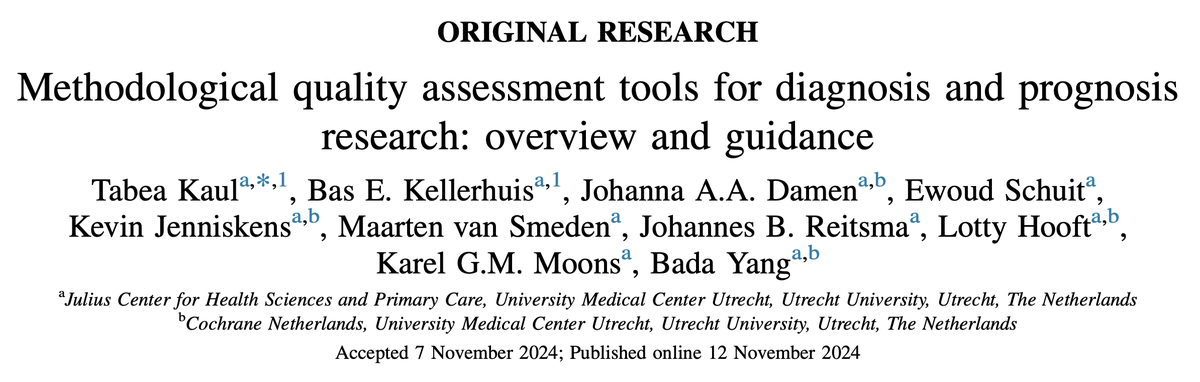
🤔 Which risk-of-bias tool is appropriate for a diagnosis or prognosis study?
There are at least 14 tools, and the choice depends on your research question and aims.
⏩ Find out, in our overview and guidance (open access): https://t.co/BPKWiihX3L
✈️ Final call for Cochrane Netherlands' online course on *Systematic Reviews of Diagnostic Test Accuracy*: 29 Nov to 1 Dec 2023.
Contents include QUADAS-C, GRADE, and hands-on meta-analysis in R!
Info and registration at: https://t.co/gg46TIsEAX
🚨Course announcement🚨
Cochrane Netherlands is once again organizing an online course on how to perform Diagnostic Test Accuracy (DTA) reviews on 29 Nov to 1 Dec 2023.
Learn from experts such as @leeflang_m and @hans_reitsma!
Info and registration at: https://t.co/gg46TIsEAX
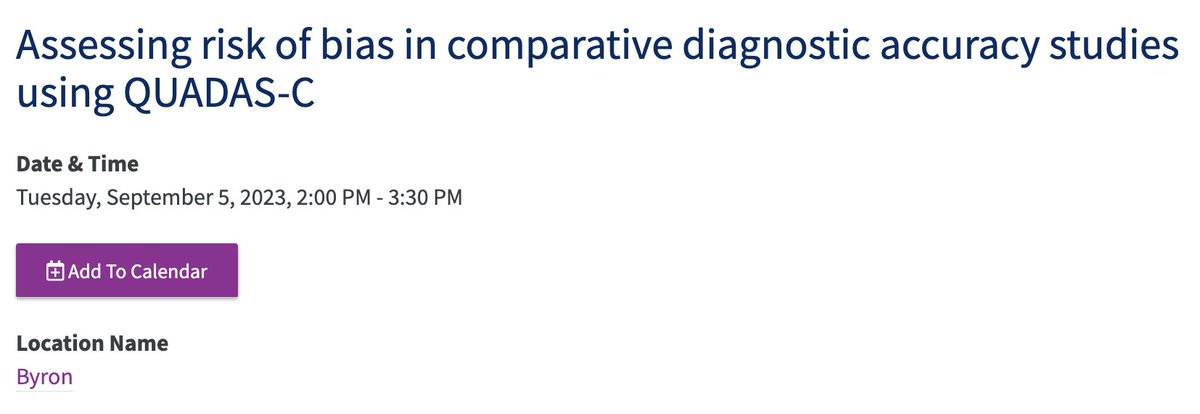
Interested in how to assess risk of bias in comparative diagnostic accuracy studies? Join me and @leeflang_m today, at 14:00 at the QUADAS-C workshop! #cochranelondon#sysrev#bias
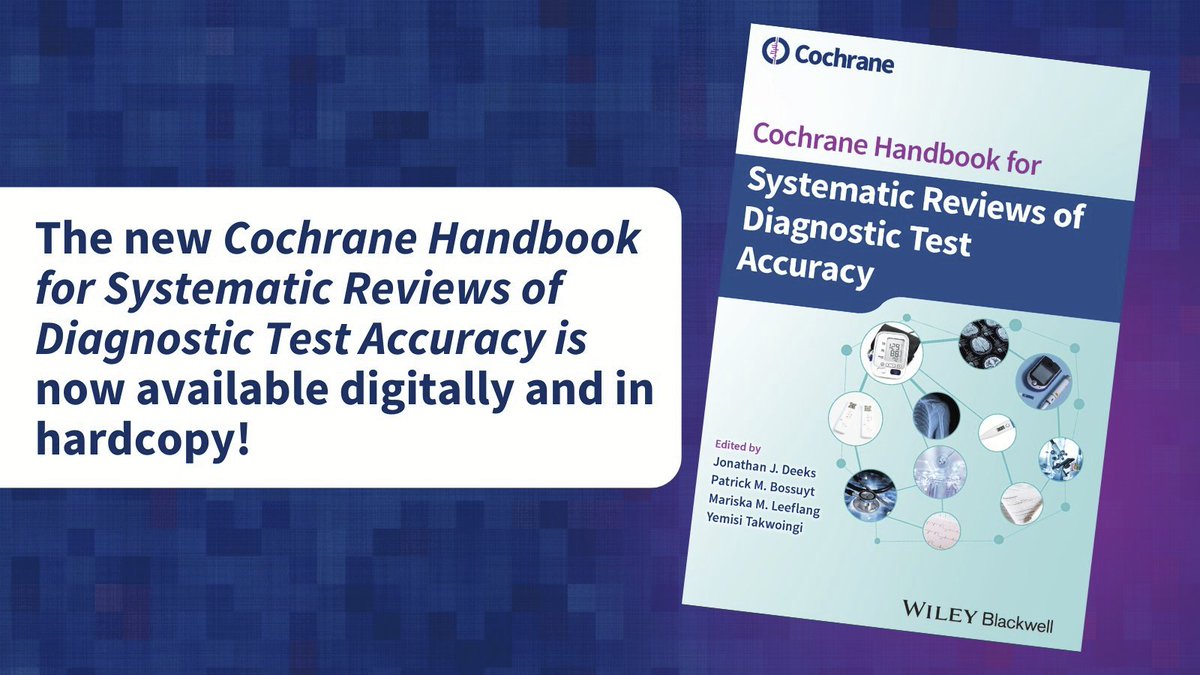
The Cochrane Handbook for Diagnostic Tests launched today! 20 years of work from many people @CochraneDTAteam
Details https://t.co/B0HBTNqb2O. At Wiley or @cochranetrain online.
Thanks to coeditors @pmmbossuyt Yemisi Takwoingi @leeflang_m and @EllaFlemyng to get this out.
We are hiring! We offer an exciting position as PhD Candidate who will focus on improving methods for the validation, updating and implementation of (artificial intelligence based) prediction models to support clinical decision-making.
https://t.co/bOLlykmrxW
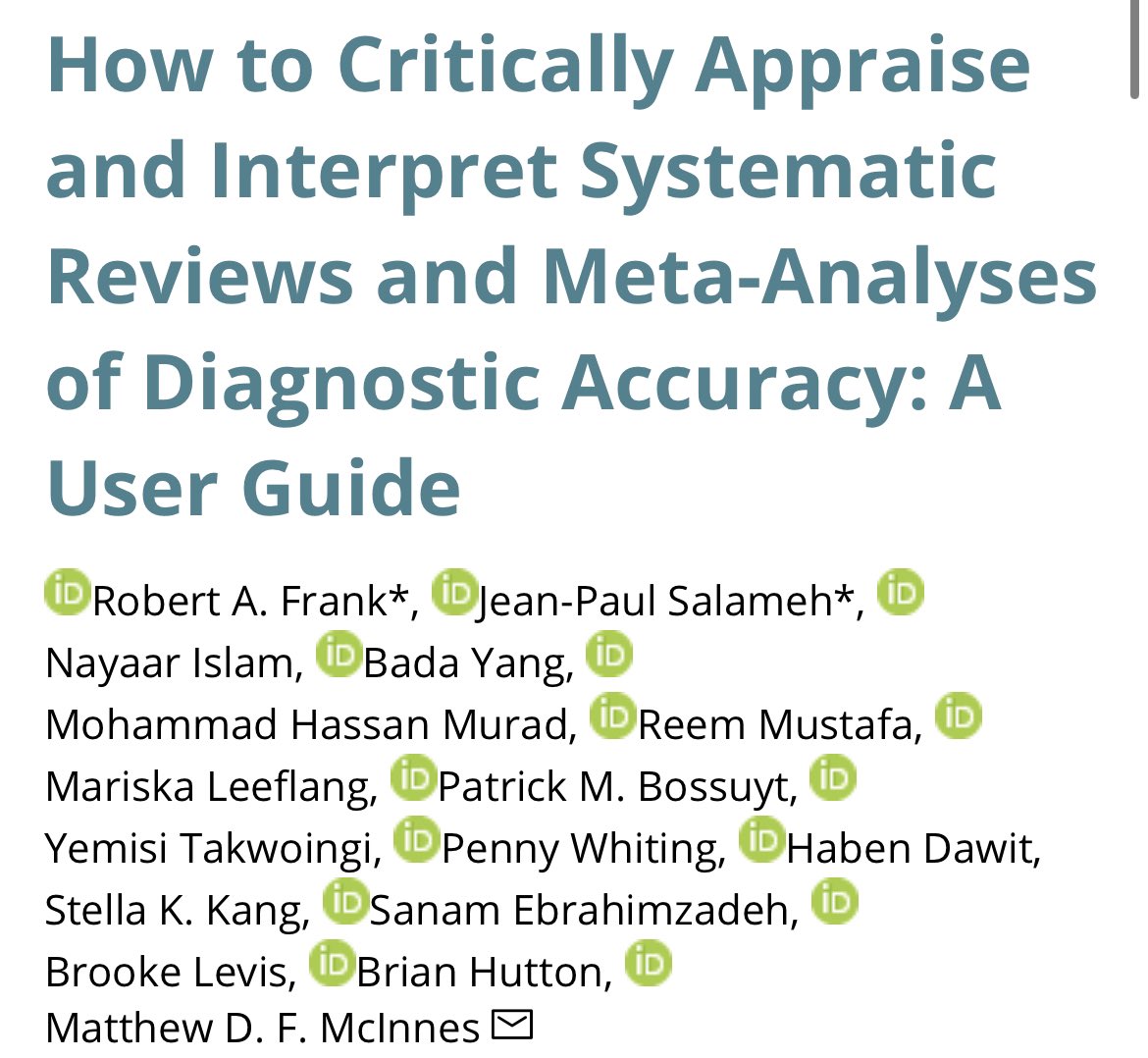
Our new work in @radiology_rsna:
We put together a practical guide for clinicians and radiologists to critically evaluate diagnostic accuracy systematic reviews when using them to inform clinical decisions.
Read: https://t.co/DWNRHE4fvi
1/5
🔥Course announcement🔥
Cochrane Netherlands is organizing an online course on how to perform Diagnostic Test Accuracy (DTA) reviews on 7, 8 and 9th Dec 2022.
Learn from experts such as @leeflang_m and @hans_reitsma!
More info and registration at:
https://t.co/AN0s5uZBd5
QUADAS-C risk of bias tool for comparative accuracy studies is now endorsed by Cochrane as an optional tool for Diagnostic Test Accuracy reviews!
Happy to help any prospective review authors who are willing to use this tool.
#epitwitter#sysrev#researchquality#QUADASC
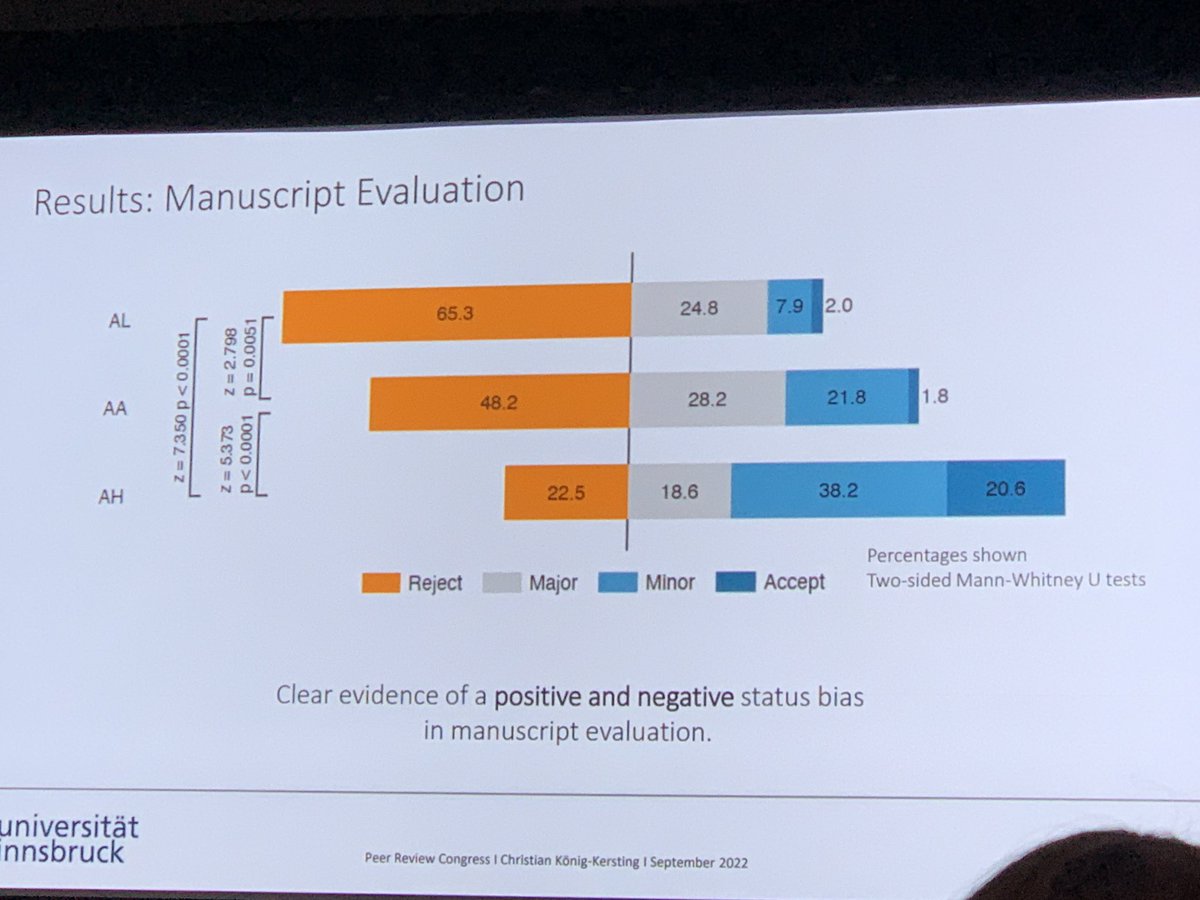
Massive status bias in peer review.
534 reviewers randomized to review the same paper revealing the low status, high status, or neither author. 65% reject low status, 23% reject high status.
Amazing work by Juergen Huber and colleagues. #prc9
Most memorable paper I've (re)read this year: Using the Principles of Randomized Controlled Trial Design to Guide Test Evaluation #happy2022
https://t.co/a4tRAPx3Fz
Many interesting developments recently for diagnostic test accuracy reviews, including several updated Cochrane Handbook chapters, publication of the QUADAS-C tool and the PRISMA-DTA explanation paper #systrev
The target condition is such an essential part of diagnostic accuracy research, but it is too often vaguely described or sometimes not at all. The target condition is not defined by the reference standard (but the other way around):
https://t.co/mGlbm1QcT1
A few days ago I have a #talk to a #medical#students conference focused on clinical decision-making. The talk, pitched at medical students’ level, explained how to deal with studies claiming a difference in treatment effect across subgroups of patients. https://t.co/MjGYjP6mYu
"Our aim was to review whether biomarkers were predictive for X"
Search strategy: biomarkers AND X
"We extracted sensitivity, specificity, odds ratios (adjusted for confounding), "
"We used Newcastle Ottawa Scale for quality assessment"
Aka: "we made a mess of our methods".
Another SR with risk of bias assessment 'checked off'
- No discussion of risk of bias in abstract
- 33/41 observational studies were rated as overall 'low risk of bias' using ROBINS-E (implying validity comparable to RCT)
- No sensitivity analysis excluding problematic studies
NEW #BMJresearch: A high intake of alpha linolenic acid, found mainly in nuts, seeds, and plant oils, is associated with a lower risk of death from all causes, and specifically from diseases of the heart and blood vessels, finds a study https://t.co/pesOLprvCs