🎉 We've just published a case report in the
@JournalCTSurg . Our work details a complex robotic-assisted right upper lobectomy in a patient with a systemic pulmonary vein anomaly.@VipinZamvar@DrDaiWei@yangjun_liu66 Full text: https://t.co/IZ08w6UMCf
https://t.co/49jxyaGWMJ https://t.co/yla4VqRoI5
Vi söker en doktorand till ett spännande forskningsprojekt med fokus på matstrups- och magsäckscancer. I projektet ingår bland annat datasinsamling i möte med patienter.
Dela gärna vidare! https://t.co/4oeRjw0SxM
20 years ago we published "Causal knowledge as a prerequisite for confounder evaluation" @AmJEpi.
What we said then still applies to AI and machine learning:
Data are not enough to make causal inferences.
You can listen to me talk about it here 👇 or...
https://t.co/iKxpH6xzBB
Honored to be co-authored on this paper and delighted to see it is online @JCO_ASCO.Compared to usual care, using #ePRO to manage symptoms after #LungCancer surgery was associated with lower #symptom burden, less #complications, and better #functioning.
https://t.co/sG9p60zoDE
🚨RCT ⚖️ of 166 pts w/ #lcsm shows ePROs (vs usual care) post-op while *inpatient* (~5d) result in ⬇️symptom burden at discharge, which is maintained at 1 month.
📰 in @JCO_ASCO: https://t.co/En2LdA1Afj
Also ⬇️cx rate and ⬇️interference, but no diff re-admission.
Most PROMs research has been in medical & radiation oncology. This study shows PROMs post #LungCancer surgery ⬇️symptom burden ⬆️functional status ⬇️ complications. Need implementation across all stages & Rx for cancer. https://t.co/OOrj0ZaPt6 @Clavikul @Afaf_Girgis@cancerNSW
Glad to be co-authored on this paper, which reports the detailed #translation process and the difficulties we met during this process. @pompili_cecilia
https://t.co/sxxveeNiYk
Really looking forward to this discussion with some great friends. Such an important part of quality improvement. Great international panel delighted to be part of it. @ISDE_net
@DoctorJSpicer Nice point! 👍 It would also be interesting to examine whether optmism could predict some objective outcomes like psychiatric diagnosis and/or psychiatric drug use after esophageal cancer surgery.
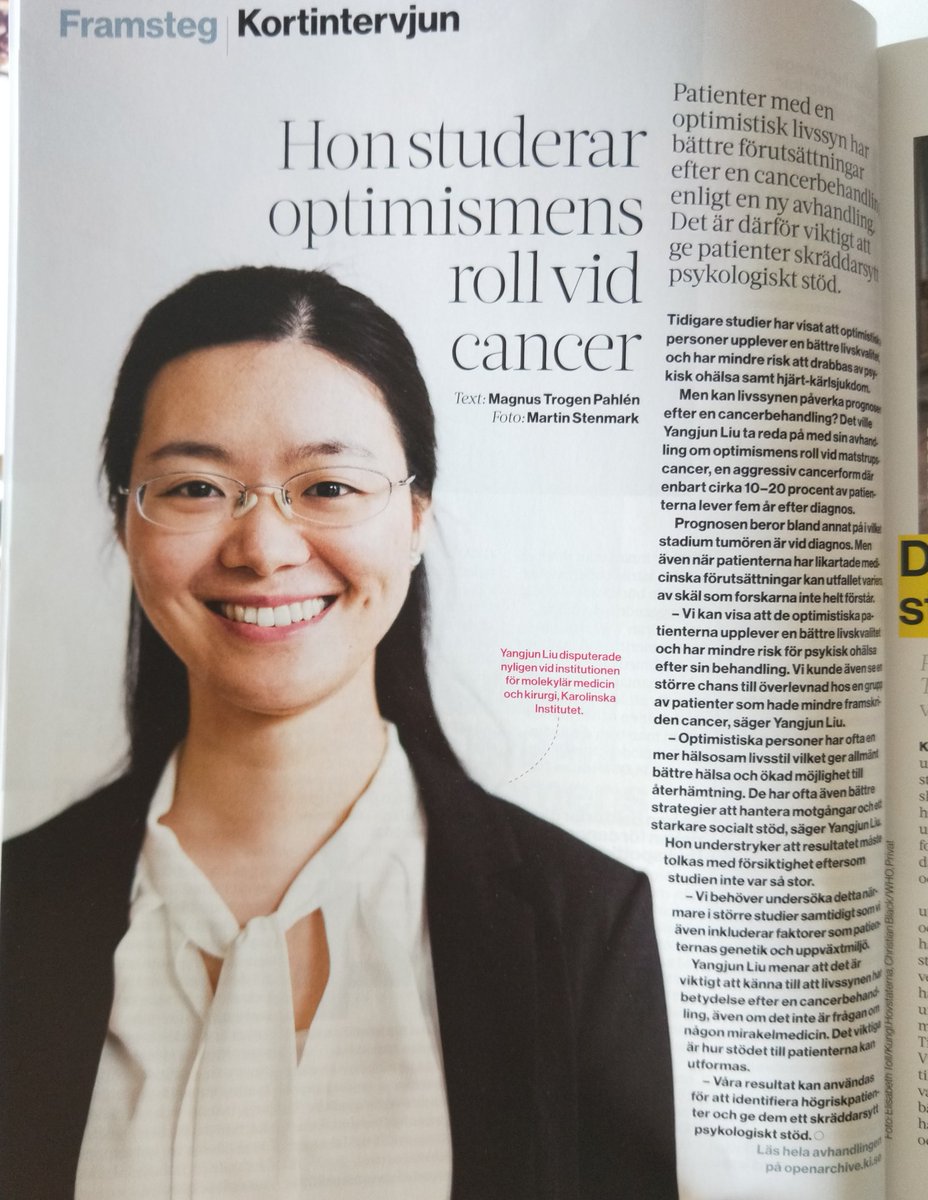
More #optimistic patients were less likely to have self-reported psychological #distress after esophagectomy for #cancer.@MASCC_JSCC Many thanks to all my supervisors/coauthors for their supports during this work! @ProfLagergren @erikpett123 @MarkarSheraz
https://t.co/Jz7vbILcOY
Delighted to supervise the outstanding @yangjun_liu66, in her latest extremely timely paper, showing the importance of disposition optimism in psychological recovery after esophagectomy. @ISDE_net @T4UGIS https://t.co/qILmutnSgL