Book suggestions for active traders:
1. The Alchemy of Finance
2. The Laws of Trading
3. Trader Vic methods of Wallstreet
4. Reminiscences of a Stock Operator
5. Rise of Carry
6. The Misbehavior of Markets
7. The Mental Game of Poker
8. The Man Who Solved the Market
9. Fooled by Randomness
10. Best Loser Wins
11. Trade Like a Casino
5 Little scalp trick I follow.
1. If I'm happy with the PA and the price, then I have zero regrets in market buying.
2. If not, then I wait for the quote I find reasonable.
(This depends on how I think a news would have the market react).
3. Both above points should be conditional at a PA where you see people being forced to sell or buy.
(Generally happens at range extremes where people are forced to sell their longs due to liquidation or fear or liquidation).
This gives you a leverage of buying from a distressed seller who don't want to exit but are forced to do so.
4. All the above process happens pretty fast so a few minutes post the trade, I recollect everything and if everything doesn't feel good, I'll exit. Zero point in carrying an anxious trade.
5. If it's a Swing or a trade where you'll be holding for longer than a day, enter in trenches, slowly, not all at once.
Tutorial 2: Position Sizing📢
Position sizing is arguably the single most important factor in trading. Proper position sizing allows you to manage risk, control drawdowns, and increase your probability of long term profitability. Without it, all the other aspects of your strategy are just noise
1) The Risk To Reward Ratio
Before we dive into proper sizing, remember that position sizing directly ties to your risk to reward ratio. If you’re aiming for a 3:1 RR your position size should reflect that. You need to determine how much you’re willing to risk on each trade before entering.
2) The 1% Rule
A popular rule of thumb. Never risking more than 1% of the capital on a single trade. This rule is often a starting point for most retail traders to protect themselves from catastrophic losses.
3) Fixed Fractional Sizing
Fixed fractional sizing involves risking a fixed percentage of your account balance per trade. For example, if you're risking 2% per trade, you adjust your position size based on your current equity. You can play around with the number you are comfortable with and largely depending on your win rate, if you are someone with high accuracy you could even get away with risking 10% of your account each trade.
4) Dynamic Sizing With Fixed Dollar Approach
Rather than risking a percentage, you risk fixed dollar amount. This involves having a hard numeric dollar amount to risk per trade, say $500. Most do this while planning out their total expenses each month and what they need to make each day to survive, this has its pros and cons.
5) Scaling In and Out of Trades
Position sizing isn’t just about sizing your initial entry. Scaling in (adding to positions as they go in your favor) or scaling out (taking profits incrementally) can drastically affect your overall exposure and risk profile. This is the skill that is very bespoke and largely depends on your overall performance and how well you catch the trends
6) Stop Loss Placement
The size of your stop loss impacts your position sizing. A wide invalidation requires a large stop loss, hence smaller position size to maintain a consistent risk. Conversely, a tight stop means you can afford a larger position size but need to be accurate
7) Psychological Aspects of Position Sizing
Larger positions can lead to a feeling of unease, Traders with poor emotional discipline tend to size their positions too large and end up blowing their account in matter of few trades
Conclusion: The Key to Longevity
In the end, position sizing is about survival. You could have the most accurate entry signals or best technical analysis, but without a well thought out position sizing strategy, you’re trading blindly.
5 changes I've made to my trading in the last 2 Years.
1. If I don't know where my exit will be, I won't enter. This is the single most important rule I have which can save all of you from losing a lot of money. If there's one rule to follow, it's this.
2. Liquidation Buying for Swing trades. Have Limit buys set in trenches at plausible liquidation points if I'm away from the system or market buy after liquidation Dump after volume becomes Nil on the 1 Minute Chart. This setup works great for Spot bottom buying for a quick swing.
3. If I absolutely know that it's the bottom, I buy Altcoins on Spot. No need to even think about Bitcoin if you have 100% conviction in your thesis of bottom. Altcoins have enough volatility to avoid leverage.
4. EMA crosses works in hindsight. There's 100K bots working right now to take away your profits if you're using EMA cross to enter or exit.
Use EMA to find trend or buy DCA when a Dump occurs on HTF to a longer EMA like 1 Day 55 EMA or 200. Don't use it as an indicator to enter or cross etc.
5. Breakout trading Will always get you rekt, specially on the HTF. Chart patterns will also get you rekt on the HTF. This sounds untrue to the new traders but I wish it wasn't true.
ABSOLUTE MUST TRADING LIST FOR TRADERS 💯
1. How to trade like a professional Fund Trader by @AmbroseXbt - https://t.co/UyazeCTWsu
2. Best Altcoin Trading strategy for 2025 by @BullyDCrypto - https://t.co/diz8P22w9Z
3. Best indicators for Altcoin scalping by @ZekeEther - https://t.co/nDnqMlgzLU
Want to Learn Trading? (Updated)
PLEASE SHARE
1. Index of All tutorials - https://t.co/c39gfY5bHQ
2. When to Exit- https://t.co/kwWzVgu3VT
3. Strategies-
https://t.co/c39gfY5bHQ
4. Risk Management- https://t.co/8LVsXpVIyo
5. High Probability Pattern - https://t.co/s0ttNyBtQH
6. Most Used Indicator - https://t.co/F2oAyKY80v
All the Best!
This is the best Tip I will give you which 99% will not understand.
Trade Crypto as a new plan,everydayday. There is zero value as a TRADER to Predict what will be the cycle top or bottom or if it is the start or the end of the Cycle.
Trade eveyday like it's a new market cycle, needing new reading and forget all opinions.
8 ways How I'd learn Trading Today.
1. 99% of traders fail to make a system that's Bulletproof i.e. gives you enough chance before making you Poor.
2. Concrete Verses to engrave in your mind - Don't enter unless you know your exit (For both profit and loss, many fail here). If you fail to do this, market will teach you risk management after you have nothing left to risk.
3. Start with Basics of Price Structure, then Study volume profile, Understand momentum and never take a breakout trades.
4. Stick to buying on the retest of means. Stick to this and take trade in direction of momentum.
5. Avoid opinions from others likes you'd avoid Herpes from Thai ladyboys.
6. Start with a small account of 100 dollars and trade the smallest TF and trade as much as you can. Don't repeat mistakes, pretty soon you'll run out of mistakes.
7. Make a trading Buddy and share findings, repeat it a 1000 times.
8. Treat indicators as statistics and not signals.
My Plan right now.
1. Assume that no one knows the final Top target.
2. Keep buying all Dips and Sell at instant Rips
Instant Rips = sudden Pumps after accumulation with no warning like the latest Pump from 98K to 103K.
3. Dips with Liquidation need to be bought harder.
Liquidation bottoms when there's zero Volume on the one Minute = No Coins left to sell in the Market Orders.
4. When Strategy 1-3 doesn't work any longer and Dip keeps dipping, assume market has Topped.
5. Find out which assets you'd like to Own after market had topped, Study market Cycle of ETH and Set your Dump target based on that Cycle, for the Coins you like.
6. Hold using Strategy 5 for 12-18 Months.
Bitcoin Price Update
1. I bid the $94,000 level as it had great confluence with fib levels and EMAs with the Korean FUD releasing right before US open (price usually goes up in US session)
2. Asked you to bid $92k higher low las ttime and asking to bid this until $90,000 breaks. We have front-run $100,000 many times now and are only getting stronger with higher lows forming on BTC on every dump. Once $100,000 breaks I expect a small BTC led rally with altcoins lagging. Until then, alt season continues.
3. Will hold my dip buys as long as important EMAs hold. If this trend is lost, I will wait ffor consolidation over 1-2 weeks before buying both altcoins and bitcoin.
Tricks for Reading and Buying a Chart.
1. Check the Kind of market Structure.
(If chart is making a HH and LL or vice versa)
2. Check for accumulation in a range (Increase in Volume in a range)
3. If price is overextended or squeezed. Buy if squeezed, qaid if over extended.
(EMA 13,55 and 100 being top far from each other)
4. Buying the Dip Opportunity.
(One day 55 EMA as Support for historical Bounce)
Don't start trading crypto by betting all your money, savings, and capital at once. Under no circumstances should you borrow money to trade.
Instead, start by making friends with people who have the same financial and knowledge background as you and are at the same stage of trading
Understand how orders work, what determines the price, and how news impacts the price. Learn about all the types of orders.
Then, determine how much you can spare to learn Trading. What can you bet to trade live. Live trading done to learn is the best teacher.
Understand leverage to prevent excessive exchange exposure. Read all the articles about the tools you use. If you can't afford a book, download its PDF. This is a sin but you can wash away your sins by retiring your mom once you're rich.
Spend a year practicing this. Trade the same chart for a year, starting with the lowest time frame. Then, add OBV (On-Balance Volume), VP (Volume Profile), and experiment with Divergence to see if it works for your trading. Find a friend to backtest with.
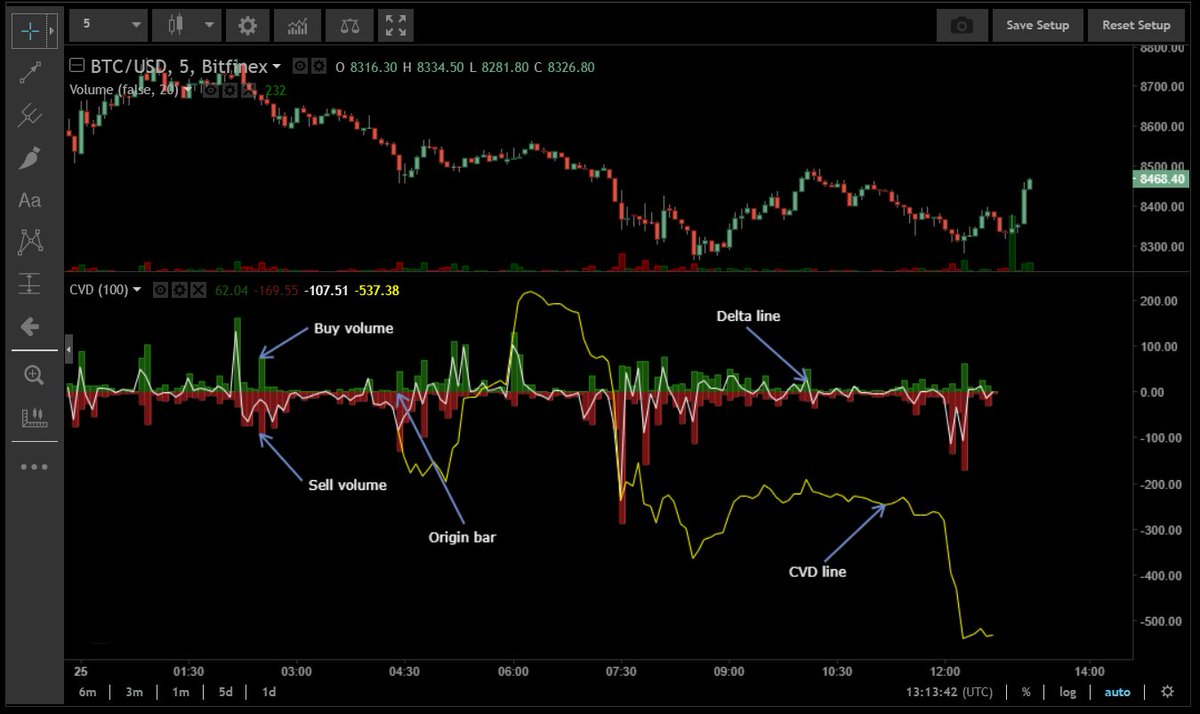
Start trading a lot, managing risk while keeping capital low. Understand where you want to buy, at what price action you want to buy, and similarly, determine your stop-loss (SL) and take-profit (TP) points. Then, utilize Open Interest (OI) and Cumulative Volume Delta (CVD). Understand how absorption works.
Repeat this process a thousand times, gradually increasing your risk as you become more comfortable.
I started in crypto with $500.
Now I am financially free.
"Trading" influencers will charge you $1000+ for a course like this but I'll teach you for free.
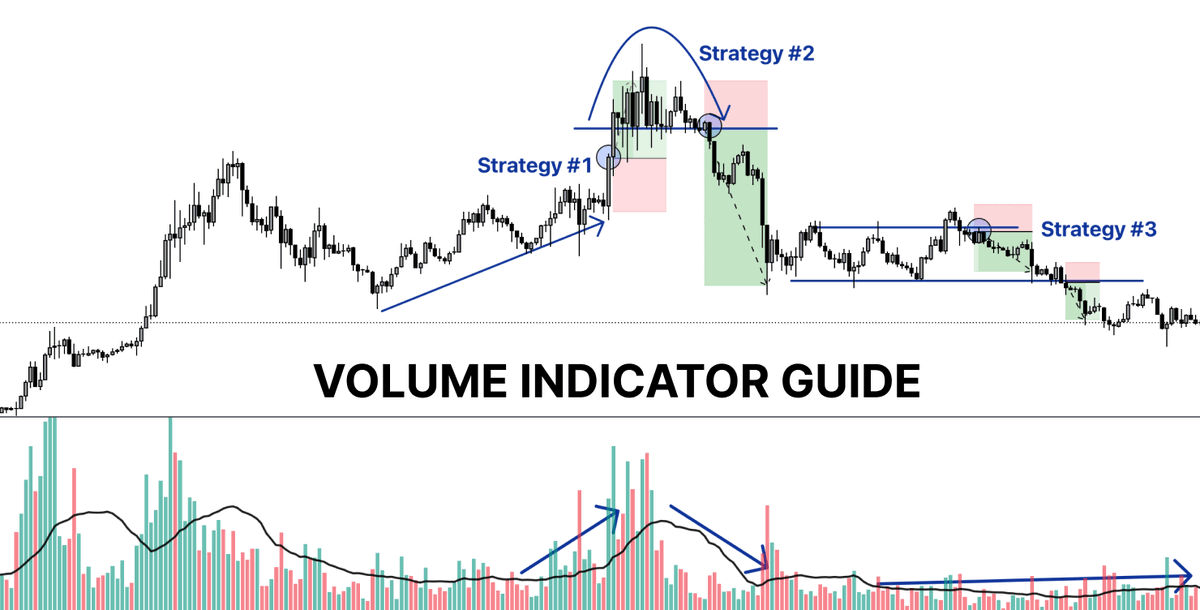
Use this Volume Guide to build your own profitable strategy🧵👇
Trick for Swing Trade
1. 60 Minute Chart. Draw the Downward Trendline if there's a Correction.
2. Find the Downtrend Slope on OBV and PVT too.
3. When the Price Candle Crosses above the downtrend line, Enter a Long if OBV and PVT also Breakout.
Before I leave for the weekend, let me tell you a Secret.
I learnt all about Trading Because I had nothing else to do. I never wanted to have a manager.
I don't like socialising so was in my room all day. Watching Videos. Reading Books. Trading the One Minute time frame thousands of times a Day.
Did it for Years. Found Options to hedge Bet and then shifted to Crypto full time because it doesn't need a Block trade or minium capital requirement and allows custom leverage.
There's no secret. I am not intelligent. I was so stupid that something my dad would stop explaining me things when we had an argument because he knows I was Stupid Hehe. That was funny.
So. That's it. Had nothing else. Kept trading. Read every Pirated PDF I could find and watched every Stolen illegally downloaded Video I could find.
Traded. A lot. Watched the One minute tome frame like they watch Pornhub.
Make sure to not repeat any Mistakes and eventually you stop making mistakes.