Human rights & democracy researcher | Fellow at the Penn Project on the Future of U.S.-China Relations @Penn | ex- @hrw @freedomhouse @pressfreedom | 勇气是最珍贵的品质
"As Washington and Beijing engage more and more in geopolitical competition, we should not lose sight of the passionate longing for freedom that people in China still hold. We should support their aspirations at every opportunity." Me testifying @SFRCdems: https://t.co/71aIdrLLHD
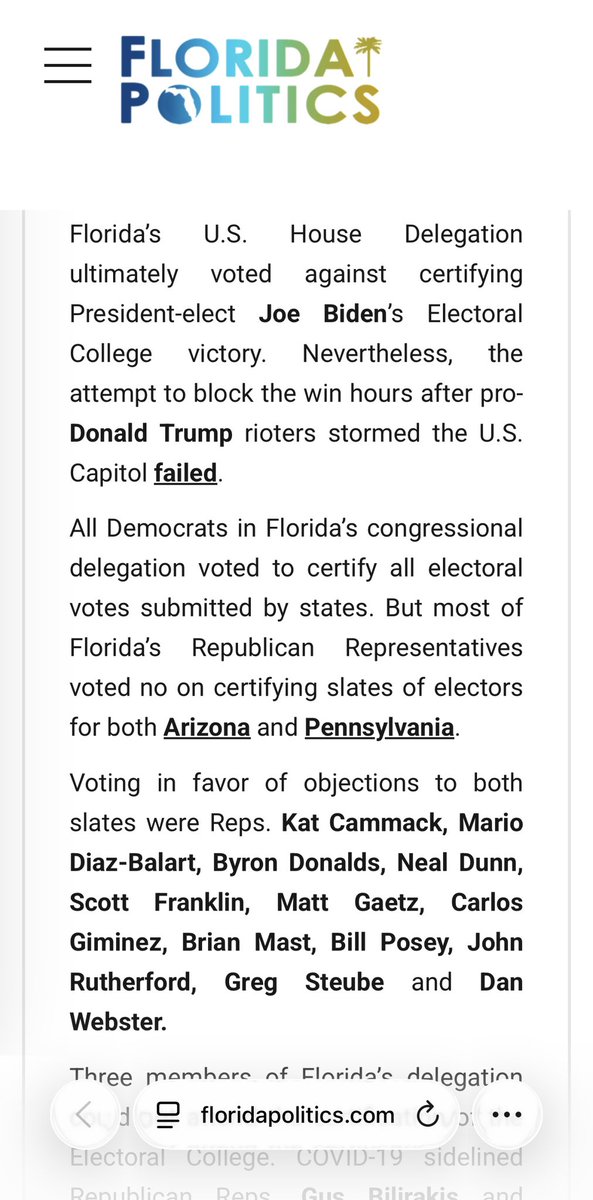
👀 … The National Endowment for Democracy tomorrow is giving Rep. Mario Díaz-Balart its Champion of Freedom Democracy Award in part for his “steadfast advocacy for democracy worldwide,” especially in Cuba. He was one of the Republicans who objected to Joe Biden’s 2020 win.
It strains credulity that the National Endowment for Democracy, of all organizations, is honoring a 2020 election denier this week. It is such a betrayal of its mission—and of the many pro-democracy scholars and activists around the world who have trusted @NEDemocracy.
Every time I read a story about China’s domestic economy stumbling, I think of the countless human rights stories behind it: labor abuses, suppressed protests over unpaid wages, and families whose life savings are trapped in unfinished homes.
https://t.co/kiI7EMJhft
Exactly. This is how the CCP exerts control. It never tells you exactly where the red line is. You're supposed to figure it out yourself. That uncertainty compels businesses and people to police themselves and stay far from a line they can't see.
“How can China's AI labs distinguish between a smart model and one that has the capabilities proposed for restriction?”
➡️ Nobody has a satisfactory answer to this question, not even the Party. Chinese labs will be expected to self-censor particularly powerful releases capable of causing real damage.
What constitutes “particularly powerful”? The labs will be expected to know it when they build it. If they judge wrong: consequences.
China's pervasive surveillance state is backfiring. Because everyone in China knows they are being monitored, most are careful not to express negative views about the government, but that leaves the government blind about what people really think. https://t.co/VVXPK70GPV
Credit where credit is due. Good to see the State Department elevate China’s travel risk. The CCP’s arbitrary detention of foreigners is uncommon but unpredictable. Anyone can be the unlucky one. And once you’re locked up, few can help you.
https://t.co/m5Pg34pRSY
In the piece, I argue that the CCP’s successful repression in Xinjiang relies in part on its exploitation of Han Chinese officials' prejudice against Muslims. The Party may find it harder to sustain the same repression when both the perpetrators and the targets are Han Chinese.
Behind the Chinese surveillance system’s futuristic façade lies a vast bureaucracy, comprising police, security officers, neighborhood committees, and information-gatherers, notes @Yaqiu in Deep Dive: Privacy. Their loyalty cannot be taken for granted. https://t.co/kYYNyXC5jQ
My new piece on the dilemma of Chinese surveillance: repression distorts the very information the govt needs to understand society. AI makes the problem more acute -- algorithms cannot learn from the opinions and behavior that fear has driven underground. https://t.co/PLtlAhriKc
The U.S. government urgently needs to stop committing egregious human rights abuses at home if it wants to retain credibility when speaking out against abuses by the CCP and other authoritarian governments.
Video credit: @Jifengbooks
The UN leadership has a long record of downplaying egregious human rights abuses in China. It is hardly surprising that it is now tolerating the open contempt for human rights from a Chinese national heading one of its agencies.
Could not agree with them more.
The question is why does the UN leadership seemingly tolerates that the head of a UN agency refuses to uphold one of the UN three pillars.
Great piece. It’s an utter shame that the U.S. has descended into a small-minded bully, voluntarily forfeiting one of its greatest sources of power: its ability to inspire people around the world through its ideas and ideals.
You'd think the Sec. State would focus on fixing our incoherent Russia or Iran policies, rather than giving speeches by Greek monuments about "the ideal of the great man" chasing glory & power w/o ethical limits.
I wrote about Rubio's weird turn here. https://t.co/esbHsJVrHB
It saddens me to see otherwise intelligent Westerners romanticize authoritarian alternatives they know next to nothing about. Such ignorance is a gross affront to those who have been killed, imprisoned, or otherwise brutalized by the CCP.
I want to invite people into a thought experiment, one that I suspect many will find insane.
The thought experiment: China is more democratic than the US.
Numerous *Western* surveys have now found that the Chinese government enjoys more public support than the US government. On the question of legitimacy, China fares better.
China also does better at securing basic economic freedoms and meeting the material needs of its poor. What's the point of the ballot box when politics becomes performative and politicians aren't held accountable when they fail to deliver universal housing, healthcare, or education?
I suspect a big part of the explanation for the Chinese government's commitment to public service is that top-level politicians in China need a proven track record in the domain of public service delivery. The Chinese political system is highly meritocratic, unlike the American one. Becoming a top-level politician in the CPC requires decades of bureaucratic progression.
Of course, China isn't more democratic than the US on every measure. The US has a free press and open competition for political power, although both of these are highly influenced by corporate interests.
While I am not convinced there's a clear answer to this thought experiment, dismissing China as a tyrannical dictatorship is ignorant. There are examples of failed authoritarian states around the world (I've lived in one), and China is not one of them.
My podcast interview with @ChengLeifreedom for @Jifengbooks about her new book, which chronicles her 1154 days in Chinese detention—for no real reason other than sheer bad luck—and how she managed to preserve her inner freedom and dignity in the face of extraordinary adversity.
Not a single Republican in Congress is willing to cosponsor a bill that would actually help Hong Kongers, despite their proclamations of support for freedom in HK. I urge Republicans to break with Xi-admiring Trump, whom a growing number of Americans are turning against.
“It’s the latest example of how Trump’s aggressive immigration enforcement is testing legal boundaries, while targeting even small communities from countries with political systems that the U.S considers oppressive” w/@ebazaileimil https://t.co/GFeKXvGZL4
Great piece. China may look strong for now, but trouble is boiling beneath the surface. Without understanding China's domestic realities, Washington can't make sound long-term China policy. https://t.co/tC9SMaPnaI
16 years ago today--feels like it was yesterday. Wrongfully detained #China#humanrights defender #LiuXiaobo won the @NobelPrize in 2010, then died in state custody in 2017 w/o adequate medical care. His legacy, and that of Charter 08, live on. @CHRDnet
https://t.co/y0Mddq7Mdj
Unsurprisingly, few highly sought-after non-Chinese researchers want to invest their professional futures in a country marked by severe censorship, pervasive surveillance, and rising nationalism increasingly hostile to foreigners. https://t.co/VVauFvuA9L
Top UN food agency official said he was fired for highlighting hunger in Gaza by China-nominated director-general. The DG told him that spotlighting hungry Gazan is playing "the game...of human rights." https://t.co/JEiyC2V5F9