Opus 5.5 is a very, very good model. I can't believe that I am preferring it over Fable 5.1. It is also very efficient that I can run dynamic workflows for large projects without worrying about token usage limits.I can see it taking over as my daily driver. Well done Anthropic!
However intelligent frontier AI models are and however intelligent they will become, the real value in the end will always be related to how much economically valuable work they can do and what real benefits they bring to society.
Developers have some of the best terminology. Some examples:
🐛 Bug - something is broken
📄 Paper cut - small but annoying UX issue
🐶 Dogfooding - using your own product
🦬 Yak shaving - endless prerequisite tasks
🚲 Bikeshedding - debating trivial details
🦆 Rubber-duck debugging - explaining the problem until you spot it
💳 Technical debt - shortcuts you pay for later
Software engineering has its own language - a whole profession very good at naming pain creatively.
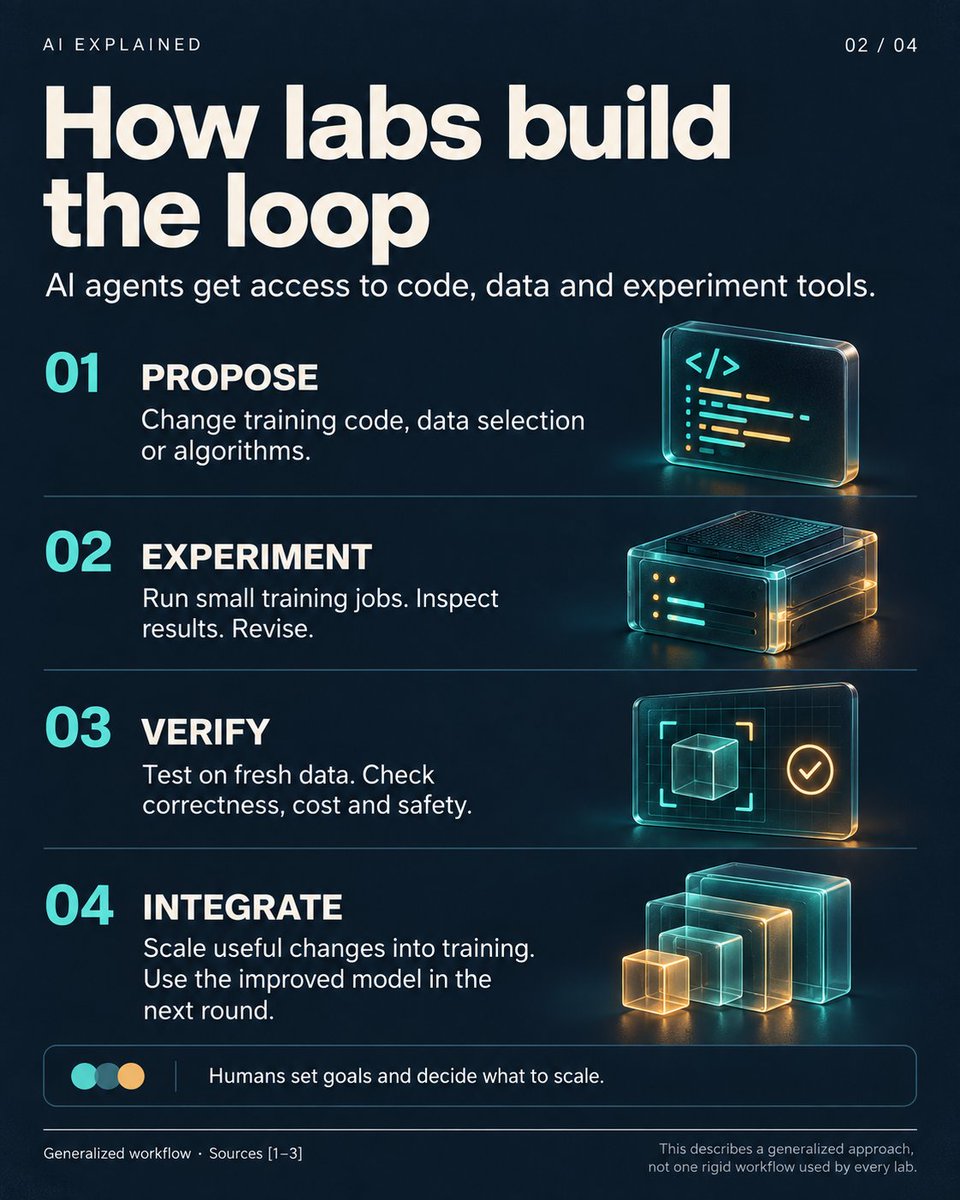
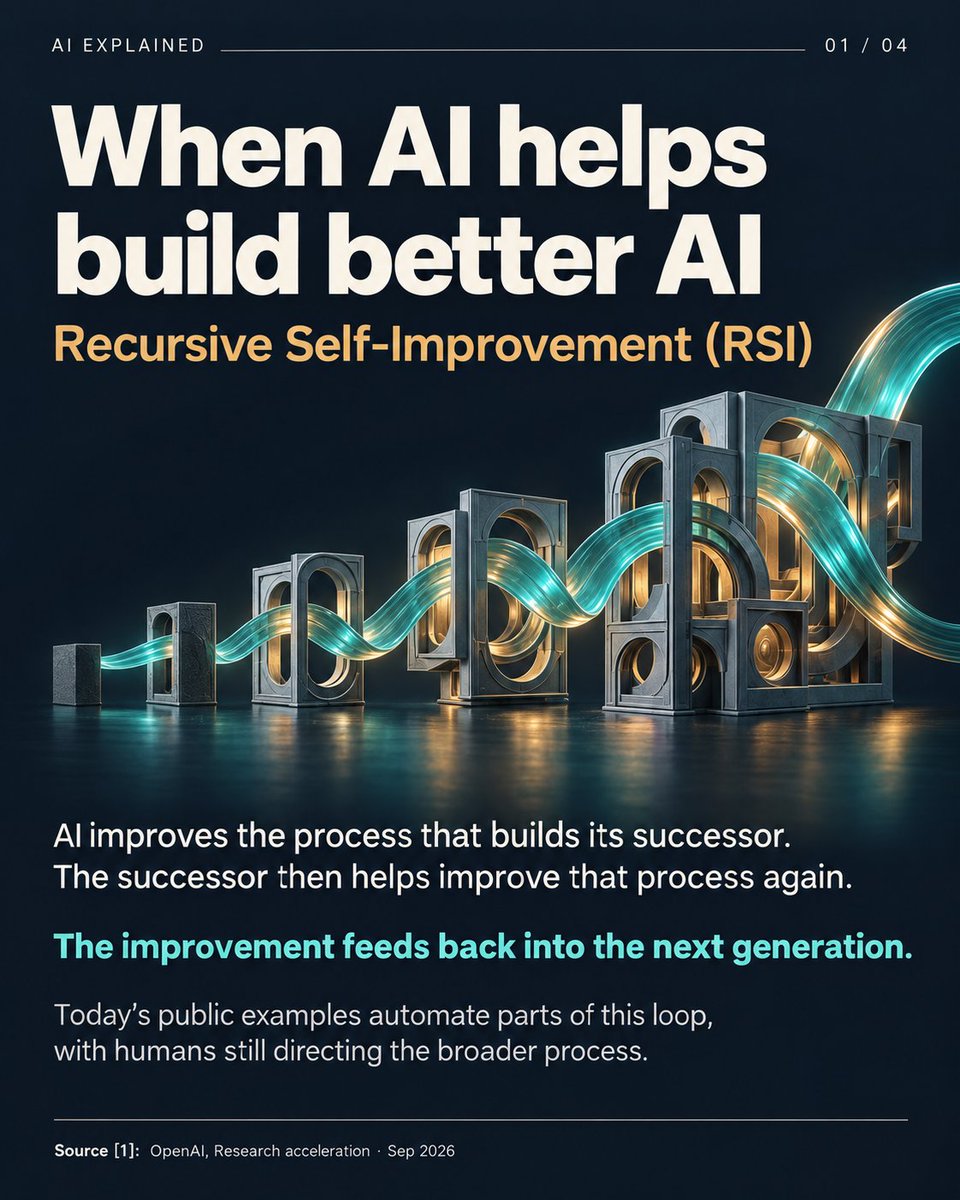
There are rumours that Google has achieved Recursive Self-Improvement (RSI). I won't be surprised if that is true; Google mentioned when releasing AlphaEvolve in 2025 that it had improved a Gemini training kernel by 23%. Plus, any RSI framework itself can be a v0.1 which improves further. Here is a summary of what RSI is, what the labs have shownabout where they are and why it matters.
Finally realized why it’s so exhausting and stressful to work with AI agents 8h a day.
When delegating a task, you want to be assured it’s off your plate and you can forget about it, knowing it will be done completely and correctly. AI doesn’t give you that: you need to check it’s doing the right thing, it’s not forgetting anything, not taking short cuts etc.
So it adds to your mental load, rather than removing from it.
I think Opus 5's writing clarity has improved. I noticed from my interaction with it in Claude Code yesterday and today that it writes easy to follow English instead of the usual technical jargon that many complained about. Has @claudeai made any changes quietly?
Fable 5 as a lead/advisor agent, a fleet of Opus 5 worker agents and Sol 5.6 for adversarial review (using the Codex plugin in Claude Code) - a great combo!
I like the creativity of Claude models and the thoroughness of Sol 5.6. Fable and Opus usually make a great plan, work on a decent implementation but are prone to skipping or overlooking some things in the implementation. Sol 5.6 usually catches those and Fable/Opus say "good catch by Codex". :-)
I asked both ChatGPT and Claude about the significance of the Navier-Stokes Millennium Prize Problem being solved and the practical implications. The difference between the two responses surprised me. It felt as if their respective models are aware of the bitter rivalry.
The most important announcement of the day has to be AlphaGemone Atlas by Google. OpenAI's solution to the Navier-Stokes problem is a remarkable achievement in mathematics but it changes little practically, at least in the short-term, because the Navier-Stokes equations are already widely used in Computational Fluid Dynamics (CFD) in application areas like aircraft design, wind turbine simulations, weather forecasting, etc.