Some great ideas here from the cartel:
- you need to give us employee-level access to your entire operation
- if we don't think you're 'safe' enough, sorry we're shutting you down for 'safety'
- China won't comply, but everyone else has to! or no chips!
Brilliant stuff.
I hope the proposals by frontier labs to pace AI research stem from a genuine concern for safety and a recognition of the potential risks posed by future models, rather than a strategic effort to consolidate power and permanently solidify the market dominance of a few top players.
If these efforts are genuine, then oversight must take a more democratic and accountable form, with both national and international components, similar to the Nuclear Regulatory Commission in the US and the International Atomic Energy Agency internationally.
If there is only one organization responsible for safety monitoring, and it happens to be staffed by the same people as the frontier labs, and it is perfectly aligned with them both by incentives and by ideology, then it would be indistinguishable from letting frontier labs self-regulate and self-certify their own safety standards.
Two potential warning signs of regulatory capture to watch out for:
1. Calls to ban open-source AI. Open-source development currently serves as the only real counterweight to the dominance of frontier labs.
2. Attempts to hinder non-frontier research. Models that are one or two generations behind the frontier -- whose level of capability has already been deployed at scale -- are empirically known not to pose safety risks.
As long as we don't see 1 & 2, and we see real international coordination efforts, then I will optimistically believe that the proposals are benevolent.
We Must Pace the Frontier: I’ve written a new essay on why the AI industry should slow down, with a three-part plan for doing so.
Anthropic is unilaterally committing to the first of these steps. We’ll provide third-party evaluators with permanent, employee-level access to our systems, so that they can verify adherence to our safety measures, report on incidents, and assess models’ alignment during training.
You can read the full post here: https://t.co/OGyPb7yaYt
Introducing Gemma - a family of lightweight, state-of-the-art open models for their class, built from the same research & technology used to create the Gemini models.
Blog post:
https://t.co/JEhKUsLzXI
Tech report:
https://t.co/MCzyojmDV4
This thread explores some of the performance characteristics of these models.
Thread: quick API overview of Gemma, the new open-source LLM by Google.
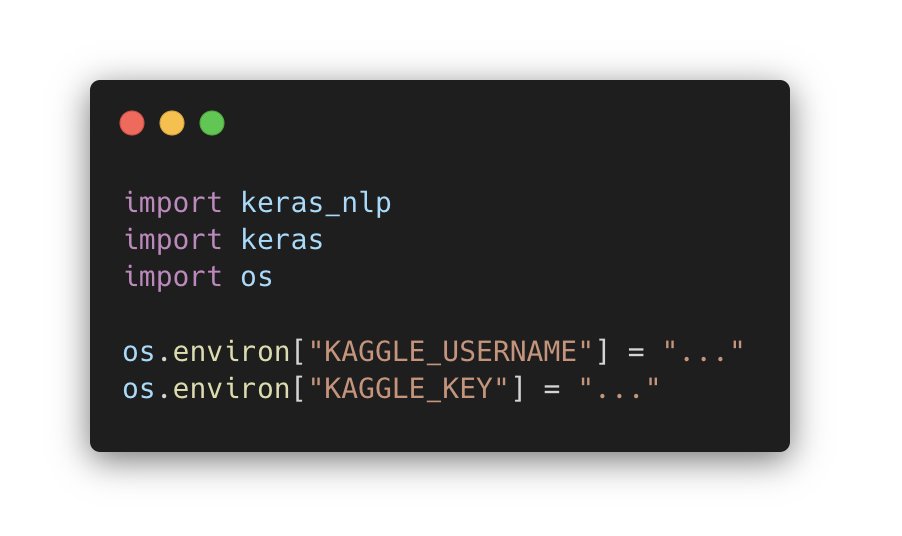
First, let's make sure you have the latest Keras and KerasNLP installed, and let's set up your Kaggle credentials, so you can download the assets from Kaggle.
Gemini is a line of 3 AI models -- the largest one (Ultra) scores better than GPT-4V across a wide range of text & multimodal benchmarks. It is also the first model to outperform human experts on MMLU.
The Pro version (smaller) is already available in Bard. Gemini Ultra will be available as an API early next year for developers and the enterprise market.
Announcement: https://t.co/VkeOJQYJJr
Technical report: https://t.co/9NOXvUu6tg
Gemini is a line of 3 AI models -- the largest one (Ultra) scores better than GPT-4V across a wide range of text & multimodal benchmarks. It is also the first model to outperform human experts on MMLU.
The Pro version (smaller) is already available in Bard. Gemini Ultra will be available as an API early next year for developers and the enterprise market.
Announcement: https://t.co/VkeOJQYJJr
Technical report: https://t.co/9NOXvUu6tg
Multiple sources said earlier this week that MLS and Apple have discussed offering Messi a share of the revenue generated by new subscribers to MLS Season Pass.
“The league has gotten very creative with all of this."
More details⤵️
https://t.co/0ExqcR8Tfn
SnapFusion: Text-to-Image Diffusion Model on Mobile Devices within Two Seconds
paper page: https://t.co/wpU2B0WTdc
present a generic approach that, for the first time, unlocks running text-to-image diffusion models on mobile devices in less than 2 seconds. We achieve so by introducing efficient network architecture and improving step distillation. Specifically, we propose an efficient UNet by identifying the redundancy of the original model and reducing the computation of the image decoder via data distillation. Further, we enhance the step distillation by exploring training strategies and introducing regularization from classifier-free guidance. Our extensive experiments on MS-COCO show that our model with 8 denoising steps achieves better FID and CLIP scores than Stable Diffusion v1.5 with 50 steps. Our work democratizes content creation by bringing powerful text-to-image diffusion models to the hands of users.