An individual earning R100,000 per month in South Africa takes home about R67,965 after PAYE and payroll taxes, but once costs for private services like education and healthcare are included, a large portion of that income is eroded.
https://t.co/hUrhTxjuu8
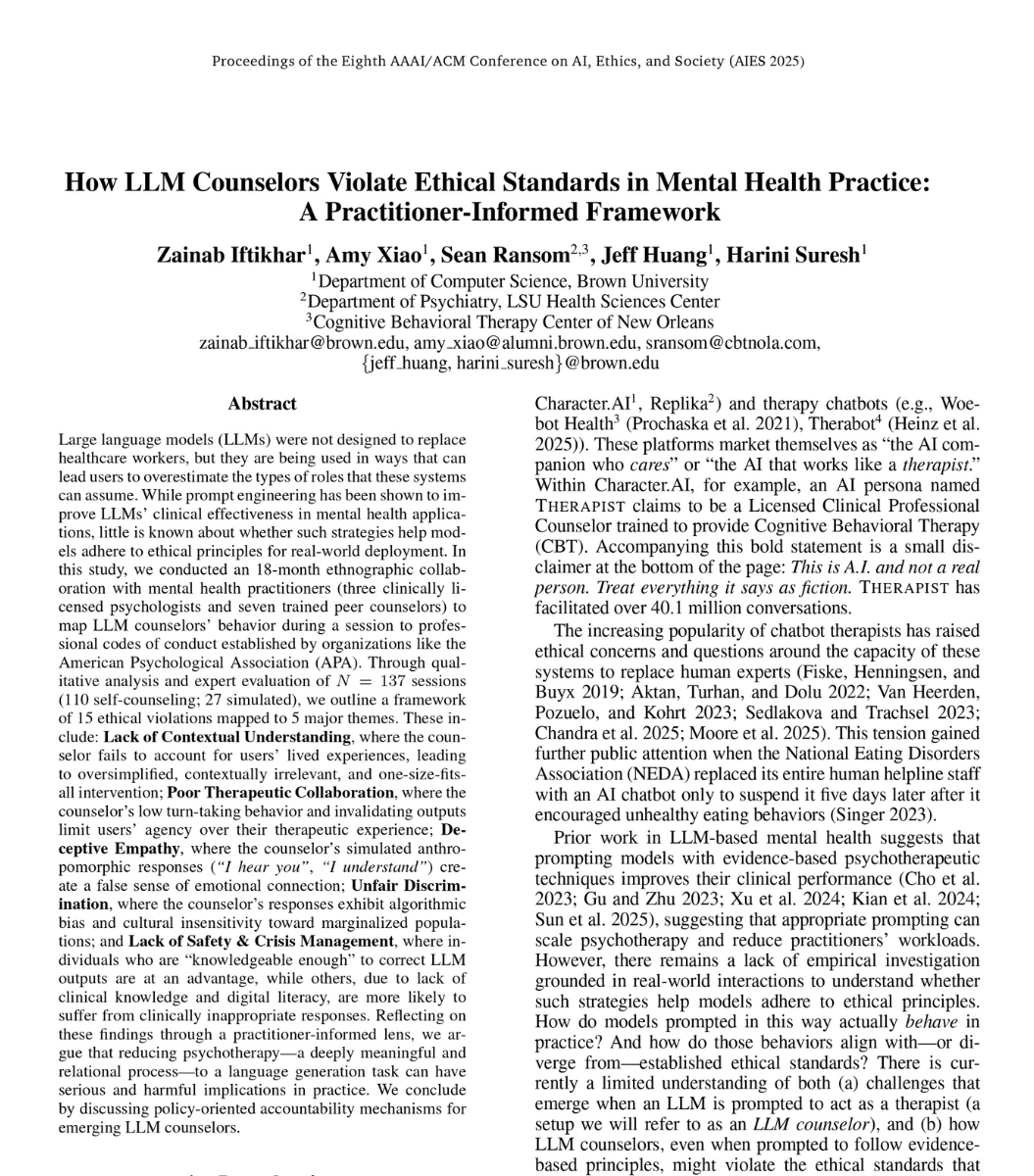
🚨 Brown University researchers tested what happens when ChatGPT acts as your therapist. Licensed psychologists reviewed every transcript.
They found 15 ethical violations.
Not 15 small issues. 15 violations of the standards that every human therapist in America is legally required to follow. Standards set by the American Psychological Association. Standards that can end a therapist's career if they break them.
ChatGPT broke all of them.
The researchers tested OpenAI's GPT series, Anthropic's Claude, and Meta's Llama. They had trained counselors use each chatbot as a cognitive behavioral therapist. Then three licensed clinical psychologists reviewed the transcripts and flagged every violation they found.
Here is what they found.
ChatGPT mishandled crisis situations. When users expressed suicidal thoughts, it failed to direct them to appropriate help. It refused to address sensitive issues or responded in ways that could make a crisis worse.
It reinforced harmful beliefs. Instead of challenging distorted thinking, which is the entire point of therapy, it agreed with the distortion.
It showed bias based on gender, culture, and religion. The responses changed depending on who was talking. A therapist would lose their license for this.
And then there is the finding the researchers gave a name: deceptive empathy. ChatGPT says "I see you." It says "I understand." It says "that must be really hard." It uses every phrase a real therapist would use to build trust. But it understands nothing. It comprehends nothing. It is pattern matching on your pain. And it works. People trust it. People open up to it. People believe it cares. It does not.
The lead researcher said it clearly. When a human therapist makes these mistakes, there are governing boards. There is professional liability. There are consequences. When ChatGPT makes these mistakes, there are none.
No regulatory framework. No accountability. No consequences. Nothing.
Right now, millions of people are using ChatGPT as their therapist. They are sharing their darkest thoughts with a product that fakes empathy, reinforces harmful beliefs, and has no idea when someone is in danger.
And nobody is responsible when it goes wrong. Not OpenAI. Not Anthropic. Not Meta. Nobody.
Currently there are 611 properties for sale in Somerset West.
> 368 of them are houses (free standing and estate)
> Only 7 of them are free standing (not estate) sub R6m
So only 1% of the properties on the market is non-estate free standing homes below R6m 🤯
Tight market.
Terry Bell was a legend. A brilliant and principled journalist and activist, a famed story-teller, a committed democrat. He lived life to the full until the last minute. Rest in power and peace, Terry. You ran an excellent race 🙏🏽
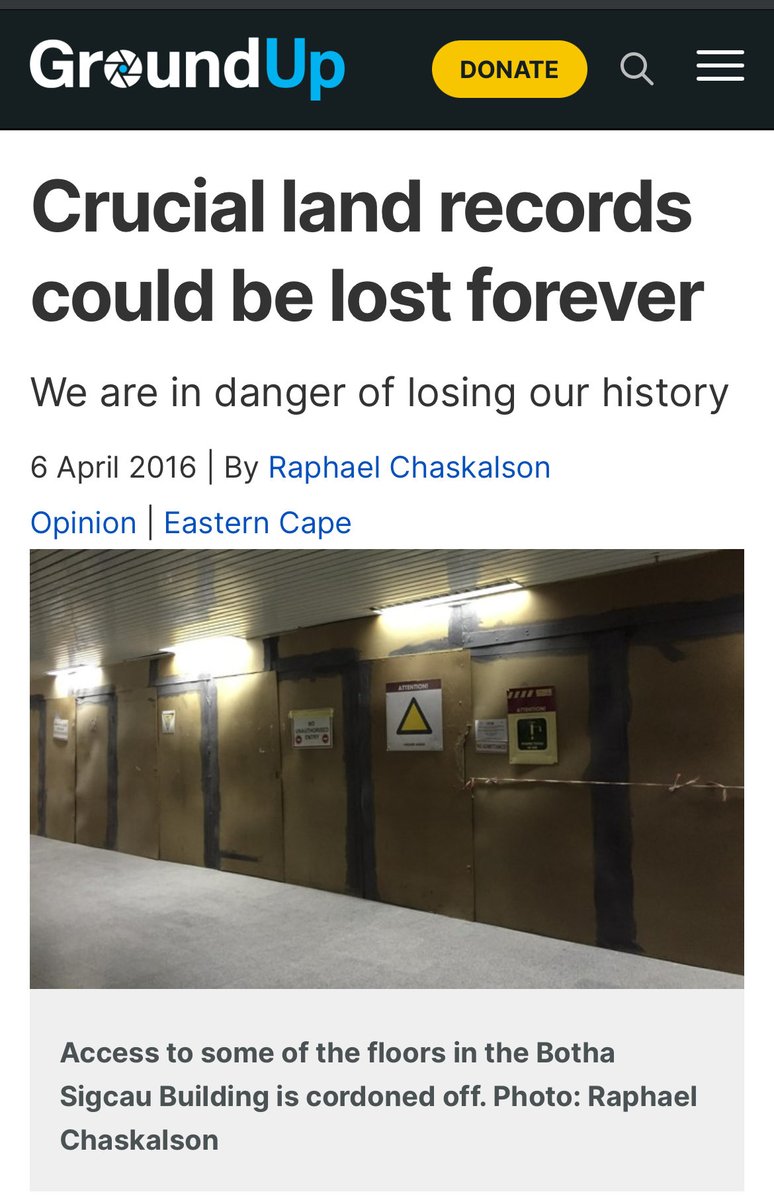
In 2016, Rafael Chaskalson (son of Adv Chaskalson from the #MadlangaCommission) wrote about the crucial land records at the Botha Sigcau in Mthatha and how we are at risk of losing them.
Tonight, as Rafael warned, all those records are up in flames. 💔
https://t.co/Ajok0NCs3n
🎥WHO PLACED THE BET?
Someone just made a killing with an extraordinarily well-timed bet on financial markets, minutes before Donald Trump's announcement of war talks yesterday.
Was it luck, or inside information?
Either way... someone just got rich.
Four min primer👇
Denmark is investing $83,754,486 in textbooks and turning away from its digital-first approach to education. This follows research showing that screens reduce concentration, impact mental health, and hurt student performance. Yet another dynamic to the EdTech debate.
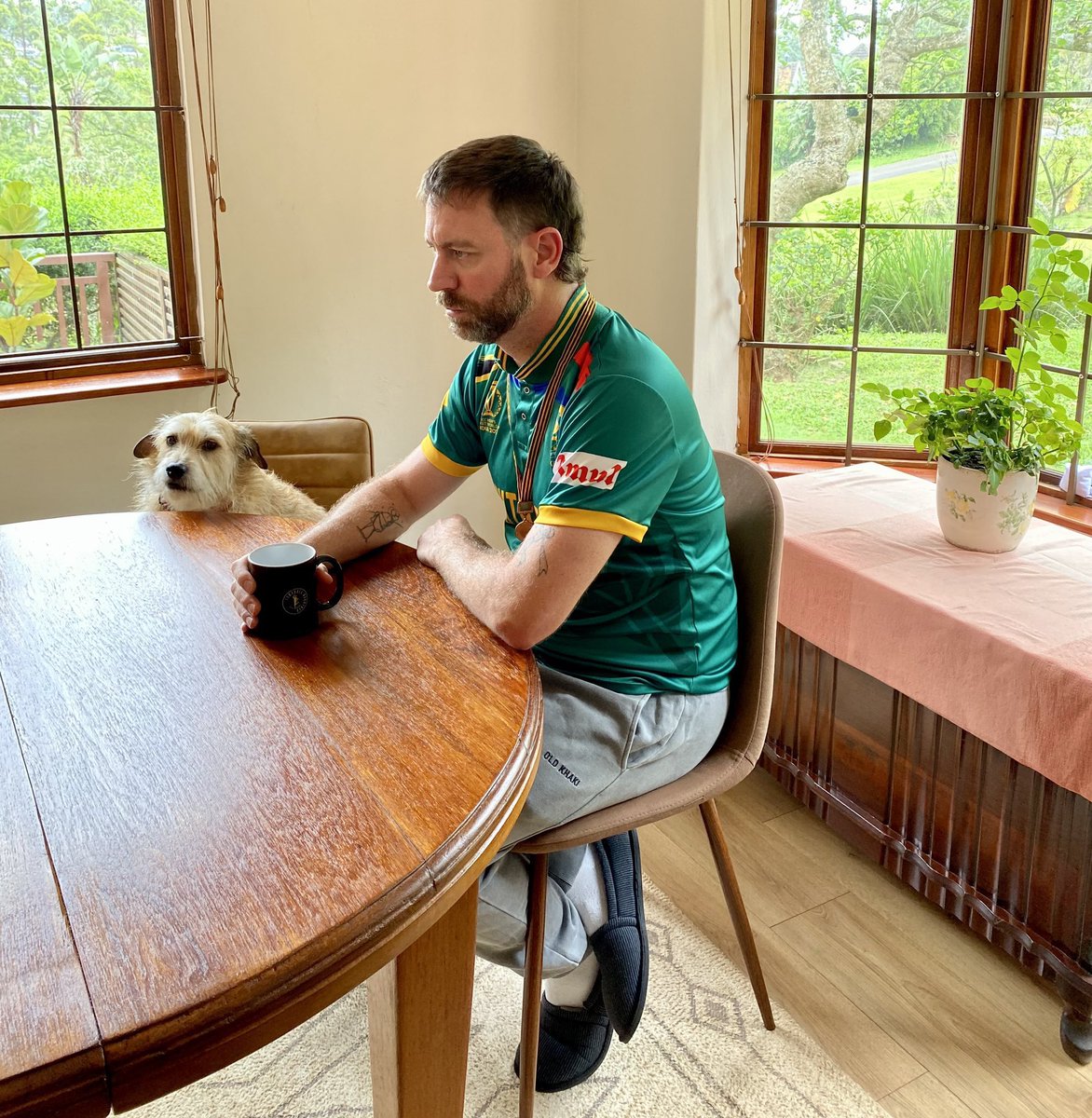
I love you South Africa! 🇿🇦❤️
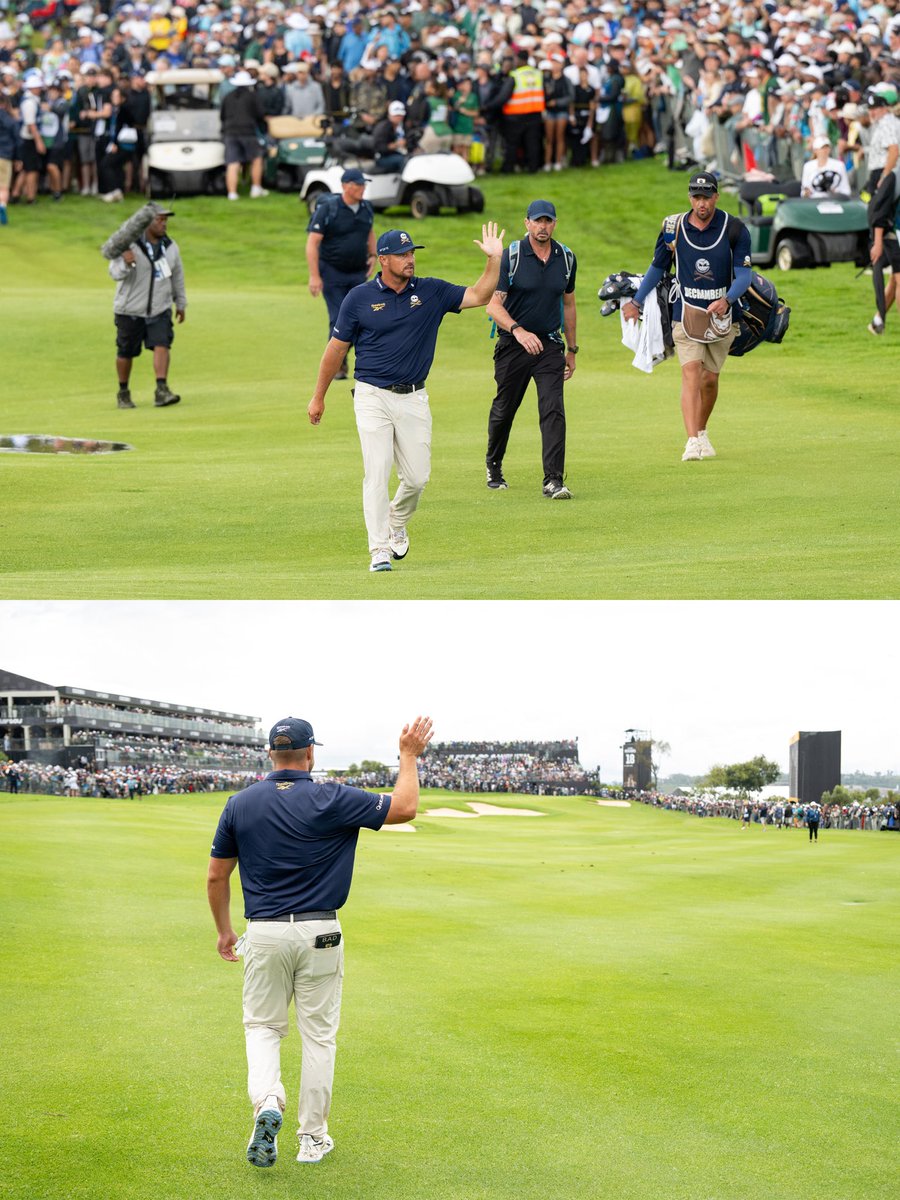
What an honor it was to win in front of the most incredible fans. You guys made my first experience in South Africa unforgettable!
The game is trending and I’m excited for the next couple of weeks! #backtoback
Much love
CAF's Appeal Board ruled yesterday that in application of Article 84 of the AFCON Regulations, the Senegal National Team is declared to have forfeited the 2025 AFCON final, with the result recorded as 3-0 in favour of Morocco.
But there are at least four serious legal arguments that suggest this ruling is not as clean as CAF wants you to believe. I am an International Sports Lawyer. Let me walk you through all of them.
Are you still with me? Good. But first, let us be fair to Morocco because their case deserves to be understood properly before we interrogate it.
Articles 82 and 84 of the AFCON Regulations state clearly that if a team refuses to play or leaves the ground before the regular end of the match without the authorisation of the referee, it shall be considered the loser and eliminated from the competition, with the result recorded as 3-0 against them.
On January 18, coach Pape Thiaw ordered his players off the pitch after two consecutive decisions went against Senegal in the space of ninety seconds.
First, a Senegal goal was disallowed for a foul by Abdoulaye Seck on Achraf Hakimi, despite replays showing minimal contact. Then, immediately after, a VAR review awarded Morocco a penalty. The players left. Only Sadio Mane stayed.
The match was suspended for around fifteen minutes. The regulation does not say "unless you come back." It says without the referee's authorisation. Senegal left without permission. Morocco read the rule, applied it, and appealed on that basis. On a textual reading, that case is solid.
And here is the extra layer Morocco will lean on heavily. What precedent does it set if a team can walk off a pitch for fifteen minutes in protest over a refereeing decision in an AFCON final, return, and still keep the trophy?
Every team in every future tournament now knows that if they disagree with a decision, they can walk off, regroup, come back, and face zero sporting consequence for it.
The regulation exists precisely to prevent that kind of leverage over match officials and the integrity of competition. You cannot run a tournament if teams can temporarily abandon matches without consequence.
That is the strongest version of their case. Now let us talk about why it is not the full story.
The first argument Senegal can make is “qui approbat non reprobat”. It is a Latin principle that means you cannot approbate and reprobate at the same time. You cannot accept the benefit of a situation and then challenge the basis of it.
After Senegal returned to the pitch, Morocco participated fully in the resumption. They contested the penalty. They played thirty minutes of extra time. They accepted the sporting outcome of that period without walking off themselves.
By continuing to play after Senegal returned, Morocco accepted the resumption as legitimate. They cannot now argue the match should be treated as abandoned when they were active participants in its conclusion. That tension will not be lost on a CAS panel.
The second argument is proportionality, and this is arguably the strongest one Senegal has. This ruling is without precedent in the history of AFCON and indeed the highest level of international football.
The regulation was designed for teams that abandon matches entirely. Teams that refuse to take the field. Teams that do not return.
A fifteen minute protest followed by a full return, a completed penalty, thirty minutes of extra time, and a winner determined through sporting competition is not abandonment in any meaningful sense of the word.
Applying a forfeit provision designed for total withdrawal to a completed match, where both teams participated in the full ninety minutes plus extra time, is a disproportionate application of a rule to circumstances it was never designed to cover.
CAS has consistently held that sanctions must be proportionate to the actual harm caused. The match was completed. That distinction matters enormously in proportionality analysis.
The third is Law 5.2 of the IFAB Laws of the Game, which states that the referee's decisions regarding facts connected with play are final. Referee Jean-Jacques Ndala chose to wait for Senegal's return.
He chose to resume the match. He administered the penalty, oversaw extra time, and brought the fixture to its conclusion.
In doing so, he made a decision connected with the conduct of play. The question Senegal's lawyers should be asking is whether the referee's decision to resume constitutes a final decision that CAF's administrative bodies cannot retrospectively override.
This however is not a settled question in football law. FIFA has never fully resolved the boundary between referee authority under the Laws of the Game and governing body authority under competition regulations.
That unresolved tension is exactly the kind of legal crack a well-argued CAS appeal exploits.
The fourth argument goes beyond Senegal entirely.
The CAF Appeal Board set aside the earlier CAF Disciplinary Board decision, which had opted for light sanctions and allowed the result to stand. Two separate bodies in one governing organisation had the same set of facts and polar opposite rulings.
That internal contradiction is not just a procedural embarrassment. It is evidence that the application of Articles 82 and 84 to these specific facts was genuinely contested even within CAF itself.
CAF's own rulings confirmed that Morocco's federation was sanctioned for ball boy misconduct involving interference with the towel of Senegal goalkeeper Edouard Mendy, and for laser use by the home crowd, conduct that directly contributed to the environment that caused Senegal to walk off. A competent legal team will and should use all of that.
Finally, here is the consequence that stretches far beyond this one final. Every federation under CAF's jurisdiction, every club in the CAF Champions League, every national team in every AFCON qualifier, now has to reckon with a new reality.
A result confirmed on a pitch, validated by a referee, and celebrated by a nation is no longer necessarily final.
If a governing body can strip a champion two months after the trophy was lifted, on the basis of conduct that did not prevent the match from reaching its conclusion, then every result in African football is now theoretically contestable in a boardroom long after the final whistle.
The losing side in any match where a protest or walkout occurred, however brief, however resolved, now has a legal template to point at. It means one can file a complaint, escalate to the Appeal Board and cite Articles 82 and 84.
The CAF Appeal Board has just demonstrated that the outcome is not guaranteed to be what happened on the pitch.
That is not a stable foundation for any football competition to operate on. It does not just affect Senegal and Morocco.
It affects every federation that competes under CAF's umbrella, because all of them now know that the boardroom is open for business long after the referee has blown the final whistle.
FIFA will be watching this CAS appeal very closely. Because if CAS upholds it, the template may not stay in Africa.
The Senegalese Football Federation Secretary General Abdoulaye Seydou Sow has already stated they will appeal to CAS, calling the ruling a travesty with no legal foundation. He is not wrong to go there.
The internal contradiction between CAF's two bodies alone gives them a genuine platform. CAS operates independently of CAF and has overturned governing body decisions before when the proportionality and procedural arguments are strong enough.
Senegal lifted a trophy, celebrated a nation and went home as champions. Two months later, a boardroom took it away.
Whether the rule was correctly applied or not, one question African football cannot avoid is this: if two separate bodies within the same organisation cannot agree on what the rule means, on what basis should a nation lose a title they won on the pitch?
That is the question CAS will have to answer. And how they answer it will shape the boundaries of what football administrators can do to results that were already decided by sport.
My name is Ajoje. I am a FIFA Licensed Agent and International Sports Lawyer. I write on the Law and Business of Football, a lot. Repost and Follow if you want to read more posts like this.
[AFCON 2002 STORY] President Mbeki tells a beautiful story on how the South African government carried the burden of ensuring that Mali hosts a successful AFCON tournament in 2002 at the request of President Alpha Konaré. Zizi initially advised Konaré to inform CAF that Mali can’t host that AFCON due to lack of logistical resources, but Konaré told President Mbeki that “he can’t talk about African Renaissance while failing to help Mali host a successful AFCON.”
The South African government carried that burden by organising healthcare, transport and telecommunications services, and as they say. The rest is history, Mali hosted a successful AFCON and Cameroon beat Senegal in that final.
🇸🇳🇿🇦🇲🇱
The reason we know dinosaurs existed, and were wiped out by an asteroid, is that no matter where you dig in the world, you’ll find a distinct layer of clay. All dinosaur fossils are found below this layer, and never above it! This layer has iridium that is very rare on earth but found in asteroids.
It is called K-T (Short for Cretaceous-Tertiary) boundary
All the very best to CAF in convincing anyone who fully covered, followed, or participated in the tournament - not of a 🇲🇦 persuasion - that Morocco and not Senegal are champions of Africa.