Yok Edilen Türklük; Mora Türkleri
19. yüzyıl başında 90 bin Türk'ün yaşadığı Mora'da Türk nüfusunun orantısal yoğunluğu.
Doç.Dr. Metin Menekşe’nin araştırmaları Mora, Eğriboz ve ve Rumeli'nin Yunanistan'da kalan bölgelerinden İsyan sonrasında hayatta kalan Müslümanların sayısının ilk Osmanlı nüfus sayımına göre 14.836 olduğunu göstemektedir (Mora Katliamı ve Anadolu’da Yunan Mezalimi Sempozyumu (15–16 Kasım 2021) – Bildiriler Kitabı = Morean Massacre and Greek Atrocities in Anatolia Symposium (15 16 November 2021) – Proceedings Book, haz. Birkan Soykan – Uğur Cenk Deniz İmamoğlu, ed. Neşe Özden, Türk Tarih Kurumu Yayınları, Ankara 2024. sf. 241).
Eğer 1831'de 14.836 Mora muhacirinin hayatta olduğu biliniyorsa, 90 bin - 14.836 (hayatta kalabilmek için mürted olanlar da hesaba katıldığında) hesabıyla 70–75 bin Türk'ün yok edildiği, yani Türk nüfusunun %80'den fazlasının soykırıma uğradığı tahmin edilebilir.
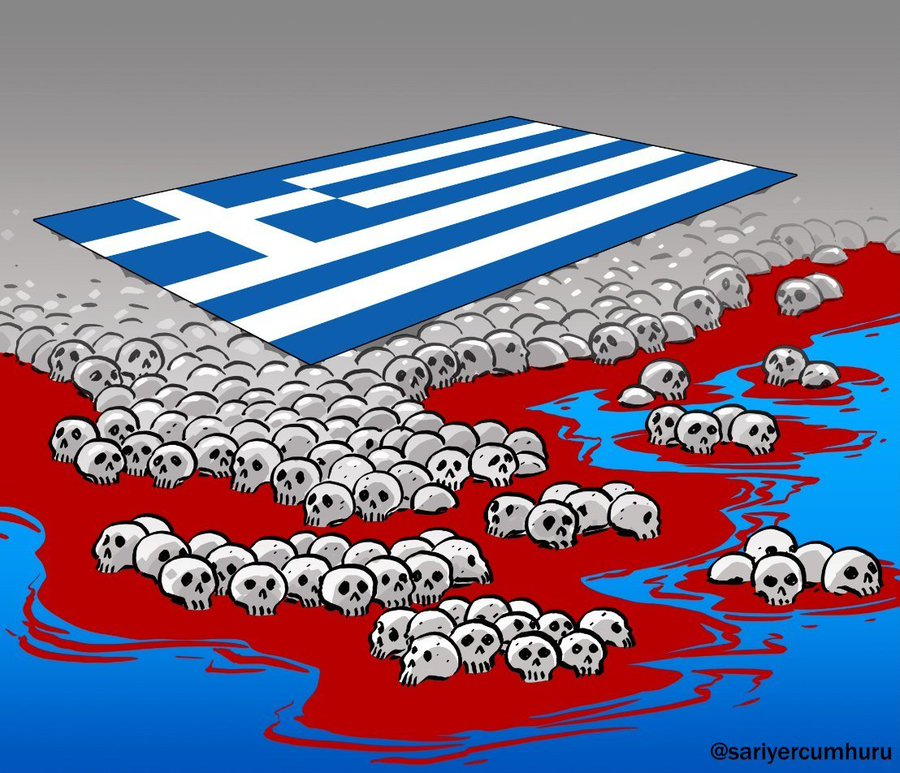
THE FORGOTTEN GENOCIDE: HOW THE "GREEK REVOLUTION" ERASED AN ENTIRE PEOPLE
The slogan was explicit: "Not a single Turk must remain in the Morea." Genocide...
23 September 1821, Tripolitsa. The date is remembered in Greece as part of a "liberation". The surviving records tell a far darker story.
Historian S.R. Sonyel, drawing on British archives, records that around 50,000 Turkish lived in the Peloponnese in March 1821. By the time Greeks celebrated Easter a month later, the Turkish population had been almost entirely wiped out.
The slogan was explicit: "Not a single Turk must remain in the Morea."
This was not confined to Tripolitsa.
Historian Stanford Shaw highlights that the massacres were not limited to Tripolitsa.
From Kalavryta and Patras to Navarino, Corinth, Athens and Kalamata, Muslim communities were attacked, expelled or massacred.
Villages were burned, refugees were intercepted on the roads, and those who surrendered after being promised safety were often killed anyway.
British historian William St Clair records that more than 20,000 Turkish men, women and children were deliberately killed within weeks.
Families living on isolated farms were slaughtered and their homes burned over their bodies. In some towns, starving Muslims surrendered after receiving promises of protection.
The men were killed, while women and children were enslaved and later killed.
Then came Tripolitsa.
After the city fell, a three-day massacre followed. St Clair records that more than 10,000 Turks were killed between Friday and Sunday.
Prisoners were tortured, mutilated and burned. Pregnant women were murdered. Children and the elderly were not spared. The Jewish community was also systematically attacked. Contemporary European observers witnessed the carnage.
The scale of the slaughter shocked even some European philhellenes who had come to support the "Greek cause". German doctor Wilhelm Boldemann, horrified by what he witnessed, is reported in contemporary accounts to have taken his own life by poisoning himself.
The destruction went beyond human lives.
Turkish property was seized, charitable foundations were plundered, mosques were desecrated and destroyed, cemeteries were violated, and the physical traces of a centuries-old Muslim presence were systematically erased.
Sonyel argues that the massacres bore the essential characteristics of genocide: intent, systematic extermination, the destruction of entire communities and the obliteration of their cultural presence.
Other scholarship has likewise described aspects of the destruction of the Morean Turks as genocide.
And the evidence did not come only from Turkish sources. St Clair's account describes the Turks of Greece as disappearing "suddenly and finally" in the spring of 1821, while European observers later found it difficult to believe that large Turkish communities had once lived throughout the Peloponnese.
This is the part of the "Greek Revolution" that the heroic liberation narrative leaves out.
A people who had lived across the Peloponnese for generations was destroyed, its property confiscated and its cultural traces erased.
23 September should be remembered as the day Tripolitsa became a symbol of the destruction of an entire community.
1821-1830 yılları arasında Mora Yarımadasında Müslüman Türk ahali sistematik olarak katledilmiştir.
Bu imha politikasına, ibadet yerlerinden medreselere, mezarlıklardan diğer kültürel miras unsurlarına kadar uzanan planlı bir yıkım ve tahribat da eşlik etmiştir.
Tripoliçe katliamının 205. yıldönümünde, acımasızca katledilen Müslüman Türk sivil halkı rahmetle anıyoruz.
Yozgat’tan bildiriyorum çarşıdayım kimsenin bu fonlardan hiç bişeyden haberi yok.Çok rahat çok relaks. Herkes kışlık menemen, turşu, kurtmalık biber hazırlıyor.🤦♂️
Türkler,
Yunanistan'ı 363 yıl
Gürcistan'ı 403 yıl
Ermenistan'ı 377 yıl yönetti.
kürtlerin zaten devleti yoktu.
Sizin DNA testi yaptırdıktan sonra Türk çıkma oranınız daha yüksek 😂