In the shadow of two world wars and the failures of traditional Marxism, a new leftist intellectual movement took shape in France and quickly spread across the Western academy.
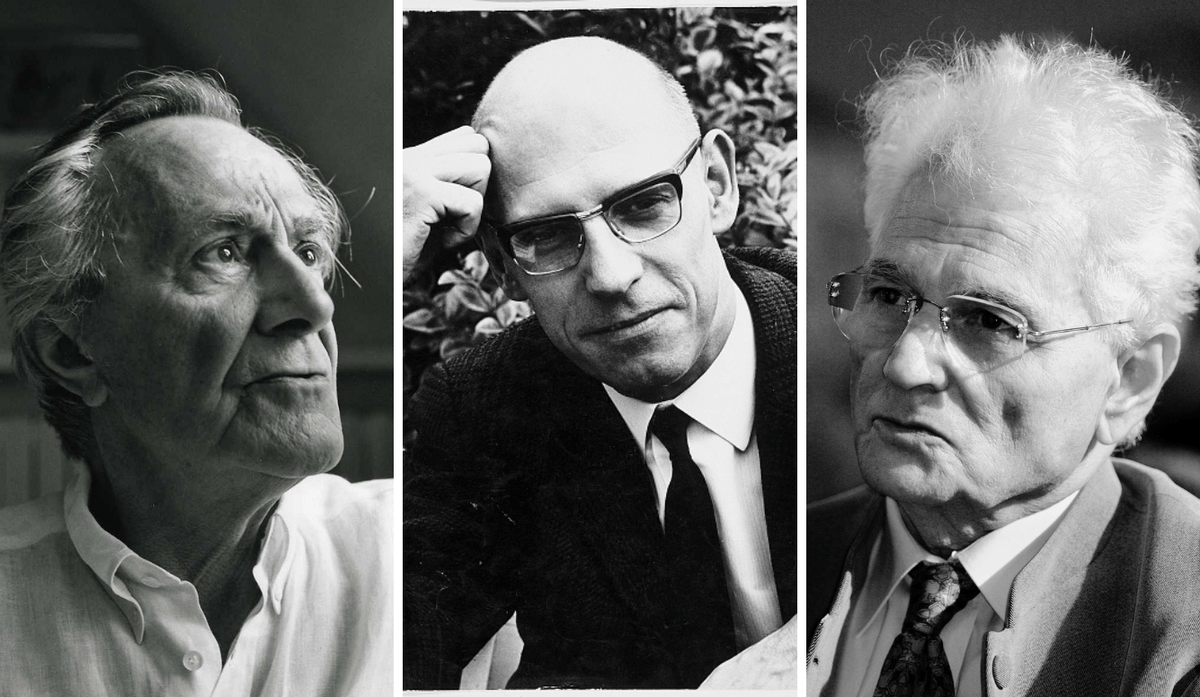
Postmodernism emerged as thinkers like Michel Foucault, Jacques Derrida, and Jean-François Lyotard pushed beyond the limits of classical Marxist analysis. Where Marx and the Frankfurt School still believed in underlying structures (economic base determining cultural superstructure, historical dialectics, systemic power relations) the postmodernists - also known as post-structuralists - rejected the very idea of stable foundations.
They argued that truth, morality, institutions, language and even human nature itself are not grounded in any objective or natural order. Everything is a social construct, a “discourse” or a product of shifting power relations. There are no grand narratives. No universal truths. No fixed principles that society must respect.
This was a profoundly new way of thinking. Society could now be endlessly deconstructed and reconstructed according to political will. Nothing was inevitable or sacred. Everything was open to reinterpretation and transformation.
The political consequences have been immense. If no structures are necessary, then long-standing institutions - the family, nation, gender, merit, and Western cultural inheritance - become arbitrary and legitimate targets for radical change. This mindset has deeply shaped modern identity politics, left-wing academia, and the belief that society can be remade according to progressive ideals with little regard for tradition, human nature or empirical outcomes.
Post-structuralism did not just criticise power. It made power the only reality: “truth” is determined by consensus, and consensus is used to exert power. The result is a culture increasingly comfortable with tearing down institutions in the name of “social justice”, often with little thought for what might replace them.
🚨 BREAKING: PUTIN SMASHES THE ROTHSCHILD FINANCIAL CABAL: “Our Future Generations Will Be Born Without Rothschild Chains Around Their Wrists And Ankles.” A HISTORIC STRIKE AGAINST THE GLOBALIST FINANCIAL EMPIRE
🚨 BOOM! Putin breaks the Rothschild chains! Russia becomes the first nation to expel the global banking cartel, defying the New World Order and reclaiming sovereignty. Discover the explosive details of how Putin crushed the elite’s financial stranglehold. This is a revolution in the making—don’t miss it!
FOLLOW ME, THE NEXT DROP WILL BE SHOCKING
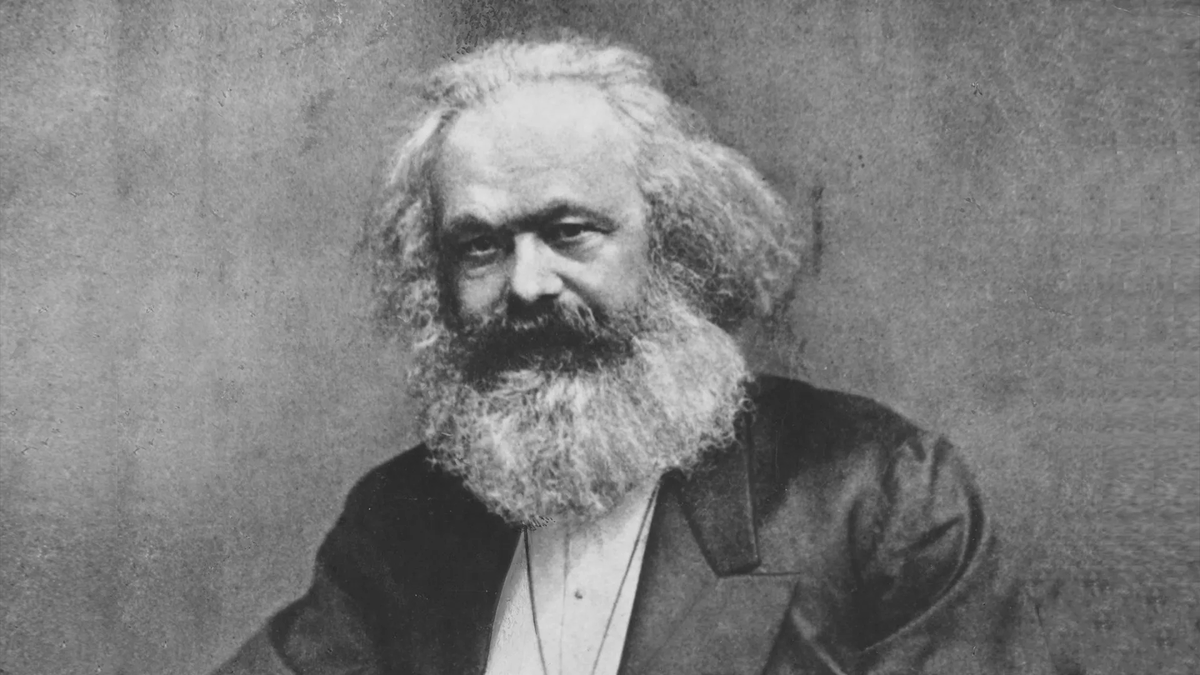
Karl Marx spent his life denouncing capitalism, private property and bourgeois "exploitation" - while living as a dependent of a capitalist and treating those around him with casual contempt.
Despite railing against the bourgeoisie, Marx never held a steady job and relied almost entirely on financial support from Friedrich Engels, whose wealth came from his family’s textile mills in Manchester. Marx lived in London with his aristocratic wife Jenny, employed a live-in maid and maintained the pretensions of a middle-class intellectual even as his family sank into debt and squalor.
Most telling was his treatment of Helene Demuth, the family’s long-serving maid. Marx fathered an illegitimate son with her in 1851. The child, Frederick Demuth, was quietly handed over to Engels to raise as his own, while Marx continued to present himself as a champion of the working class. Several of Marx’s legitimate children died young in conditions of poverty and neglect, even as he worked on Das Kapital in the reading room of the British Museum.
Marx’s theories demanded the abolition of private property and the creation of a classless society, but he showed little interest in applying those principles to his own life. He lived off the profits of capitalist enterprise, exploited domestic labour, concealed his own sexual misconduct and left his family in financial ruin.
It is, of course, a pattern common among revolutionary intellectuals: the willingness to impose radical equality on others while exempting themselves from its consequences.