Steve Kerr says Roger Federer taught his Warriors team the secret to sustained success wasn’t outworking everyone, it was building a life around your craft you never want to escape from
“I’ll tell you a great story about Roger Federer. We were playing in China with the Warriors in 2017. Roger was in Shanghai for the Masters tournament, so we invited him to come speak to the team.”
“Draymond Green asked him, ‘How do you sustain success? How have you managed to win majors 20 years after you first won one?’ Everyone was expecting him to say, ‘I work harder than everybody,’ the will, all the clichés.”
“Roger Federer says, ‘I get up every morning and I make breakfast for my kids. Then I take them to school and drop them off. Then I go practice tennis for about two hours, and I’ve figured out a really good routine where I don’t destroy my body, but I can get all the work in I need.”
“‘Then I go have lunch with my wife. In the evening, we cook dinner together. The kids are all home from school. We ask them about school. There’s so much joy in the house. We put them to bed, and then I put my head on the pillow and go, “Man, that was just a great day.” And I’ve been doing that for 20 years.’”
“And it was like, yes. That’s it. That’s the formula. That’s what leads to sustained success. He loves tennis. He loves his family. He loves life. It’s not outworking everybody and banging your head against the wall, ‘I’m going to be better than everybody.’ It’s allowing your natural talent to shine through with a work ethic, with a great family life, with perspective, with peace, with mindfulness.”
“It’s perspective. It’s joy. It’s passion. It’s mindfulness. It’s an awareness that we are truly lucky. To get the most out of ourselves, it’s our daily rituals and experiences and love and joy.”
Important life lessons I wish I knew years ago:
1 lost money can be found, lost time is lost forever - protect what matters most
2 to learn, unlearn, relearn and then change yourself is a superpower
3 you are not your job
4 networking is about giving
5 the best teacher is your last mistake
6 good manners is as important as good education
7 do not take your good health for granted
8 be a better friend and value relationships
9 if you are waiting for a title to lead, you are not ready to lead
10 a work sponsor is more important than a mentor
11 a good story is data with a soul
12 stop worrying about what others think of you
13 if you want an easier life, work on harder problems
14 best teachers are life long students
15 imposter syndrome is real, and a good thing
16 fight against a sense of entitlement
17 half the battle is showing up
18 love and cherish your parents by giving them your time
19 success is not accidental
20 the best views are there for those who love the climb
21 lucky people work harder
22 takers may end up with more, but givers sleep better at night
23 memorizing is not learning
24 it is okay to look back, just don’t stare
25 knowing is not acting - I can > IQ
26 straight roads do not make great drivers
27 good listeners hear the unsaid (listen with your eyes)
28 be the person that you want to follow
29 do not limit your contribution to a job description
30 take care of your parents - the best gift that you can give yourself
31 customer service is not a department
32 in the long run, the optimists create the future
33 never ruin an apology with excuses
34 salary is for expenses. equity is wealth - do not rent your time
35 do not take a caring boss, joyful work or steady income for granted
36 as you get older, you love your parents more
37 challenge assumptions, starting with your own
38 we learn more from disagreements
39 best gift you can give yourself is quality time with parents
40 the older you get the less you care about what others think of you
41 be a good person but do not waste time trying to prove it
42 be comfortable with saying ‘I don’t know’ - there are no experts of tomorrow
43 being self-aware is a key to learning and growth; know yourself
44 first, invest in yourself, then help others win
45 if the answer is no, do not say maybe or yes
46 Don’t just translate, write something new and original; write for yourself - writing improves your thinking
47 It’s more important to do the right thing than to win an argument
48 do not buy your children what you never had, teach them what you never knew
49 begin with the end in mind
50 to make progress on your to-do list, you must also keep a to-don’t list
51 leave everything and everyone better than you found them
52 be kind and polite to everyone
53 Here’s how luck finds you:
—Work harder than expected
—Stay teachable
—Give without expecting a get
—Read and write more
—Show up on time
—Focus on your customers
—Develop good manners
—Be humble
—Be kind and generous
—Surround yourself with smarter people
54 bosses we remember:
—provided us a safe space to grow
—opened career doors
—defended us when we needed it
—recognized and rewarded us
—developed us as leaders
—inspired us to stretch higher
—led by example
—told us our work mattered
—forgave us when we made mistakes
55 The older you get, the more quiet you become. Life humbles you so deeply as you age. You realize how much nonsense you’ve wasted time on.
56 Hire based on high rate of learning and good judgment
57 straight lines do not make great drivers
58 stand in the middle of the road for too long and you may get hit from both sides -be decisive
59 if you do not know the answer, it is okay to say 'I don't know, but I will find out'
60 do not follow or admire mean people - be the person that you would want to follow
61 decisions you made 5-10 years ago shaped where you are today; decisions you make now will shape where you’ll be in 5-10 years
⚠️ Shadow agents are the next blind spot after shadow IT.
🔹 Unknown identities
🔹 No discovery or inventory
🔹 GDPR/NIS2/DORA gaps
🔐 Takeaway: govern every agent. How are CISOs finding yours?
Do not use your energy to worry. Life is too short to worry about stupid things.
Have fun. Fall in love. Regret nothing and do not let people bring you down.
Study, think, create and grow. Teach yourself and teach others.
—Professor Richard Feynman
The bosses we remember:
1 told us our work mattered
2 opened career doors
3 defended us when we needed it
4 recognized and rewarded us
5 developed us as leaders
6 inspired us to stretch higher
7 led by example
8 provided us a safe space to grow
9 forgave us when we made mistakes
10 appreciated high rate of learning
12 were player coaches - skin in the game
13 apologized when they made mistakes
14 sponsored our work (career pathing)
15 led us by questions not answers (taught us how to think, not what to think)
16 in a celebration led from the back, in a crisis led from the front, in the presence of a better plan, followed side-to-side
17 asked for feedback
18 allowed the best ideas to win, not the best titles
19 showed up on time, left when it made sense to leave
20 did not speak poorly behind others back
Einstein's birthday, and Pi Day today. Because March 14 is written as 3.14 in the US, the first 3 numbers in the irrational number Pi.
And what could be more irrational than thinking that, exactly 25 years ago, two batters could last through the whole day and lead India to one of the greatest ever test victories against the Australian juggernaut.
March 14th, Einstein Day, Pi Day, & Dravid and Laxman Day!
How to set up the Claude completely in just 1 day:
(Save this. Send it to your team. Thank me later.)
Tool 1: Cowork
Download Claude (claude .com/download).
Open the Cowork tab.
Select a folder from your computer.
Now build your brain file. Create "about-me .md."
To download mine, go here: https://t.co/psB7XxAv8w.
Don't pay anything. It's free in the welcome email.
Then, start every chat with this prompt:
"Read the files first. Then ask me questions before doing anything."
Tool 2: Model
Pick Opus 4.6 (it's the best model right now).
Turn on Extended Thinking.
Most skip this & wonder why Claude feels generic.
Then go to Settings > Connectors.
Link Slack, Google Drive, Notion.
Claude now reads your actual workspace.
Tool 3: Excel
Open Excel. Go to Insert > Get Add-ins.
Search "Claude by Anthropic." Install.
Open any spreadsheet. Ask: "Give me a summary of each tab." Claude lives inside the spreadsheet. It knows what D14 actually contains.
Tool 4: Plugins
Go to claude .com/plugins.
Pick the one as per your job.
Marketing. Sales. Legal. Finance. Data.
Click install. Type / in your next chat.
Legal software companies lost $285B in market cap when these dropped. That's a signal.
Tool 5: Artifacts
Nothing to install. Ask Claude to build something.
"Create an interactive HTML calculator for [thing]."
You get a working tool inside the chat. Not text. Not a suggestion. A thing you click and use.
Tool 6: Projects
Go to claude .ai. Click Projects. Create one. Upload your files and add instructions. Every chat inside the project remembers your context.
Honest take: Cowork replaced this for me.
But for teams, it still works.
Where Claude falls short:
No image generation. Use Gemini.
Not the best at real-time search. Use Grok.
Not the best at everything. No tool is.
But for writing, thinking, analyzing, and working with your files? It's the best.
The real difference:
Most people open Claude, type one prompt, get a mid response, and leave.
Because they set up one tool out of six.
Set up all six. It takes 1 day.
Then you'll understand why everyone switched.
Full setup guide + features: https://t.co/jw2qdIbLxJ
Full Claude cowork set up: https://t.co/uWTpOI3oyE
Follow for more @rubenhassid
The biggest enemy of continuous growth and progress is arrogance.
“All of us need to be on guard against arrogance, which knocks at the door whenever you are successful.” —Steve Jobs
Never confuse education with intelligence.
Intelligence isn't the ability to remember and repeat, like they teach you in school.
Intelligence is the ability to learn from experience, solve problems, and use our knowledge to adapt to new situations.
—Professor Richard Feynman
Do not use your energy to worry. Life is too short to worry about stupid things.
Have fun. Fall in love. Regret nothing and do not let people bring you down.
Study, think, create and grow. Teach yourself and teach others.
—Professor Richard Feynman
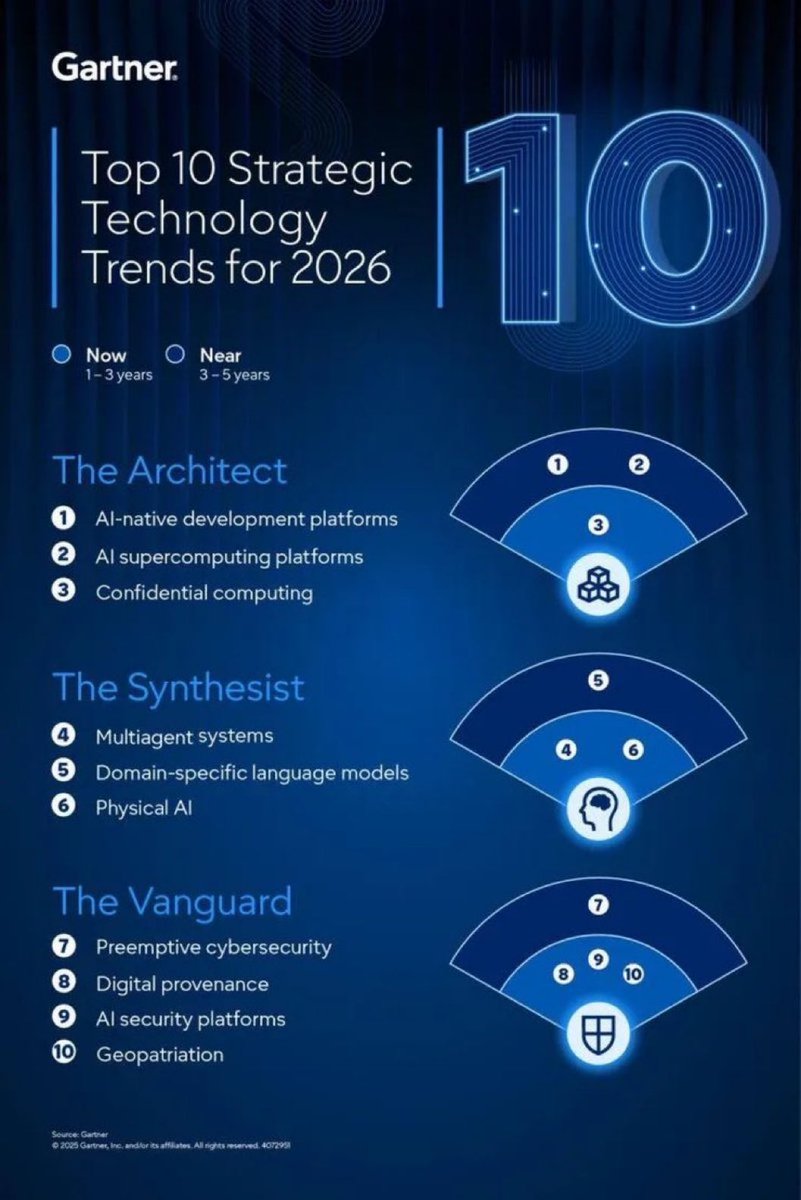
Gartner’s top IT strategic predictions for 2026 and beyond:
1. Through 2027, gen AI and AI agent use will create the first true challenge to mainstream productivity tools in 30 years, prompting a $58 billion market shakeup.
2. By 2027, 75% of hiring processes will include certifications and testing for workplace AI proficiency during recruiting
3. Through 2026, atrophy of critical-thinking skills, due to gen AI use, will push 50% of the global organizations to require "AI-free" skills assessments.
4. By 2027, 35% of countries will be locked into region-specific AI platforms using proprietary contextual data.
5. By 2028, organizations that leverage multi-agent AI for 80% of customer-facing business processes will dominate.
6. By 2028, 90% of B2B buying will be AI agent intermediated, pushing over $15 trillion of B2B spend through AI agent exchanges.
7. By the end of 2026, "death by AI" legal claims will exceed 2,000 due to the insufficient implementation of AI risk guardrails.
8. By 2030, 20% of monetary transactions will be programmable to include terms and conditions of use, to give AI agents economic agency.
9. By 2027, the cost-to-value gap for process-centric service contracts will be reduced by at least 50% due to agentic AI reinvention.
10. By 2027, fragmented AI regulation will grow to cover 50% of the world's economies, driving $5 billion in compliance investment.
Gartner: top IT strategic predictions for 2026 and beyond
1. Through 2027, gen AI and AI agent use will create the first true challenge to mainstream productivity tools in 30 years, prompting a $58 billion market shakeup.
2. By 2027, 75% of hiring processes will include certifications and testing for workplace AI proficiency during recruiting
3. Through 2026, atrophy of critical-thinking skills, due to gen AI use, will push 50% of the global organizations to require "AI-free" skills assessments.
4. By 2027, 35% of countries will be locked into region-specific AI platforms using proprietary contextual data.
5. By 2028, organizations that leverage multi-agent AI for 80% of customer-facing business processes will dominate.
6. By 2028, 90% of B2B buying will be AI agent intermediated, pushing over $15 trillion of B2B spend through AI agent exchanges.
7. By the end of 2026, "death by AI" legal claims will exceed 2,000 due to the insufficient implementation of AI risk guardrails.
8. By 2030, 20% of monetary transactions will be programmable to include terms and conditions of use, to give AI agents economic agency.
9. By 2027, the cost-to-value gap for process-centric service contracts will be reduced by at least 50% due to agentic AI reinvention.
10. By 2027, fragmented AI regulation will grow to cover 50% of the world's economies, driving $5 billion in compliance investment.
https://t.co/IrIjYHcbBk







![rubenhassid's tweet photo. How to set up the Claude completely in just 1 day:
(Save this. Send it to your team. Thank me later.)
Tool 1: Cowork
Download Claude (claude .com/download).
Open the Cowork tab.
Select a folder from your computer.
Now build your brain file. Create "about-me .md."
To download mine, go here: https://t.co/psB7XxAv8w.
Don't pay anything. It's free in the welcome email.
Then, start every chat with this prompt:
"Read the files first. Then ask me questions before doing anything."
Tool 2: Model
Pick Opus 4.6 (it's the best model right now).
Turn on Extended Thinking.
Most skip this & wonder why Claude feels generic.
Then go to Settings > Connectors.
Link Slack, Google Drive, Notion.
Claude now reads your actual workspace.
Tool 3: Excel
Open Excel. Go to Insert > Get Add-ins.
Search "Claude by Anthropic." Install.
Open any spreadsheet. Ask: "Give me a summary of each tab." Claude lives inside the spreadsheet. It knows what D14 actually contains.
Tool 4: Plugins
Go to claude .com/plugins.
Pick the one as per your job.
Marketing. Sales. Legal. Finance. Data.
Click install. Type / in your next chat.
Legal software companies lost $285B in market cap when these dropped. That's a signal.
Tool 5: Artifacts
Nothing to install. Ask Claude to build something.
"Create an interactive HTML calculator for [thing]."
You get a working tool inside the chat. Not text. Not a suggestion. A thing you click and use.
Tool 6: Projects
Go to claude .ai. Click Projects. Create one. Upload your files and add instructions. Every chat inside the project remembers your context.
Honest take: Cowork replaced this for me.
But for teams, it still works.
Where Claude falls short:
No image generation. Use Gemini.
Not the best at real-time search. Use Grok.
Not the best at everything. No tool is.
But for writing, thinking, analyzing, and working with your files? It's the best.
The real difference:
Most people open Claude, type one prompt, get a mid response, and leave.
Because they set up one tool out of six.
Set up all six. It takes 1 day.
Then you'll understand why everyone switched.
Full setup guide + features: https://t.co/jw2qdIbLxJ
Full Claude cowork set up: https://t.co/uWTpOI3oyE
Follow for more @rubenhassid](https://pbs.twimg.com/media/HDHuZ3iWUAEvEMY.jpg)