Congratulations to Brazil, The Bahamas, and the Turks and Caicos Islands on achieving major milestones towards eliminating vertical transmission of HIV, bringing us closer to a world where no child is born with HIV.
The new Political Declaration on HIV/AIDS, adopted by UN Member States in June, commits countries to urgently accelerate the elimination of vertical transmission of HIV. The strong progress across the region shows what is possible when political commitment, evidence and partnership translate into action.
These milestones are part of the Elimination of Mother-to-Child Transmission of HIV Plus Initiative, implemented in collaboration with UNAIDS and @UNICEF, and embedded within @PAHOWHO’s Elimination Initiative.
Read more: https://t.co/H6WAphrhqK @UnaidsLac
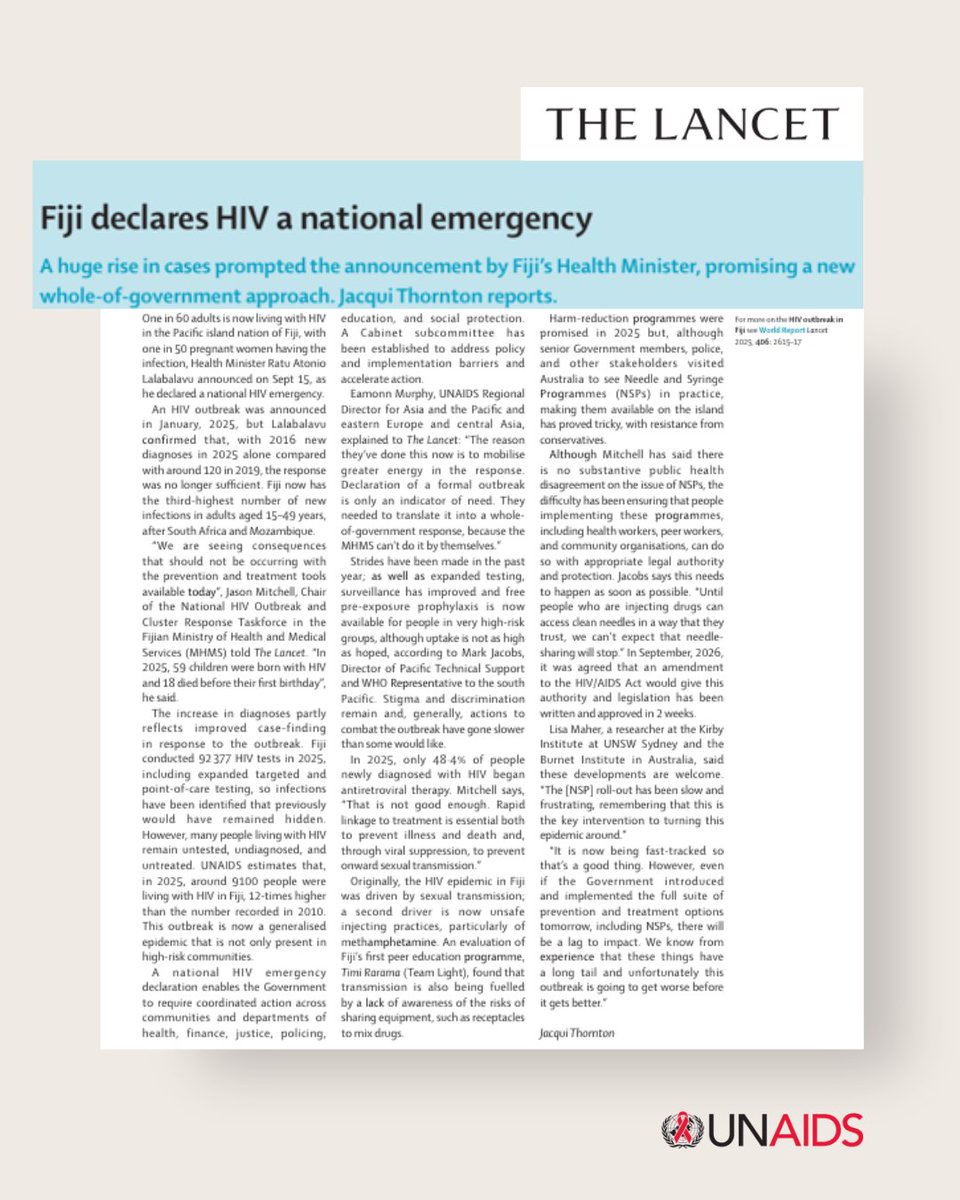
Fiji remains in the international spotlight. @TheLancet looks at the country’s rapidly evolving HIV epidemic and the response now taking shape.
Important progress last week: Parliament passed amendments to the HIV/AIDS Act, clearing the way for a needle and syringe programme and stronger evidence-based harm reduction.
@UNAIDS will continue to support Fiji and partners to scale up what works.
#Myanmar: @volker_turk deplores military airstrikes that reportedly kil at least 50 people at a market in Kyauktaw township in Rakhine State. The attack underlines grave plight faced by civilians in Myanmar.
https://t.co/G58jxQJG2v
What are we hearing at #UNGA81?
UNAIDS Deputy Executive Director @AchrekarAngeli shares her midweek reflections: people and communities must remain at the centre, and we must continue to evolve how we work to better support countries.
Hear more from Angeli 👇
I was asked my 3 takeaways from #UNGA81. They are:
1. People and countries first
2. People and countries second
3. People and countries third
All work and reform should respond to needs and priorities of the people we serve in the countries where they live.
Dozens of people have been killed in a military air strike on an opposition-controlled area of Rakhine State, Myanmar. Survivors have reportedly suffered hearing loss, and young women are among those killed.
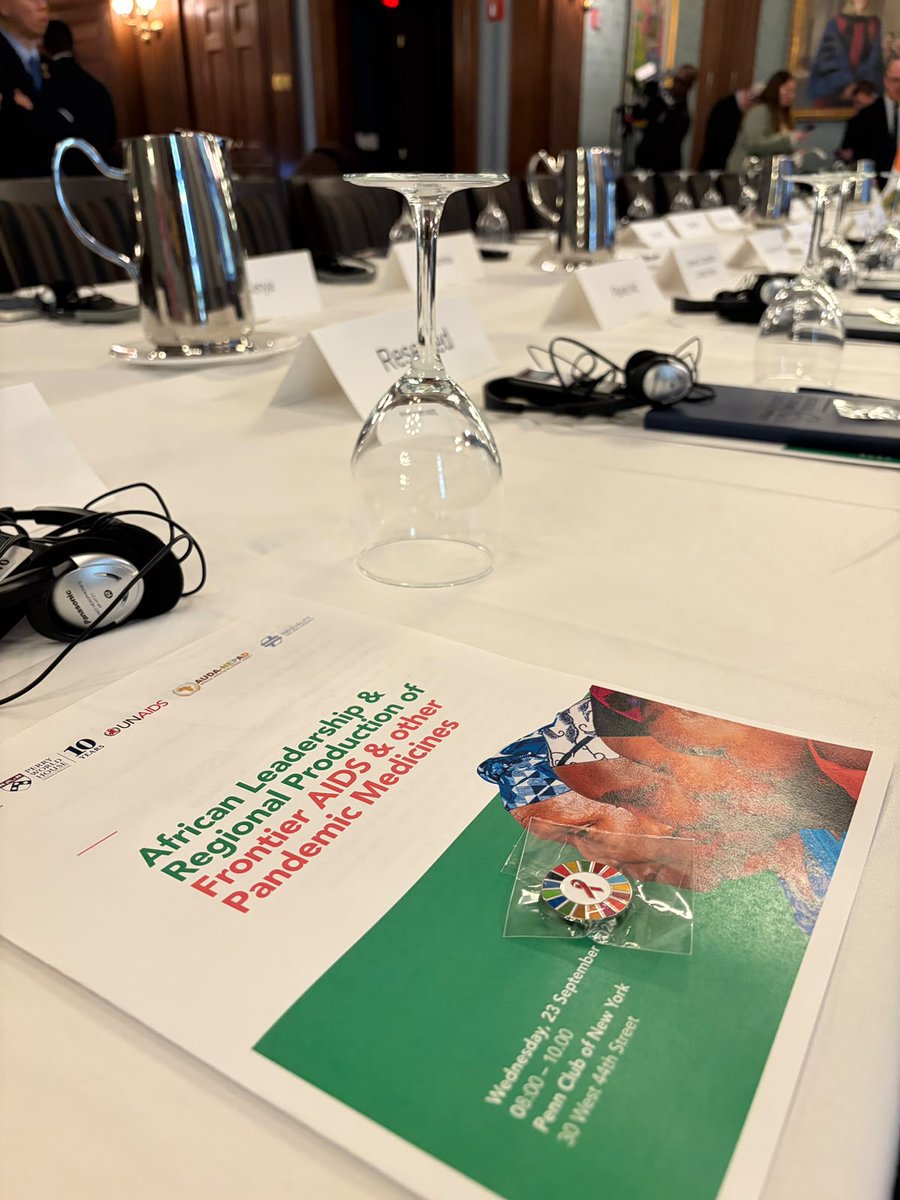
At #UNGA81, UNAIDS is bringing African leaders and global partners together to advance a shared agenda for health sovereignty: building Africa’s capacity to produce the medicines and technologies it needs.
Convened by UNAIDS Executive Director @Winnie_Byanyima , the high-level discussion on African Leadership and Regional Production of Frontier AIDS and other Pandemic Medicines is co-sponsored by UNAIDS, the African Medicines Agency ( @AU_AMA_ ), AUDA-NEPAD, (@NEPAD_Agency) Perry World House at the University of Pennsylvania (@perryworldhouse), and the Global Council on AIDS, Inequality and Pandemics.
For UNAIDS, this is about turning the lessons of the HIV response into action: strengthening country and regional capacity, expanding equitable access to innovation, and building more resilient health systems for the future.
At UNGA81’s Devex Impact House: A featured speaker for our partnership with ViiV Healthcare, Angeli Achrekar, UNAIDS Deputy Executive Director, highlighted the progress made in preventing HIV among children — and the gaps that remain.
Since 2000, 5 million HIV infections among children have been averted, but gaps persist in the paediatric treatment cascade and in preventing new infections.
@AchrekarAngeli underscored UNAIDS’ role in shining a light on both progress and gaps in the HIV response — and where action is still needed.
At #UNGA81, @UNAIDS is calling for countries to turn the Political Declaration on HIV/AIDS into action.
Asia and the Pacific’s diverse epidemics demand focused, strategic responses to deliver on the 2030 targets.
Hear @EamonnMurphy63, Regional Director for Asia Pacific and EECA, outline the region’s priorities and the action needed ahead.
#UnitedToEndAIDS
“Young people must have the power to shape the response and that principle must guide how we work.”
@EamonnMurphy63, UNAIDS Regional Director, at Adolescent, SRHR & HIV 2026 in Bangkok, with @YouthLEADAP_ and partners.
Nearly 1 in 3 new HIV infections in Asia and the Pacific is among young people. Their leadership, experience and perspectives must be at the heart of the decisions that affect their lives.
UNAIDS to support Fiji as it declares HIV a national crisis and puts in new measures to strengthen the response.
Read press release: https://t.co/KLR8TlVXKH
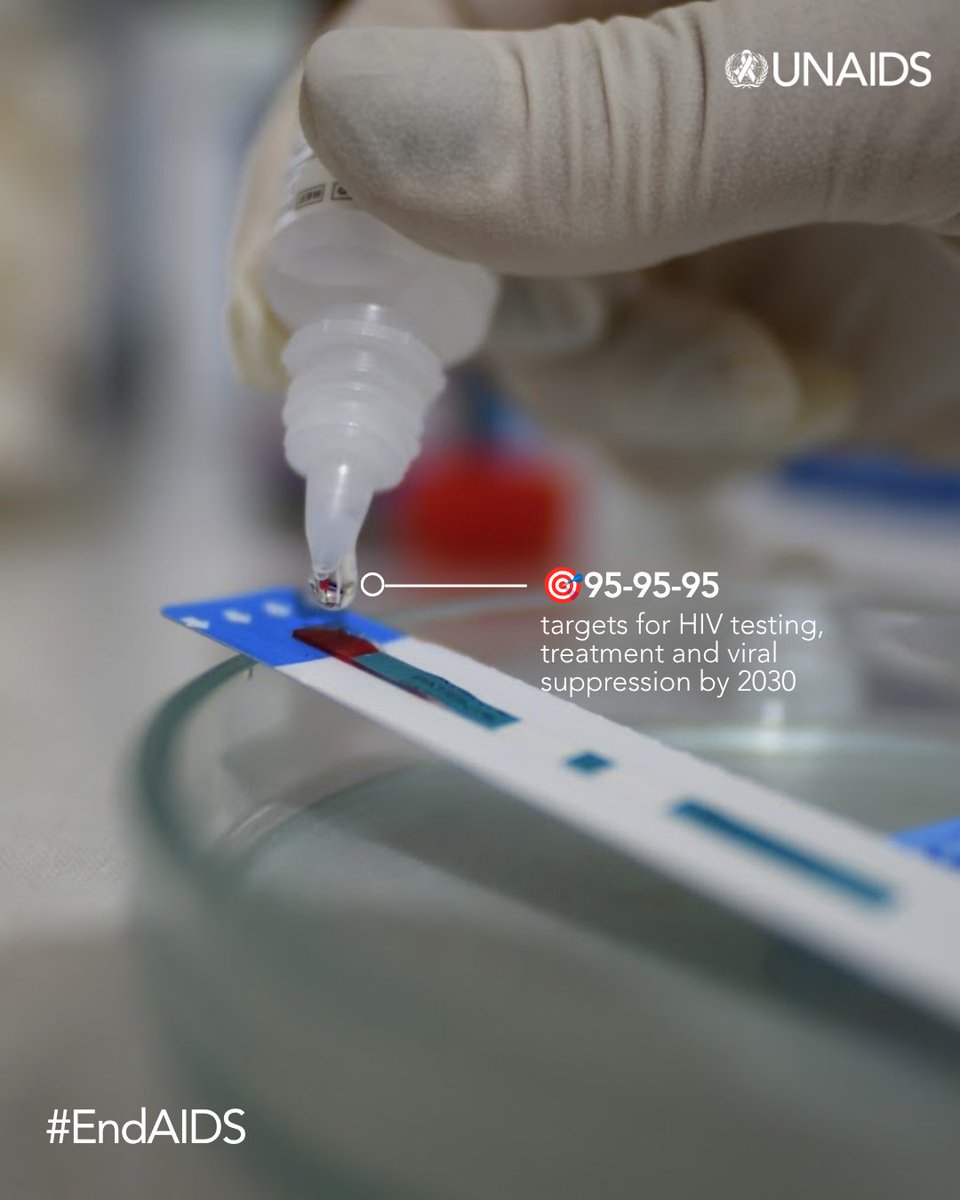
95-95-95 remains one of the world's most powerful targets to end AIDS:
✅ by 2030, 95% of people living with HIV know their status
✅ 95% of those diagnosed are on treatment
✅95% of those on treatment achieve viral suppression.
The new Political Declaration reaffirms these targets. https://t.co/8nmN1uZPyp
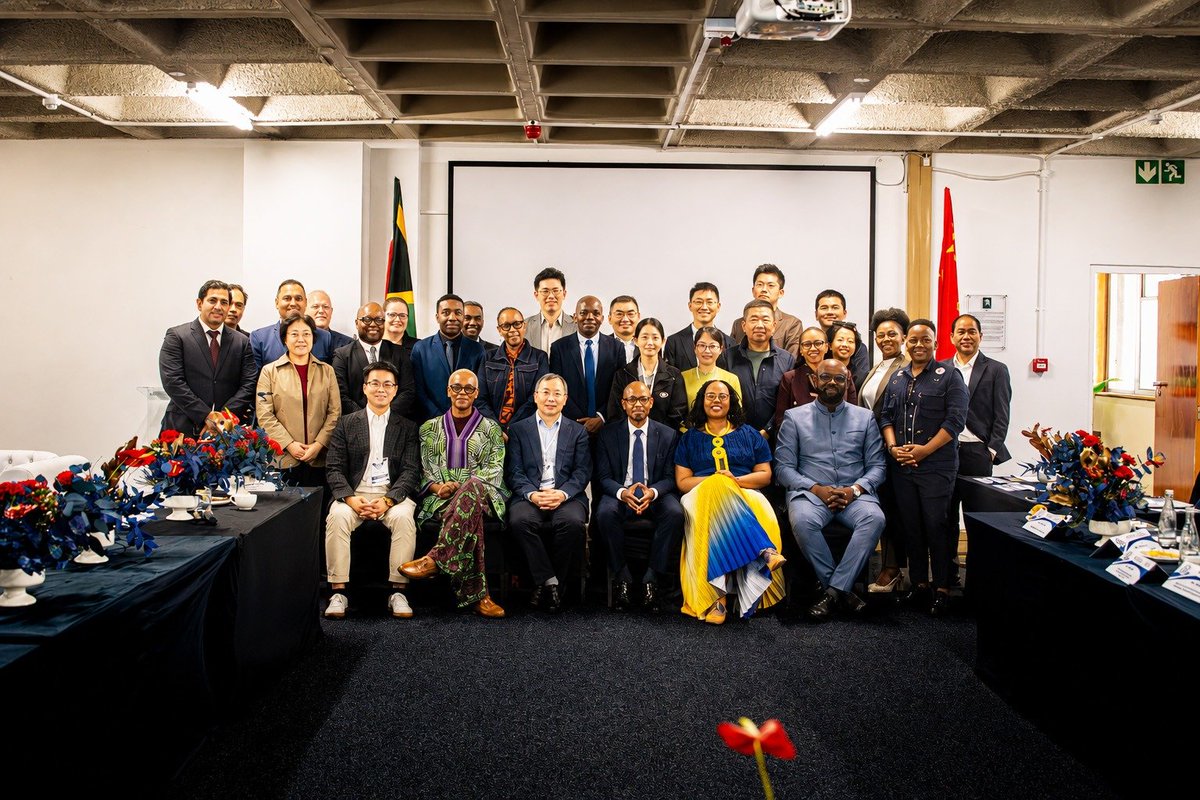
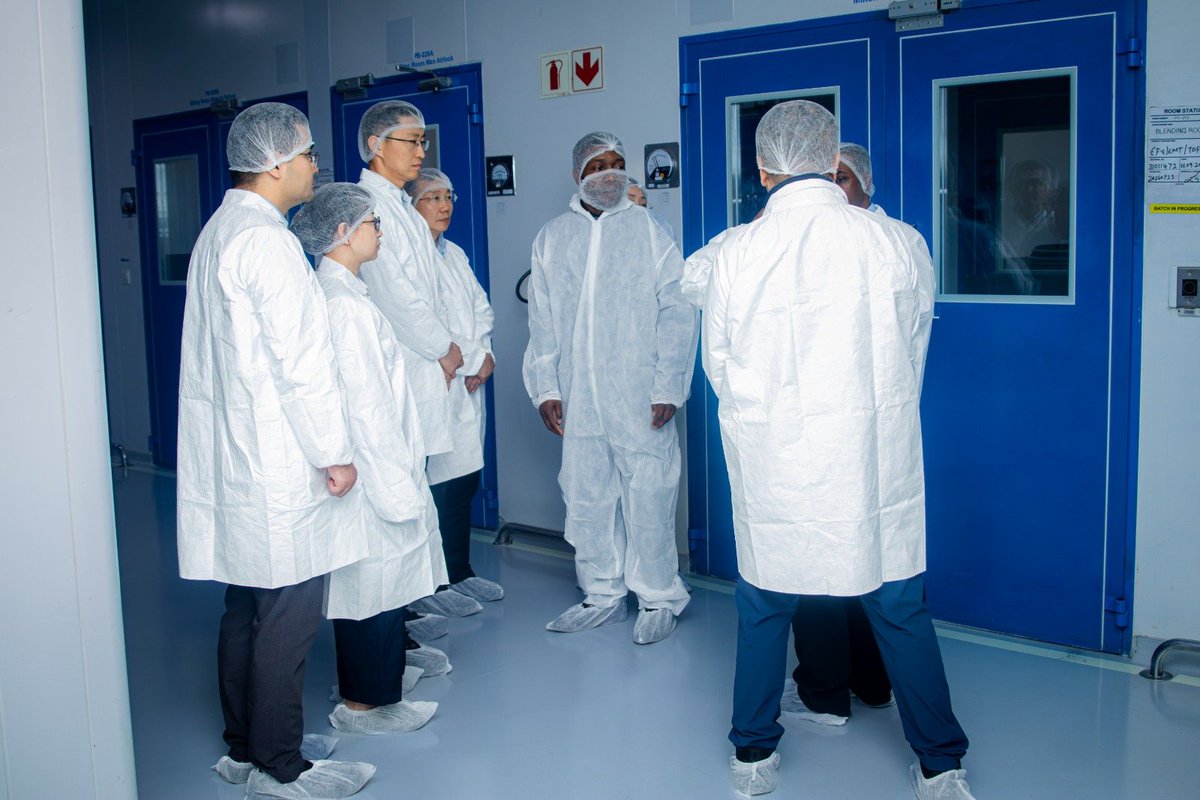
Day 2 took the SADC–China strategic exchange into South Africa’s pharmaceutical manufacturing sector, with a visit to Cipla South Africa.
The visit offered a first-hand look at manufacturing capacity, quality standards and production at scale, while opening discussions on local API production, technology transfer, skills development, investment and industry partnerships.
With a footprint across Africa and global-access markets, @Cipla_Global also highlighted the potential for stronger regional manufacturing and industry-to-industry collaboration to expand access to quality, affordable medicines.
A key takeaway: stronger partnerships can help turn local manufacturing potential into sustainable production capacity and greater pharmaceutical security.
Dolly Parton leaves a lasting legacy of compassion and solidarity. At a time when HIV was deeply stigmatized, she used her platform to support and fundraise for the AIDS response, and stand with the LGBTQ+ community.
Her commitment helped challenge stigma and advance messages of dignity, inclusion and acceptance ❤️
#DidYouKnow HIV treatment can help people living with HIV achieve an undetectable viral load - meaning they do not transmit HIV to their sexual partners. People with a suppressed viral load have a near-zero risk of transmitting HIV.
In 2025, 30.4 million people living with HIV globally have a suppressed viral load. The target? 38 million by 2030.
Countries must ensure everyone who needs HIV treatment can access it, helping people stay healthy and preventing new HIV infections. https://t.co/8nmN1uZPyp
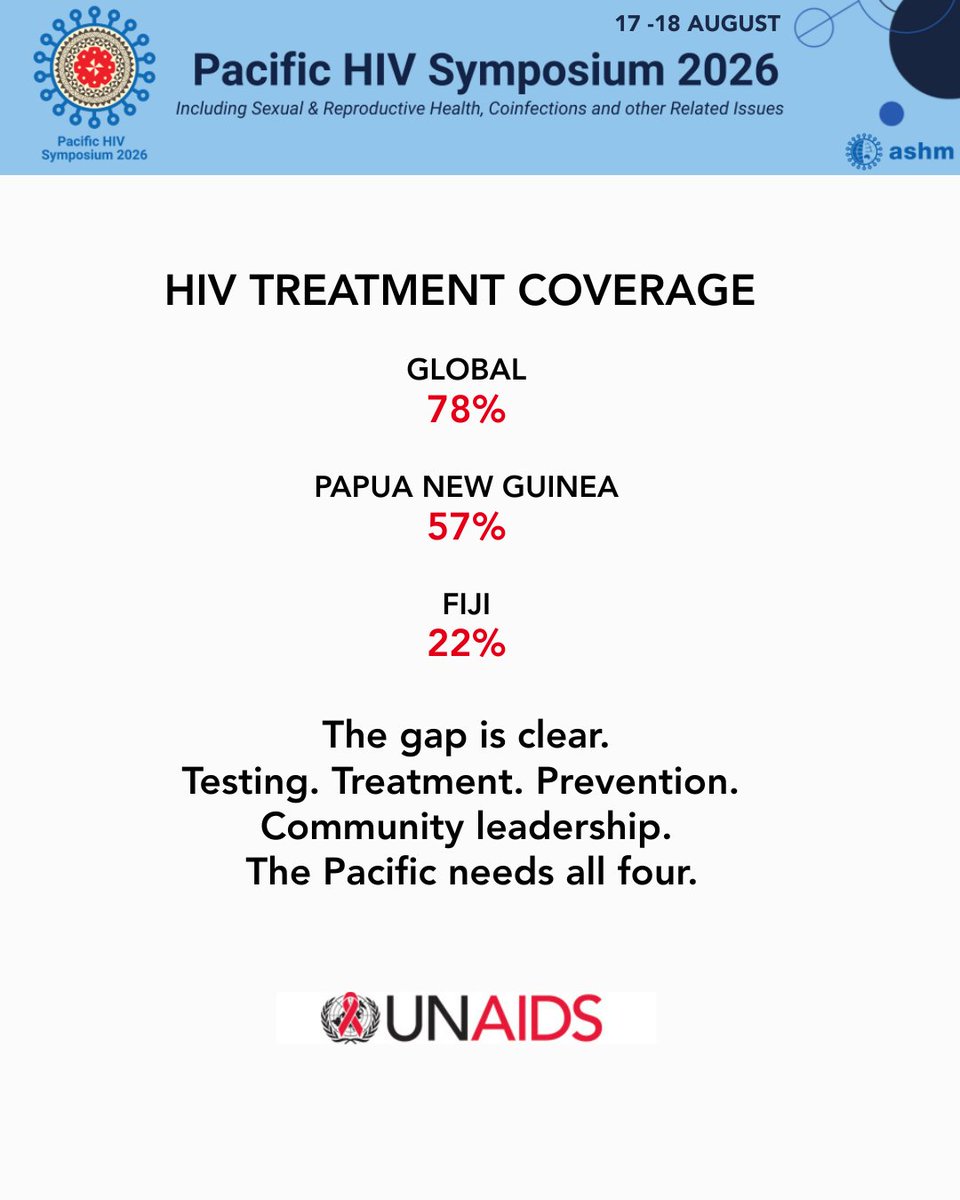
The Pacific HIV Symposium 2026 has kicked off in Fiji at a critical moment for the region.
“Collective power means moving beyond isolated responses. By pooling leadership, knowledge and resources, we can respond faster and stay ahead of the epidemic.” @EamonnMurphy63
More countries are introducing Lenacapavir as an HIV prevention option.
UNAIDS data shows that by the end of June 2026, over 50,000 people were accessing this long-acting prevention medicine across 9 sub-Saharan countries.
This is nowhere near enough. UNAIDS estimates that 20 million people are in need of long-acting prevention.
https://t.co/BOnCnKCsHK