BREAKING NEWS
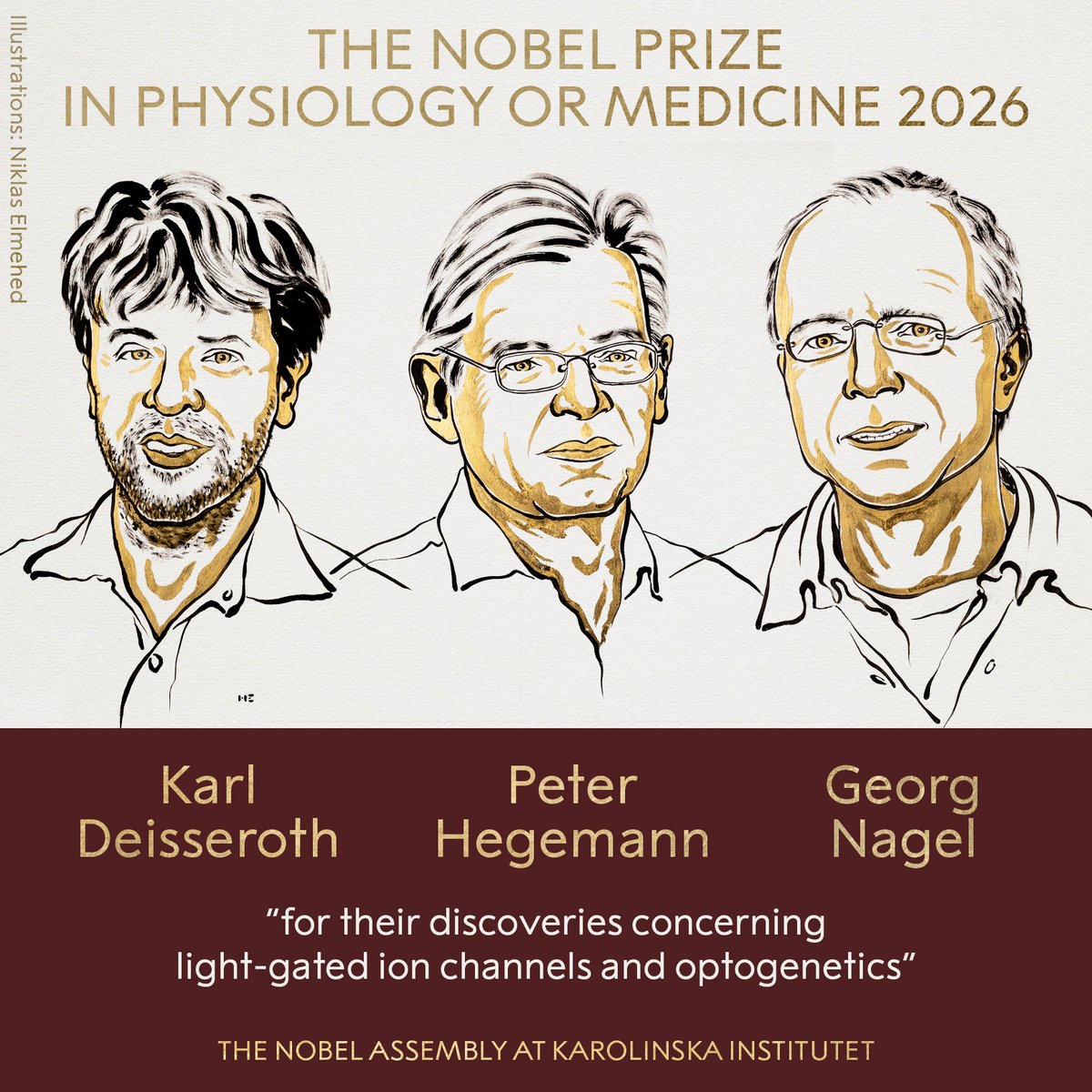
The 2026 #NobelPrize in Physiology or Medicine has been awarded to Karl Deisseroth, Peter Hegemann and Georg Nagel “for their discoveries concerning light-gated ion channels and optogenetics.”
The evolving landscape of drug targets
https://t.co/5OMoUEClEZ
https://t.co/fTzpQTwnje
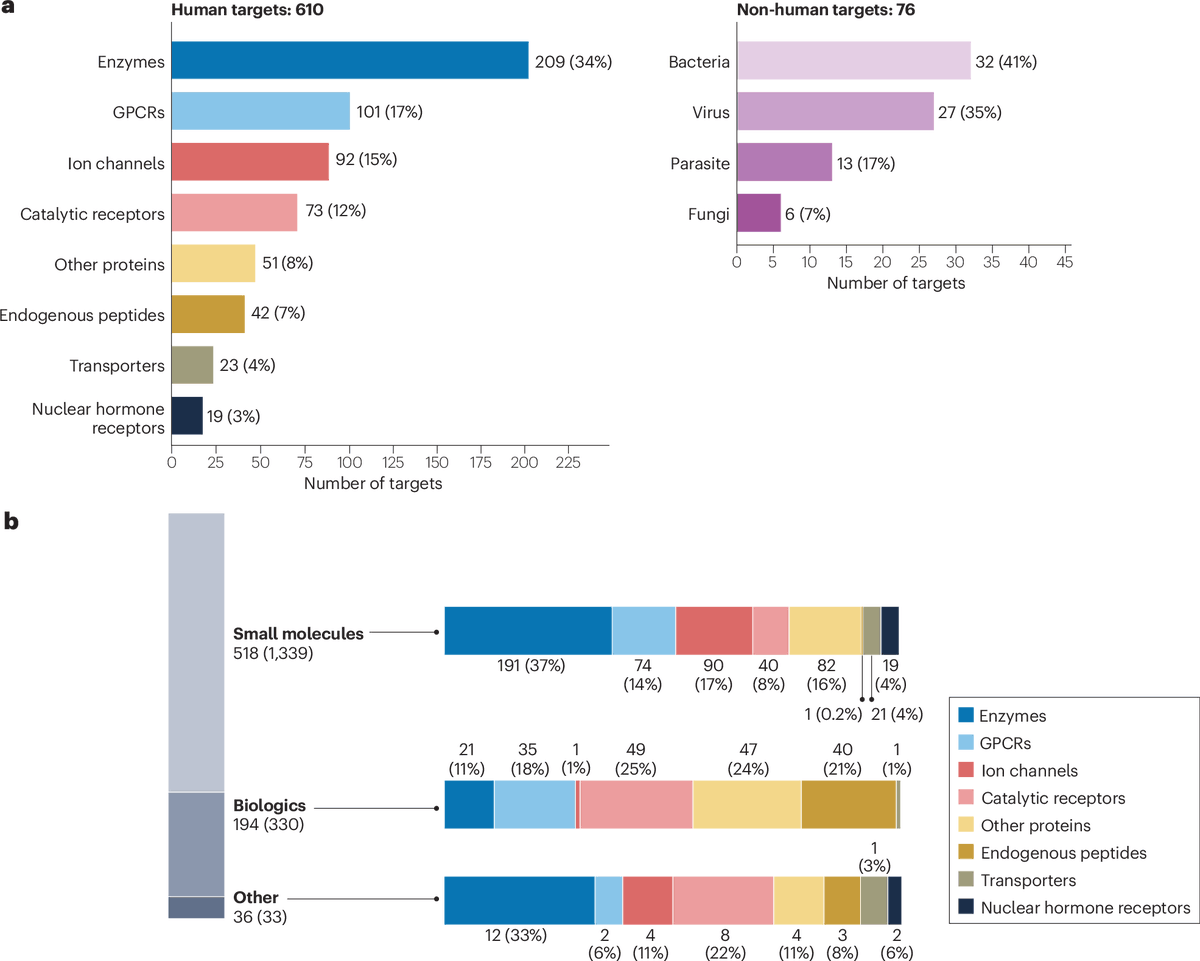
In the past 25 years, advances in areas such as genomics and the diversification of therapeutic modalities have expanded the drug target landscape, which now includes ~700 targets mapped here
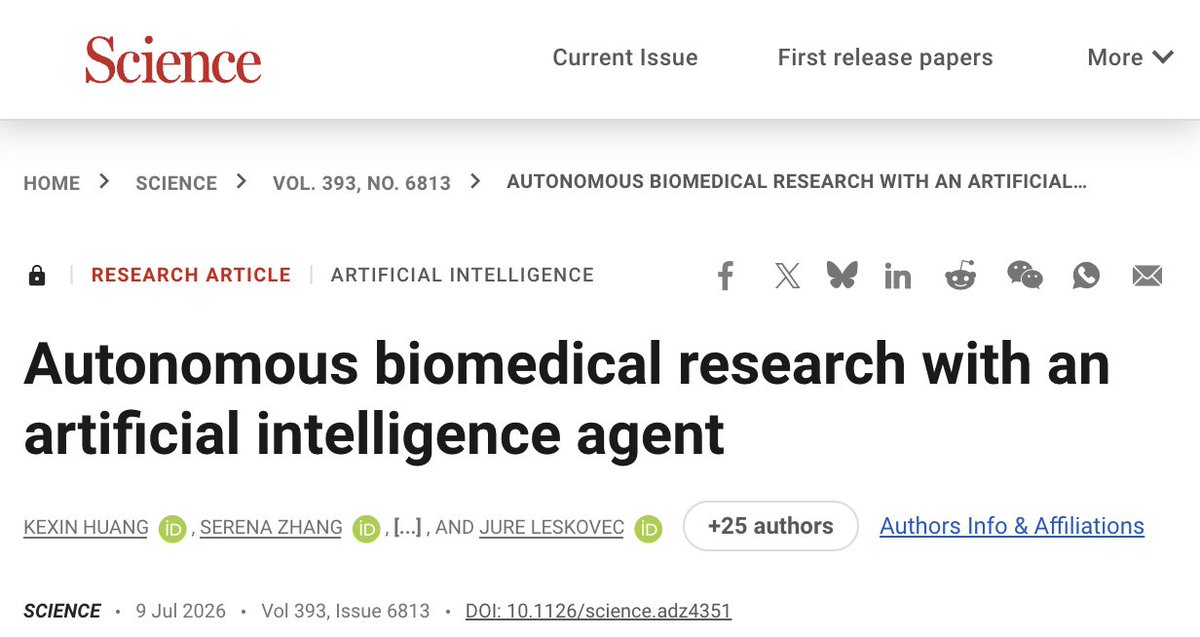
An AI agent is moving beyond answering scientific questions toward actually executing biomedical research workflows
Kexin Huang and coauthors introduce Biomni, a general-purpose biomedical AI agent designed to autonomously combine reasoning, scientific software, databases and experimental protocols.
The architecture addresses one of the hardest problems in scientific agents: biomedical research does not happen inside a single model.
Biomni first maps a large biomedical action space by mining thousands of publications across 25 biomedical domains. The resulting environment integrates software tools, biological databases, predictive models and laboratory know-how that the agent can retrieve and compose dynamically.
An LLM then acts as the reasoning layer.
Given a scientific task, it retrieves the relevant resources, creates a plan, writes and executes code, evaluates intermediate results and adapts the workflow rather than following a predefined pipeline.
The authors test this across remarkably different problems: causal gene prioritization, drug repurposing, rare-disease diagnosis, microbiome analysis and molecular cloning.
More interestingly, real research case studies move beyond benchmarks. Biomni analyzes multimodal biological datasets, optimizes protein stability, generates experimentally testable protocols and can orchestrate wet-lab instrumentation.
The important shift is architectural.
A scientific foundation model does not need to contain every capability internally. It can instead reason over an ecosystem of trusted scientific tools and decide which computation or experiment to perform next.
That starts to look much less like a chatbot for scientists and much more like an interface to the scientific process itself.
Paper: Huang et al., Science (2026) | https://t.co/m2GL7P4WFB
For many bilingual people, switching between languages feels effortless. Now, scientists have figured out how bilingual brains accomplish this feat at the single neuron level. https://t.co/XEPGq7IVeJ
Xinyuan Yan, Benjamin Y. Hayden, Sameer A. Sheth & colleagues
@cellcellpress
Looking to visualize the distribution of a numeric variable across different categories in R? ggridges, an extension of ggplot2, makes it easy to create ridge plots, offering a clear and elegant way to compare distributions.
✔️ Effortlessly create ridge plots to visualize density distributions.
✔️ Display multiple categories in an overlapping style for clarity.
✔️ Customize colors, labels, and themes to match your presentation style.
✔️ Effectively handle large data sets with smooth visual output.
Whether you're comparing distributions across time, groups, or conditions, ggridges provides a powerful tool to present your data in an engaging and informative way.
I’ve collaborated with Adrián Álvarez Molina to create a tutorial that demonstrates how to use ggridges in practice: https://t.co/aoFpxnKoRg
Learn more about ggplot2 and its extensions in my online course "Data Visualization in R Using ggplot2 & Friends."
For more information, visit this link: https://t.co/ztlEzoEDWv
#Python #RStats #DataAnalytics #ggplot2 #Rpackage
I recently discovered the tidyplots package in R, and it’s impressive how effortlessly it enables you to create beautiful, publication-ready plots. Designed with scientific papers in mind, tidyplots lets you build, adjust, and refine plot components gradually, all with a consistent and intuitive syntax that takes the complexity out of visualization.
✔️ Simple Syntax: Tidyplots offers user-friendly functions for creating polished visuals with minimal coding, saving you time and effort.
✔️ Consistent Style: Achieve a cohesive look across all visuals, eliminating the need for repetitive adjustments.
✔️ Flexible Customization: Easily customize colors, labels, and themes to align with your project’s goals, resulting in professional and engaging data displays.
✔️ Enhanced Data Storytelling: Built for clarity, tidyplots helps you convey insights effectively, making your data stand out.
The example visualizations shown here were created by the package author, Jan Broder Engler, and are featured on the tidyplots website: https://t.co/fgIWzxFVZI
For a deeper dive into R data visualization, join my Data Visualization in R Using ggplot2 & Friends course where we’ll explore ggplot2 and related tools in depth! Learn more by visiting this link: https://t.co/ztlEzoEDWv
#Rpackage #DataVisualization #datascienceeducation #RStats #ggplot2 #DataAnalytics #datasciencetraining #database #tidyverse #pythonprogramming #Python
Human organoids as 3D in vitro platforms for drug discovery: opportunities and challenges
https://t.co/356Ga8hxtS
This new Review by Clevers et al. discusses organoid generation methods and uses in preclinical drug discovery, as well as the regulatory and practical challenges
A simple guide to understanding how neurons make neurotransmitters
Your brain has different classes of neurons, each defined by the chemical messenger (neurotransmitter) they release. These transmitters are built from specific precursors using unique enzymes and cofactors.
1️⃣ Cholinergic Neurons (green)
Main transmitter: Acetylcholine (ACh).
Source: Built from acetyl-CoA and choline.
Special enzyme: ChAT (choline acetyltransferase).
🟢 Example: These neurons drive muscle contraction and attention.
2️⃣ GABAergic Neurons (blue)
Main transmitter: GABA (gamma-aminobutyric acid).
Source: Derived from glutamate.
Special enzyme: GAD (glutamate decarboxylase).
🟢 Example: GABA is the brain’s main “calm-down” signal.
3️⃣ Glutamatergic Neurons (orange)
Main transmitter: Glutamate.
Source: Recycled from other cells and stored in vesicles.
🟢 Example: Glutamate is the brain’s main “go” signal for learning and memory.
4️⃣ Serotonergic Neurons (green-teal)
Main transmitter: Serotonin (5-HT).
Source: Made from tryptophan → 5-HTP → serotonin.
Special enzymes: TPH (tryptophan hydroxylase), DDC (decarboxylase).
Cofactor: BH₄ (tetrahydrobiopterin)
🟢 Example: Serotonin regulates mood, sleep, and appetite.
5️⃣ Dopaminergic Neurons (light blue)
Main transmitter: Dopamine.
Source: Made from tyrosine → L-DOPA → dopamine.
Special enzyme: TH (tyrosine hydroxylase), DDC.
Cofactor: BH₄.
🟢 Example: Dopamine drives motivation, reward, and movement.
6️⃣ Noradrenergic / Octopaminergic Neurons (red)
Main transmitter: Norepinephrine (mammals) or Octopamine (in invertebrates).
Source: Derived from tyrosine/tyramine.
Special enzyme: TBH (tyramine β-hydroxylase).
Cofactor: BH₄.
🟢 Example: Linked to arousal and “fight or flight.”
7️⃣ Tyraminergic Neurons (orange-brown)
Main transmitter: Tyramine.
Source: Made from tyrosine → tyramine.
Special enzyme: TDC (tyrosine decarboxylase).
🟢 Example: Acts as a trace amine, modulating dopamine and serotonin systems.
Supporting Pathways (Panels B & C):
Acetyl-CoA production (B): from the citric acid cycle, provides building blocks for acetylcholine.
BH₄ synthesis (C): a critical cofactor for making serotonin, dopamine, and norepinephrine.
Each neurotransmitter system has its own “assembly line”: specific precursors, enzymes, and cofactors. Together, they form the brain’s chemical language — acetylcholine for movement and attention, glutamate and GABA for balance, and monoamines (serotonin, dopamine, norepinephrine) for mood, reward, and arousal.
The OBI Scholars Program is recruiting early career scientists of ANY discipline whose research includes mechanistic studies that advance understanding of CNS disease & aging. Scholars receive a generous ~$3M recruitment package and lab space. Learn more: https://t.co/XfBJXBhdVV
By popular demand — the next edition of our hands-on @Stanford@BrOrganogenesis course is coming in 2026!
This year, the focus turns to neural #assembloids, reflecting the growing movement toward modeling circuit-level and complex cell-cell interactions in brain disease.
The course remains free (including lodging) and is taught by my lab for a full week.
We look forward to welcoming another cohort of 20 participants from all over the world selected from hundreds of applications each year.
Organized by an amazing trio of scientists: @RebeccaJLevyMD, Sabina Kanton, and Merve Avar.
Supported by @BrOrganogenesis, @StanfordBrain, @StanfordBioX, and @NIH_NINDS.
🧠 Deadline: mid-December