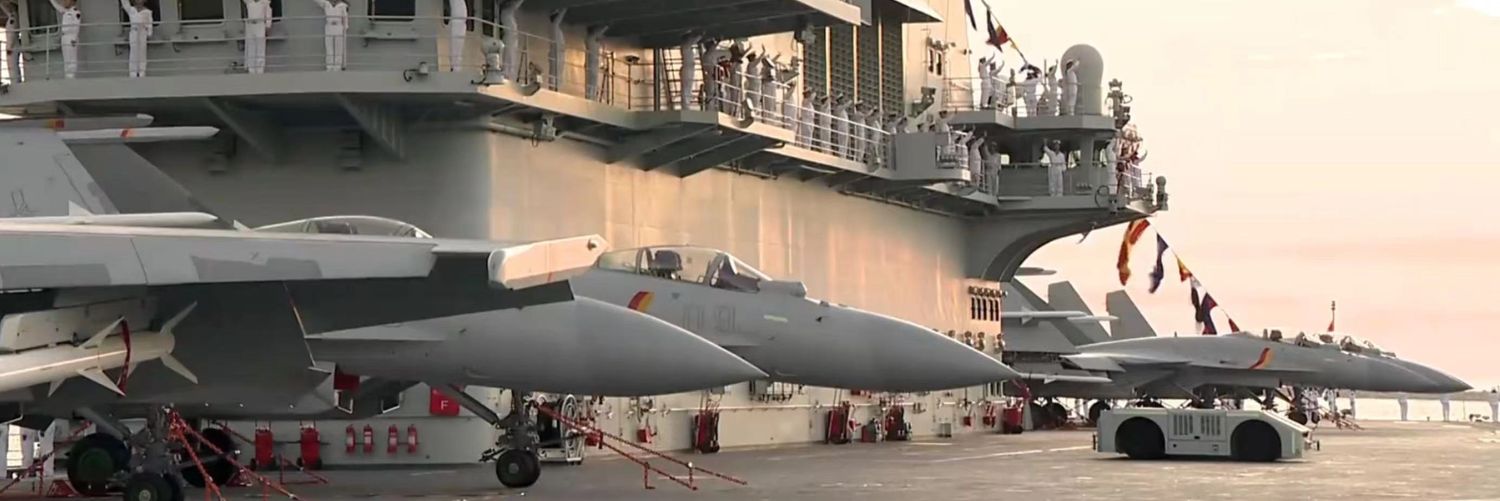
This is a clear refutation of the idea that Trump wanted to overthrow the government in Iran on a weekend.
It is clear from Lindsey Graham’s comments that they wanted to incite a civil war similar to Libya followed by the invasion of Iran by the Arabs.
Graham specifically says he’s expecting a few cities start to fall “within three to four weeks.” Obviously not a weekend plan.
The failure wasn’t in that it didn’t happen on a weekend. It was that the uprising they anticipated didn’t happen. People rallied around the flag and in support of their nation against foreign invaders.
This should guide Iran’s understanding. Fantasies of good relations with Arabs are nothing but that. It should aim to overthrow these governments and make sure whoever is in charge is their person.
It should also make it clear for Iran that the goal is a much longer term project: to destroy Iran as a state. As such, they should never even think about the possibility of normal relations. The only thing they should plan on is protecting the state, weakening its enemies, and repelling adversaries as far as possible.
America's inability to make nitrile gloves at scale is relevant because it reveals the loss of (and subsequent failure to rebuild) industrial capabilities policymakers claim they desperately want to restore.
You can't hide behind a hypothetical counterfactual of "we would make them if we wanted to, but it's not worth our time" anymore. The pandemic was the ultimate acid test. The gloves were strategically important and highly profitable. We wanted to. We tried. We funded it. We prioritized it. We STILL couldn't do it.
When healthcare workers' lives were literally on the line amidst a pandemic, with enormous resources in the richest country on earth and extremely favorable political and economic tailwinds behind this one objective, the U.S. was unable to recreate and scale a domestic PPE supply chain.
...and six years later, still can't. 850M dollars of gov't money spent in an effort to remedy this, yet 99% of the gloves are still imported and the domestic flagship projects are failed or stalled. If it's important, own the failure, not pretend you don't want it in the first place.
It's true that the U.S. retains strong manufacturing capacity in some critical segments. It's also true that the US has lost capabilities across a much wider range of supply chains, and recent attempts to rebuild them have exposed just how hard that process really is. In the case of the gloves, it exposed how difficult it is to organize capital, procurement, and long-term political will behind a low-margin strategic industry, even when everyone agrees it's important. That's a serious goddamn problem.
You have to abandon this childlike view of manufacturing, that industrial capacity is something you order off the menu at Chipotle when you have an appetite for it. "If we wanted to make gloves, we'd make gloves, and if we wanted to make batteries, we'd make batteries, but we choose to make semis and jet engines because we're the best and they're the best durr hurr."
Competitive industrial ecosystems depend on a whole constellation of productive factors that are hard to build, easy to lose, and incredibly hard to rebuild from scratch, once they're gone. *Especially* when they require consistent political will and patient, disciplined capital.
For anyone paying attention, that lesson from the gloves is being repeated in many other important segments, from transformers, to shipbuilding, to critical minerals, to power infrastructure for AI data centers. Again, the efforts to fix these issues enjoy very favorable tailwinds, yet it's not enough. Critical gaps remain, although governments, manufacturers, investors, utilities, and hospitals are super interested in closing them, which is why it's so uncomfortable that they've not been successful.
Oh, and let's be clear here, Mr. Royal "We". You don't build jet engines. GE Aerospace does. You don't manufacture semiconductors. TSMC Arizona does. You write blogs. You host podcasts. You yap on social media for updoots.
The country is still full of engineers and technicians and machinists and toolmakers and construction workers all playing a part in these highly specialized industrial ecosystems that took decades to build. The people responsible for these efforts tend to have a clearer understanding of how difficult industrial capacity is to build, maintain, and finance. Maybe try talking to them more, and talking to social media a little less.
"'Why do many American soldiers who fought in Afghanistan and later returned to their country commit suicide?' Mr. Gulab asked. 'I have heard this many times. What is the reason?'
It was a question that haunts many of us. I tried to explain how we carried the crushing weight of our own shattered expectations: We had grown up on the nostalgia of World War II, then done something we were supposed to be proud of. Instead, what we got from our politicians and generals were evasions and lies. Our commanders could never articulate how our deployments, and all the violence we committed and the losses we suffered, made anyone safer in the United States.
We were left to figure everything out on our own while they landed lucrative jobs at defense companies and collected big fees on speaking circuits. For some people, it was too much to handle."
I’ve worked on Iran for nearly 20 years. Our options are never great, but I’ve never seen things this bad. For the first time in my career, I’m at a loss.
When this war began, I warned that Iran would likely emerge weakened but more aggressive and risk-tolerant—leaving the region trapped in a cycle of military clashes and chronic instability. That has happened. What I underestimated was the leverage Iran would gain through its stranglehold over the Strait of Hormuz.
For a moment, the MOU offered a possible way out. It was deeply flawed, but better than the alternatives. Then vague terms and shoddy negotiating caused it to collapse: Iran believed it could retain some control over the Strait; Washington believed the Strait would reopen to international shipping.
But the fundamental problem wasn’t the negotiation. It was Trump’s catastrophic decision to go to war in the first place.
The result: higher oil prices, economic shocks, depleted US missile-defense stocks, immense regional damage and civilian suffering, alienated allies and very little achieved in return.
So what now?
We could pay Iran off through sanctions relief, oil exports and access to the international banking system. But after surviving forty days of war, Tehran is angry, distrustful and convinced it holds the stronger hand. Its price is so high – and so humiliating – that Trump will never accept it.
We could escalate militarily, which is what the US is doing. But bombing has not produced meaningful Iranian concessions, and Trump appears unwilling to bear the costs of the maximalist alternatives. More pressure means an expensive, dangerous and potentially endless war, with serious risks to US forces and the entire region as we tragically saw this weekend. And it has little chance of success.
Or we could encourage the Gulf states to negotiate a regional arrangement. That may ultimately be the most promising path, but the Gulf states are divided, this remains fundamentally a US-Iran conflict, and any agreement will require major American concessions while leaving Iran strategically stronger than it was before the war. So this isn’t very appealing and hard to get to as well.
The likeliest outcome is therefore that we are looking at a new normal: recurring US-Iran clashes, periodic American or Israeli strikes on Iran’s nuclear program, Iranian control over the SOH, higher oil prices and a larger, longer-lasting American military presence in the Middle East. But since the costs of all out escalation are too high both sides try to keep it from going there, though there is always a risk.
Iran’s leverage will eventually depreciate as countries build pipelines, diversify energy supplies and establish alternative trade routes. But that could take years.
Eventually, exhaustion may produce a deal. Iran may decide that controlling the Strait while living under blockade is unsustainable. Washington may accept that it must offer more. The Gulf states may finally unite around a workable diplomatic framework. But not soon.
Trump took a situation in which better options plainly existed, started an unnecessary war and produced a strategic disaster that will take years to unwind.
For now, we are all stuck with this mess.
This is one of many reasons why I would never let my children serve in the US military. Every day we are feed this propaganda that “freedom isn’t free, our soldiers defend the US and our freedom”. No that’s not true at all.
Americans have to wake up and realize there are many countries across the globe that have equal freedoms and our young soldiers are sent to die in useless wars to fund US government interests.
Defending your homeland is different. That’s a battle worth fighting but there isn’t a country on the planet who is threatening to take over the US or invade US soil.
As a twin father myself, I can only imagine the pain this widow is now feeling. I pray she has the family support to help her during this difficult time. Her husband never should have been there!
The US has no military solution to Iran and the longer we stay the more Americans will die. Absolute stupidity
The scary thing here is that IMAX can't build any more new projectors. (They apparently don't have a complete set of the engineering blueprints, most of the engineers who designed them have retired or passed away, and the parts supply chains have long since dried up.) So the goal for the foreseeable future is to upgrade and keep all the existing projectors running for as long as they can.
For the “boom boom Tel Aviv” idiots:
The biggest mistake people make when looking at war is assuming the objective is to hit the enemy’s capital as quickly as possible. That’s political theater, not military strategy.
If you look at the strike map, Iran isn’t behaving like a country trying to maximize headlines but like a military attempting to shape the battlespace.
The targets are not random or insignificant. Iran is dismantling the entire American military ecosystem in the region:
Early warning radar sites.
Air defense systems.
Aviation facilities and hangars.
Logistics hubs.
Fuel and ammunition storage.
Forward operating bases.
CENTCOM support infrastructure.
Bases supporting operations in Syria and Iraq.
Naval and maritime surveillance assets.
Intelligence collection and communications nodes.
Look at jordan as an example. Most people couldn’t point to Tower 22 or Muwaffaq Salti Air Base on a map, yet they’re arguably more important militarily than firing a few missiles at downtown Tel Aviv.
Tower 22 supports operations at Al-Tanf. Muwaffaq Salti hosts American aircraft and coalition operations. Erbil supports intelligence and special operations. Bahrain hosts the U.S. Navy’s Fifth Fleet headquarters. Kuwait is a massive logistics and staging area. Qatar hosts the forward headquarters of CENTCOM and the largest U.S. air base in the Middle East. These are the eyes, ears, and connective tissue of American power projection in the region.
From a military perspective, you don’t begin by punching the strongest part of your opponent. You isolate him.
There are several principles of warfare being applied here:
1. Suppression of enemy support infrastructure.
2. Degradation of intelligence, surveillance, and reconnaissance capabilities.
3. Attrition of air defense and interceptor inventories.
4. Disruption of logistics and sustainment.
5. Political pressure on host nations.
6. Shaping the operational environment before attempting anything larger.
The United States does not fight Middle Eastern wars from Washington or even from aircraft carriers alone. It fights them from an interconnected network of bases stretching from Jordan to Qatar to Kuwait to Bahrain. If that network becomes degraded, every sortie, every intelligence feed, every resupply mission, and every interceptor launch becomes more difficult and more expensive.
People screaming “just bomb Tel Aviv” fundamentally misunderstand what modern warfare looks like. Destroying a radar site that enables coalition air operations can be militarily more valuable than causing superficial damage to a symbolic target.
There’s another aspect people are missing: INTERCEPTOR ECONOMICS.
Every Patriot interceptor fired costs millions of dollars. Air defense inventories are finite. Sustained operational tempo places enormous strain on maintenance crews, missile stockpiles, and logistics chains. If an adversary can force you to defend a dozen locations simultaneously, you’ve already begun winning the resource allocation battle.
Historically, successful military campaigns begin with degrading command-and-control, communications, air defenses, and logistics before moving to decisive operations.
Whether one agrees with Iran politically is irrelevant to the military analysis. What we’re witnessing is not random retaliation, it is a deliberate campaign aimed at systematically degrading the regional architecture that allows the United States and its allies to project military power across the Middle East.
Wars are won by destroying capabilities, not by chasing viral videos of missiles landing in capital cities and gay techno songs. The boring targets on a map are often the most important ones