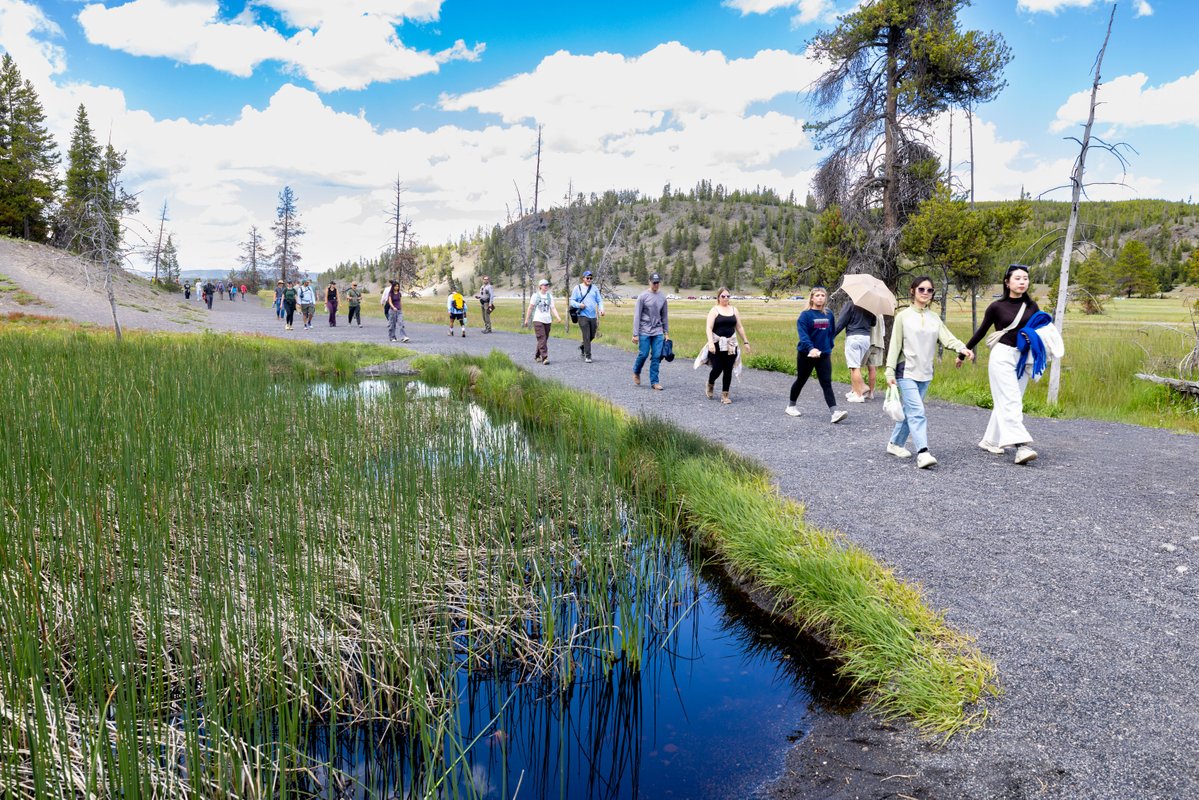
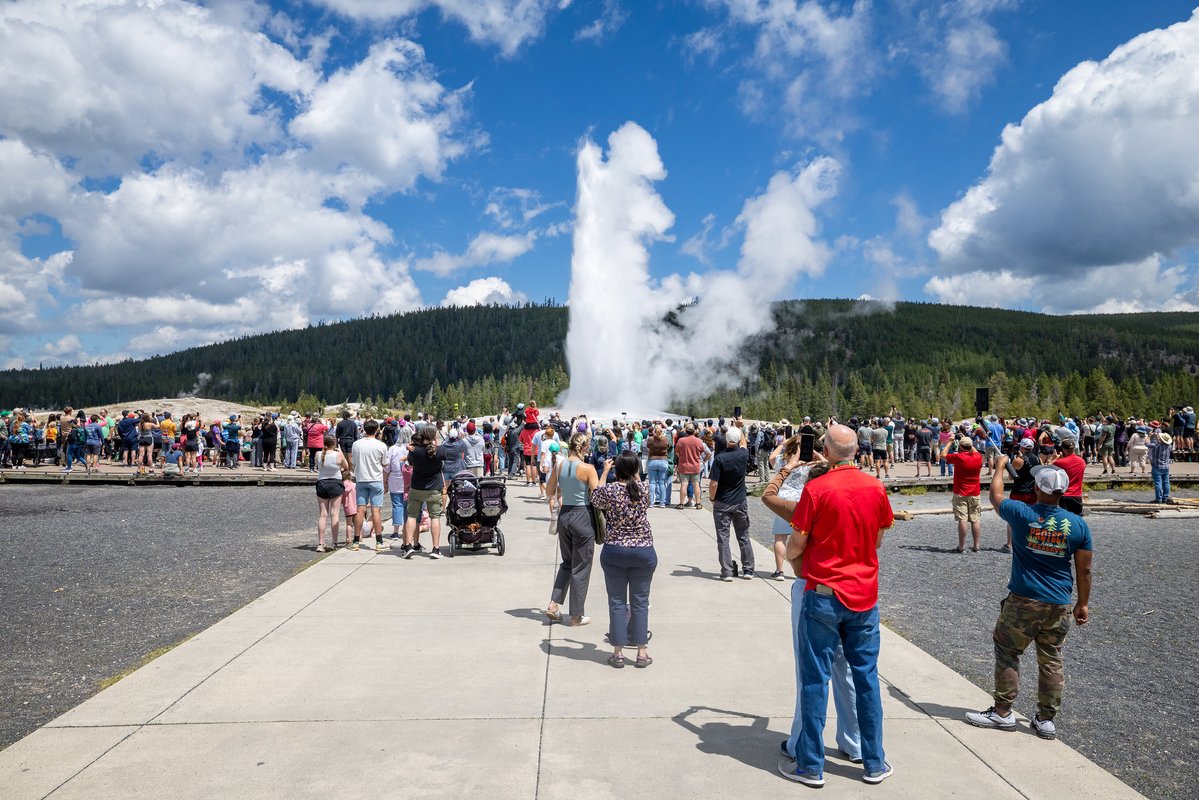
From the park's backcountry to the boardwalks around Old Faithful, all of Yellowstone is bear country!
Protect yourself and the bears you come to Yellowstone to see by carrying bear spray and learning how to use it. Bear spray is a non-lethal deterrent designed to stop a bear's aggressive behavior. Knowing how to use bear spray can reduce human injuries caused by bears and can also reduce the number of bears killed by people in self-defense.
👉Visit our website for even more safety info and tips at: https://t.co/IaHWB5JIFc
Video description: Yellowstone Bear Management Biologist Kerry Gunther demonstrates the steps for how to use and deploy bear spray if you ever find yourself in a bear encounter.
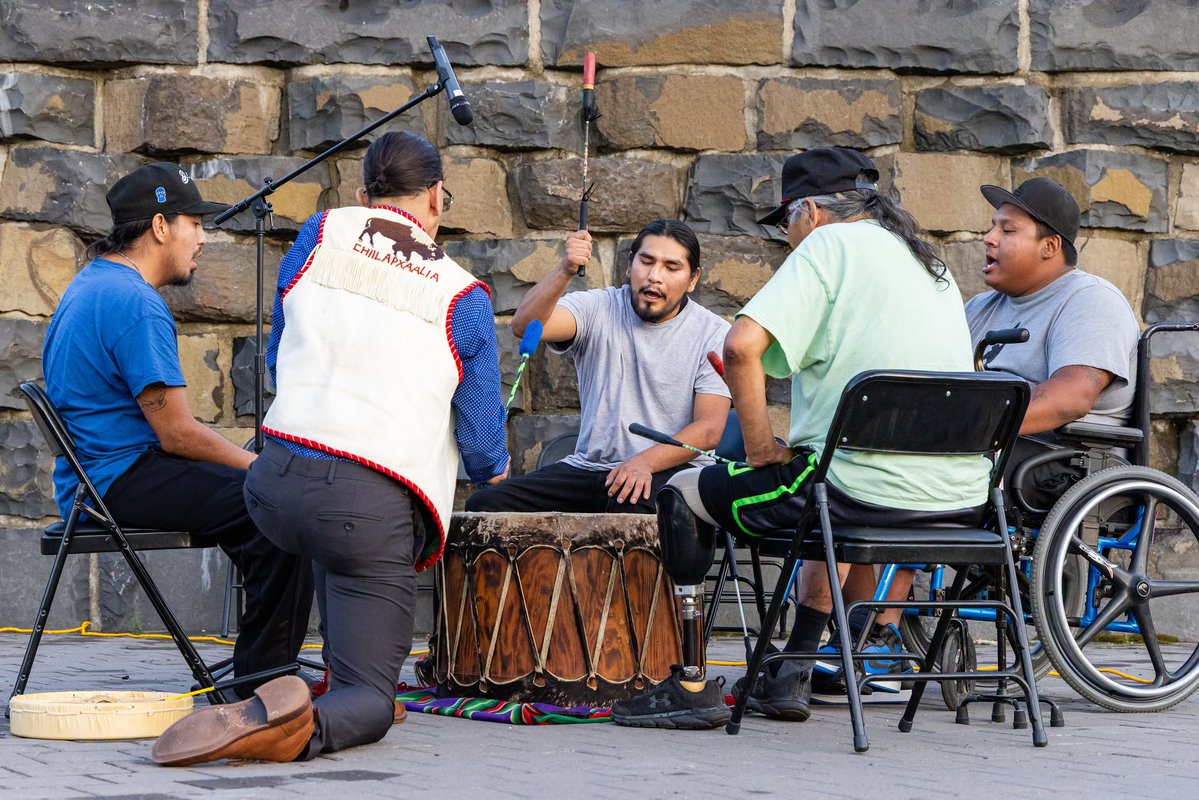
Join us for Voices of Yellowstone: First Peoples Celebration, which will be taking place Aug. 2-8 near the North Entrance in Gardiner, Montana!
This week-long series honors and celebrates the diverse cultures of the Indigenous Peoples of Yellowstone—past, present, and future. Scheduled events include an opening ceremony and lighting of the teepees, guided cultural tours throughout Yellowstone (registration required), a native art market, musical performers and speakers, and a community potluck.
Voices of Yellowstone: First Peoples Celebration is hosted by @ynpforever, in partnership with Yellowstone National Park, and in collaboration with the Pretty Shield Foundation, @RMTLC, and Gardiner Chamber of Commerce and Visitor Center.
👉 View the full schedule of events at: https://t.co/qJneJP695H
(News Release) Beginning Saturday, Aug. 1, people may apply to the 2026-2027 winter lottery for permits to snowmobile in Yellowstone National Park without a commercial guide. Authorized in 2013, the Non-Commercially Guided Snowmobile Access Program allows permit holders to enter the park for up to three days with a group of up to five snowmobilers. Learn more at: https://t.co/JSHpWupjol
Planning to hike a trail during your visit?
Be sure to check our online Backcountry Conditions map and follow our safety tips:
✅ Check https://t.co/EdGkRcI7x3 for current trail closures, restrictions, known hazards, and more detailed info.
🐻 Be bear aware. Hike in groups, be alert, make noise, and carry bear spray (and know how to use it!)
🌦️ Gear up for changing conditions. Rain, wind, sleet, and snow can be deadly if proper precautions are not taken. Always bring rain gear and extra clothes for warmth.
💧 Watch out for water. Many rivers or streams cannot be crossed until July or later. The water can be cold, fast, and more than thigh-deep, making any attempt to cross perilous. Carefully check your itinerary for stream crossings.
❄️ Check the weather forecast. Yellowstone can experience winter-like weather any time of the year. Calm, sunny mornings can abruptly turn into fierce, stormy days.
Photo (NPS / Jacob W. Frank): Hikers in the Black Canyon of the Yellowstone.
(News Release Update) Beginning July 15, temporary full closures to fishing on the Firehole and Madison rivers and their tributaries are in effect. The Gibbon River and all associated tributaries downstream of Norris Campground are also temporarily closed to fishing.
In recent days, peak water temperatures have ranged from 80 to 86 degrees Fahrenheit during the day. Coupled with high air temperatures, these conditions are lethal to trout, and there have been reports of dead fish in the Firehole River. The closures will protect the park’s native and wild trout fisheries and will remain in effect until conditions improve.
The weather forecast for the coming week calls for slightly cooler temperatures and isolated thunderstorms. Staff will continue to monitor the water temperatures, and the closures may be lifted, or additional restrictions and closures may be put in place, depending on condition assessments. Currently, there are no restrictions on fishing other park lakes, rivers and streams due to high water temperatures and low river flows.
👉 Learn more at: https://t.co/iCteG7kZUO
Use extra caution this time of year - the bison rut is beginning!
You may see mature male bison with their mouths open, tongues out, and upper lips pulled back. This is how bull bison sniff pheromones and determine whether a female is ready to breed. Bulls will also display their dominance by bellowing, wallowing, and engaging in fights with other bulls. The winners earn the right to mate with receptive females.
Bison are wild and unpredictable, no matter how docile they may appear to be. Be sure to always maintain a distance of at least 25 yards (23 meters) from them, and if a bison charges, retreat!
👉 Learn more about our safety tips at: https://t.co/IaHWB5JIFc
(News Release) Fire danger level increased to HIGH in Yellowstone National Park
At this time, there are no fire restrictions in place or planned in the park and there are no uncontrolled wildland fires.
Campfires are only permitted within established fire rings and grates in designated campgrounds, picnic areas and some backcountry campsites. Campfires must always be attended and cold to the touch before abandoning. Soak, stir, feel, repeat.
👉 Learn more at: https://t.co/nz47MHPsuz
On July 11, our fire and EMS staff responded to a mutual aid structure fire in our gateway community of Gardiner, Montana, located near the park's North Entrance.
Large structure fires often require significant resources and personnel, which means neighboring agencies routinely work together to respond to those in need. We want to thank our mutual aid partners Gateway Hose Company, Livingston Fire and Rescue, Park County Sheriff's Office, and the Paradise Valley Volunteer Fire Department for working alongside us!
(News Release) Yellowstone hosted 903,025 recreation visits in June 2026, down 3% from June 2025 (928,250 recreation visits).
Visitation in June 2026 showed a 4% decrease from June 2021 (938,845 recreation visits). The park’s record-breaking year was 2021 with over 4.8 million recreation visits.
So far in 2026, the park has hosted 1,676,678 recreation visits, down 1% from 2025 (1,690,922 recreation visits), and up 6% from 2021 (1,587,998 recreation visits).
Visiting Yellowstone during the busy summer months? Plan ahead by browsing our website and downloading the free NPS app. Protect yourself and the park by taking the Yellowstone Pledge, act responsibly and safely, and set a good example for others.
👉 Read more at: https://t.co/cLRyNxtWiI
(News Release) Effective Thursday, July 9, select Yellowstone National Park rivers and streams will close to fishing daily from 2 p.m. to sunrise the following day due to warm water temperatures and low river flows.
Water temperatures in select rivers and streams have exceeded 68 degrees Fahrenheit (20 degrees Celsius) in recent days, and flows are low. Additionally, air temperatures with highs around 90 degrees Fahrenheit (32 degrees Celsius) are forecast in the coming days. These conditions are lethal to trout, and the closure will protect the park’s native and wild trout fisheries and will remain in effect until conditions improve.
Staff will continue to monitor the water temperatures. The closure may be lifted, or additional restrictions and closures may be put in place depending on condition assessments.
The following rivers will be closed to fishing from 2 p.m. to sunrise the following day:
▪️The Madison River and all associated tributaries
▪️The Firehole River and all associated tributaries
▪️The Gibbon River and all associated tributaries downstream of Norris Campground
👉 Learn more at: https://t.co/iCteG7kZUO
This spring, Yellowstone's archives team hosted a group of seven graduate students and one faculty member from the University of Michigan School of Information (@umsi) for an “archives blitz” processing workshop.
Yellowstone's Interim Archivist, Erin Smerage, describes what it was like for participants to process 68 linear feet of records over the course of 5 days at the Yellowstone Heritage and Research Center (HRC).
👉 Learn more about Yellowstone's collections at the HRC, which has over 6 million items (one of the largest collections in the National Park Service!), at: https://t.co/O1vBUQ4Gtl
Yellowstone Pledge Tip No. 10: Leave what you find
We know it's tempting to take home rocks, flowers, antlers, artifacts, and other objects you find while visiting Yellowstone. However, did you know that these objects have extremely important ecological, historical, and cultural purposes and it's illegal to remove them from the park?
For example, antler sheds contain many nutrients, such as calcium, phosphorus and protein, which are important for all types of animal growth. Many smaller critters will gnaw on antlers for these nutrients and to also wear down their ever-growing teeth. Even bears, foxes, and otters have been known to eat antlers!
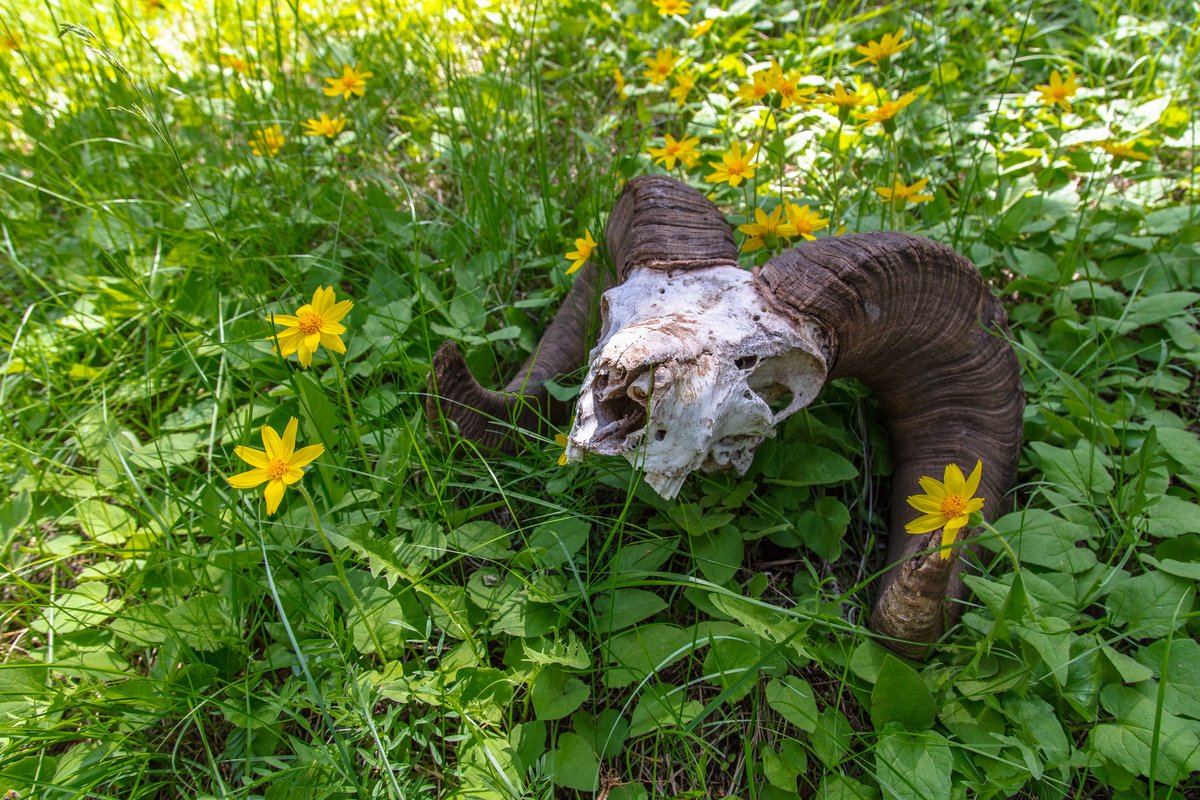
Leaving behind petrified wood, pretty flowers, neat rocks, and antler sheds also allow for everyone who finds it to experience a sense of discovery. Imagine how you would feel coming across this huge skull of a bighorn sheep ram, this patch of colorful yellow wildflowers, or these pillars of petrified rock on your hike!
👉 Help us protect the park by leaving what you find and taking the #YellowstonePledge: https://t.co/2qzh9c0Qol
Photos: (1) Bighorn sheep ram skull in a patch of heartleaf arnica flowers; (2) Oneflower helianthella blooms on Dunraven Peak; (3) A hiker next to petrified wood on Specimen Ridge.
A friendly reminder: Fireworks are not allowed in the park, but we've got plenty of other things that might keep you entertained this holiday weekend, like watching a nighttime geyser eruption! Happy Fourth of July! ❤️🤍💙
Photo: People watching a Castle Geyser eruption at night beneath the stars.
On June 13, 2026, a small hydrothermal explosion occurred in Biscuit Basin! We cover that story in the latest Yellowstone Volcano Observatory video update, along with seismic, deformation, and geyser activity from the month of June.
https://t.co/N3ljtUEv6M
Hello, summer? Are you there? 🧐
It may be almost July, but that doesn't stop the occasional snowstorm in Yellowstone. If you visited the park this week, you may have been surprised to experience snowfall. Since most of the park lies at an elevation of 6,000 feet (1,829 m) above sea level or higher, unpredictability characterizes our weather around here! No matter when you visit, bring a warm jacket, rain gear, and lots of layers.
👉 Be sure to check the weather forecast before you arrive: https://t.co/QLb94DQ3tX
Early bird gets the worm... or bug! 🪲
Summer is the busiest time of year in Yellowstone. Wanna beat the crowds? Rise early or stay late!
An added bonus: animals tend to be more active earlier in the morning and later in the day to beat the summer heat.
Photo: A Canada jay caught itself a tasty buggy snack.
Learn more about safety while visiting Yellowstone, including how to behave around wildlife. The safety of visitors and wildlife depends on everyone using good judgment and following park regulations. https://t.co/TJ0QLthdE3
(NEWS RELEASE) A 12-year-old visitor was injured by a bison in Yellowstone National Park on June 26 at approximately 9:15 a.m.
The incident occurred near Mud Volcano, just north of Fishing Bridge. The visitor sustained injuries, and emergency medical personnel transported them to a nearby hospital. The incident remains under investigation.
Remember, animals in Yellowstone are wild and can be dangerous.
Wild animals can be aggressive when people do not respect their space. Visitors are responsible for staying at least 25 yards away from all large animals, including bison, elk, bighorn sheep, deer, moose and coyotes, and at least 100 yards away from bears, wolves and cougars.
If wildlife approach you, move away to maintain the required distance. Never approach, touch, feed or crowd wildlife, even if an animal appears calm.
Bison have injured more people in Yellowstone than any other animal. They are unpredictable, can run three times faster than humans and will defend their space when threatened.
(News Release) If you plan to visit Yellowstone National Park this Fourth of July, plan ahead to protect yourself and this wild and awe-inspiring place. Summer is the busiest time in the park, so please pack your patience. Expect crowds at popular areas and lines at entrance stations, construction areas, and roadside wildlife sightings.
🎆 Leave fireworks at home. Fireworks are not allowed in Yellowstone – even just a spark can ignite a wildfire!
💧 Flood your flames. Campfires are only permitted within established fire rings in campgrounds and some backcountry campsites in Yellowstone. Never leave your campfire unattended and always check to ensure it’s cold to the touch before leaving: Soak, stir, feel, and repeat.
🔥 Check current fire conditions. The current fire danger level in the park is moderate but could change at any time based on conditions. Please plan your activities accordingly. If you see smoke or fire in the park, please report it to rangers or call 911.
View more of our tips for visiting the park during Independence Day weekend at: https://t.co/2aBHWD0Q17
Ker-PLOEY!
The new pool of boiling water that formed last week in Yellowstone National Park at Biscuit Basin (following a small hydrothermal explosion on June 13) erupted this morning (June 23) at 8:51 a.m. MDT, sending a plume of steam and dirty water tens of feet (several meters) into the air. This is the first observed eruption of the feature since June 18, when it had several pulses of smaller spouting.
🎥: 10-second clip from the Biscuit Basin camera from 8:51 a.m. MDT
@YellowstoneNPS