We're the official nonprofit partner of @YellowstoneNPS. Protect, preserve, and enhance Yellowstone through philanthropy + education. #YellowstoneForever
Have you noticed the moon looking more "super" than usual? That's because it is!
Tilt your head toward the sky to see a supermoon - a full moon that's larger and brighter than average. This month's supermoon is at its largest and brightest today and it's also the first of three consecutive months of supermoons that'll end in January.
Photo (NPS / Neal Herbert): Supermoon rise in Yellowstone.
🎁 This holiday season, wrap up a few of Yellowstone's most recognizable icons with gifts inspired by the landscapes, wildlife, and experiences that make the park unforgettable! Choose items from our specially curated gift guide or search our entire store. 🎁 https://t.co/PgE9DTH4gT
The November issue of Explorer, our monthly e-newsletter, is out! Thankful for Yellowstone, Holiday Gifts, Seasons and Stars, Teacher Workshops, Celebrating Native Heritage, Annual Report Released, and more! https://t.co/ChLdnT5nVi
Let it snow, let it snow, let it snow ❄️
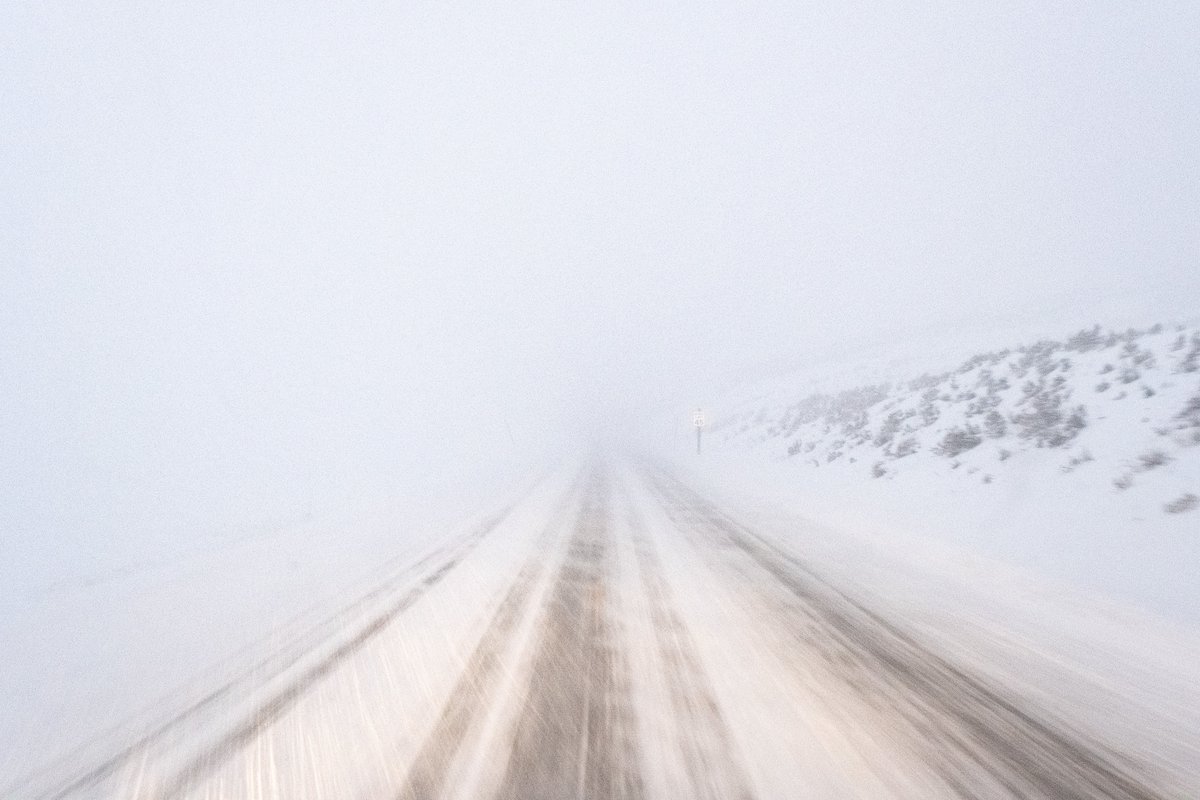
Snow is in the weather forecast, so make sure you're prepared if you're planning to visit us soon! It's currently the off season here in Yellowstone, which means the only road open to vehicles is the road between the North and Northeast entrances. Temporary road closures can occur due to hazardous conditions, so always check current road status before venturing into the park:
🚙 Check our road status map: https://t.co/IxQq7d8iRQ,
🚙 Call (307) 344-2117 for recorded information, or
🚙 Sign up to receive Yellowstone road alerts on your mobile phone by texting 82190 to 888-777 (an automatic text reply will confirm receipt and provide instructions)
Mating season has begun for bighorn sheep in Yellowstone. The horn size of bighorn sheep rams can influence dominance and rank. Horns can weigh more than 40 pounds on older rams and make up an incredible 8-12% of their total body weight.
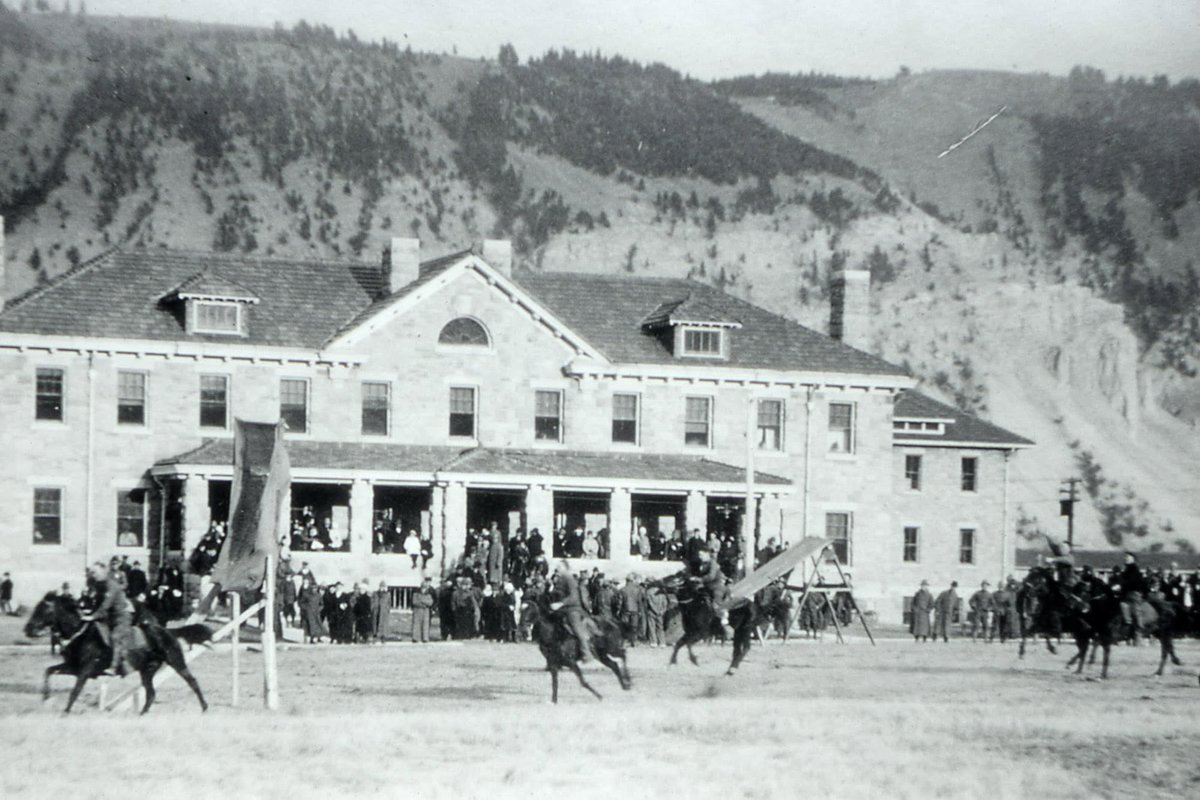
When Yellowstone was established in 1872, the National Park Service did not yet exist (and wouldn't until 1916). The park's first civilian superintendents lacked experience, funds, and a workforce to protect the park from exploitation. Eventually, Company M, First U.S. Cavalry of Ft. Custer, Montana Territory, answered the call to come to Yellowstone in 1886. This started the 30+ years of military protection of Yellowstone National Park.
From the beginnings of Yellowstone to modern day, and all the time in between, we thank those who have served in the U.S. Armed Forces and continue to serve in the in a different uniform for the NPS. #VeteransDay
Take a walking tour of the Fort Yellowstone Historic District or check out our virtual tour to learn more: https://t.co/n0SIxHONhR
Photos (from the NPS Historical Archive and Jacob W. Frank):
1. Mounted cavalry drill on Fort Yellowstone's Parade Ground in Mammoth Hot Springs (c. 1910)
2. View of buildings and roads of Fort Yellowstone in Mammoth Hot Springs (c. 1910)
3. NPS rangers speak to visitors at the Albright Visitor Center in Mammoth Hot Springs
What’s behind the magnificent clear blue of Sapphire Pool in Biscuit Basin of Yellowstone National Park? Or those gorgeous milky blues in the namesake features of Norris Geyser Basin’s Porcelain Terrace? Today's Yellowstone Caldera Chronicles is very colorful!
https://t.co/WP1l09wCpx
📷1: Sapphire Pool, in Biscuit Basin, on a stormy morning. The crystal blue color is a result of high temperatures, which prevent most bacteria from growing, and the manner in which the light interacts with the water and the reflective bottom of the pool. Credit: Jacob W. Frank, NPS
📷2: Small hot spring in the Back Basin of Norris Geyser Basin. The opalescent blue color is caused by silica, which has precipitated out of the water to form small clumps that float and interact with light (in a process called Tyndall scattering), resulting in a blue color. Credit: Brandon Duktig, NPS
📷3: View looking northwest at a new thermal pool in the Porcelain Basin area of Norris Geyser Basin, Yellowstone National Park, that probably formed in a series of mildly explosive events between late December 2024 and early February 2025. The rocks and white material (silica mud) surrounding the pool were probably ejected as the feature formed. The pool is about 4 meters (13 feet) across. The milky blue color is a result of small clumps of silica floating in the water and scattering light. Credit: Mike Poland, USGS
This #NationalBisonDay 🦬 we celebrate and honor the remarkable and resilient American bison. The protection and recovery of bison in Yellowstone is one of the great triumphs of wildlife conservation.
And that's a wrap! Another peak season has come to an end. Most park roads are now closed to vehicles as we prepare for the upcoming winter season. Interior roads will open to snowmobiles and snowcoaches on Dec. 15! https://t.co/LThc4PFAb5
In a place like Yellowstone that has over 400 miles of roads, 1,100 miles of trails, and millions of visitors each year, unexpected things are bound to happen. When people need help, our team of first responders are ready! #NationalFirstRespondersDay
Happy Birthday to President Theodore Roosevelt, who was born on this day in 1858. President Roosevelt visited Yellowstone in 1903 and inspired the construction and naming of the 50-foot-high Roosevelt Arch at the park's north entrance. https://t.co/aVVMzVfavv
While monitoring bat populations this summer, park biologists found the fungus Pseudogymnoascus destructans (Pd) on 28 little brown bats from two colonies in the northern area of the park. This was the first detection of Pd in Yellowstone since our bat population monitoring began in 2019 with support from @ynpforever.
Pd is a fungus that causes white-nose syndrome (WNS), a disease that has been killing millions of bats across North America. WNS damages bats’ skin and disrupts hibernation, causing bats to wake more frequently and deplete their fat reserves needed to survive winter.
Pd spreads mainly through physical contact between bats or contact with contaminated surfaces in their hibernation sites. Although the fungus does not harm humans, people can spread Pd from their clothing or gear after visiting affected caves. Park visitors can help Yellowstone bat populations by reporting any odd bat behavior to a park ranger and avoiding direct contact with bats since they can also carry diseases like rabies.
Though rarely seen, bats play an important role in ecosystems by controlling insect populations, pollinating plants, and dispersing seeds.
👉 Learn more about bat monitoring in Yellowstone at: https://t.co/4IkcO8TNHw
Photos (NPS): (1) A bat sleeping on a building overhang in the park; (2) Damage to a bat tail membrane, which is characteristic of the WNS disease.