Refer friends to join Pi Network - I am sending you 1π! Pi is a new digital currency developed by Stanford PhDs, with over 47 million members worldwide. To clai
We checked both the Seoul meetup and Cfan’s speech in Singapore. Over the past six years, I have carefully listened to and organized every philosophy, roadmap, and argument the core team has presented. But this time, I feel compelled to say something.
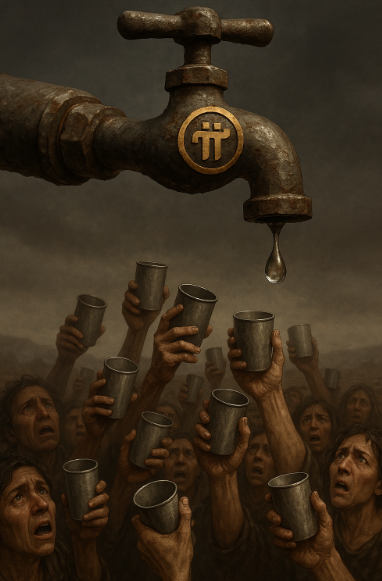
We, the community, have long worked together under the goal of building a “Pi utility ecosystem.” Countless users joined forces to expand Pi Stores and integrate Pi into real-world use cases. During the enclosed mainnet phase, we actually saw tangible progress in ecosystem growth. However, after the transition to the Open Network and the subsequent sharp drop in price, that momentum has completely stalled. Today, no one is even discussing building new services or enabling payments with Pi anymore.
At this point, there is a crucial fact the core team must understand. The team has consistently emphasized that “utility comes first, and value will follow,” warning against short-term value pursuits or profit-driven approaches. But the reality doesn’t work that way. Utility can never be built on top of a valueless asset. Developers build apps and merchants operate Pi Stores because they believe Pi’s current value is attractive — and that it will continue to grow in the future. In other words, utility and value are not a matter of sequence; they are two complementary pillars that must grow in balance.
If Pi’s value collapses in the midst of building a utility ecosystem — to the point that no one is interested in development or operations — that is precisely when the core team must step in and take proactive measures to protect its value. In most projects, this is when teams implement aggressive buyback programs, token-burning policies, or early-stage marketing campaigns to retain users and stabilize the price. Yet despite repeated requests from the community, the core team’s response remains the same: “Focus solely on utility and reject speculative approaches.”
From the very beginning, this project was built on a two-way structure — one that core team and users would build together. If that is the case, the weight of responsibility lies even more heavily on the core team.
#Pi #PiNetwork #Picoin #파이 #파이코인 #Picoreteam
Pi Network will likely need at least another 5 years before it can be used as a global peer-to-peer currency.
Why?
1. Pi needs trusted and fully functional utilities. Without real-world use cases and widespread adoption in commerce, it cannot sustain meaningful economic value.
2. It must achieve price stability. If Pi is not as stable as hard currencies like the US dollar, why would anyone use it for everyday transactions?
3. Widespread usage among its 70+ million users requires higher value. For Pi to be practical within the Pi Ecosystem, its price would need to reach at least $10. Keep in mind that around 95% of Pioneers hold 1,000 Pi or less, much of which is still locked or pending migration.
In conclusion, it may take more than 5 years for Pi to reach the necessary stability, utility, and adoption required to function as a truly global transactional currency. @PiCoreTeam@nkokkalis@Chengdiao
Someone in the Pi community dug out that the $Pi project sold a large number of Pi coins? I will not comment on whether the matter is true or false. If a large number of $Pi coins are sold, there should be transparency, so that the community can know the timetable in advance. Perhaps this incident can make $Pi more transparent and develop healthily. We should support the project #PiNetwork
Pi Network is a project plagued by severe information asymmetry.
Internal updates and progress are strictly withheld from the community, and only a small portion of information is selectively shared with moderators.
They... however, refuse to relay any of that information to the broader community—
justifying their silence with the absurd claim that “sharing information without context could lead to misunderstandings.”
If transparency had been practiced from the beginning, there wouldn’t be any risk of such misunderstandings in the first place.
Ironically, it is this secrecy that has led to widespread baseless rumors dominating the project narrative.
What’s most important is that the true driving force behind Pi’s growth has not been the core team or the moderators—it has always been the community itself.
Perhaps this very lack of transparency is what caused so many people to put their faith in unverified ideas like GCV (Global Consensus Value), partnerships with major corporations, 70,000 TPS claims, theories about Nicolas being Satoshi Nakamoto, and even the infamous “Simpsons prophecy.”
These speculative narratives filled the void left by the absence of clear and honest communication.
#Pi #PiNetwork #Picoin #파이 #파이코인
The Pi Core Team's communication style has not changed at all from the enclosed mainnet period to now. We only hear the same predictable updates once a month. It's difficult to maintain a large community with this approach. We need a new communication method, a new community leader who understands cryptocurrency well, and we want to hear transparent development updates.
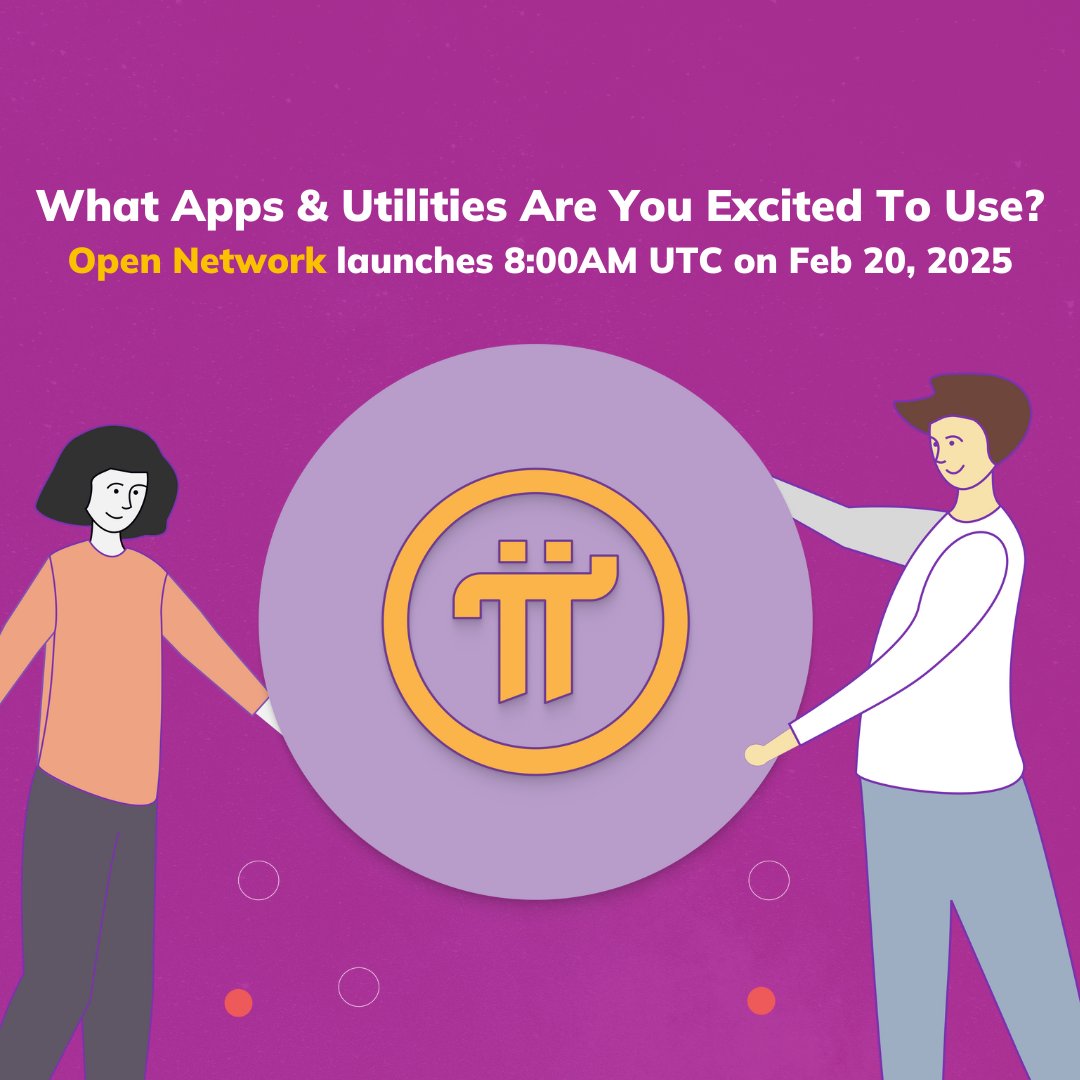
Less than ONE WEEK until Open Network, which will launch 8:00AM UTC on February 20, 2025! What kinds of apps and utilities are you excited to use? Let us know in the comments!
Revolut, the digital banking giant serving 45M users across 200 countries, just became a Pyth Network data publisher!
Real-time price feeds from a fintech giant = better data for builders, more transparency for users.
The future of finance isn't either/or — it's both. 🤝