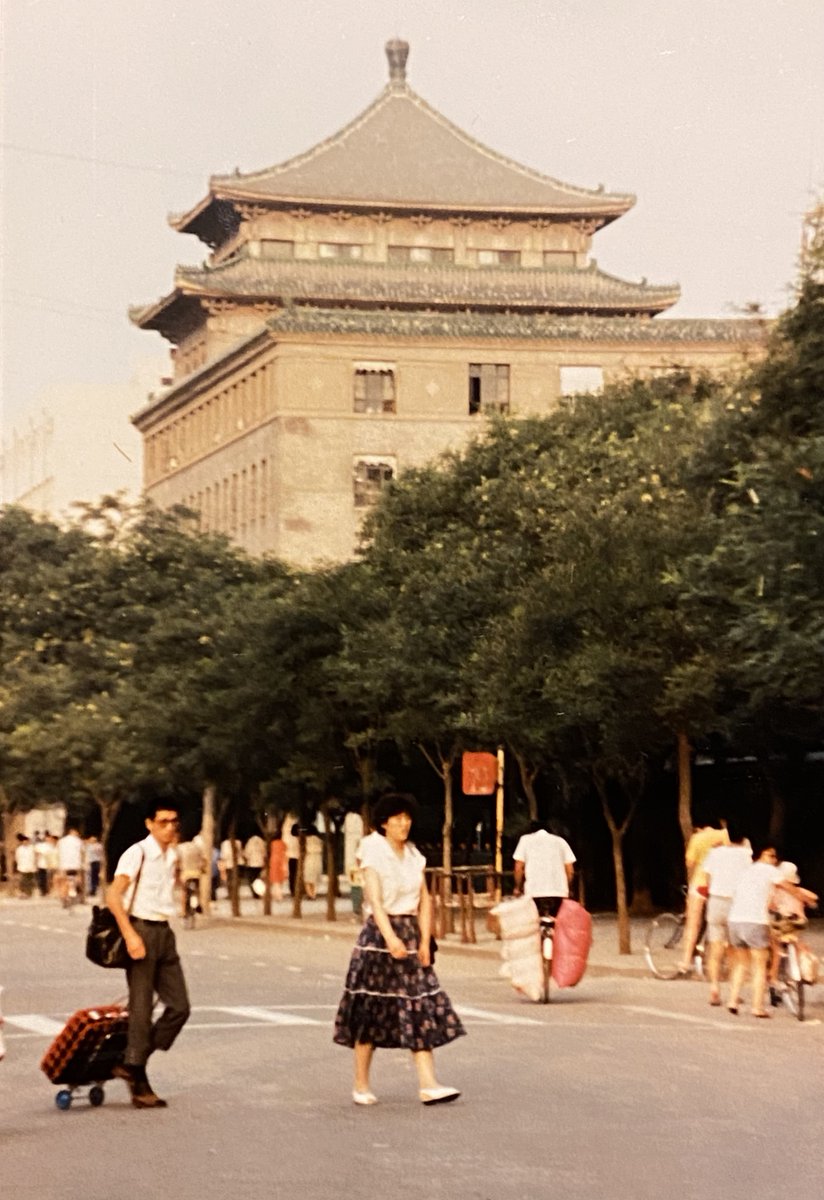
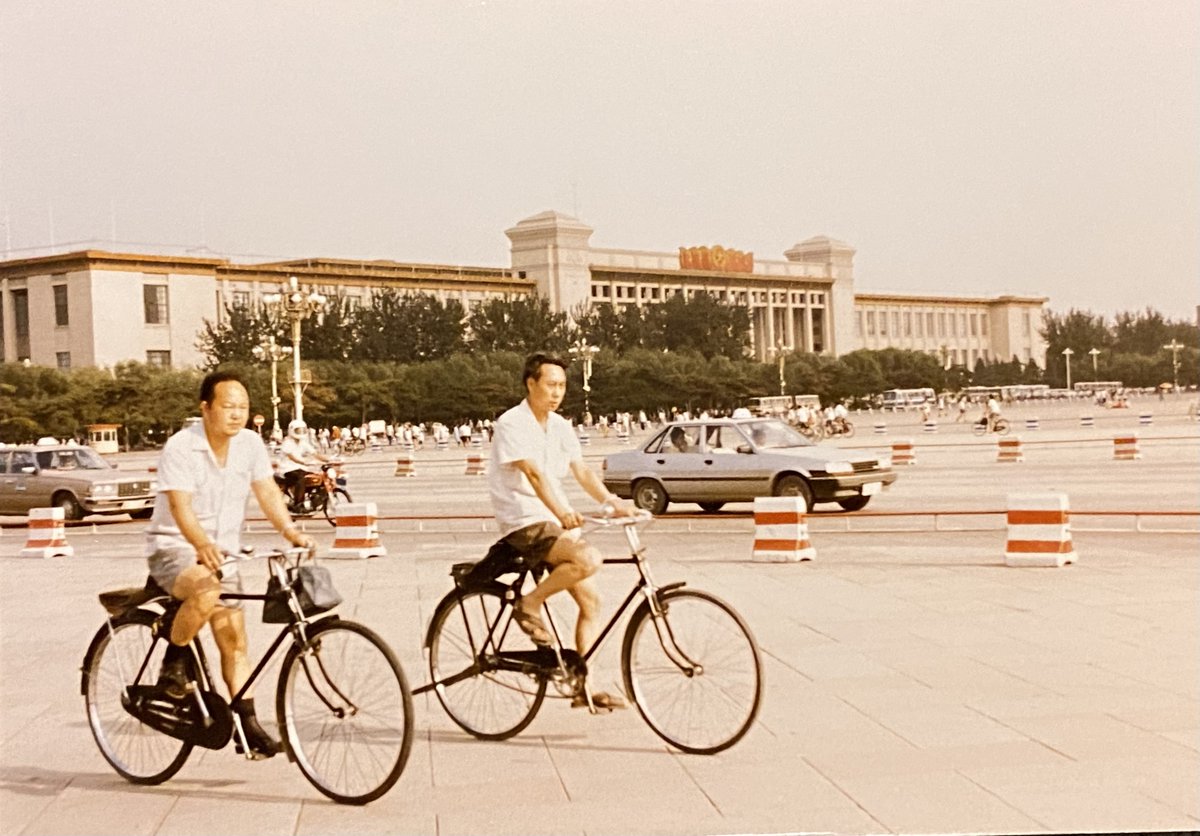
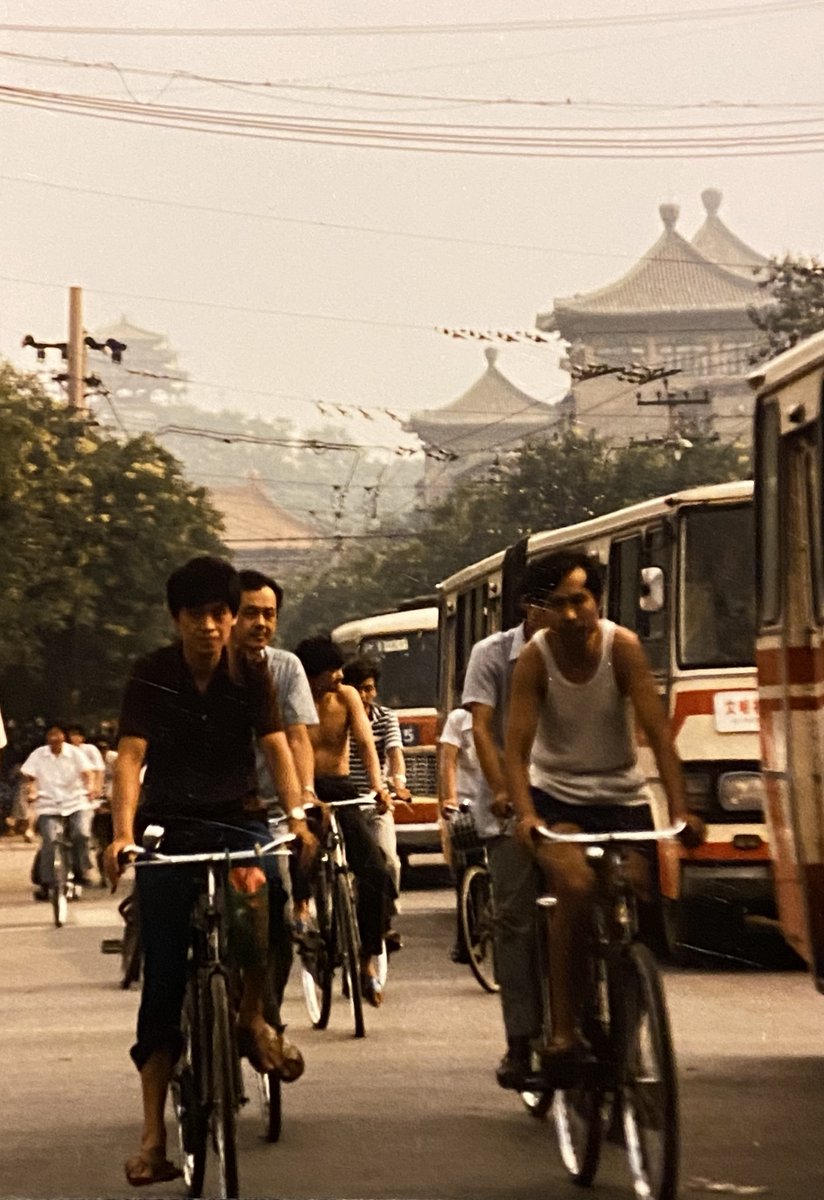
Multi-post 🧵on China past ... I have a gazillion photos of China in the mid-1980s, from when I was a language student in Beijing in 1985 and 1986 and then again in Shanghai in 1988 but traveled the country by train, especially on weekends. (I have a ton from Taiwan in the early 1990s too, from when I later studied in Taipei in 1992). These span urban and rural China, from Qinghai and Gansu to Shanxi and Jiangxi. And they are like a time capsule of a 1980s China in transition that, in recent years, have spilled out of envelopes in shoeboxes stored in closets, forgotten for years, lost but then found. I'll post just a few that will probably stoke up a lot of memories for those on X who lived in China at this seminal time 40 years ago ...
🚨 must-read 🚨
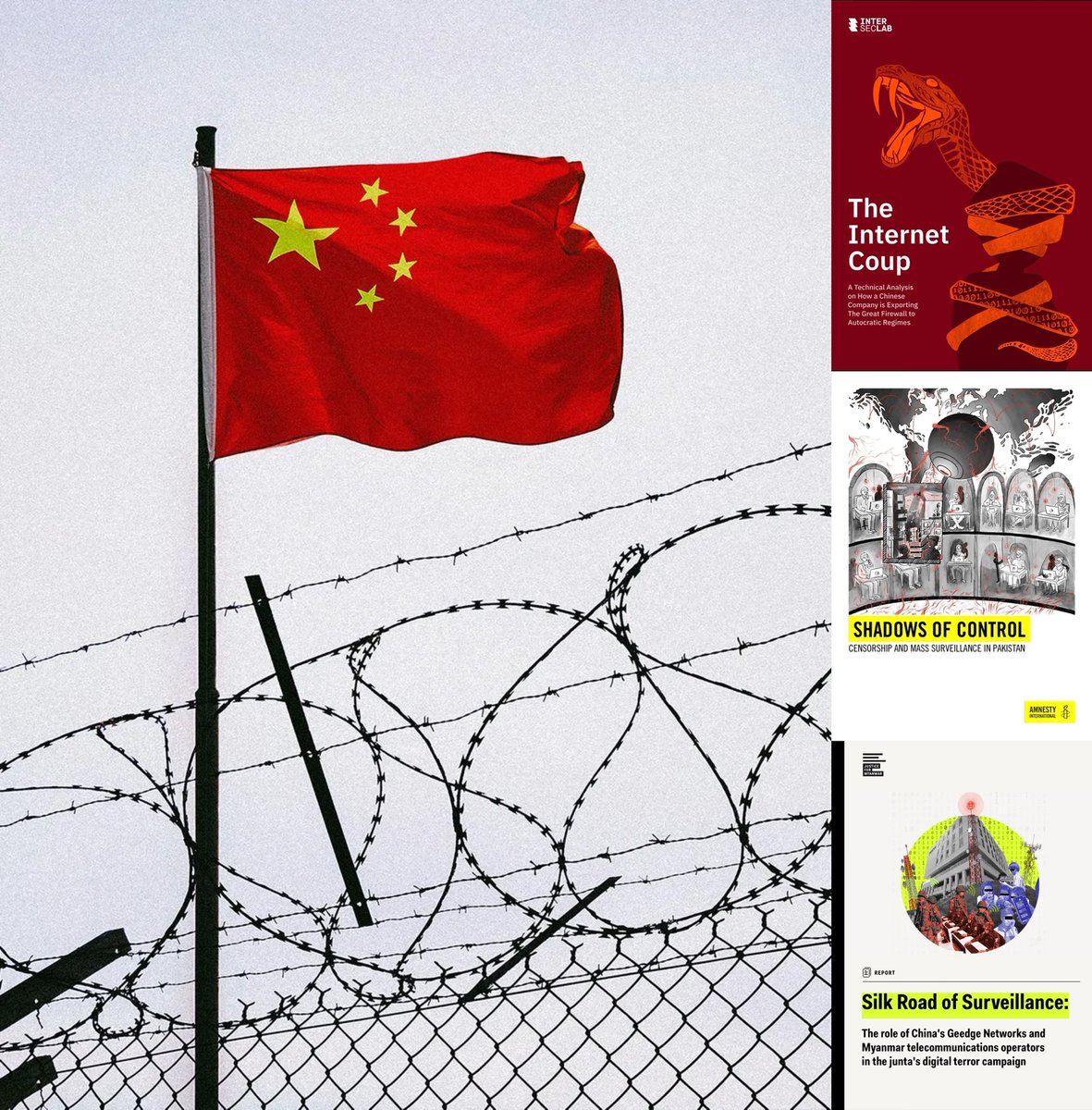
A new months-long investigation based on a leak of more than 100,000 internal documents from 🇨🇳 Geedge Networks (积至), co-founded by 🇨🇳 Fang Binxing (方滨兴) — an academician of 🇨🇳 Chinese Academy of Engineering and “the Father of China’s Great Firewall”, has revealed that the little-known Chinese company has been exporting surveillance and censorship technologies to repressive regimes including Myanmar, Pakistan, Kazakhstan and Ethiopia.
Fang had a big influence on what China's internet looks like today: a parallel universe without Google, WhatsApp, or Wikipedia — but with a censorship machine that silently eliminates any undesirable content.
For its export of surveillance and censorship technologies, Geedge Networks partly relied on Western and European technologies.
The investigation was conducted by Follow the Money, German investigative newsroom Paper Trail Media, Austrian newspaper DER STANDARD, and Canadian newspaper The Globe and Mail, with the help of Amnesty International, Justice for Myanmar, the Tor Project, and InterSecLab — which also provided technical support.
https://t.co/gSDkInLd7g
https://t.co/4SC2ytLUiR
https://t.co/YQsvBeqTKA
Technical analysis 👉🏻 https://t.co/s826MK0CDf
Pakistan (press release) 👉🏻 https://t.co/AqSuknw4zI
Pakistan (report) 👉🏻 https://t.co/y3O9Jhsl9t
Myanmar (press release) 👉🏻 https://t.co/23CrLIRMsv
Myanmar (report) 👉🏻 https://t.co/u7Drhf3uYg
#China’s Mega Dam Project Poses Big Risks for Asia’s Grand Canyon https://t.co/uzqOmWTJVc via @YaleE360
china, indien, kampf um wasser, oder, wasser abgraben......
Now Wang Yi had confirmed (to Kaja Kallas) what many, including myself, have told all along: China benefits from the war in Ukraine. In Wang Yi’s words: “China cannot afford for Russia to lose the war in Ukraine, otherwise the US will divert its full focus to Beijing.” 1/
Ht @fbermingham
“It can directly erase voices it doesn’t like from the internet, so it’s more than just a surveillance tool – it is an infrastructure of digital totalitarianism.” https://t.co/redIMJIgeZ
Die Insel wurde einst durch die Sowjetunion befreit. Heute gibt es dort keinen einzigen funktionierenden Panzer mehr, und die Sorge vor Russland geht um. Nun rüstet Dänemark massiv auf. https://t.co/64Q7mxCvL2
Taiwanese TV drama Zero Day — the first work of mass entertainment to realistically portray a Chinese invasion — aims to have a real world impact by forcing the country’s public to ask itself the same question. https://t.co/IE6lsuAM7Y
Profile on the AI accelerator Xi Jinping visited in Shanghai - it was built in 38 days. #AbundanceAgenda
On the morning of April 29, General Secretary Xi Jinping visited the “Model Speed Space” (模速空间), a large-model AI innovation ecosystem community located in Xuhui District, Shanghai.
What kind of “space” is Model Speed Space?
Strategic Significance
In September 2023, China’s first dedicated incubation and acceleration platform for large AI models—the Shanghai Model Speed Space Innovation Ecosystem Community—was inaugurated in Xuhui Riverside. Its goal is to build five core public service platforms: open data, testing and evaluation, computing resource scheduling, financing services, and integrated services.
Phase one of the community, covering 10,000 square meters, was launched immediately after the opening ceremony and welcomed nearly 20 large-model AI enterprises. The entire project is planned to cover 100,000 square meters.
Remarkably, the construction of Model Speed Space took just 38 days. In August 2023, leveraging the spillover effects of the World Artificial Intelligence Conference, which hosts a sub-forum annually in West Bund, the Shanghai municipal and Xuhui district governments collaborated to choose a prime riverside location in West Bund Media Port for developers and talent. Starting from bare concrete, construction teams transformed 13,000 square meters of space into a high-quality, plug-and-play industrial hub for developers in just over a month.
But more urgent than building physical space was enabling its functional capacity. With the AI industry evolving rapidly, Model Speed Space focused on solving the most pressing challenges facing large-model innovation enterprises.
Based on its comprehensive service platforms, Model Speed Space is now deepening its evaluation, overseas expansion, and other value-added services.
Innovative Approach
Model Speed Space also enhances its service capability through an innovative paradigm: each resident company receives dedicated 1-on-1 lifecycle support, including policy guidance and targeted resource matchmaking. Over the past year, it has assisted nearly 100 companies in applying for city- and district-level industrial policies, with application funding exceeding 100 million RMB. Additionally, it appointed 12 leading large-model experts to mentor resident companies in R&D, venture capital, and entrepreneurship—nurturing a wave of potential unicorns.
A few numbers illustrate the space’s broader impact on Shanghai’s AI sector:
As of the end of last year, 255 large-model enterprises had settled in the area.
34 large-model filings were successfully completed.
More than 1.3 billion RMB in computing subsidies (overlapping city and district policies) were granted.
Over 180 TB of open-source corpus has been released, with a 2000+ TB data resource system under development.
Over 100 AI companies have received funding from national and municipal AI funds, as well as direct and indirect investments from Xuhui Capital.
More than 100 financial institutions have now established offices in the area, highlighting Model Speed Space’s growing capital magnetism.
Global Relevance
Looking back at its first year of development:
At launch, over 20 companies moved in.
Within 100 days, that number surpassed 50.
After 500 days, it had grown to 255.
Today, over 100 large-model companies operate directly from the site, catalyzing over 200 surrounding AI enterprises and more than 100 investment institutions.
Recently, a returned overseas developer interviewed in the space’s communal lounge shared that thanks to initiatives like Model Speed Space, "Shanghai is now globally recognized as China’s most AI-focused city."
In late February, the 2025 Global Developers Pioneer Conference was successfully held at the site. During the event, Model Speed Space announced its next goal: to become “the world’s largest AI incubator.”
In January, Shanghai had already unveiled five public service platforms under the “Modeling Shanghai” initiative, covering intelligent computing, corpus, large-model evaluation and validation, young scientist development, and financing—each one deeply linked with Model Speed Space. Prior to that, in October 2023, Shanghai’s Pilot Zone for Generative AI Innovation was also inaugurated within Model Speed Space.
Why is it called “Model Speed”?
After nearly 19 months of refinement, Model Speed Space is shaping a “dual-cycle ecosystem” for the large-model AI industry.
Internally, it addresses practical challenges in AI deployment by encouraging cooperation among upstream (infrastructure), midstream (model building), and downstream (applications) enterprises—creating a vertically integrated flywheel model where “a change of floor means a new partner in the value chain.”
Externally, it connects with academia, enterprises, and capital, organizing nearly 100 matchmaking events to help resident startups validate business models and expand commercially—supported by favorable policy and an integrated innovation ecosystem.
A National Innovation Hub
Model Speed Space is surrounded by seven major tech innovation clusters in Xuhui Riverside, each over one million square meters. These include:
UNESCO Category I Center
China-BRICS AI Development and Cooperation Center
Open Atom Foundation
It also houses national research anchors like:
Shanghai AI Lab
China Telecom AI Research Institute
Tech giants such as Alibaba, Tencent, NetEase, and AI leaders like SenseTime, StepFun, and Xiyu Technology are also present, alongside industry giants like CCTV, BMW, Polestar, and Zeekr—together forming a powerful innovation matrix.
As of February 2025, 60,000 square meters of Model Speed Space have been completed, with Phase 5 currently under rapid development.
The Road Ahead
To fulfill its ambition of becoming “the world’s largest AI incubator,” Model Speed Space is exploring a “standalone operations + co-incubation” model and launching the “Model Speed Partner Program.” The initiative supports:
Dedicated zones for foundational models
University innovation hubs
AI innovation centers led by major tech firms
It is building:
A computing resource platform with 9 partners, over 50,000 GPU cards, and 30 EFLOPS of planned compute power
An open data platform via Shanghai AI Lab’s OpenDatalab and KoopaTech, planning to offer 2000 TB of high-quality data in 2025
A financial services platform that hosts 52 investment institutions and over 100 billion RMB in combined national, municipal, and district AI funds
A compliance guidance platform, home to Shanghai’s first offline service center for large-model regulatory advice
Censored modern Chinese history resurfaces in online archive: Interview with #China historian Ian Johnson
“But it is not true that suddenly all these people with alternative opinions disappeared from China or no longer work.” @nasredinhoja https://t.co/lulf2eraaI
As Chinese authorities are keeping its internet under full control with a proactive censorship regime, why are those videos not deleted from Weibo and Douyin?
Beaucoup ont été convaincus par son hypothèse : Musk et Trump révèlent une nouvelle modalité du pouvoir structurée par une transe algorithmique.
Mais qui est vraiment Jianwei Xun ?
Entretien.
https://t.co/uAatnE7aPx
DeepL startet "Clarify" – interaktives Feature für höhere Übersetzungsgenauigkeit, allerdings nur für zahlende Kunden (DeepL Pro). Funktion bezieht Nutzer in Übersetzungsprozess ein und hilft, mehrdeutige Textstellen eindeutig zu klären. Mehr hier: https://t.co/EoHKLABchm #MÜ#KI
What's been happening in the Uyghur region? it's still dire: 500k-1m detained in prisons and new kanshousuo; forced institutionalization of non-Han young, old in boarding schools, nursing homes while working age non-Han pushed to distant forced labor.
https://t.co/nYfyMZBHeZ