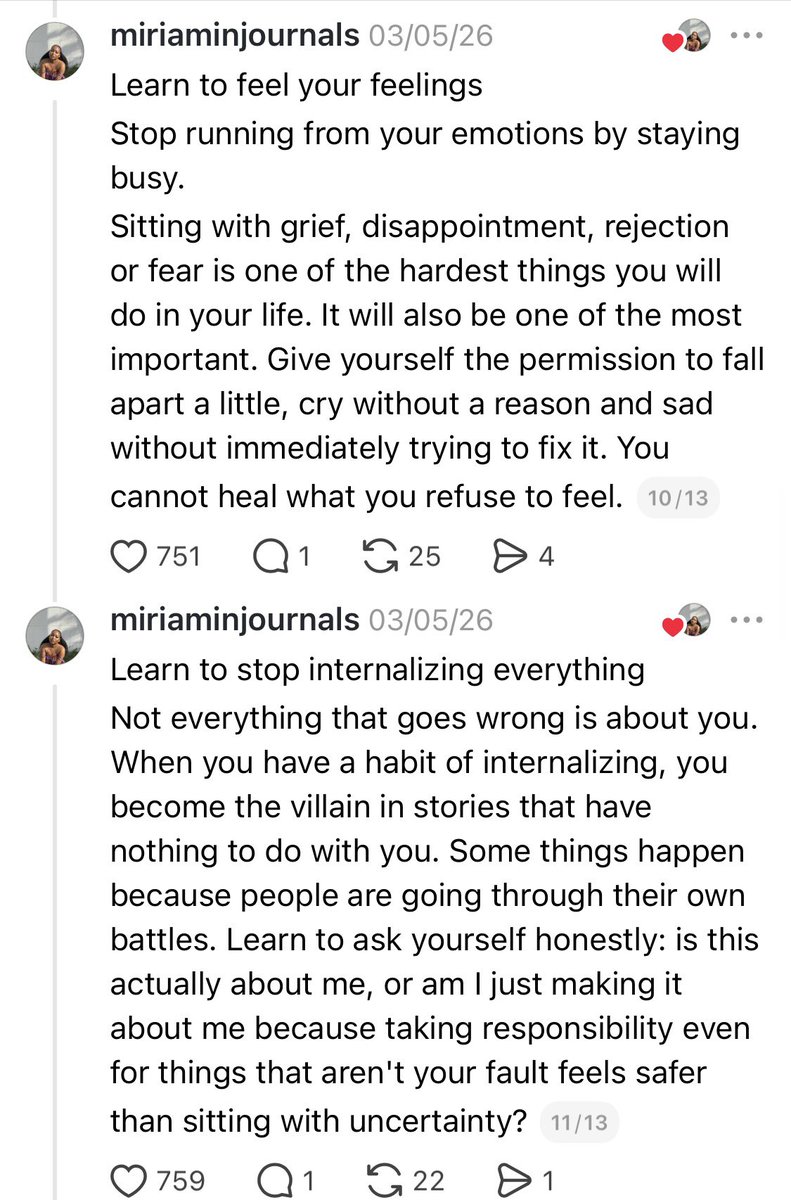
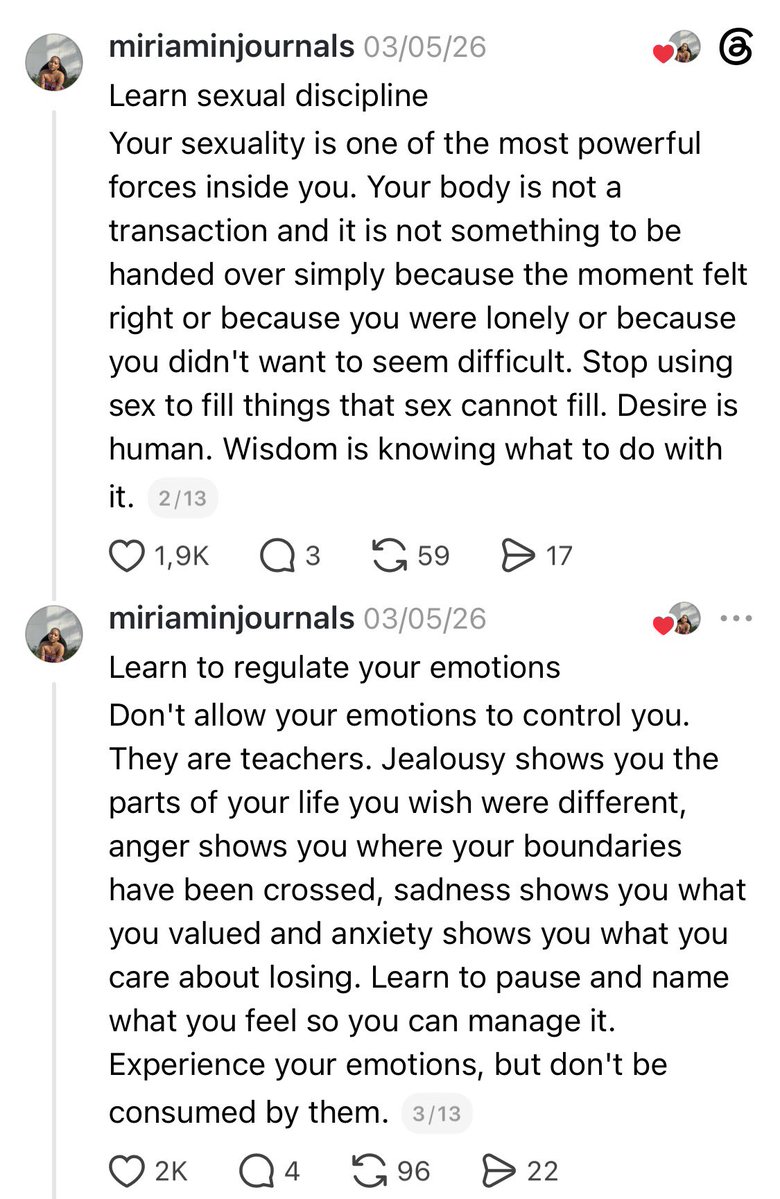
how to start training your nervous system to remain calm in situations that would normally overwhelm you:
- practice observing your emotions before reacting to them. when something goes wrong, create a little space between what happened and how you choose to respond.
- learn to regulate your breathing. when you feel yourself becoming overwhelmed, consciously slow your breath, unclench your jaw, relax your shoulders, and release the tension in your body.
- stop assigning urgency to everything. being five minutes late, sitting in traffic, making a mistake. most inconveniences don't require an immediate emotional response.
- practice sitting with discomfort. boredom, uncertainty, frustration, impatience. allow yourself to experience these sensations without immediately reaching for your phone or looking for something to distract you.
- become conscious of the stories you're telling yourself. notice when your mind begins catastrophizing and gently redirect your attention toward what is actually happening in the present moment.
- spend time walking without stimulation. no music, podcasts, or scrolling. learn to become comfortable with your own thoughts and the natural rhythm of the world around you.
- practice surrendering control over things you cannot change. the traffic will move when it moves. the plane will board when it boards. your resistance to the present moment only creates additional suffering.
- build trust in your ability to handle difficult situations. remind yourself of everything you've already navigated and survived. you have so much more capacity to handle life than your anxious mind sometimes allows you to believe.
- understand that emotional regulation is a practice. every little inconvenience throughout your day is an opportunity to teach yourself that discomfort does not always mean danger.
- the goal is to reach a point where your inner state is no longer completely dictated by your external circumstances. there's an incredible sense of freedom that comes with knowing you can remain grounded even when the world around you feels chaotic.
There's no light
My phone's battery has died, my power bank too
My torch has gone off
There's heat
There's no food
I'm a student supposed to be reading
There's no light in school too
They stopped night classes due to insecurity
But yeahhhhhhhh there's NELFUND👏👏👏
Dear men,
There’s a freedom I want you to experience, financial freedom.
I’m begging you , put systems in place for yourself .
Life is not only “I get muscle, I get muscle.”
One day, the muscle & agidi will soften.
And life will ask you:
What did you do with the proceeds of the last 30 years of work?
Everywhere go first blur ,IF
all you did was gamble and chase ponzi, hoping to build real wealth
you ate everything and never invested while your mates did.
your lifestyle ran ahead of your income.
If debt and bad money behaviour kept dragging you backwards .
Walk further with me ,
If at that moment,
the quiet power of dividends,
the steady rise of capital gains,
the calm cashflow from your investments of over 30 years of work.
cannot step in and say, “Peace, Be still.”
Do better financially.
The older you get in university, the less you care about looking smart and the more you just want to understand your courses, pass your exams and graduate peacefully.
A quick walkthrough of what it looks like when you’re about to change your life.
You’ll make a decision. You may not yet know how you’ll carry it out, but your heart will pound with anticipation. You’ll wake in the middle of the night, unable to fall back asleep. When sleep finally comes, you’ll dream only of what you’re pursuing.
Then you’ll find yourself waking in the early hours, too excited to stay in bed and eager to get moving. When you set things in motion, you’ll hear screeching noises.
Your heart will pound faster and faster. You’ll move quickly, starting slowly, then gaining momentum as you show up in the right way. That momentum will create leverage and accelerate your progress. You’ll move faster than you ever thought possible.
You’ll move at the speed of light, and when it is no longer an option to stay on the ground, you’ll take off. At that point, the only game left is this: You WIN.
Instead of writing down what your lecturer is saying during classes, you can do these:
Step 1. Put your phone near the front and record with your voice recorder app.
Step 2. After class, open NotebookLM (https://t.co/EHxmnv7z8X). It is free with a Google account. Create one notebook for that course.
Step 3. Upload the audio file. MP3 and WAV both work, and NotebookLM transcribes the recording when you add it.
Step 4. Add the lecture slides to the same notebook.
Step 5. Ask it:
"List everything the lecturer said that is not on the slides."
Then ask:
"What did he stress or repeat?"
Step 6. Check the important facts against your slides or textbook. A noisy hall makes transcription mistakes, especially with Latin terms.
No data at home? Record in class and upload when you get Wi-Fi.
Half of what your lecturer says never reaches the slides. Now you can find it.
Some of you come from homes where your parents support you financially, even when you're married with kids.
Some of you come from homes where your first salary after university, and every subsequent one, goes towards taking care of the home, your parents, younger siblings and extended family.
Some of you come from homes where you start shouldering responsibilities even before your 18th birthday.
Whatever your reality is, act accordingly. Remember the home you're coming from, and don't measure your decisions by someone else's reality