I see a lot of FUD on Twitter now about bigger blow ups in the following weeks and months. The scars of 2021 were clearly visible to many as it was still very recent.
Ethereum is still a non-consensus buy. Pretty bullish about it. The problem with investing in the app layer is I am unsure if any of them will survive or face earning compression.
Ethereum L1 will make less fees this year than Hyperliquid or Pump, and trades at 15x Hyperliquid's market cap (~4x fully diluted) and 150x Pump's (~65x fully diluted)
This gap will close
a lot of crypto native friends writing me that they are totally underexposed and dont know if they should buy now
crazy how many people had captiulated and how few people were truly prepared for this sudden turn
i personally believe this is only the very beginning
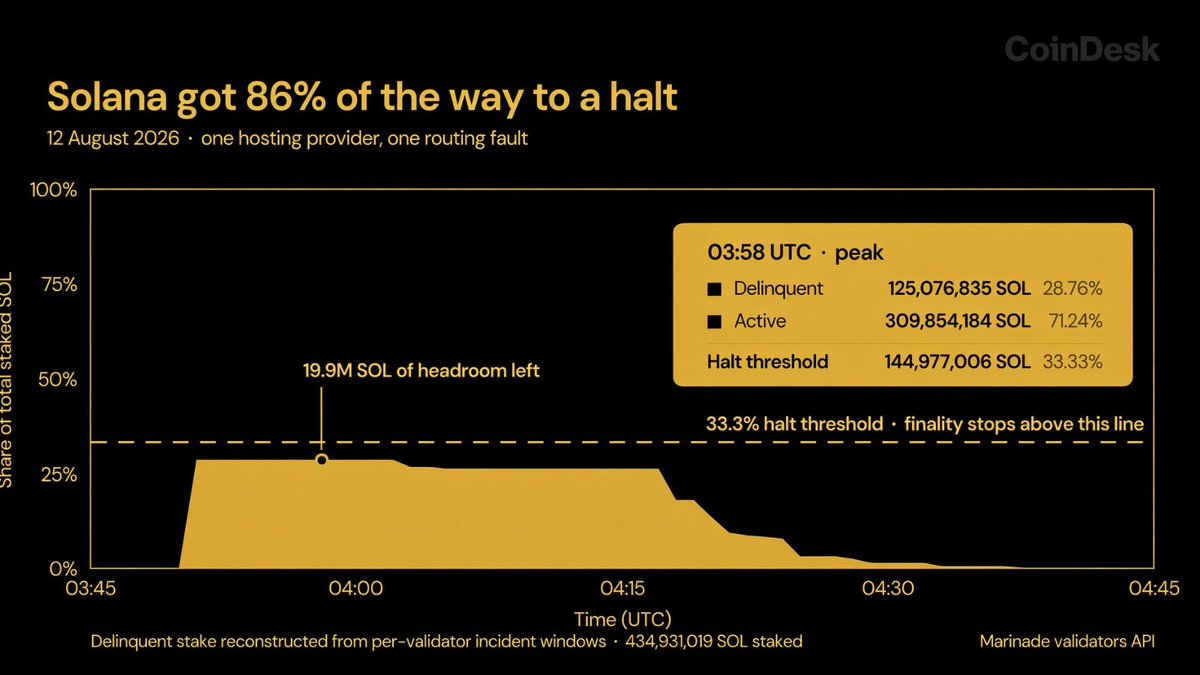
LATEST: ⚡️ A routing fault at hosting provider Teraswitch knocked nearly 29% of staked SOL offline on Wednesday, just shy of the 33% threshold at which Solana halts block finalization.
LATEST: @Solana nearly halted today after a routing glitch knocked 29% of staked $SOL offline, coming within 20 million tokens of the one-third threshold that would have frozen the entire network, per @MarinadeFinance.
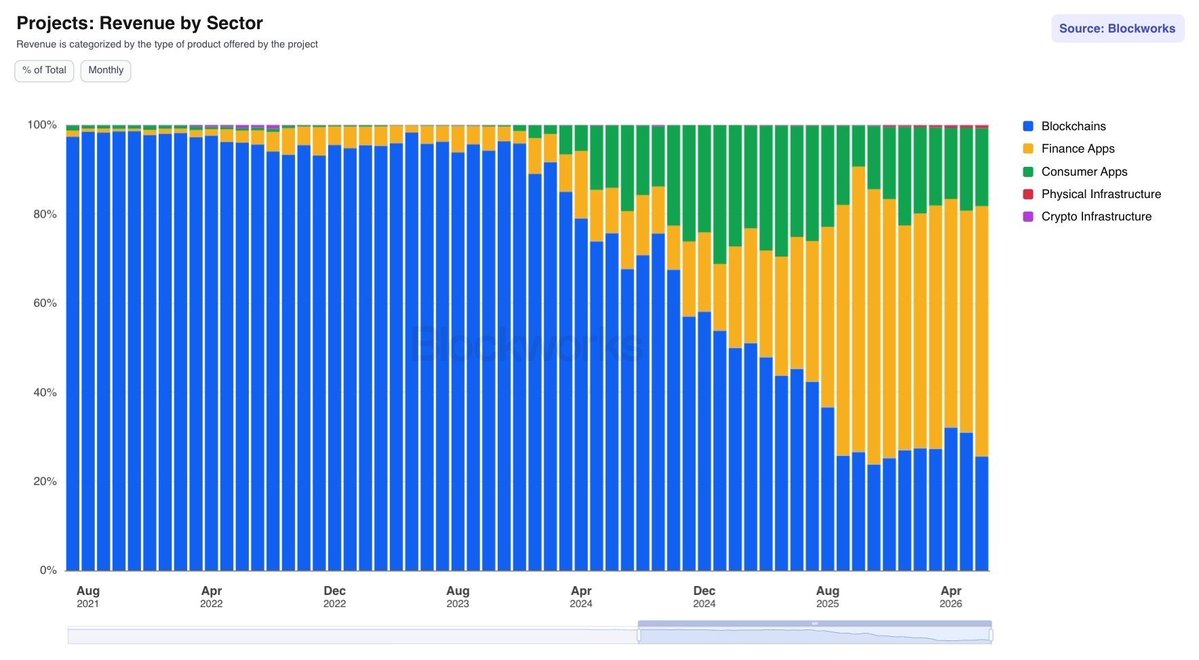
From August 2021 through 2023, blockchains captured 90%+ of monthly crypto revenue.
By mid-2026, that share dropped to 25%.
The new breakdown:
🔸 Finance apps: exceeded 50% in most months
🔸 Consumer apps: steady meaningful share
🔸 Blockchains: down to ~25%
🔸 Physical and crypto infrastructure: rounding errors
The economic center of crypto moved from the base layer to the apps running on it.
Early cycles were infrastructure-focused because infrastructure was the only place value could accrue.
Users paid L1 gas fees because there was nowhere else for the money to go. Ethereum's high fees, Solana's spikes, Bitcoin's security budget drove revenue.
As blockchains became cheaper, more scalable, and more reliable, apps could finally support real users and capture their own revenue streams.
Finance apps (perp DEXs, lending protocols, stablecoin issuers, trading tools) earn fees from trading volume, not just gas.
Consumer apps (memecoin launchpads, wallets, social tools) turn engagement into sustained revenue as they find market fit.
The internet followed the same arc.
In the 1990s, ISPs and backbone providers made the money. By the 2010s, applications and platforms captured most of the value.
Crypto is following that path, faster and with full transparency because everything settles onchain.
You can't value L1s solely on the claim that they capture all fees anymore.
App-layer protocols have proven that lean teams can generate hundreds of millions in revenue across:
🔸 @HyperliquidX -style derivatives platforms
🔸 @Pumpfun -style consumer platforms
🔸 The wider DeFi stack
These products now capture economic surplus that once flowed almost entirely to validators and miners.
That diversification is healthy. Crypto no longer depends on one revenue source or one narrative.
The infra succeeded, which is why its revenue share fell. Finance and consumer apps now generate the majority.
That's where the next decade of value compounds.
h/t: @Blockworks
Ethereum needs more than code. It needs storytellers.
If we want $ETH to keep growing mindshare, we should support the creators who spend hundreds of hours explaining the tech, markets, and long-term vision.
Two channels that deserve way more attention:
@edge_pod
@MilkRoad