Chopra’s Silver and a Changing Guard
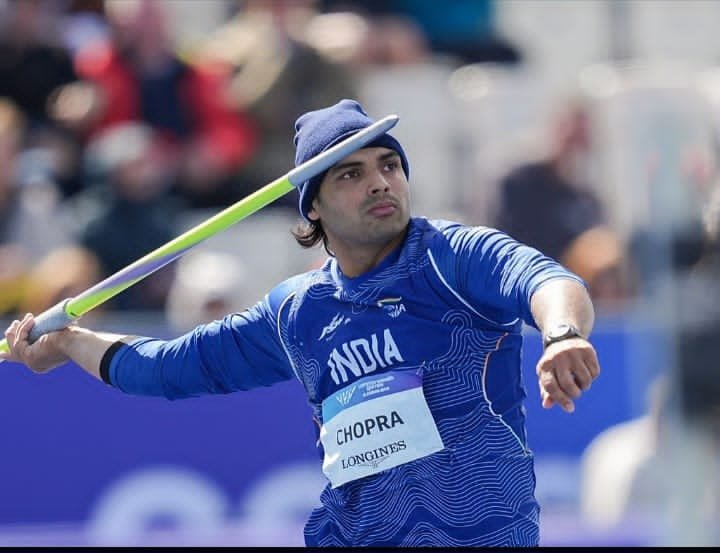
We are so used to seeing Neeraj Chopra win, picking off medals like fruit in a harvest season, that a silver kind of doesn’t feel right. It doesn’t belong. But since Paris 2024, where a certain Arshad Nadeem crushed the competition to pick up gold with a mammoth 92.97m, Chopra’s fortune has kind of lived on a slippery slope. In Glasgow, however, the familiar routine was back when he threw 85.83m, turning back in the same motion, looking at the fans with hands raised. Was Chopra back?
Sri Lanka’s sensation, Rumesh Tharanga Pathirage, came up with the answer. We certainly expected it, knowing the kind of form he has been in since the Rome Golden Gala, where he threw 92.62m! So, when Tharanga launched 89.75m on his second attempt, one knew the Commonwealth Games crown was heading to Lanka.
World sport moves fast. It changes. It embraces new talent yet shows the way in a humane manner, reminding us that the young need to take over. Olympic Champion Arshad Nadeem couldn’t even break into the top eight for the final set of three throws. Keshorn Walcott, the 2012 Olympic Champion who had earned a new lease on life by winning the 2025 World Championship, finished in sixth spot, his jacket bearing the brunt of the Trinidadian’s frustration. Anderson Peters, the two-time World Champion, couldn’t go beyond 83.88m; those shoulders that once threw three 90-plus monsters at the 2022 World Championships seemed to sag that wee bit.
On nights where giants fall, a dark horse riding on youth and the fire of audacity usually powers through. Yash Vir Singh hadn’t been given a ghost of a chance; simply reaching the final was considered a massive achievement for the 24-year-old. With only a best throw of 81.33m heading into his sixth and final attempt, Yash Vir could have been forgiven for simply being comfortable with a top eight finish. As he unleashed the throw, collapsing onto the runway, he watched the spear soar and soar, his face contorting into a mix of jubilation and shock. The score registered 85.41m, catapulting him into third place.
Chopra still had a final throw left, but for him, the nights have certainly grown longer. Pathirage came in for his sixth throw but stepped over the line when he saw it just barely cross the 80m mark. Out of six throws, only one was legal but that single monster effort was enough to secure the CWG title.
It wasn’t a calamitous night for Indian javelin. Three athletes reached the CWG final, a first, and two finished on the podium. But as I said, the feeling echoed Paris 2024, where Chopra’s silver felt like only silver. Twilight is not a word we dare use for Chopra just yet. We look forward, we embrace a fantastic past, and as Anderson Peters shook Yash Vir’s hand at the end of the night, we do too. #javelin #yashvir #neerajchopra #Glasgow2026
Sachin Tendulkar has finally spoken on the student protests, and I had to read his note twice: once as a fan and once as an editor. The fan was disappointed, but the editor realised that this was a textbook specimen of the kind of writing that George Orwell warned about in his essay “Politics and the English Language”.
The essay was written in 1946, but it might well have been written yesterday about this very statement. Orwell’s point was that when people want to hide something, they stop using plain words and reach instead for the passive voice, for fog, for phrases that sound like they mean something while meaning nothing at all.
Consider the line, where students are disappointed that “their hard work hasn’t been rewarded”. Rewarded by whom, and denied by whom? There was a paper leak, which means somebody leaked it, some institution failed to prevent it, and an official presides over that institution. Yet none of them appears in the statement, and neither does the leak itself. A crime with identifiable custodians has been turned into something that simply happened to lakhs of children through nobody's fault.
Then comes the list of those who must set things right: parents, teachers, friends, relatives, schools and administrators. If you read that list again slowly, you will notice it covers everyone in India except the people the students are actually protesting against, which is to say the NTA, the education ministry and the government. When everyone is responsible, nobody is, and that is not an accident of drafting. It was engineered to deflect blame.
There is also a quiet sentence buried in the middle. “A society which prioritises outcomes over effort will seek shortcuts over meritocracy” is a line about those who take shortcuts, meaning the cheat. So a note on protests around paper leaks ends up gently lecturing the leaked-upon about honesty. His father’s lovely lesson—that failure is okay but cheating is not—is again aimed squarely at individuals, while the scandal and protests right now are about institutions that failed them.
The rest of the statement is what Orwell called ready-made strips of words, glued together. Full of dreams and energy, fuel to our success, safeguard their aspirations. Nobody can disagree with any of it, which is precisely the point, for this is prose engineered so that no one in power will find a single sentence to object to.
What an actual position would have looked like is a single sentence in the active voice: The government must find and punish those who leaked the paper, and fix the system that allowed it. He wrote 160+ words to avoid writing that one.
Here’s Orwell’s full essay for those interested:
https://t.co/VlPoJdOcDG
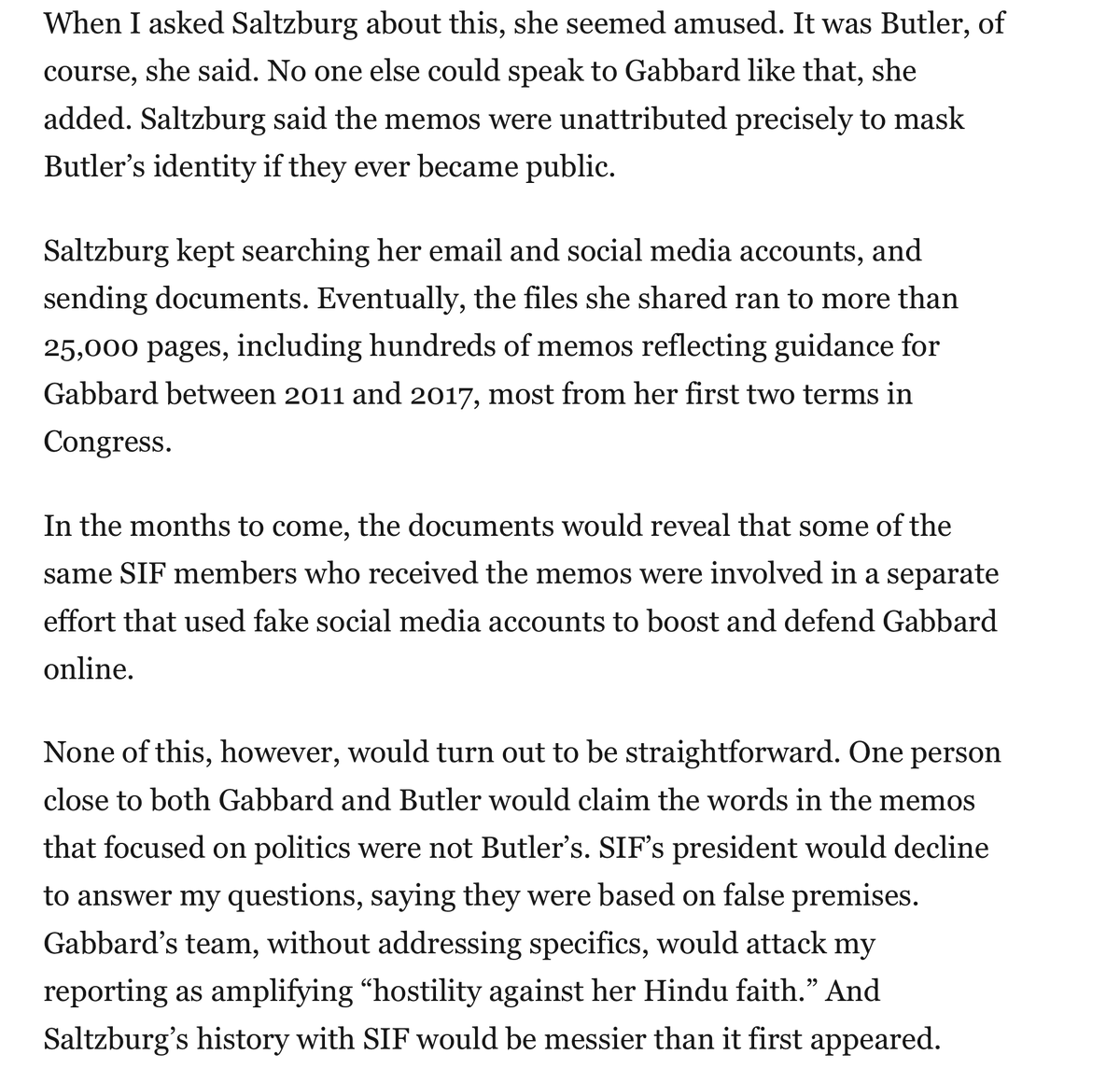
Absolutely insane revelations about Tulsi Gabbard.
Throughout her public life, she's been a puppet for a Hindu cult.
Washington Post got access to 25,000 pages of documents including directives from Tulsi Gabbard's cult leader telling her which policy positions to take and how to present herself throughout her career.
It matches her record in Congress. At one point, she was instructed to say "It’s not a ‘boohoo, I don’t get to go to the party’ situation, Wolf" during a CNN interview, and used that exact phrase. This is one of several examples of her taking direct orders about what to say on TV. They told her what to tweet about too.
The cult set up fake accounts to boost her on social media. Gabbard was aware, at one point telling them to add a photo to a profile.
An email records a phone call where she was yelled at, but Tulsi is reminded at the end that "we still love you."
This woman was always a freak, which is why she ended up in the MAGA coalition. Anti-vaxxers, criminals, racist, and a woman in a weird cult all end up as allies. Trumpism is Kakistocracy.
It’s been a minute.
2015–2018
- Exited FreeCharge. Spent time learning and investing.
- Pondered about: Why can't trust be rewarded? Started with $1M of personal capital.
- Launched CRED to reward people for paying credit card bills on time.
2019–2025
- Built a system run by a team that values ownership, judgment, and craft.
- Grew from 0 to 17M members by aligning incentives with behaviour.
- Built several products during COVID lockdowns.
- Raised $900M+ from global investors. Did 4 ESOP buybacks.
- Made Indiranagar and IPL ads slightly more interesting.
- Received a full stack of regulatory licences.
- Lost 35 kilos.
- Scaled from 0 to ~$325M ( ~₹3,200 crore) in annual revenue across payments, lending, insurance, commerce, wealth, and credit cards.
2026
- First profitable quarter (yet occasionally asked what our business model is)
- Raised another $900M from Meta in primary and secondary capital.
- Announcing our 5th ESOP buyback.
Today
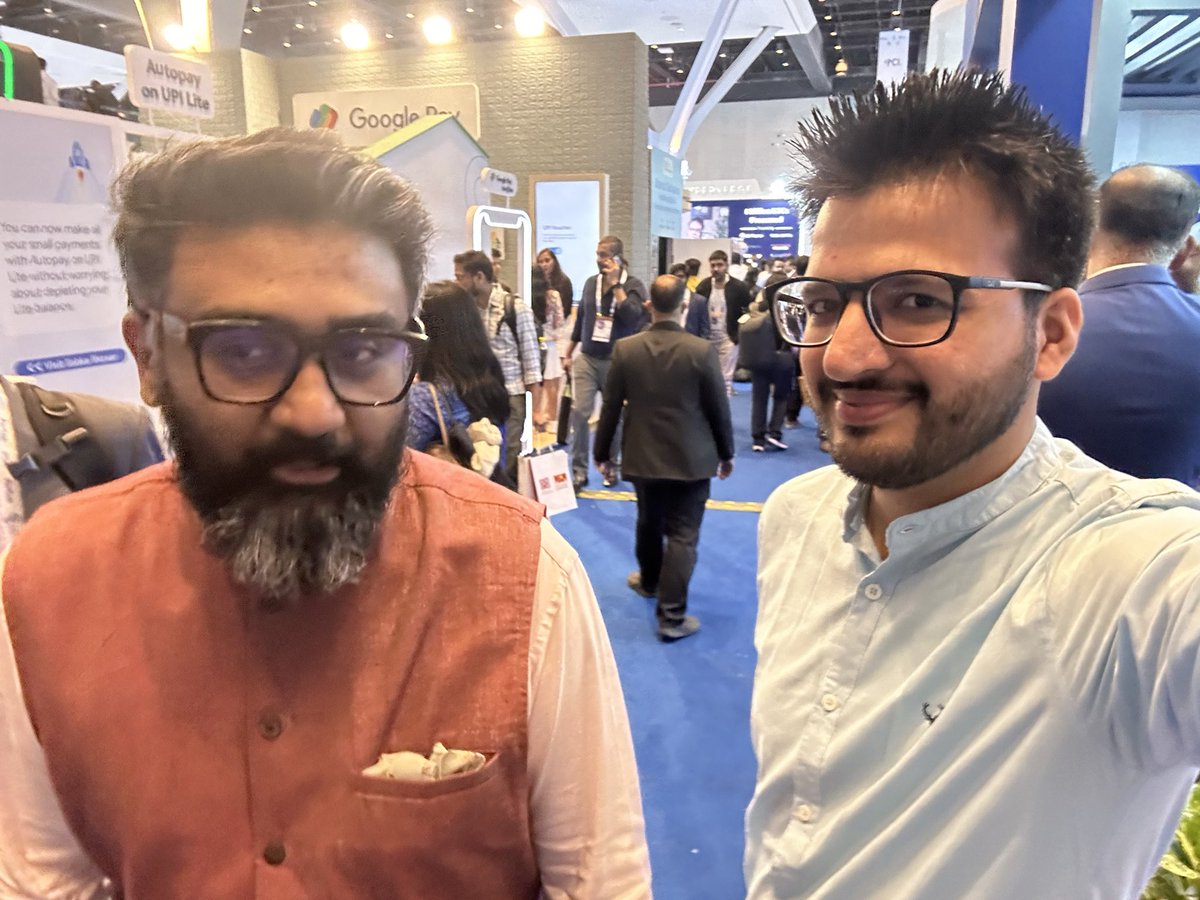
CRED is ready for its next phase. I am stepping back and @miten steps in as interim CEO, partnered with an incredibly talented team. He has been heading strategy and finance and suffering me since 2020. I’m stepping away from the operating role and will continue as a shareholder. My commitment doesn’t change. Just the role.
Extremely grateful to our members, partners, regulators, and investors who made this possible. And to our board, Shailendra, Micky, Saurabh for their extraordinary conviction.
Team CRED, I’ll still expect you to be a 10x version of yourselves.
As for me, I’ll be joining Meta to lead WhatsApp globally.
Meta comes in as a minority investor in CRED. No access to member data.
While it’s come very far, the delta between WhatsApp today and its full potential is massive. I look forward to working with Mark, Chris, and the leadership across Meta for the next step in WhatsApp’s journey. Will, thank you for scaling something the world relies on quietly, and for making this transition smooth.
Onwards.
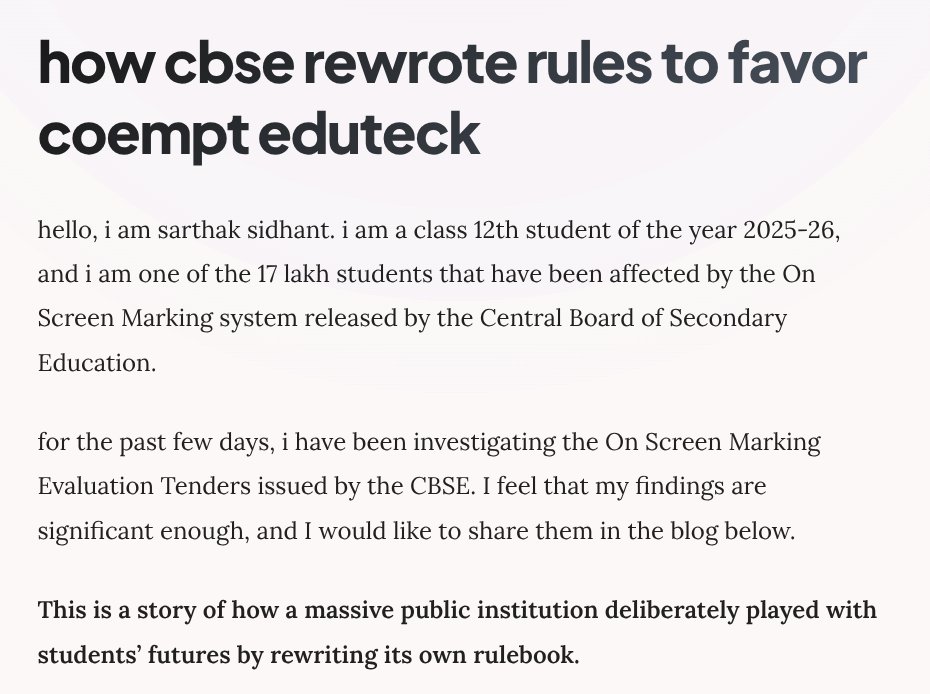
This is an unbelievable piece of work by Sarthak and something that requires amplification.
Let me explain what he found, in simple terms.
Sarthak is a Class 12 student from the 2025-26 batch, one of the 17 lakh students whose answer sheets went through CBSE's new On-Screen Marking system.
He spent days reading through CBSE's evaluation tenders, scraped all 576 tenders CBSE has issued, and tracked how the rules changed across three versions of the same tender.
The core finding is that the company that won the contract to scan and grade 17 lakh students' answer sheets is Coempt Eduteck.
Coempt used to be called Globarena Technologies. Globarena was the company behind the 2019 Telangana intermediate exam disaster, where software failures led to 3.8 lakh students getting wrong or missing marks, and 23 students died by suicide.
A government committee found systemic failure and negligence. Six months later, Globarena rebranded to Coempt Eduteck.
So a company with that track record won a contract to handle 17 lakh CBSE students. Sarthak's investigation is about how the rules were rewritten to let that happen.
The tender was issued three times.
> First tender, February 2025. It existed, then disappeared from the public GeM portal. Sarthak scraped all 576 CBSE tenders and this one was missing from the archive entirely.
> Second tender, May 2025. Four companies applied including TCS and Coempt. All four failed the technical evaluation. Cancelled.
> Third tender, August 2025. Coempt won. Between the second and third tender, a series of rule changes happened, and every single one made it easier for Coempt to qualify.
Here is what changed, one by one.
01. The old rules disqualified any company with a history of abandoning work, failing to complete contracts, or financial weakness. The new rules deleted this clause entirely. Coempt's Telangana history stopped being a barrier.
02. The old rules disqualified any company that was "blacklisted earlier." The new rules changed this to "currently blacklisted." Because Globarena rebranded after Telangana, removing the word "earlier" effectively erased their past.
03. The rules required Rs 50 crore average turnover over three years. Coempt's exact average came to Rs 50.86 crore. They cleared the bar by less than 1%. Earlier, a smaller company had asked CBSE to lower the bar to Rs 30 crore for fairer competition. CBSE refused. So the bar was kept high enough to block small players, but sat exactly low enough for Coempt to scrape through.
04. Software maturity is measured on the CMMI scale, 1 to 5. The old rules required Level 5. The new rules dropped it to Level 3. Coempt is a Level 3 company.
05. The cooling-off period for engaging retired CBSE officials was cut from two years to one. This makes it easier to use recently retired insiders to influence the process.
06. The old rules required experience with large projects of at least 5 lakh students each. The new rules removed the student count and counted cumulative answer-book volume across small projects instead. Coempt has many small fragmented university contracts. This helped Coempt and hurt TCS.
07. The old rules required bidders to own their own data centre and disaster recovery centre on Indian soil. The new rules allowed third-party MeitY-empanelled cloud hosting. Coempt runs on AWS and Azure. This helped Coempt and hurt TCS, which owns its own data centres. It also means student data is no longer on sovereign, Indian infrastructure.
08. The old rules required the bidder to own or control the complete source code of its software. The new rules deleted this. Coempt's platform runs on Microsoft's proprietary IIS, which they don't own.
09. A last-minute corrigendum, issued right before bid submission, removed CBSE's own power to blacklist the firm if its software failed catastrophically. So even a Telangana-scale failure couldn't get Coempt banned from future government tenders.
10. The penalty structure shifted from punishing mistakes to punishing delays. The old rules fined the vendor for wrong scanning, merged pages, and unscanned books. The new rules dropped those and instead levied Rs 50,000 per day for delays. This incentivises rushed scanning over accurate scanning.
11. The old rules had a hard accuracy threshold, error rate not to exceed 0.5%. The new rules removed this number entirely.
12. The old rules specified proper book and robotics scanners. The new rules just say "sufficient scanners." The definition was vague enough that, as Sarthak notes, the scanning could be done with a phone on a stand.
13. On the security side, the contract required a VAPT (vulnerability and penetration test) certified by CERT-In before go-live, and a restricted beta phase before launch. The system clearly wasn't restricted, because the other researcher, Nisarga, was able to access it and find vulnerabilities four days before go-live. So the mandatory security audit appears to have been bypassed.
These are more than a dozen rule changes, all between the failed tender and the winning tender, all pushing in the same direction, all benefiting the one company with the worst track record in the field.
The security holes Nisarga found last week now have an explanation. The system was built by a vendor that was specifically allowed to skip the security certification, the source code ownership, the data sovereignty, and the quality thresholds the original rules demanded.
Following things need to happen immediately;
1. An immediate CAG audit of the tender process.
2. A parliamentary debate on the topic.
3. An independent investigation into
> Why the first tender vanished?
> Why the disqualification clauses were deleted?
> Why the turnover bar was held exactly where it was?
> Why the security level was dropped?
> Why the blacklisting power was removed at the last moment?
Sarthak, this is genuinely exceptional investigative work. Far better than most journalists with full resources ever manage. Take a bow. :)
श्रीलंका से भारत तक तैरकर पहुंचे बेंगलुरु के कपल, 10 घंटे में पूरा किया समुद्री रास्ता..
बेंगलुरु के रहने वाले दानिश अब्दी और वृषाली प्रसाद ने श्रीलंका के तलाईमन्नार से भारत के धनुषकोडी तक 32 किलोमीटर की दूरी समुद्र में तैरकर तय की.
इन लोगों ने श्रीलंका से भारत तक लगभग 32 किलोमीटर लंबी समुद्री दूरी तैरकर पूरी की. तेज धाराओं, थकान और समुद्री लहरों के बीच उन्होंने 10 घंटे 45 मिनट मिनट तक लगातार तैरते हुए यह मुश्किल सफर तय किया.
Good but still no Dwarka-Gurugram metro link.
But why?
Even if built today, it would likely be one of the busiest metro corridors, taking significant load off the ever-choked NH-48, where commuters get stuck for hours every day.
If planners don't know how many people commute daily, from West Delhi/Dwarka to Gurugram or from Gurugram to International/Domestic Airport daily.
Gurugram is North India's biggest business hub,
yet it still doesn't have a direct metro link to the airports, despite being so close.
Every time there is talk of approval, it gets pushed to the back burner.
Any idea why does this still not qualify as a top-priority metro corridor?
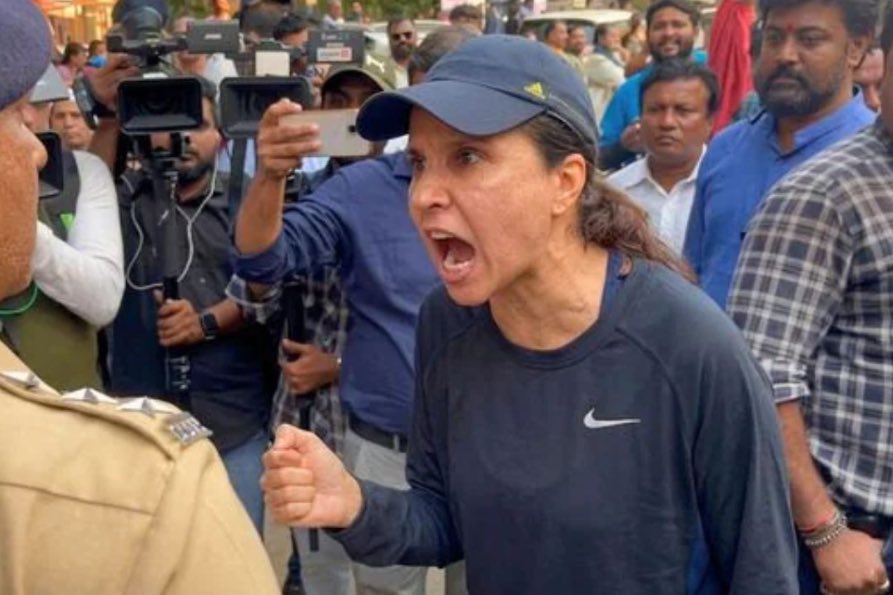
Filing a complaint against that brave woman in Worli is pure arrogance.A citizen stood up and asked questions to Minister Girish Mahajan while his party’s selfish protest choked Mumbai traffic for hours.
Instead of apologising, they’re harassing her?Citizens are the real owners of this country — we have every right to ask questions. Politicians are public servants and must respect citizens’ comfort, not cause trouble to them.
Stop this shameless bullying!
#WorliTraffic #CitizenRights #Maharashtra #GirishMahajan
𝐈𝐧𝐝𝐢𝐚'𝐬 "𝟏𝟎 𝐏𝐢𝐥𝐥 𝐌𝐢𝐧𝐢𝐦𝐮𝐦 𝐓𝐚𝐱" 💊🇮🇳
Visited a chemist: needed 6 pills, forced to buy 10. Why? “If I cut the strip, I lose the expiry date info.”
In 2025, India’s pharma market hit ₹2.4L Cr with margins up to 32%.
We are the ‘Pharmacy of the World,’ yet our packaging is stuck in the 90s causing wastage of medicines that could go to those who need them the most.
We need unit-dose labeling (printing expiry/batch on every cell) or micro-QR codes.
No more "waste tax" on patients. 💊🇮🇳
@MoHFW_INDIA@JPNadda #Pharma
you only get:
1 summer with them as a baby
3 as a toddler
5 as a child
3 as a preteen
6 as a teen
so let them run barefoot,
turn on the sprinkler,
cut up the watermelon,
chase fireflies under fading golden skies
because the summers of sticky hands, sun tired kids, and slow evenings filled with the sounds of childhood
do not last forever 🤍
Happy birthday to the @undertaker! Yes, you burned down the family home, encased my real father, Paul Bearer, in concrete, and set me on fire...a couple of times...but otherwise you're the best big brother anyone could ever hope for!
AI is deflationary for everyone.
One of the startups in the services space just replaced 8 people with AI.
If you take cost of per person at 20L, they saved 1.6 crores thru AI, which cost them about 10L. Their end clients saw the AI improvement and renegotiated fees from 2.5Cr (including mark up) to 50L.
Employees got moved out, startup lost significant revenues and made less profits using AI.