Our paper has been published in PRL!
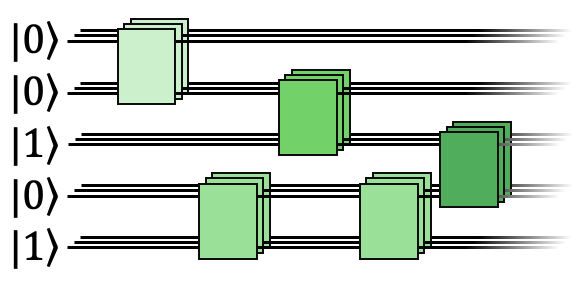
We have characterized the quantum randomness generated in symmetric local random unitary circuits by using unitary designs.
https://t.co/lFdWIv2K7U
Thank you for the great collaboration, @ryotarosuzuki_, Tomohiro Soejima, and @komoinv.
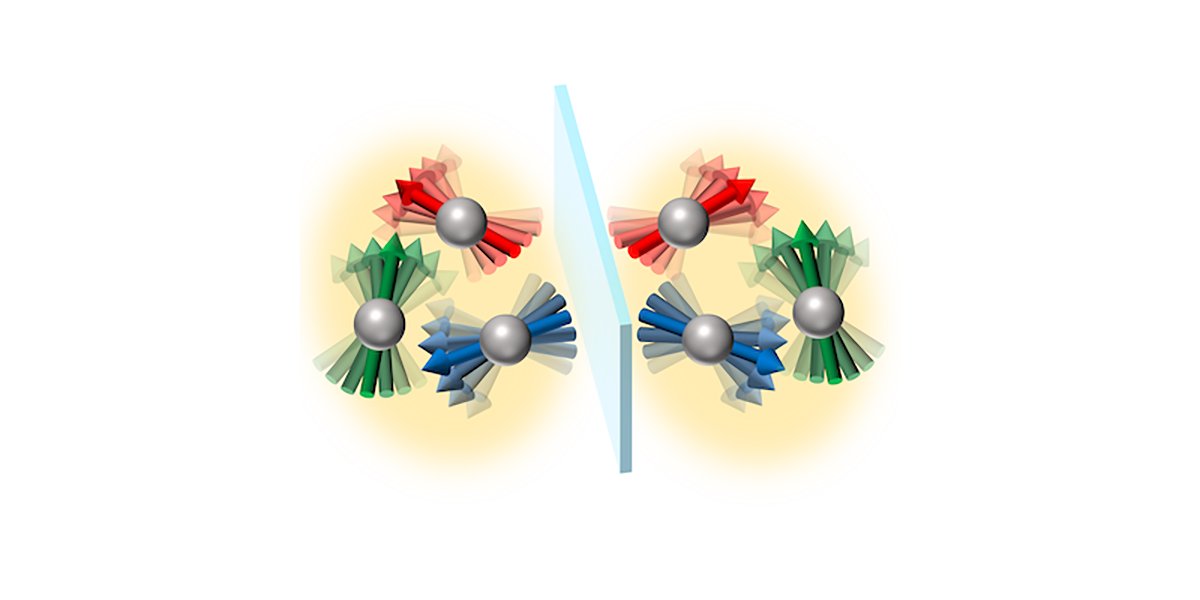
Symmetry breaking had only been quantified for the simplest case among continuous symmetries — the U(1) group — until now. A new study establishes the quantum geometric tensor as the complete measure of symmetry breaking for any compact Lie group.
🔗 https://t.co/JF5FRP5dP9
Thrilled to share that seminal works on unitary designs of symmetric local random circuits have been published jointly in PRL and PRA.
Yosuke Mitsuhashi will give a talk at TQC 2025. Don't miss it!
https://t.co/uzqkrMraXV
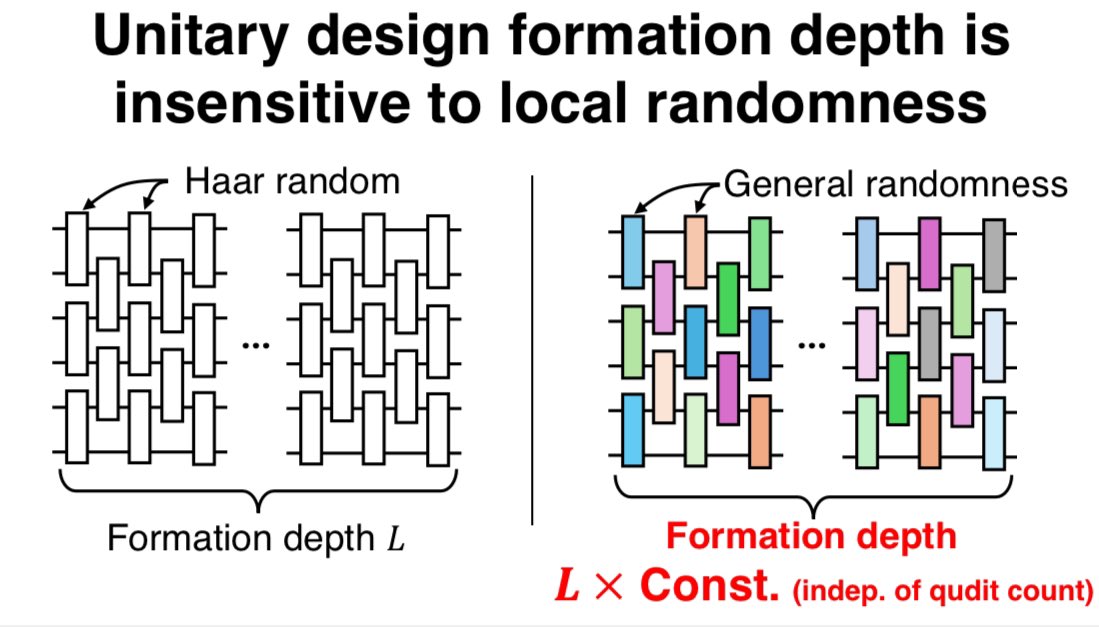
How does the choice of local random gates affect global randomness generation rate in quantum circuits?
In our new paper (https://t.co/myG2DubIeB), we resolve this open question by proving that non-Haar random circuits form unitary designs as fast as Haar random counterparts.
Are local Haar random gates the best local scramblers?
Surprisingly, the answer is negative; some fixed structure in local gates can scramble even faster.
Congrats Ryotaro (@kjroooo) for great work, and thank you @YM_physics@jenseisert for collaboration!
https://t.co/LmGo6atfiZ
More global randomness from less random local gates
https://t.co/YtBeKjqqCo
Non-Haar local quantum gates can actually lead to more global randomness in #randomcircuits and can be better scramblers.
Given a circuit architecture, which types of random gates are optimal for generating random unitaries? Maybe counter-intuitively, we show in
https://t.co/78Gw4Z8WL5 that Haar-random gates are not the best option. Instead, structured random gates can generate more randomness.
Our paper on symmetric Clifford twirling is out!
We have established a framework of twirling that accelerates the white-noise approx to realize cost-optimal QEM in early FTQC. Congrats Kento, and thanks Yosuke and Kunal for the great collaboration!
https://t.co/sUypgPNZra
The concept of unitary designs is extended to scenarios involving symmetry, which can be applied in the contexts of randomized benchmarking and many-body simulations. @YM_physics, @komoinv, @UTokyo_News_en
https://t.co/aegJLFs369