This couple have been caught on camera fly-tipping near Nuneaton. The evidence will be passed to the Leader of Warks County Council @_GeorgeFinch who, we have full confidence, will ensure these people are prosecuted. @bbcmtd
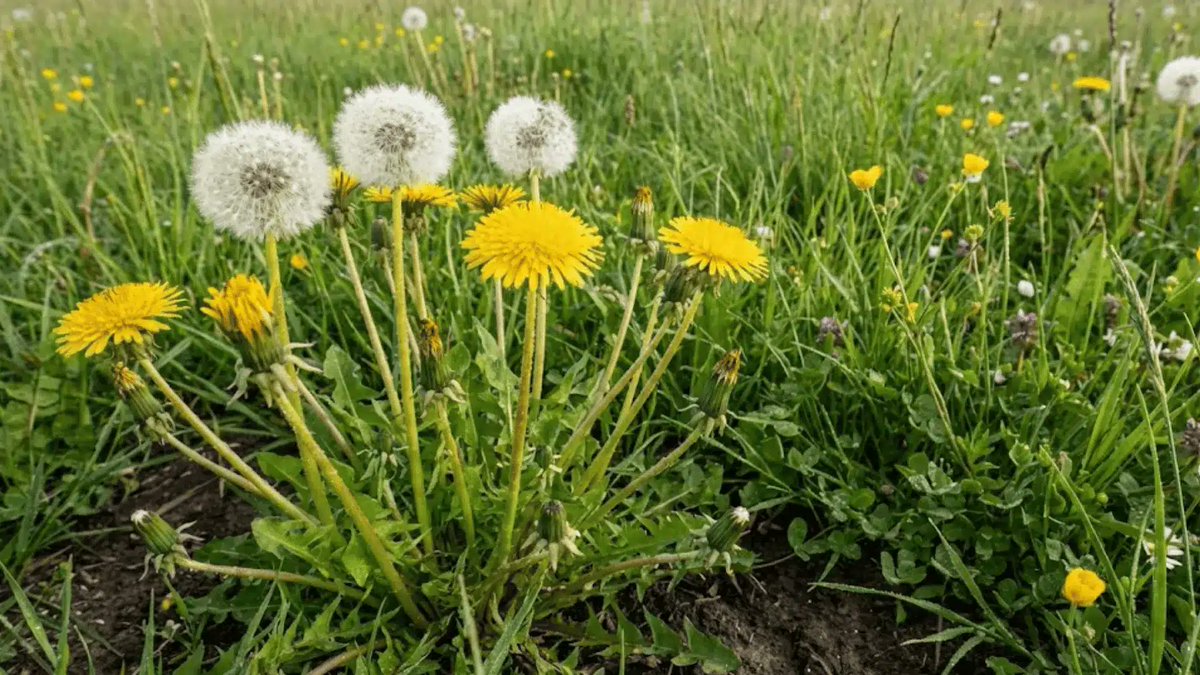
The reason we think dandelions are weeds is because of a 1950s marketing campaign.
Dandelions, native to Europe and Asia, were brought to North America in the 1600s by European colonists who grew them deliberately.
Every part is edible. The leaves are a salad green, the flowers were made into wine, and the roots were roasted as a coffee substitute and used medicinally for liver and kidney conditions for thousands of years. They were a kitchen-garden staple well into the 1800s.
The shift happened after World War II, when 2,4-D (originally developed for chemical warfare research) was approved as a residential herbicide. Companies like Scotts built the modern lawn-care industry around the idea that a perfect green lawn meant zero broadleaf plants.
Dandelions, being bright yellow and resistant to mowing, became a visible enemy, and the campaign worked. By the 1970s, "dandelion-free" was synonymous with "well-kept."
They aren't native, but they aren't doing significant ecological harm either. The herbicides used to kill them, on the other hand, kill bees, contaminate groundwater, and have been linked to non-Hodgkin lymphoma in humans.
If you hate dandelions, it's most likely due to a marketing campaign that ran before you were born.
When they announce a summer hosepipe ban on us plebs and blame it on climate change, spare a thought for all the huge AI data centres that will continue to guzzle 5 million gallons of water per day - the equivalent of the daily water consumption of a town with 50,000 residents.
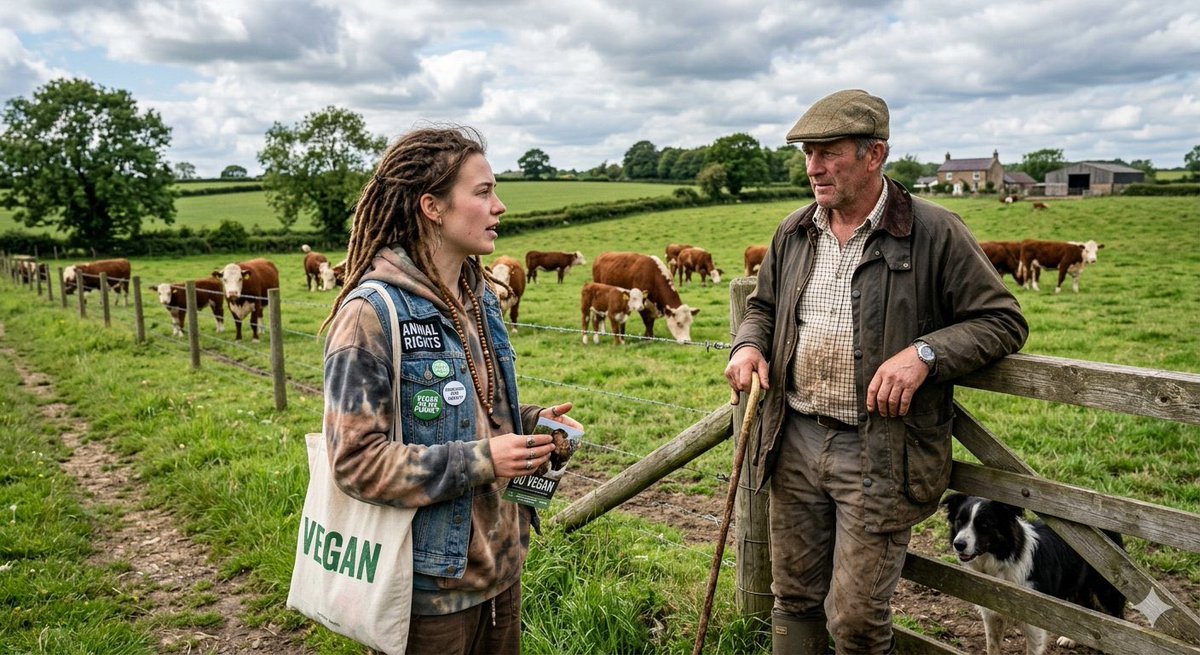
Activist: "Animals shouldn't have to die for food."
Farmer: "What did you have for lunch?"
Activist: "A salad. No animals."
Farmer: "The wheat in your croutons came off a field where the combine killed forty mice, six rabbits, and a fawn. The lettuce had a hare in it the harvester turned to mulch. The chickpeas were sprayed twice in May and the bees never made it back to the hive."
Activist: "But I didn't kill them."
Farmer: "You ordered them killed. You just didn't watch. The man on the combine watched. He's the one who cleans the blade."
Activist: "It was an accident."
Farmer: "An accident that happens every harvest, on every field, in every country that grows food. You've redefined a body count as a clerical error."
Activist: "..."
Farmer: "Your salad has more bodies on it than my steak. You just couldn't see them. They didn't have eyelashes."
Credit: @SamaHoole
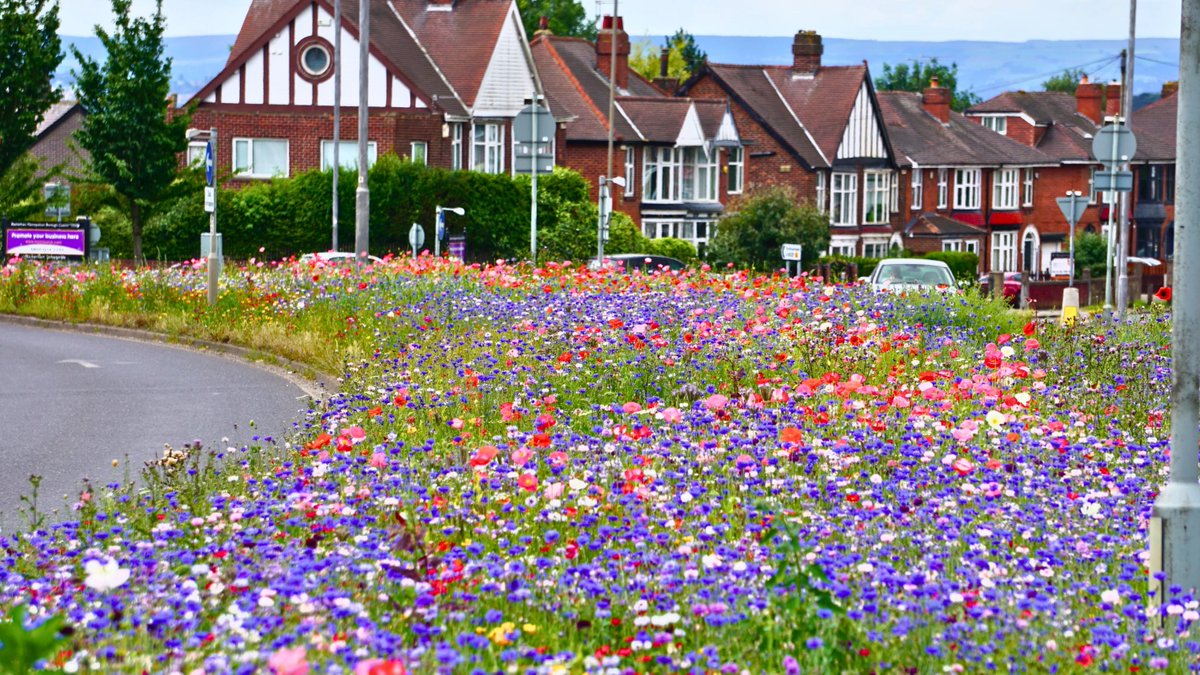
13 years ago, Rotherham, England turned 8 miles of mowed roadside grass into a "river of flowers." In 2021, they added even more miles.
The original scheme was commissioned by Rotherham Council in 2013, designed by Professor Nigel Dunnett at the University of Sheffield, and seeded with a 180-species wildflower mix along the central reservations of the town's main ring road. It replaced mowing that had been costing the council around £80,000 a year.
Since then: the wildflower verges have saved roughly £23,000 to £25,000 per two-year mowing cycle, increased pollinator abundance, and inspired similar programs in Nottinghamshire, Derbyshire, Birmingham, Newcastle, and Sheffield.
In 2021, Rotherham added 3.5 more miles across 12 new sites including Herringthorpe, Swinton, Harthill, and Maltby. They just keep expanding it.
The UK has lost 97% of its wildflower meadows in the last 100 years. Most of what was lost was paved, plowed, or mowed. The verges nobody was using anyway turned out to be one of the largest untapped habitats in the country.
This is what entitlement looks like! 🤬
There are nesting waterbirds on this pond on Hampstead Heath... there are also big 'No Swimming' signs, all being totally ignored! 🤬
Pure selfishness... 😒🤬🤬
(Shared from Instagr*m with permission from 'swansofhampsteadheath')
Britain has lost around half its hedgerows since the Second World War. The wildlife that depended on them has followed a similar trajectory. 🌿
The old field boundary — a strip of blackthorn, hawthorn, dog rose, and elder two to five metres wide between cultivated ground — was not wasted agricultural space. It was a functioning ecological system that maintained pollinators, pest predators, and farmland birds across centuries of working land.
Each hedgerow is a nesting corridor for grey partridge and skylark, a foraging habitat for brown hares and hedgehogs, a site for solitary bee colonies, and a windbreak for the crops alongside it.
The field cultivated to its very edge gives the maximum return this season. It removes the populations of beneficial insects, farmland birds, and small mammals on which stable long-term production depended.
The field with a hedgerow yields a few percent less per cultivated hectare — but remains productive across decades without compensatory chemical inputs. The documented declines in grey partridge, lapwing, and skylark across the British agricultural landscape since the 1970s are directly linked to field consolidation and hedgerow removal.
Practical equivalents for the garden or smallholding:
- A strip of wildflower meadow at least one metre wide at the plot boundary
- A clump of nettles in a shaded corner as a habitat base for red admiral, small tortoiseshell, and peacock butterflies
- A native mixed hedge of blackthorn and hawthorn in place of post-and-wire fencing
- A section of uncut grass between rows of fruit trees
#HedgerowHabitat #FarmlandWildlife #NativeHedge #GardenWildlife
🚨 Labour’s private school VAT raid is pushing over 65,000 children out of independent education
1 in 10 pupils.
The Adam Smith Institute says this is 3x worse than the government predicted, with 115 schools already closed.
These kids aren’t disappearing they’re flooding into already oversubscribed state schools. Bigger classes, longer waiting lists, overstretched teachers, and crumbling buildings. Standards will fall for every child.
Taxpayers face an extra £500m+ bill a year, while the policy likely loses money overall.
Ideological vandalism that punishes aspiration.
Britain’s children deserve better.
#EducationFail #StateSchoolCrisis
#LabourFail
#VATRaid
Myth: "I only wear vegan fabrics. Better for the animals, better for the planet."
Let's check in on Doris's annual contribution.
Once a year, in late spring, Doris is sheared. The procedure takes approximately three minutes. Doris does not enjoy it. Doris does not, by any visible measure, suffer from it. Doris is, immediately afterwards, a noticeably more comfortable animal in the British summer.
The fleece weighs approximately 3 kilograms. It is sold to the British Wool Marketing Board for, depending on the year, between £0.40 and £2.50 per kilogram. The shearing costs more than the wool fetches. Brian is shearing Doris at a loss.
The wool is then:
- Naturally flame-retardant
- Naturally antibacterial
- Moisture-wicking
- Biodegradable
- Renewable, annually
- Carbon-storing while in use
The replacement, in performance fabrics:
- Polyester
- Polyamide
- Acrylic
- Polypropylene
- All petroleum-derived
- All shedding microplastics on every wash
- All requiring fossil fuel inputs to produce
- All non-biodegradable, with a typical landfill lifespan of 200-500 years
A single wash of a polyester fleece can release up to 700,000 microplastic fibres into the water system. These fibres are now in: every tested water source on earth, every tested human placenta, every tested rainfall sample, the deep ocean, the Arctic ice, and the lungs of marine mammals.
A single wash of a wool jumper releases: nothing. The wool, when eventually disposed of, returns to soil within a few years.
The fabric being marketed as the "ethical" alternative to wool is plastic.
The plastic is "ethical" because nobody has been asked to slaughter the polymer.
The polymer also has not been asked.
Doris, by being a sheep on a fell, is producing the most thoroughly sustainable performance fabric humans have ever made.
Brian is selling it at a loss.
The fashion industry, meanwhile, is selling petroleum at a profit and calling it ethical.
Reject plastic. Wear wool.
Doris is, this morning, growing next year's batch.
We are officially in a reading crisis.
Kids of all ages are reading less and enjoying it less.
Kids who said they enjoyed reading:
• In 2005: 51%
• In 2025: 32%
Kids who said they read daily:
• In 2005: 38%
• In 2025: 18%
This is concerning.
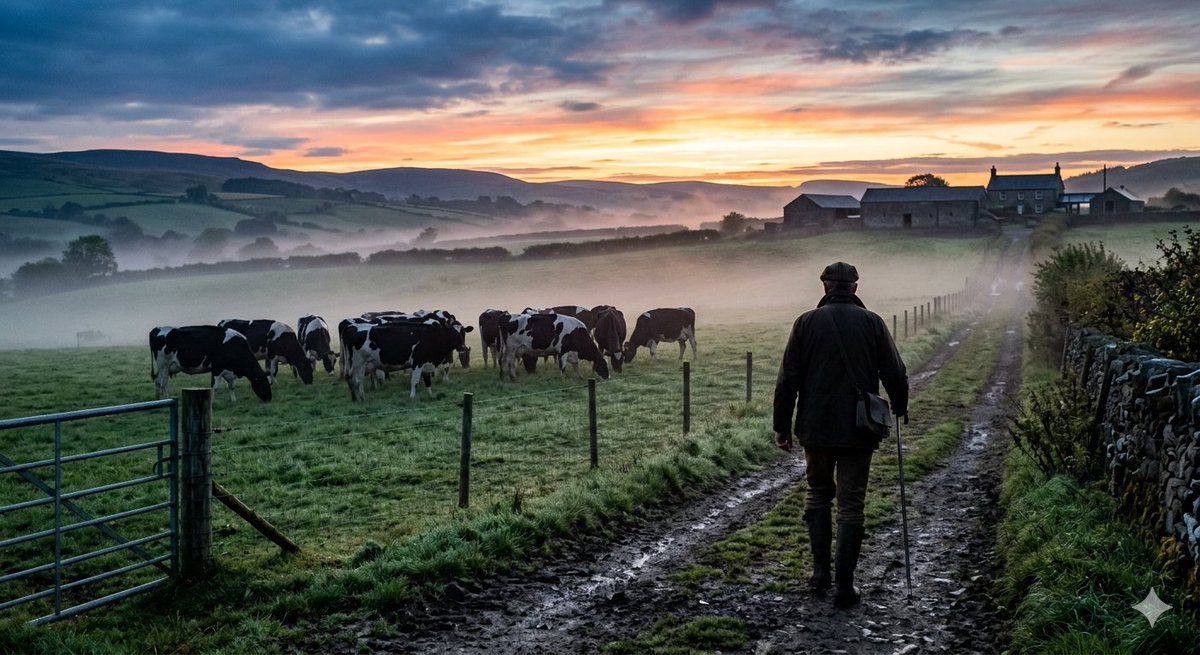
A reasonable audit of what the British farmer is actually doing, measured against what he is currently being accused of.
What he is doing:
- Up at 5am. Earlier in lambing. Finished at 9pm last night. Doesn't consider this notable.
- Producing 60% of the food eaten in the UK.
- On a land area smaller than Oregon.
- Maintaining 400,000 miles of hedgerow.
- Several hundred thousand miles of stone wall.
- The entire drainage infrastructure of the lowlands.
- Every postcard the country has ever printed.
- Sequestering carbon into the soil beneath his livestock at rates that offset a significant fraction of his sector's emissions. Not widely discussed.
- Feeding, clothing and tanning a population that has mostly forgotten where any of this comes from.
- Lambing in March at his own expense.
- Calving in April on no sleep.
- Silage in June on three hours a night.
- Harvest in August.
- Ploughing in October.
- Feeding stock through January in conditions any urban professional would call a humanitarian emergency.
- Watching his son decide whether to take over the farm, knowing what the answer is likely to be.
- Earning less per hour than the barista who served the coffee to the journalist writing the article about him.
What he is not doing:
- Destroying the ozone layer. Hasn't been near it.
- Flying almonds in from California.
- Clearing the Amazon.
- Running a data centre.
- Operating a private jet.
- Producing microplastics.
- Failing to recycle his packaging. He hasn't got any.
- Causing the climate crisis. The climate crisis is two hundred years of industrial activity he wasn't around for.
- Lobbying Parliament. Can't afford it. He's in a field.
- Complaining about any of this. He hasn't got the time.
The audit concludes.
The defendant is out feeding the cattle.
He'll be back for supper if the tractor holds up.
The job of a teacher really feels more and more like trying my best to make students less stupid while all other forces in their life--parents, peers, technology, administration, etc.--do their best to help them remain as stupid as possible.
Why get them to wear a uniform at all?
Indeed why do any of us wear clothes to work?
Why not wear pyjamas?
They are far more comfortable.
Perhaps tmrw I should deliver assembly in a track suit.
Does nothing matter anymore? 🙄
@Apple this is an ongoing issue of your products, sometimes amounting to 4 repetitions of a dictated message, in my case. Can it please be rectified?
https://t.co/J5vKF4iv12