Don't listen to demoralization posts. Losing revenue is always bad needing 80 hours to recoup losses is 80 hours it could've made revenue instead.
It looks bad on paper, bad on charts, bad to management and above all it looks bad to investors.
NO DISC 💿 NO BUY.
Characters look real, because they are.
❌ 3D modeling
✅ Filming
This indie dev:
- recorded professional actors
- color graded the raw videos
- imported them into the engine
- sliced them into separate animations
100% Full Motion Video (FMV)
I reached out to the dev, and he gave me some behind-the-scenes footage you can see below.
Such a smart way to get photorealistic graphics without melting your GPU. Basically a modern version of the trick that was used in the classic Mortal Kombat.
I think we'll see this tech in more indie games soon.
These indie devs are making a game where you don't fight monsters, you cook for the people who do
- The meals you make build the hero's battle deck
- Feed them well, they fight better
- Cozy farming meets deckbuilding RPG
It's called Beastro. Would you play this?
A 17-year-old in Iowa boiled beets in her chemistry class and turned them into stitches that change color when your wound gets infected. Her name is Dasia Taylor. It started as a science fair project.
She wanted a low-tech version of the "smart stitches" Tufts researchers built in 2016. Those used thread wired up with sensors and a tiny chip that pinged your phone if something went wrong. Cool, but useless without a phone or a hospital that can afford it.
Her version doesn't need any of that. Healthy skin is slightly acidic, like lemon juice but much milder. When bacteria grow in a wound, the chemistry flips and turns more like soap or baking soda.
Beet juice has a quirk. The same red pigment that stains your fingers when you cook it shifts color based on what it touches. Bright red on healthy skin. Dark purple on infected skin. The switch lines up with infection almost exactly.
She tested ten threads before finding a cotton-polyester blend that soaked up the dye and changed color within five minutes. That was the prototype.
Around 1 in 40 American surgeries end in an infection at the cut, costing hospitals more than $3 billion a year. In poorer countries the rate is closer to 1 in 9. In parts of Africa it's 1 in 6. In some Ethiopian hospitals, up to a quarter of surgery patients leave with an infection.
The whole game is catching it early. Spot it in time and antibiotics handle it. Miss the window and the patient is back on the operating table.
Dasia filed a patent in 2021 and started a medical device company called VariegateHealth in 2022. The stitches haven't been tested on real patients yet. New medical device patents can take a decade. She's also looking into a side benefit: the beet pigment kills bugs like E. coli and Klebsiella in lab tests.
Smart stitches need a phone to read them. Hers just need eyes.
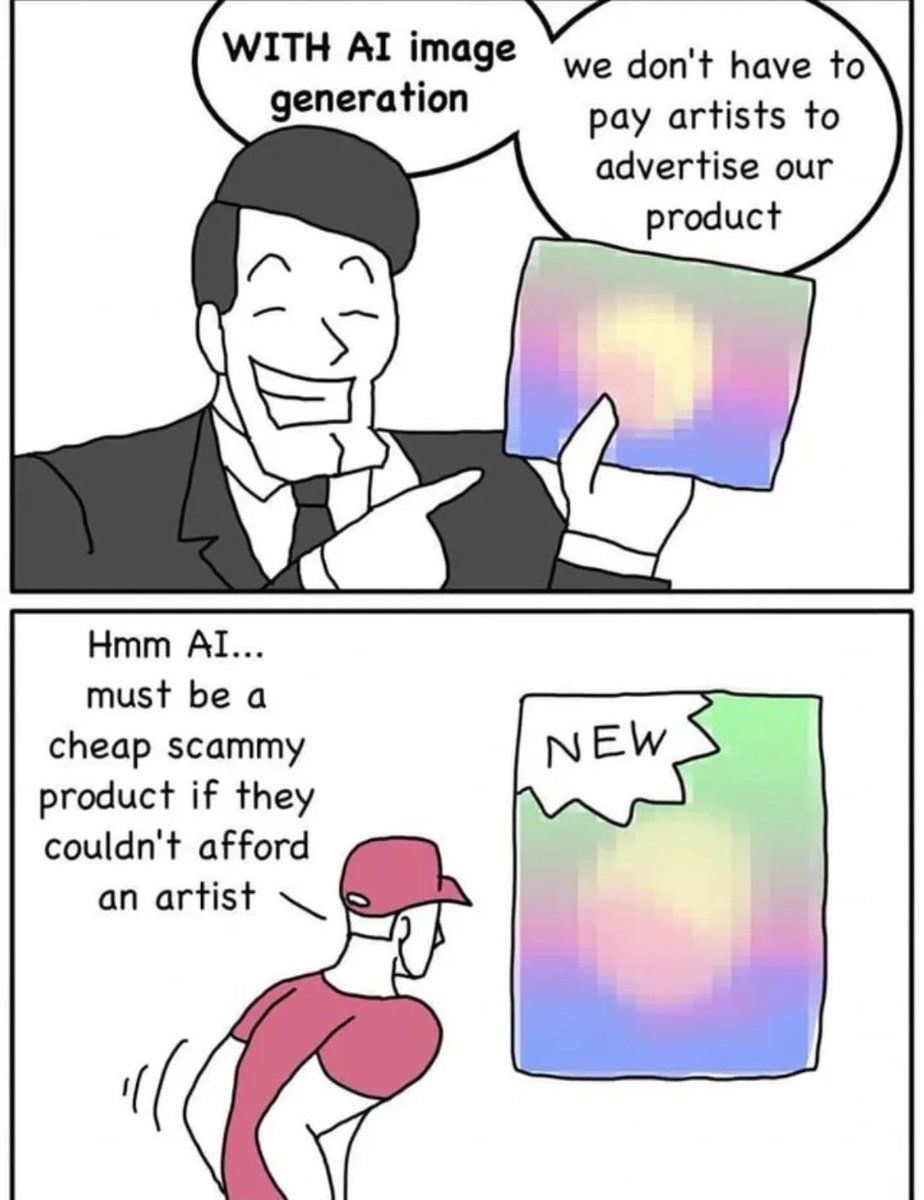
I know it's easy to be doomer about AI but it needs to be stressed.
They had to LIE that they weren't using it AT ALL to get any of these VTubers on board. It was an IMMEDIATE dealbreaker. No ifs, ands or buts.
That's the public reputation of AI. A dirty and shameful liability.