One of the most interesting outcomes:
Direct erasure was not the dominant behavior.
The perturbation landscape was instead dominated by:
metastable redistribution
partial retention
gradual erosion
rather than binary survival/collapse transitions.
Phase16 is planned as IBM Quantum hardware-constrained validation.
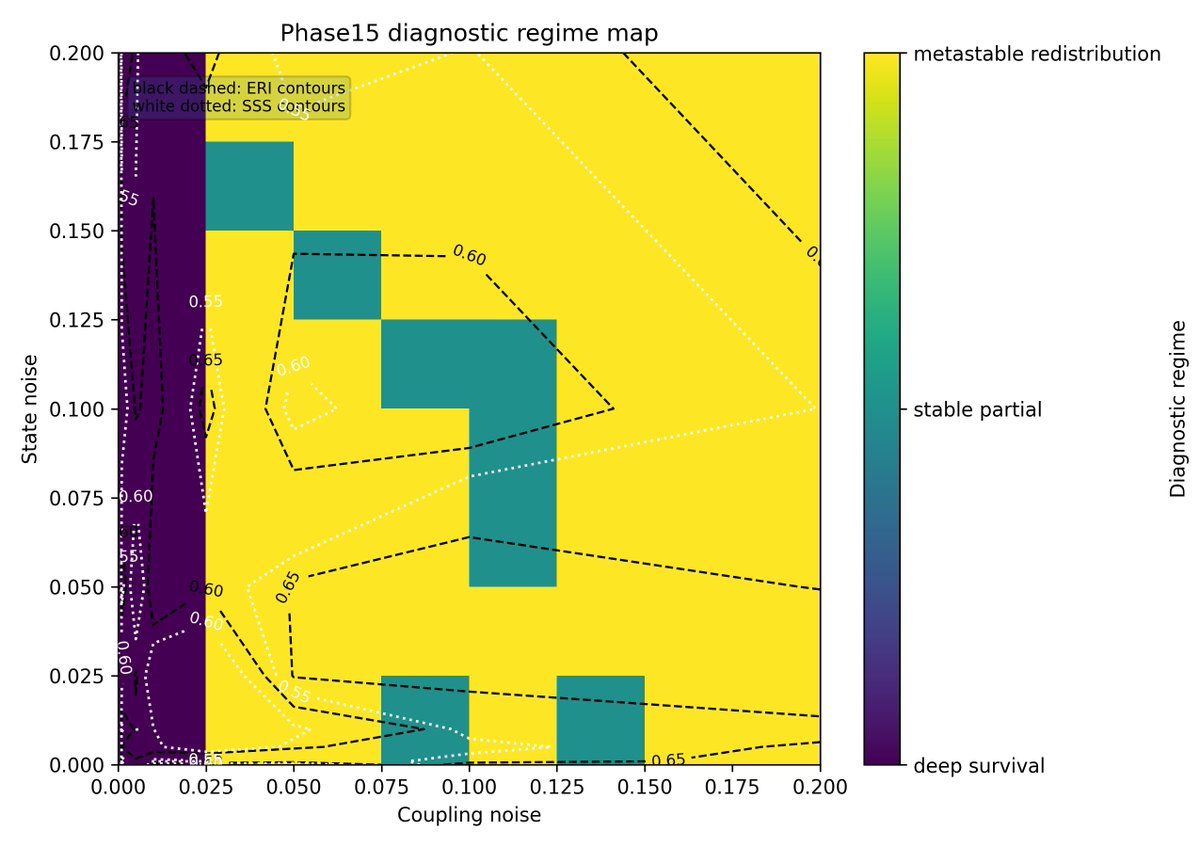
Phase15 revealed a strong survival–erosion duality.
Structural Survival Score (SSS)
vs
Erosion Risk Index (ERI)
show a near-perfect negative relation across the perturbation grid.
Instead of sharp collapse boundaries, the system forms a broad metastable erosion manifold.
This extends:
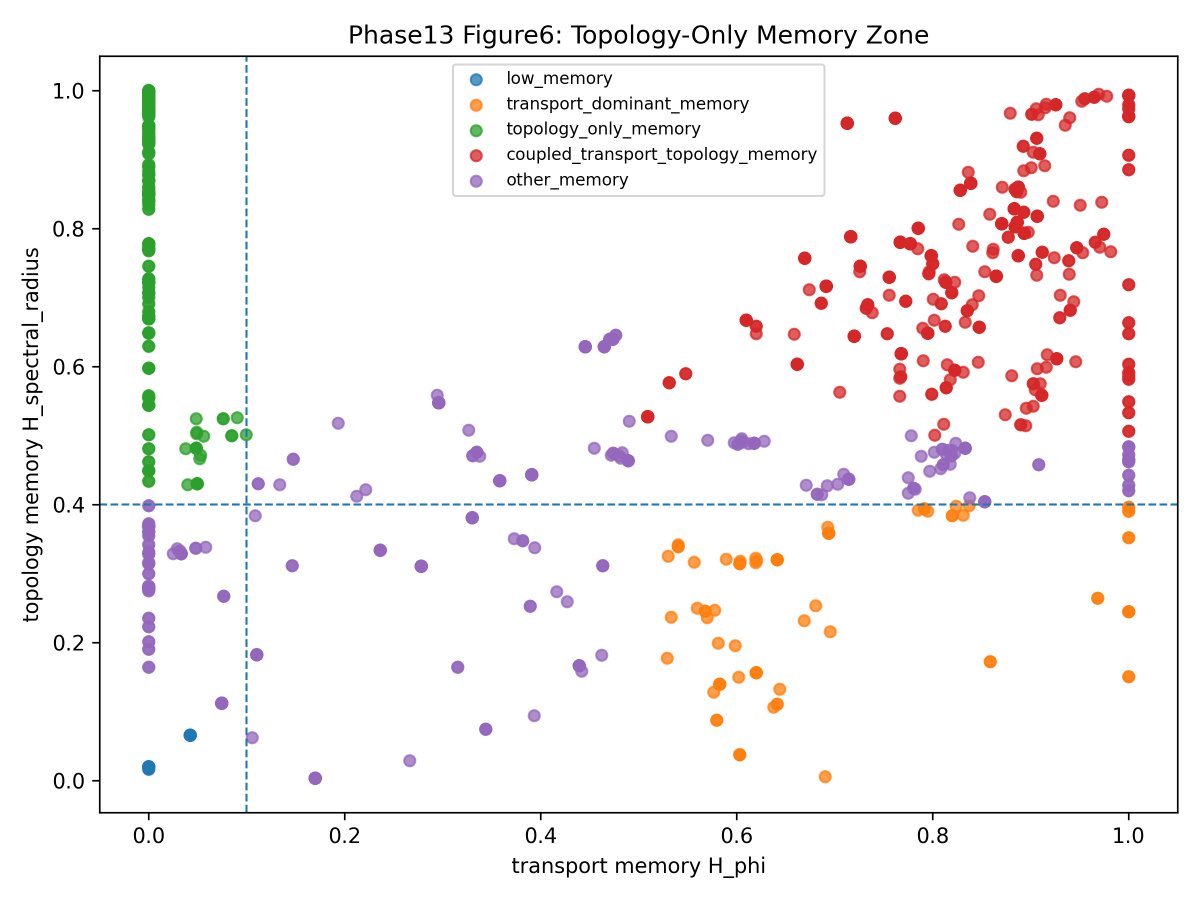
Phase13:
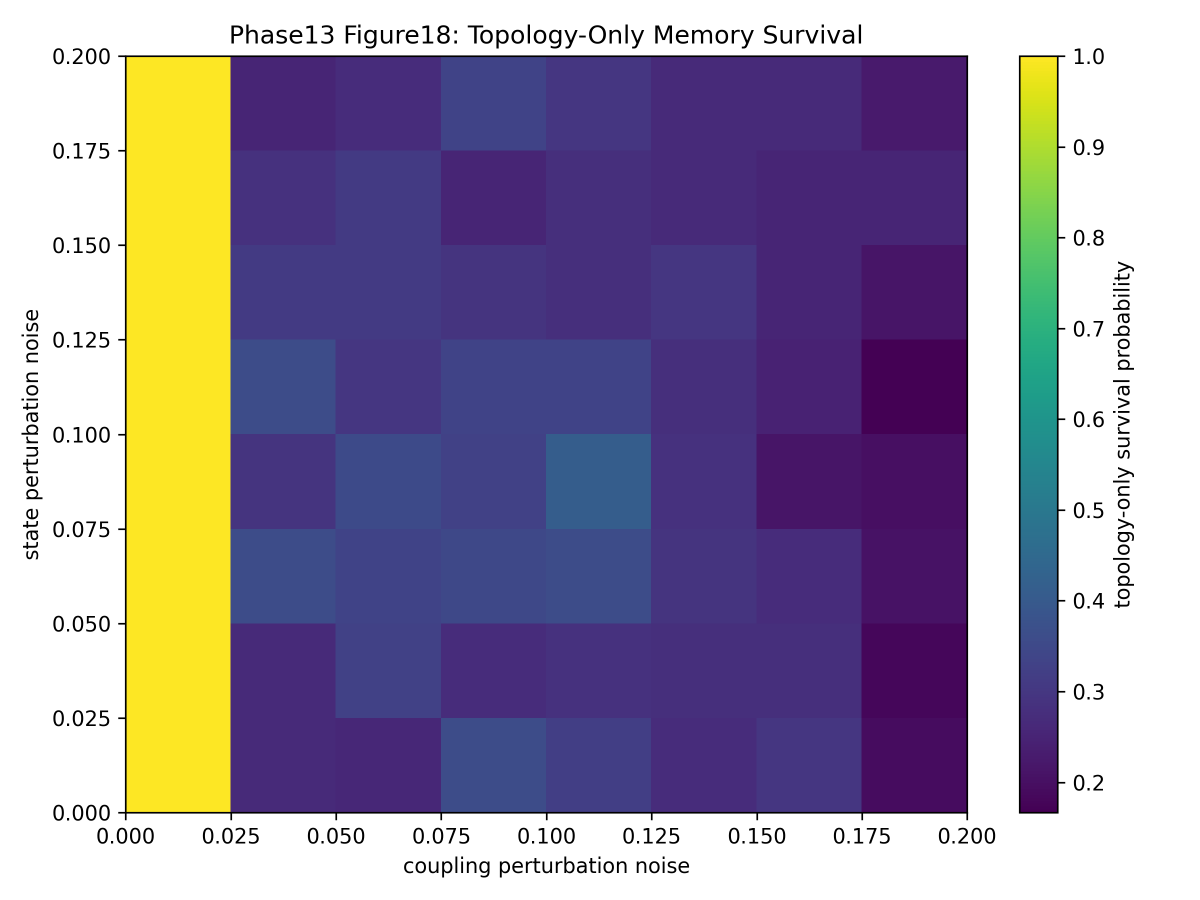
topology-only memory
↓
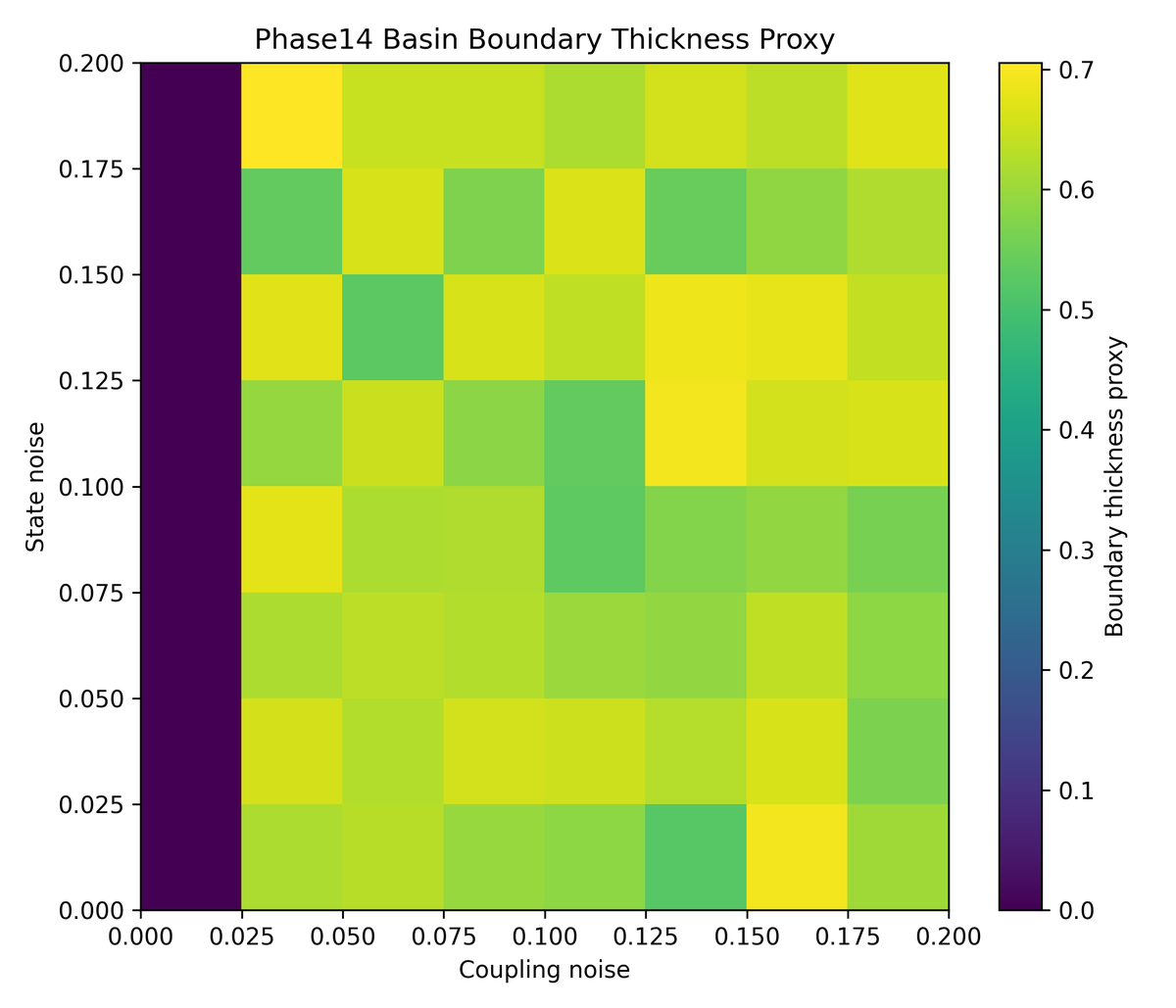
Phase14:
adaptive basin geometry
↓
Phase15:
structural survival diagnostics
One of the most important Phase14 results:
No collapse-boundary regime was detected.
Instead of binary collapse,
SRFM memory states show:
- gradual erosion
- partial retention
- probabilistic redistribution
- metastable degradation pathways
Topology-memory survival remains dominant
even under strong perturbation.
#QuantumComputing
#ComplexSystems
#NetworkScience
#NonEquilibrium
#Metastability
#SRFM
Phase13 also introduces perturbation-supported adaptive memory analysis.
Observed memory states included:
topology_only_memory_survived
partial_topology_memory
mixed_or_weak_memory
memory_erased
suggesting a graded adaptive memory landscape rather than a binary memory/no-memory transition.
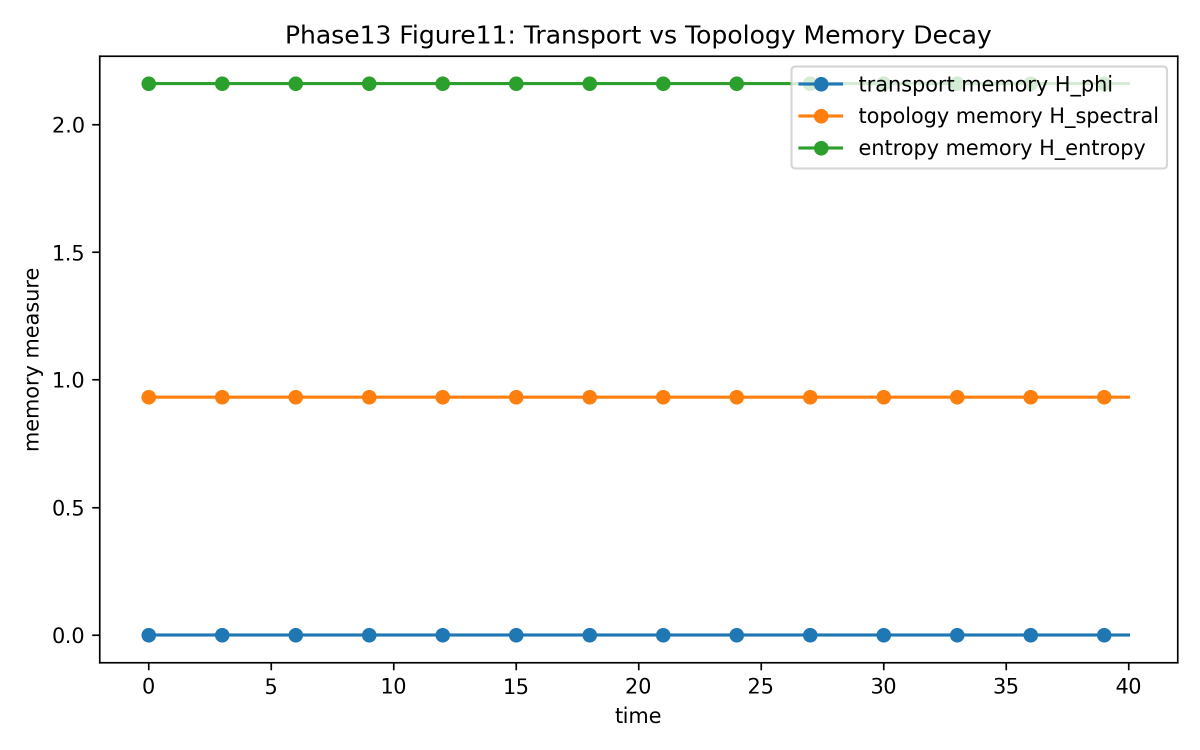
One of the central findings of Phase13:
transport-memory and topology-memory can decouple.
In many simulations:
observable transport converged
but adaptive coupling topology remained history-dependent
This produced persistent “topology-only memory” states.
Phase12 moves SRFM Quantum toward:
adaptive transport topology formation.
Transport is no longer treated as propagation on a fixed structure.
Instead:
the coupling topology itself evolves dynamically through synchronization and reinforcement.
This creates:
transport islands
concentration fronts
fracture precursors
adaptive phase selection
#AdaptiveNetworks #ComplexSystems #NonEquilibrium #TransportDynamics
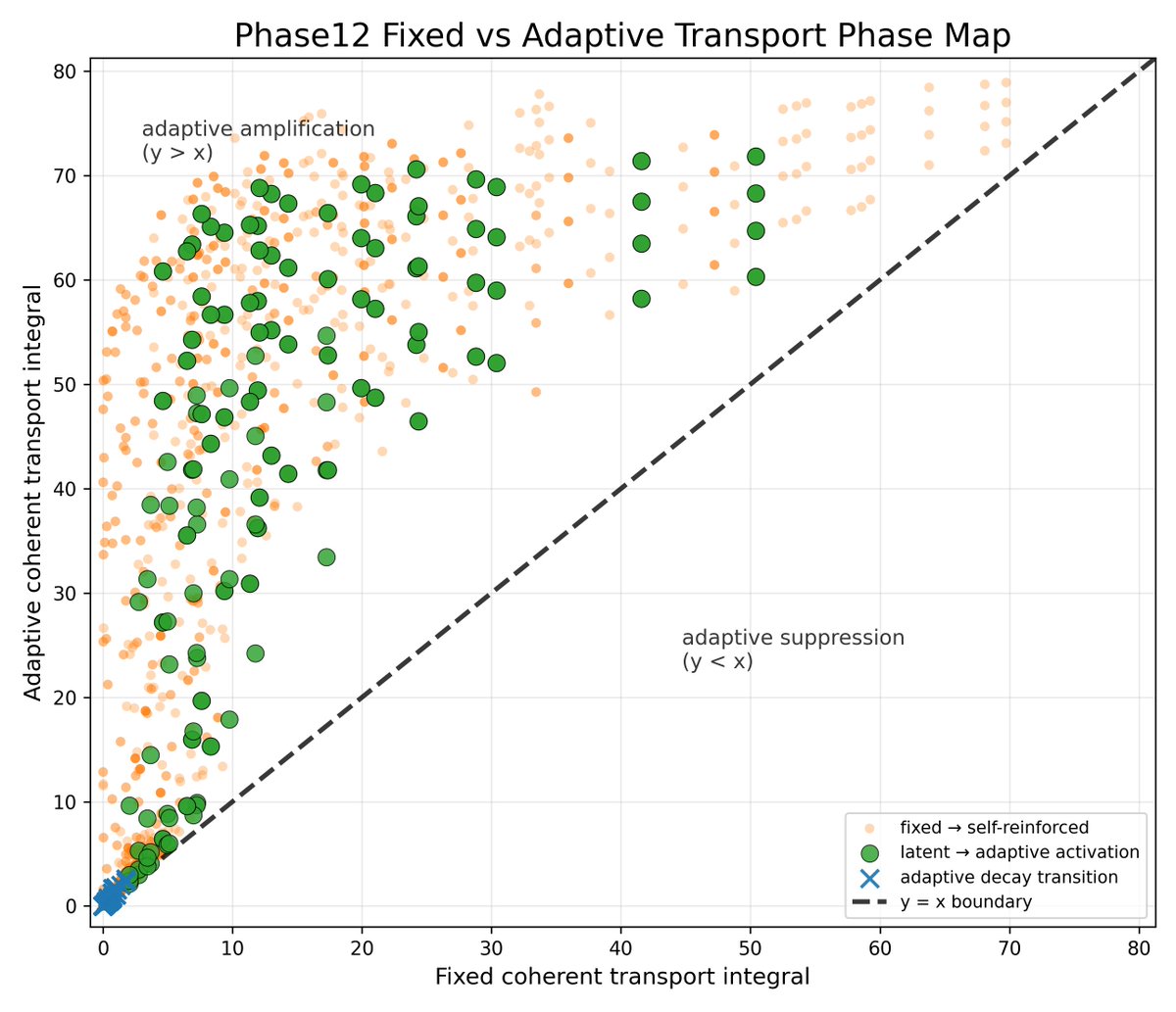
Phase12 Figure 2:
Fixed vs Adaptive Transport Phase Map
Adaptive coupling does not behave as uniform amplification.
Instead, transport separates into:
self-reinforced transport
latent transport activation
adaptive suppression
Most importantly:
weak fixed transport structures can become sustained coherent transport states.
This suggests transport may reorganize the topology that carries it.
#ComplexSystems #NetworkDynamics #Synchronization #AdaptiveTransport
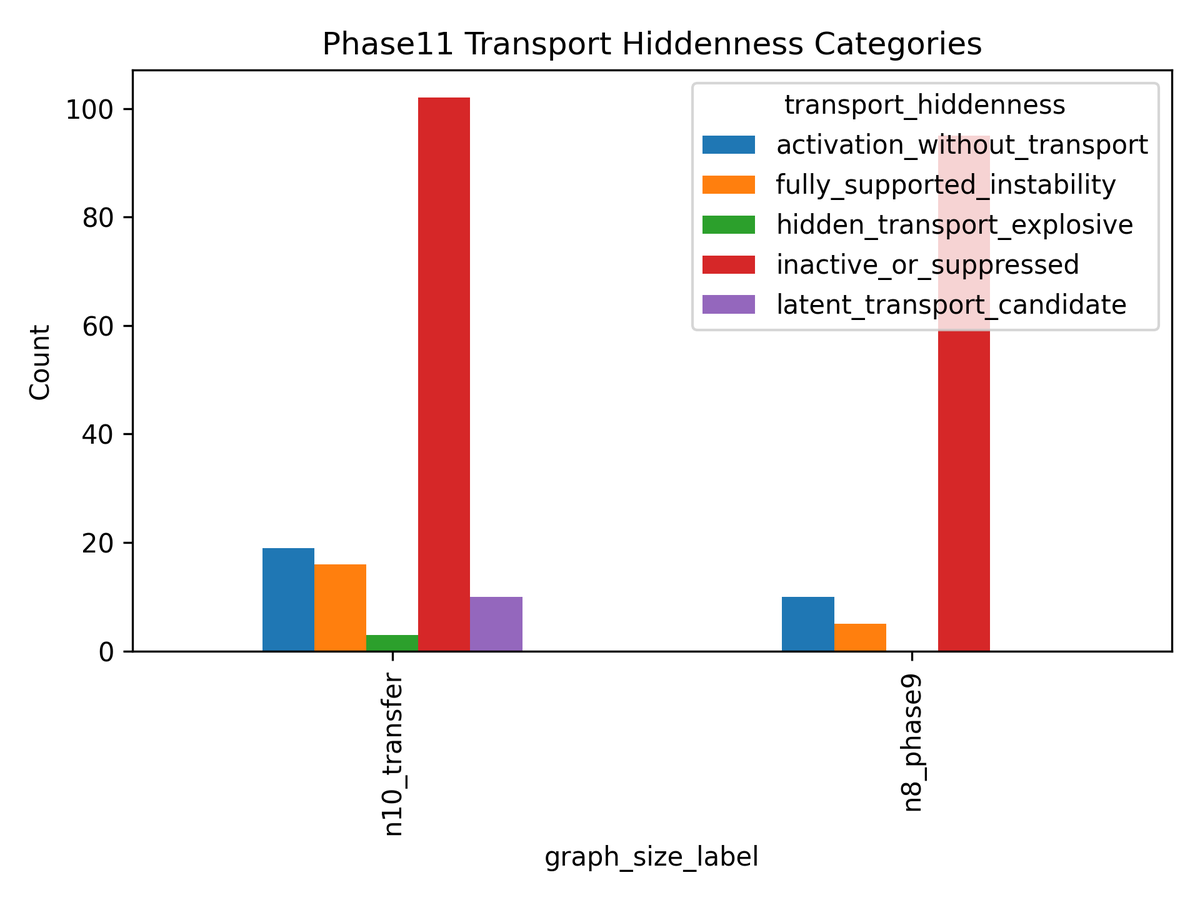
Phase11 also introduces:
“hidden transport instability”
Structures that appear weak under static thresholds,
but maintain coherent propagation dynamically.
This became one of the key conceptual transitions toward:
dynamic instability field theory.
#SRFM#Synchronization #NetworkDynamics