@2mrpc In Web3, it's becoming increasingly critical to differentiate between bot traffic and genuine community engagement. What should be measured isn't just views, but whether people understand the project.
Web3 visibility can sometimes feel like a foggy screen. 🌫️
Numbers move.
Posts circulate.
The crowd looks active.
But for project teams, the real value is being able to separate the real signal from the noise. 📡
Who actually understood the product?
Who only waved while passing by?
Which contribution started a real conversation?
Which feedback can actually help the project?
That is where the DAOVERSE Engagement Marketplace feels different to me. 🧭
It is not just a board where tasks are completed.
It works more like a community radar for Web3 projects.
You read the project.
You understand the context.
You create a contribution that fits your own community.
Then that contribution becomes visible, trackable, and open to evaluation. 🔍
For a project, this is not just extra engagement.
Cleaner signal.
More authentic visibility.
More meaningful feedback.
Less bot smell, more human trace. 🧑💻
For me, this is why @TheDAOLabs makes #SocialMining feel much more concrete.
From my own Marketplace experience, good contribution is not just posting something and moving on. 🛠️
Sometimes it is the right comment.
Sometimes it is a useful quote.
Sometimes it is a small but valuable field note from someone looking at the project from outside. 📝
If Web3 wants to grow, reaching more people is not enough.
It needs real reactions from the right people.
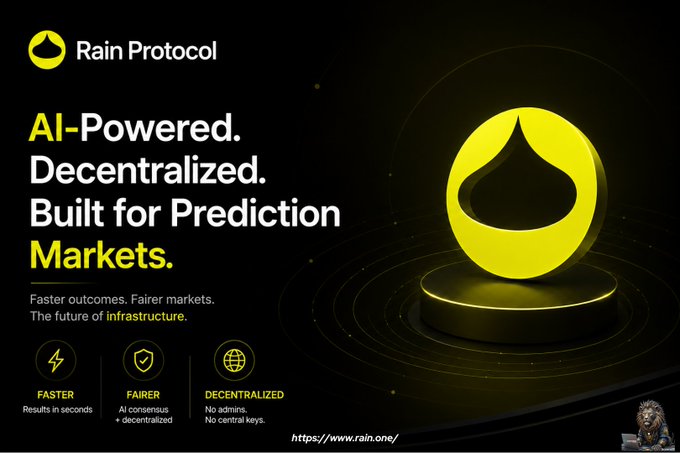
✍️ Today, when we talk about prediction markets, you've probably heard the name @Polymarket more than once. Recently, there was the question, "Trump on a $250 bill this year?" So, it has everything. Today, as a @TheDAOLabs writer, I'll talk about @Rain__Protocol , which redesigns the market outcome validation process with a protocol architecture built entirely on automation.
Current prediction markets have a structural problem: 📌Manual juries are slow.
📌Centralized oracles are manipulated.
📌Gas charges drive Web2 users away before they even start.
Rain Protocol rebuilds the infrastructure layer from scratch, using artificial intelligence.
👉So how does it work?
The fundamental problem is that most prediction market protocols still rely on humans to validate results.
This creates three significant limitations:
📌Determining the outcome takes hours (sometimes days).
📌Centralized decision makers are sensitive to economic pressure.
📌 Human capacity is not proportional to market volume.
The bottleneck isn't the market itself. The solution layers are crucial.
👉Delphi Oracle
Rain Protocol replaces the jury with Delphi. It's a multi agent AI consensus engine. 5 independent exploration agents pull data from separate data sources. A result is valid only if at least 3 agents agree. Sports results, elections, weather, financial data all are resolved in seconds.
Looking at the results, it has ~96% accuracy. There's not a single point of error.
👉Lex and Disagreement Layer
What happens if someone disputes a result? That's where Rain's AI arbiter, Lex, comes in. An objector stakes 0.1% of the market volume (maximum $1,000). Lex independently evaluates all arguments. If it's still unresolved, it's referred to human arbiters for a decision.
There are three layers. Speed, accuracy and a human safety net are key factors.
👉Gasless Integration One of the key issues is adoption friction, and Rain is making a real structural move here. In Arbitrum, the ERC-4337 Account Abstraction means:
📌No ETH required to trade
📌No wallet setup barrier for new users
📌USDT/USDC participation possible
For the first time, you'll encounter a prediction market that feels like a Web2 product.
👉Decentralized Solution There's no administrator approving results. No central key.
After Delphi proposes a result:
📌A 15 minute objection window opens
📌No dispute? Automatically resolved onchain
📌Dispute? Lex takes over
Everything is recorded onchain and auditable via Arbiscan. Smart contracts are audited by Hacken. Transparency is not a feature here, it's architecture.
☑️Kalite yeni standart.
Bir değişim fark ettik; otomatik içerik ve genel şablonlar her alanda öncelik sırasından düşürülüyor
🌐2. ipucu serimizde, erişimi sürdürmenin ve gerçek etki oluşturmanın en etkili yolunun neden orijinal içgörü olduğunu inceliyoruz.
Aşağıda izleyin👇
👉 Merkezi borsalarda işlem yapan çoğu trader, aslında marketi değil önce komisyonları yenmek zorunda. Özellikle VIP olmayan kullanıcılar için bu görünmeyen maliyet belirli bir süreden sonra ciddi sorunlar yaratıyor. @FainEraFee bizlere bu noktada farklı bir model sunuyor. Gelin buna birlikte göz atalım.
FainEra modeli oldukça basit aslında. Kullanıcılar borsalardaki hesaplarını Kimlik transferi işlemi ile FainEra’ya taşıyorlar veya yeni kullanıcı olarak FainEra üzerinden kayıt oluyorlar. Daha sonra FainEra’da, yaptığı anlaşmalar çerçevesinde oradaki size ait fee ücretlerini kendi tarafına geçiriyor. Daha sonra da bu ücretlerin %45’ini sizlere geri iade ediyor. Bunlar gerçekleştirilirken;
📌 UID bağlantısı yok
📌 API yok
📌 Fon erişimi yok
📌 İşlem yetkisi yok
Yani sistem trade işlemlerinize dokunmuyor veya yönetmiyor. Sadece işlem komisyonu tarafında cashback katmanı gibi çalışıyor.
FainEra desteklenen partner borsalarda ödenen işlem ücretlerinin %45’e kadarını kullanıcıya geri yönlendiriyor. Kimlerle partner olduklarına bakacak olursak
📌 OKX
📌 Bybit
📌 BingX ve 9 tane daha farklı platform mevcut.
FainEra bunların yanında kendi içinde tier sistemini uygulamaya geçirmiş. Bununla birlikte Tier atladıkça daha fazla geri iade alma hakkına sahip oluyorsunuz. Bu tierler
✅ Bronze: Başlangıç
✅ Silver: +2.5%
✅ Gold: +5%
✅ Diamond: +7.5%
oranında ilave kazanç sağlıyor. Bir kez kazanılan seviyeler korunuyor ve aşağıya düşme olmuyor.
✍️ Sonuç olarak FainEra trader’ların yıllardır normal kabul ettiği operasyonel maliyetleri optimize etmeye çalışan bir finansal altyapı olarak işlemlerini gerçekleştiriyor. Kimlik transferi, süreleri ve farklı konular için FainEra sayfasına ve anlaşmalı oldukları platformların sayfalarına bakmayı unutmayınız.
Yukarıda bahsettiğim bütün hususlar sadece bilgilendirme amaçlıdır. Kripto işlemleri yapmak her zaman risk içerir. Proje ile ilgili daha detaylı bilgileri kendiniz araştırarak işlemlerinize devam ediniz. Daha detaylı bilgi için buraya bakabilirsiniz.
https://t.co/m9lTzOEVoE
🔥 @StandX_Official continues to advance rapidly. The latest updates demonstrate the project's focus on a single core mission: increasing capital efficiency for every investor.
The biggest update is SIP-3, which ushers $DUSD into what #StandX calls the era of Infinite Yields. Protocol fee revenue is now distributed directly to $DUSD holders, meaning users can earn from actual platform activity. Investors are fortunate in this regard.
$DUSD now offers Triple Yield:
📌Basic Yield
📌SIP-3 Yield
📌Position Yield
Current yields are already above 10% APY, making $DUSD much more than a standard stablecoin.
In addition to these, StandX has also implemented several trading interface upgrades.
✅ Hide panels for a cleaner chart view
✅ Kline view now shows liquidation and position lines
✅ Custom margin risk alerts with traffic light indicators
Looking at other important updates, WTI Crude Oil ($CL) is now traded with 40x leverage. The Referral Network page is now active and available to track invitations and rewards. On the other hand, Maker program limits have been updated to provide better balance between markets. Finally, the ongoing competition has ended and the winners are expected to be announced soon.
🔥 And another important update for the ecosystem. Investors are excited and eager about this. Now is the time to determine your strategy correctly and collect points. From May 24th, all Trader, Maker, and Holder point emissions will be reduced to 50% of current levels. Don't miss the opportunity for the most efficient period.
This usually means one thing in reward systems. Early participation is more important than ever. As a result of early participation, it is necessary to continue trading with security and transparency issues. StandX is not just building a trading platform among its goals. The platform is establishing a system where activity, trading volume, and user rewards are interconnected, offering more and more to investors every day. It's a project worth following. The decision is yours.
✍️ @StandX_Official has been making truly remarkable strides in the #DeFi arena lately. Their focus on both capital efficiency and institutional level transaction needs sets them apart.
✨ The first notable feature is $DUSD. Users can automatically earn interest while holding their DUSD assets on the platform. Interest is calculated every second and distributed weekly. Long term positions can be opened based on the yield and profit rates on the protocol. They can also evaluate different positions for hedging purposes. For details, see: https://t.co/xM064KQ8FP
This model offers a more flexible structure than the classic DeFi staking experience while also allowing users to generate passive income. It creates a very strong use case, especially for those who want to invest their capital outside of active trading.
✨ However, the most striking development is the Block Trade system introduced with SIP-1. #StandX offers a solution to one of the fundamental problems experienced in large scale derivatives trading: market impact. Under normal circumstances, large orders can disrupt the order book, shift the price and create costs unfavorable to the investor. StandX Block Trade allows parties to directly agree on price and quantity, then finalize the transaction completely onchain and transparently. For details: https://t.co/HnuzgcQWlx
This model offers significant advantages, especially for high volume investors and institutional desks:
📌 Minimum market impact on large transactions
📌 Fully onchain consensus and verifiability
📌Flexible matching with multiple counterparties
📌 Counterparty verification support when needed
📌 Reliable settlement without the need for centralized structures
✅ On the StandX platform, you can execute transactions in different modes. You can place your orders and execute them in parts as the counterparty becomes available. Furthermore, the transaction will not be executed unless the entire order is filled.
🔎 For example, if BTC is at $100,000, an investor wants to take a 20 BTC long position at $98,000 without affecting the market. They create a Block Trade order via StandX. The first counterparty fills 8 BTC, the second counterparty completes the remaining portion, and the system finalizes the entire transaction onchain. This large transaction is completed without creating extra volatility in the market.
👉 I think what StandX is building here is more than just a derivatives platform. It's also about providing a transparent and scalable transaction infrastructure suitable for DeFi's institutional use cases. If you're following the onchain derivatives space, StandX could be one of the projects you should have on your radar. There are over 235,000 $DUSD holders here.
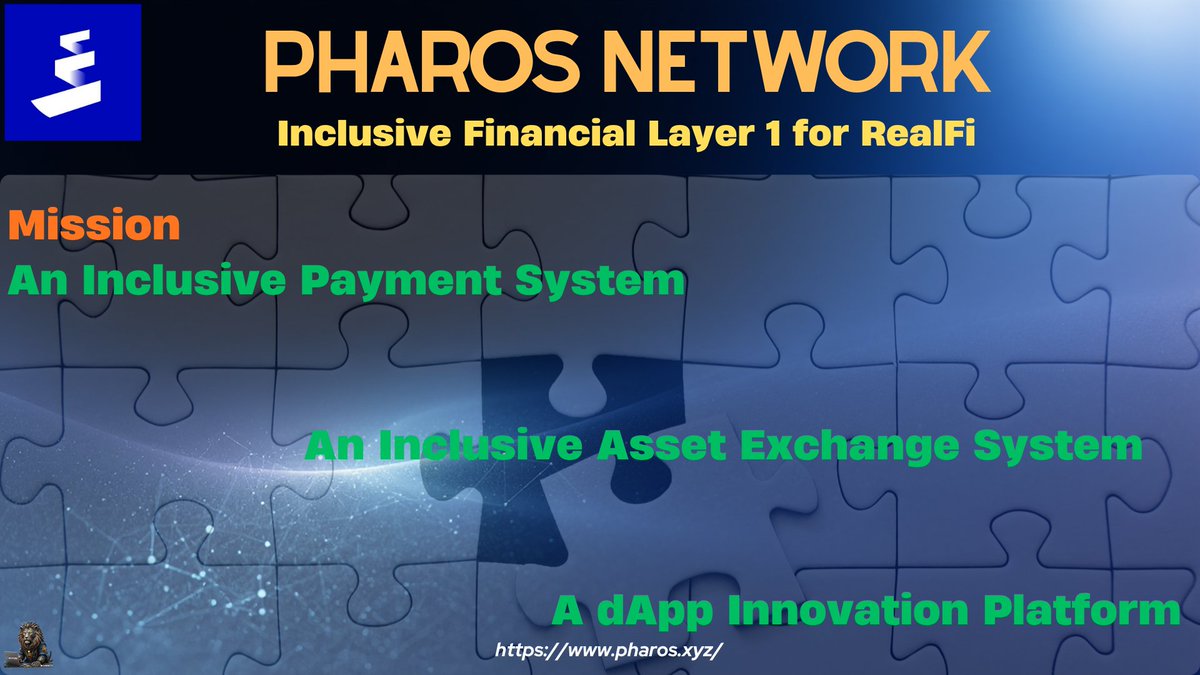
✍️ @pharos_network : Building the Infrastructure Layer for the Tokenization of Enterprise Real-World Assets (RWA)
The trillions of dollars worth of RWA market is still largely untapped. As a social miner at @TheDAOLabs , I'll delve deeper into this topic today.
The lack of growth in the RWA market isn't due to institutional indifference, but rather to the blockchain infrastructure not being ready. The key factors here are Compliance, Speed, and Privacy.
This is where most systems fail. That's where Pharos Network comes in. Pharos is a Layer-1 designed for institutional adoption. It's growing with $52 million in funding (Hack VC, Lightspeed Faction, Sumitomo). It's designed for real financial systems.
The fundamental problem: Traditional blockchains struggle with execution. Transactions are processed sequentially:
✅ Sequentially
✅ or with limited parallelism
This creates bottlenecks, especially for complex financial transactions. #PharosNetwork offers:
👉 Deep Parallel Execution: Transactions can run concurrently. Without causing state conflicts or bottlenecks.
Result:
✔ Higher throughput
✔ Lower latency
✔ Better scalability
Performance alone is not enough here. Organizations also need compliance. This requires the integration of necessary elements.
✔ zkKYC
✔ zkDID
Thus:
✅ Authentication is possible
✅ Private data is not disclosed.
✅Systems remain compliant
✅User privacy is protected.
This is solidifying its place as a major change.
In conclusion, the biggest deficiency in Web3 has always been this: Organizations need an infrastructure they can actually use. Pharos is one of the few projects that directly targets this. RWA tokenization is no longer an exaggeration, it's a necessity.
"Sir, please follow and RT for 0.0001 airdrop." 🙄
VS.
"Provide actual value, grow the brand, and earn a seat at the table." 😎
#SocialMining isn't just a way to earn; it's a filter for the people who actually know what they’re talking about. Somi doesn't chase crumbs.
#somisays
gQuack @wallchain fam,
Happy Sunday...
I didn’t make any changes to my routine this week either.
I continued to move forward with concise yet meaningful content.
I focused specifically on some topics discussed on the Kolo Podcast featuring Yuri. I plan to go over the highlights from that episode next week as well.
Also, I’ll be making a change next week. I’ll be sharing content in my native language. That is:
- I’ll share content in Turkish.
- I’ll reply in Turkish.
- I’ll leave comments in Turkish.
If you see me commenting on your content, please don’t dislike it or mute me. 🫣This is just an experiment...
Looking at my performance this week...
Compared to last week, I dropped one spot in the 30D ranking and am currently in 629th place. My X Score dropped from 93 to 92...
My Quacks earnings are as follows:
- 3.83 Quacks Apr 18
- 2.76 Quacks Apr 17
- 6.18 Quacks Apr 16
- 3.15 Quacks Apr 15
- 1.69 Quacks Apr 14
- 5.55 Quacks Apr 13
- 2.94 Quacks Apr 12
- 2.78 Quacks Apr 11
Engagement dropped significantly this week,
and some of my followers unfollowed me as well.
So, in short, I felt the impact on my performance very clearly😅
But as I always say, I don’t obsess over numbers anymore.
Increasing the number of posts won’t benefit me. Because the inconsistency in my online presence is one of the biggest obstacles to my steady progress and engagement...
Without addressing this, success won’t be sustainable for me.
In short, the conclusion is this: When you maintain consistency and keep moving forward, you’ll get much closer to your goal.
Quack Quack
🔍 Web3 dünyasının daha fazla spekülasyona değil, netliğe ihtiyacı var.
🇹🇷 Karşınızda @Bitcoinfanaticc: Karmaşık blok zinciri verilerini herkesin anlayabileceği içgörülere dönüştüren, #Türkiye'den seçkin bir #Web3 araştırmacısı ve yazarı 🧵
❓ Why does @StrikeRobot_ai 's artificial intelligence exist?
👉 Humanoid robotics is often presented to us as the technology of the future, but the real problem is far more concrete and realistic. If technology has advanced so much, why do people still have to work in dangerous environments?
StrikeRobot AI is born precisely from this point. Today, routine checks in areas such as nuclear facilities, radiation zones, and electrical infrastructure are still performed by humans. These tasks, carried out with heavy protective equipment and under high risk, are not exceptional; they are repeated thousands of times every day worldwide. And this situation is part of a system that has been considered indispensable for years. StrikeRobot AI questions these assumptions and changes them according to the new world order.
When we look at the problem, at its core is not only risk but also the inadequacy of existing solutions. While today's robots perform impressively in controlled environments, they fail in the real world. Unexpected contact, sensor noise, poor visibility conditions, or situations requiring quick decisions can easily disrupt robot systems. This is because these systems are optimized for repeatable and predictable scenarios. However, the real world is disordered, chaotic, and often hostile. StrikeRobot AI aims to close this gap through its own work, from laboratory robots to autonomous systems that can actually operate in the field.
In fact, the problems mentioned are not simple enough for a single company to solve. Robot morphologies, movement strategies, interaction scenarios, and failure conditions vary infinitely. Therefore, StrikeRobot AI adopts a decentralized approach. The platform brings researchers, developers, and robots together in the same ecosystem, scaling data generation and learning. It creates a structure where everyone who contributes can generate value.
StrikeRobot AI's purpose is clear: to send robots to places where humans should not physically enter. The SafeGuard ASF system is the concrete embodiment of this vision. They are developing robots that can withstand unexpected contact, operate under sensor noise, and make quick decisions in critical moments. The goal here is not just automation, it's to eliminate human risk and successfully perform safer and more consistent tasks.
🚀 @TheDAOLabs SMV2 Marketplace has received a major upgrade. The rules of the game are getting stronger with each update.
🏆 Daily, weekly and monthly #SocialMining rewards are ready for the top 20. Earn and claim your rewards. Real time user data is always available. With the new update, even small accounts can now surpass whales with strategy.
📝 Post once a day. Edit if needed. Continue earning even after 24 hours. Much more is available on the Visual Leaderboards.
🚀The biggest obstacle facing the $50T+ RWA market: infrastructure. That's where @pharos_network comes in.
Looking at it from a Social Miner perspective at @TheDAOLabs ; the fact that #PharosNetwork is focus on real usage, not just hype, makes a significant difference 👇
#TradFi
🧐Humanoid robots?
✅ Humanoid robotics is now moving beyond impressive demonstrations and representing a real workforce transformation. @StrikeRobot_ai is at the heart of this transformation, moving robots beyond being mere machines that move.
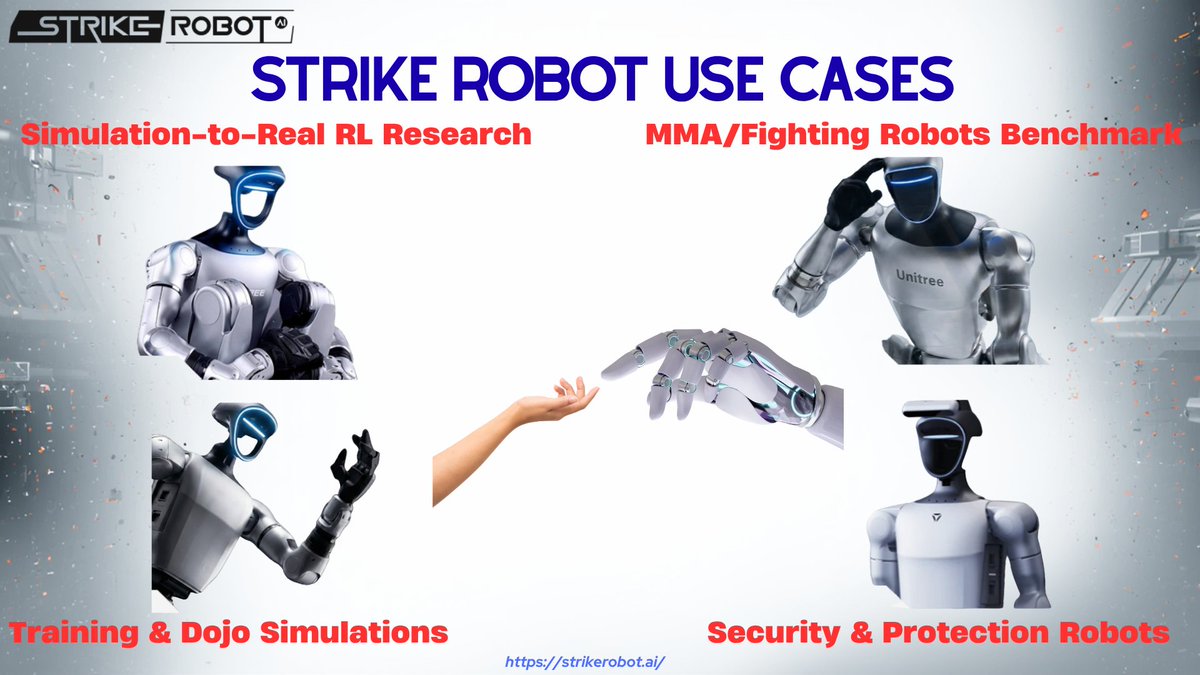
👉 Instead, it's transforming them into successful and intelligent systems that think, decide and take action. With the SR Agentic framework, robots are equipped with advanced sensing, LLM-based task planning, and real time environmental analysis. This process, beginning with Unitree G1, paves the way for robots that can operate autonomously, especially in complex and dynamic environments.
✨ It's crucial to clearly understand Strike Robot's vision: to integrate robots into economic systems. Because today, even if robots generate data, they cannot manage, share or monetize that value. Strike Robot changes this structure by transforming each robot into an entity that generates and manages its own economic output. Thus, robots become not just tools that do work, but also investable digital physical assets.
✍️ Looking at the application areas of this approach, we see developments that offer direct solutions to a wide range of real world problems. In industrial facilities, they can play a critical role in highly sensitive areas such as autonomous patrolling and anomaly detection, equipment inspection in power plants, and risk analysis on oil and offshore platforms. In agriculture, they can significantly increase efficiency in areas like continuous monitoring of large areas, autonomous delivery and warehouse operations in logistics, and urban service robots. In the healthcare sector, they can be used in tasks such as operating room support systems and data tracking. Strike Robot's key difference is that it transforms these robots from mere task performing systems into agentic structures that learn, adapt, generate data, and convert that data into economic value. This makes it possible for them to do more in jobs currently controlled by humans. As their areas of application increase, we will realize that we are part of this transformation.
🀦 SMV2 Marketplace büyük bir güncelleme alıyor!
✅ Günlük/Haftalık/Aylık En İyi 20 Ödül: Zamanında ve doğru hamleler yapmak en çok kazandırır!
✅ Yüzen İstatistikler: Fareyi üzerine getirerek kullanıcı verilerini anında görüntüleyin 🧵
#SocialMining#DAOLabs#Web3
🔎 Hello. Today I'll be talking about verified data in @WalrusProtocol .
Nowadays, AI systems don't fail because of weak models. The reason they fail is something much simpler: data.
And more importantly:
👉 Unverifiable data.
This might seem like a silent layer of failure that nobody talks about. Today, teams train models using datasets they assume are accurate. They deploy systems and automate decisions. But assumption isn't proof. When a model produces an output, there's usually no way to trace it back definitively.
📌 So where did this data come from?
📌Or was it altered?
📌Was it biased or did it contain incomplete information?
If you can't answer these questions, the system itself becomes unreliable. Think of it like many things we doubt in everyday life. This isn't a small problem. When you look at it more broadly, it's a systemic problem.
Today, almost 87% of AI projects fail due to data quality issues. Not computational limitations, architecture or capabilities. Simply because of bad or unverifiable data. And the deeper you dig, the worse the situation gets. Today's data pipelines are fragmented and there's no single point of reference. Look at training datasets. They're collected from multiple sources. Transformations are rarely properly tracked. By the time the data reaches production, it's already lost its history. Here's the fundamental problem:
❌ We use data
❌ We trust data
❌ But we can't prove the data
It doesn't even sound good when you say it.
That's where Walrus Protocol offers a fundamentally different approach. It's not just about storage and availability.
👉 It offers a Verifiable Data Layer.
Instead of storing data and hoping for the best, Walrus transforms it into something verifiable. Looking more closely at how this change happens:
✔Every file uploaded to Walrus becomes a blob.
✔But this isn't just a file; it's a uniquely identifiable unit.
✔A deterministic blob ID is generated directly from the data itself.
✔ This identity acts as a cryptographic fingerprint.
✔ If the data changes, the identity changes too.
This alone truly changes the rules of the game. Let's combine this with Sui. Each data block is linked to an object on the chain, meaning its existence can be publicly verified. Its history can be traced. Its integrity can be checked. Data is no longer passive. It becomes an active, verifiable entity.
But it doesn't end there. Walrus also ensures integrity during retrieval. Data isn't simply downloaded and made trustworthy. Instead:
✔ Pieces (slices) are compared against signed metadata.
✔ Reconstruction only occurs if the pieces are valid.
✔ The final output is compared against the stored hashes.
🧩 Like a complete jigsaw puzzle. The pieces must fit together. What if something doesn't match?
👉 The system rejects it. This doesn't just mean tampering is impossible. It also means it's detectable. This continues even at the application layer.
For example, Walrus sites store the SHA-256 hashes of resources onchain. Here, each resource uses the SHA-256 hashes stored in Sui to verify the match. When a user loads a page:
✔The content is re-hashed.
✔It is compared with records on the chain.
✔If there is a mismatch, access is immediately blocked.
This is a completely different trust model. Don't trust the server. Don't trust the platform. Verify everything. And this is where things get really interesting. Because here, it's not just the infrastructure, for example. All the work done ultimately affects the real world system.
In AI Training, you can prove that datasets haven't been manipulated. In Advertising Technology, you can verify impressions, eliminate fake traffic and provide real metrics. In data marketplaces, you can verify what you're buying before paying. Non-transparent systems will always lose to verifiable systems. Verified data will become increasingly indispensable. Within this complex architecture, large scale verification can increase the overhead. Indexing large datasets becomes even more complex.
This is a structural redesign. And like any redesign, it requires balance. Security, performance, verifiability, and scalability are balanced as processes are carried out. But the direction is clear and the destination is set.
We are moving away from a world where data is blindly trusted… We are moving towards a world where data must justify itself. Because in an AI driven future, data is not just input. It is the most important raw material underlying every process and decision. And if this foundation cannot be proven, nothing built upon it can be trusted.
Therefore, perhaps the real question is not:
❓ Can we build better AI?
The correct question is:
✅ Can we ultimately trust the data behind it?
Web3 in 2021: Pay a "KOL" $50k to tweet a rocket emoji. 🚀
Web3 in 2026: Let the actual community govern, grow, and earn through #SocialMining. 🧠
If your project doesn’t have a Social Mining framework, are you even a DAO or just a group chat with a bank account? 😼
#SomiSays