You already have the audience or the customers. I build the app that serves them, and I keep it running. Ex-CTO, 0 to 120k MRR. 10 yrs, 8+ apps in production.
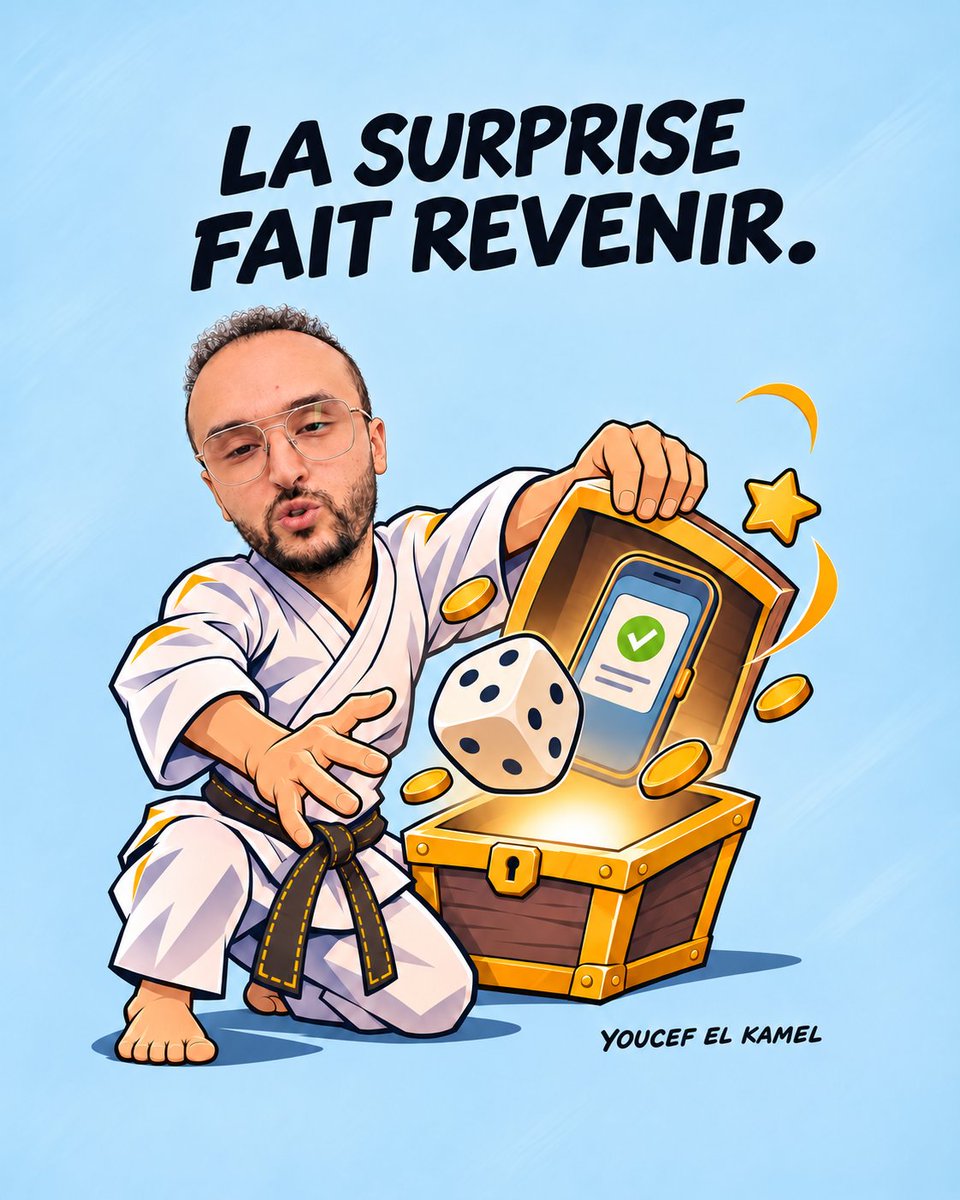
I would never put this in accounting software. But in a consumer app, surprise is what makes people come back. What was the last app that truly surprised you?
I was listing four gamification principles on camera and completely forgot the last one. It was randomness. If the exact same thing happens after every action, your app becomes boring. You check a task, get your points, and eventually stop looking.
On BeeDone I added unpredictability in three places. The Lucky Strike multiplies your points at random. The generated image is impossible to guess. The seasons are all different.
I eventually saw that one mechanic worked better than the rest, but only after trying them all. If I had to do it again, I would go step by step. Release one mechanic, check the analytics, keep it or kill it. Then the next.
I launched four social mechanics at once on BeeDone. A leaderboard, competitions, groups, and guilds. I went too far. BeeDone is my sandbox. I tried everything and shipped it all before understanding anything.
To non-tech people I am a pure coder. To my developer friends I am a vibe coder. I learned recursion and databases by hand, then switched entirely to assisted coding. I stand between these two worlds, and that is my place.
I was the tired one, not the app. You hear a lot about the moment you launch. Very little about the moment you realize your own product deserves someone else.
The hardest part of Evolum was not building the app. It was admitting I was no longer the right person to run it. Founder fatigue had set in and the code had to be completely rewritten. The users were still there. 4.8 out of 5, over 11,000 reviews.
It is the exact opposite of my own apps, where I ship fast and fix bugs in the evening. Both make sense. If your app opens in front of thousands on day one, your first version is not a test. It is the product. What does your day one look like?
At Renault Digital, I had to rebuild two native apps in Flutter. Not screen by screen. A brand new app, all at once. When you know tens of thousands of people will open it on launch day, you work differently.
You run extensive server load tests. You look at costs before they happen. You become obsessive about quality, because the slightest flaw multiplies fast and damages the image of the whole group.
I cut them off and tell them this is not going to happen. I build apps to satisfy users, but complying with strict legal standards does not fit my creative mindset. The client did not reject me. I withdrew out loud. Knowing what you do not do pays faster.
The interview has been going for 7 minutes 27. The team across the table is building an app for lawyers. They ask for my ISO certifications, my security audits, my passive and active monitoring trackers. I answer with the truth. No, no and no.
My apps have never been hacked and I have crash reports, but I have never implemented this kind of specification. I realize their demand is perfectly valid. For legal files, it is a prerequisite. The problem is not the standard, it is that this is not my job.
UpDrive's CEO trains ride-hailing drivers. She knows the persona and meets them every day. The distribution is already there. That's the unfair advantage.
The budget depends on subscriptions, invoices, user roles, and whether someone keeps the app alive after delivery. When the budget is tight, I cut the scope. I never cut the rate. A small app that works is better than a discounted big one.
An app costs between €5,000 and over €40,000. The difference is almost never on the screen. On UpDrive, there is a plain invoice screen. To the user, it is just a button. To the budget, it is a different story.
The exact same screen costs three times less when your data already exists. It costs three times more when it has to plug into the management software you have been using for ten years.