I have seen quite a number of reactions to this CV, so allow me to explain the thinking behind it.
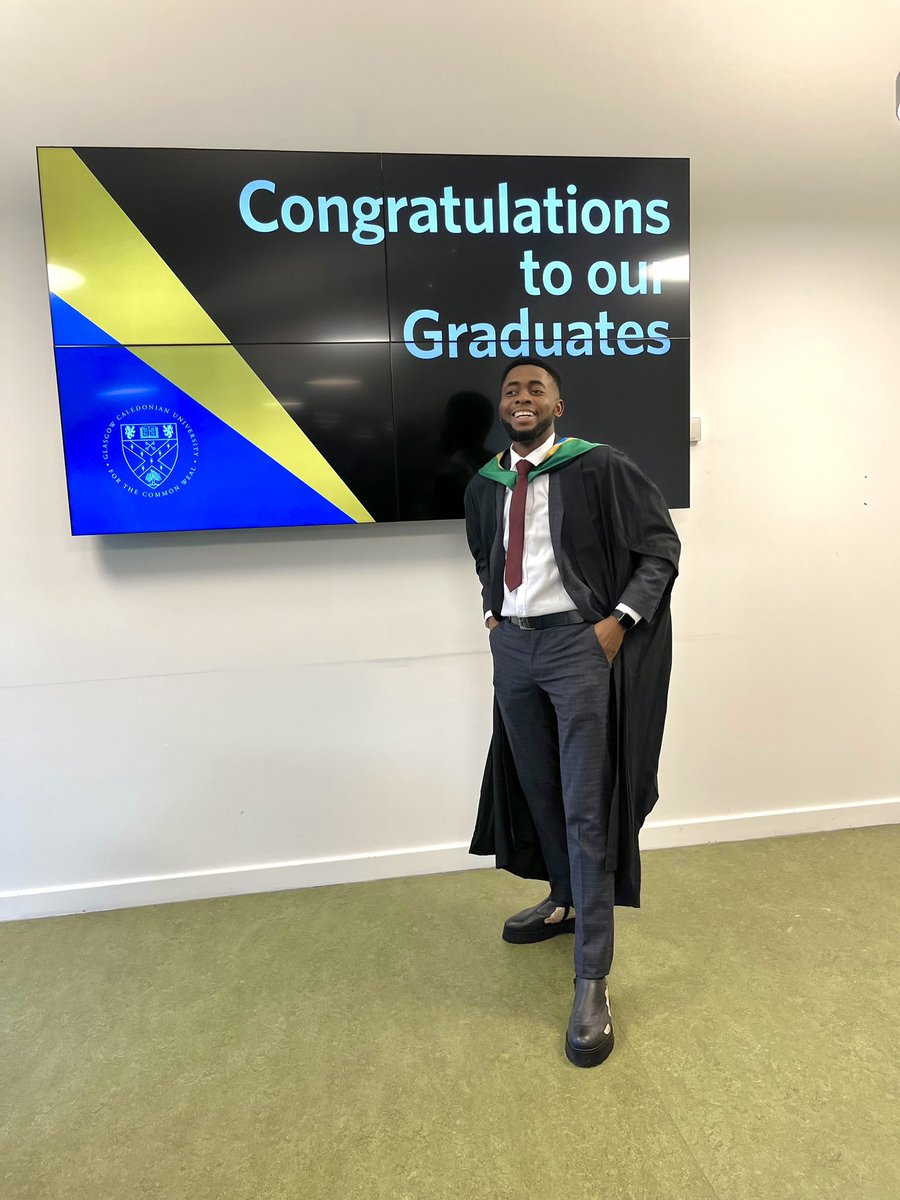
I prepared it in early 2025, shortly after graduating from the University of Lagos. It is the CV that earned me a place on the Erasmus Mundus Joint Master's in Biomembranes, where I was the only sub-Saharan African selected.
In all honesty, I cannot tell you exactly why the committee picked me. I had some strengths like my CGPA, Academic Awards, Research Experiences, etc. What I can tell you is the reasoning behind each choice, and what I would change today.
Nothing on that CV was accidental. We were going to be the programme's first cohort, so there were no past scholars to learn from. I simply asked myself what a committee building its very first class would want to see, and then I presented every strength I had. Requirements have changed since then, so kindly adapt this to your own programme.
1. Why 6 pages?
The standard advice is 2 to 3 pages, and I still recommend it. However, the Europass format has a lot of spacing. The same content in Word comes to 3 or 4 pages. There was also no page limit that year, so I made full use of the space. If you would like a template of the Word version, my Oga @Demo4show has shared one here: https://t.co/qmpneCsvQm
2. Why a photo?
For well-established programmes, I would advise against it. My case was different. Erasmus Mundus rules state that no more than 10% of scholarships can go to one nationality, so diversity is part of how these cohorts are formed. A first cohort would want to look truly international. I wanted the committee to see an African in that picture before they finished the first page.
3. Why my full address?
It was not necessary, and I have removed it from my more recent CVs. We learn every day.
4. Why languages right after education?
The programme begins in France. I took French lessons for one year at UNILAG and mentioned it in my SOP, so I placed languages where they could not be missed. The message was simple: this candidate will settle in quickly. Looking back, I now know it did not need to be that high up. It can sit on a later page and still do its job.
5. Why list selected modules?
I recommend this to everyone. My programme was clear about the coursework it expected. If you compare the programme website with my CV, you will find that every module I listed was either a requirement or a foundation for what I would study.
6. Why all the links?
For every project, award or certificate you mention, attach a link. Do not ask the committee to take your word for it.
7. Why so many awards?
They were my greatest strength, together with my research experience. Whatever your own strength is, place it where it cannot be missed.
8. What about publications?
I had none, and that is not a disadvantage in itself. It depends on how you present it. My undergraduate thesis produced two projects we intended to publish, and we were still writing the manuscripts. I therefore listed them as publications in view, marked "manuscript prepared for" with the target journal. I was clear that they were not yet published.
What I did have was a conference presentation. I presented the work at the Nigerian Institute of Medical Research (NIMR) international conference, where I was one of eight shortlisted for the External Young Scientist Award. I made sure that appeared in both my CV and my SOP. If your research has been presented anywhere, show it.
9. Why so much leadership?
My personal assessment is that Erasmus Mundus selection is about 60% social and 40% academic. You live and study with a small group across several countries. A new programme will care a great deal about whether that group can bond. I wanted the committee to see a team player, and I had real initiatives to show for it.
My advice: do not simply copy the template. Copy the thinking. Understand who is reading your CV and what they are looking for, then present your best self.
I did my Masters degree at 36.
I moved to the United States at 38.
I joined the US Army at 39.
I got my US Citizenship at 40.
I started my PhD at 41.
I am building an African Play Center at 42.
Just do it. You will grow older anyway, so why don't you age with impact, influence and income?
Òkú ń sunkún òkú, Akáṣọlérí ń sunkún ara wọn.
In May 1990, during the burial rites of the great Hubert Ogunde, Dr I-Show Pepper (Ishola Ogunsola) led the dirge and procession while the prolific chanter Ogogo (Taiwo Hassan) carried the powerful oríkì and chants that day.
I-Show Pepper himself later joined the ancestors on 28 December 1992.
The same Ogogo who led those chants for Ogunde died yesterday (23 August 2026) and will be buried today, 24 August 2026, in his hometown Ilaro.
Who will now chant for him?
When I moved to the UK 🇬🇧 some years back, I thought my biggest advantage was my work ethic.
Turns out… it wasn’t enough.
Not because I wasn’t skilled. Not because I wasn’t qualified. But because I was playing by rules that worked back home, in a completely different system.
UK corporate has its own language. It’s own politics. Its own unspoken expectations. And no one hands you the manual.
I had to unlearn:
• Waiting to be noticed
• Staying silent in meetings
• Thinking hard work guarantees promotion
• Avoiding self-advocacy
• Oversharing with colleagues too quickly
Growth in a new country isn’t just about upgrading your CV. Sometimes it’s about upgrading your awareness.
So here are 10 things you need to unlearn to survive UK Corporate 🇬🇧
If you’re navigating UK corporate as an immigrant, this post is particularly for you. 👇👇
🚨 NEW: The UK has officially signed up to rejoin the EU’s Erasmus+ scheme from 2027
It means students, apprentices and young people will be able to study and work across Europe
10 years of work experience in Nigeria.
Managed teams. Led projects. Delivered results.
Moved to the UK 🇬🇧 and suddenly... "We'd like to start you at Associate level."
Do you know anyone in this situation? This thread is for them 👇
The UK economy was not designed for one person to figure it out alone. Rent/mortgage, bills, council tax… everything assumes there are two of you.
Finding a committed, sensible partner who understands money isn’t just romantic. In this country, it’s genuinely strategic. Single people, please choose wisely! This is not an advice, it’s a warning.
Well. The message shouldn’t be to desist from AI but to desist from using AI amateurishly, lazily, and unimaginatively.
Instead of copy and pasting AI’s responses, a research student can use AI creatively by:
1. Having it challenge you: Tell AI your main idea and ask it to argue against you. Read through to see if it makes sense.
2. Use it to think out loud: See AI like a friend who listens. Explain your idea, let it reflect it back, then refine what you meant.
3. Use it to get ideas: Use AI to generate a rough outline, then rewrite it in your own words and thinking. Make it truly yours.
4. Use it to find areas you missed: Feed AI your research and ask it to spot gaps you missed.
I will say it again and again that the best use of artificial intelligence is in combining it with natural intelligence.