Everybody should watch Samdish's coverage video. The man did exactly what a journalist is supposed to do, and more.
I have never seen such anger on his face.
Please stop putting money or any offering in the daan peti of any place of worship 🙏 Try helping needy people directly. You look around you will find someone who needs help
🚨 BREAKING | ROAD SAFETY & FAMILY AWARENESS
Adults Aren’t the Only Ones Who Need This — Kids Do Too
Journalist + Analyst + Investigator + Teacher Explainer
A critical safety truth is still being ignored in most families:
👉 Children are often the only conscious passengers during emergencies.
Teaching them nothing is a risk.
Teaching them the right things can save lives.
🔎 Investigator’s Reality Check
Real-world emergencies don’t follow age rules.
•A driver can:
•Faint
•Have a medical episode
•Panic in traffic
•The nearest passenger may be:
•A teenager
•An older child
•A sibling sitting in the front or back
In several documented incidents worldwide, children were present but helpless—not because they were incapable, but because no one taught them.
Ignorance, not age, is the vulnerability.
📊 Analyst’s Risk Assessment
•Low-speed emergencies are survivable if someone acts
•Runaway vehicles escalate fast
•Teaching children does not increase risk
•Not teaching them guarantees inaction
This is one of the highest safety-return lessons per minute invested.
🎓 What Children Should Be Taught (Age-Appropriate)
This is not driving.
This is emergency response.
👶 Younger Children (5–8 years)
•How to:
•Shout for help
•Turn on hazard lights (show the button)
•Unlock doors
•When to:
•Stay seated and belted
•Get out only if told
🧒 Older Children (9–13 years)
•Everything above, plus:
•How to pull the handbrake
•What “Neutral (N)” means
•How to open windows
•How to call emergency services
👦 Teenagers (14+)
•Full emergency basics:
•Handbrake usage
•Gear to Neutral
•Engine off (if safe)
•Seat adjustment to reach controls
•Guiding the car to a safe stop if moving slowly
Many teens already understand phones better than cars — this balances that gap.
🧠 Teacher’s Golden Rule
“Teach children what to do — not what to fear.”
No panic.
No dramatization.
Just calm, repeatable steps.
Practice once.
Revisit occasionally.
Confidence replaces fear.
📰 Journalist’s Hard Truth
We teach children:
•Fire drills
•Stranger danger
•Internet safety
Yet we leave them clueless inside a 1.5-ton moving machine.
That’s not caution.
That’s oversight.
⚠️ Why Parents Hesitate — And Why They Shouldn’t
❌ “They’re too young”
❌ “They’ll misuse it”
❌ “It’ll scare them”
Reality:
✔ Kids rise to responsibility when taught calmly
✔ Clear rules prevent misuse
✔ Knowledge reduces fear — ignorance fuels it
📌 BOTTOM LINE
•Safety is not adult-only.
•Children are not passengers by default — they are potential responders.
•A 20-minute family lesson can:
•Prevent panic
•Stop a rolling car
•Save siblings, parents, pedestrians
🚨 Teaching car basics isn’t about driving.
It’s about survival — for adults and children alike.
Cars carry families.
Safety education must include every seat.
#RoadSafety #ChildSafety #FamilyAwareness
This whole Messi tour to India is the cringiest thing I have seen this country participate in a long time.
There is no serious Football match, where we get to see Messi’s real skill. Everyone using Messi as a prop, as a shiny thing, to project their own importance. Their level of access. Be it Ed Sheeran. Coldplay. Or any new placeholder. It’s a naked display of our corruption, our sycophancy, our slavery, our politics. A real black pill for all the believers of new India.
The Japanese stocks everyone ignored until 2020 👇
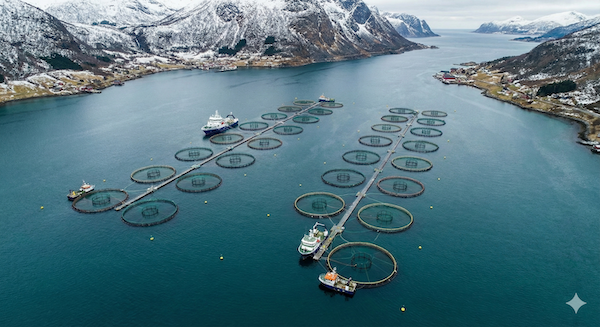
Mitsubishi spent $1 billion buying fish farms.
The farms were located in Norway and Canada. They were farming salmon fish.
The Japanese company felt that the global demand for protein was increasing.
Grieg Seafood, the Norwegian company, was the owner of these farms.
The company will become the world’s 2nd largest producer of salmon by 2027.
Salmon is a source of protein with one of the lowest carbon footprints compared to chicken, lamb, and pork.
You may have heard of Mitsubishi as a car manufacturer — notable models include the Lancer and Pajero. Or, you might have noticed the Mitsubishi logo on air conditioners and elevators.
Why is this company buying a fish farm?
Mitsubishi is a "sogo shosha”. Translated from Japanese, this roughly means ‘general trading house’.
These companies do not do one thing. They own multiple businesses.
Japanese general trading houses have become a talking point in recent months. One of the primary reasons for this is Warren Buffett's stake in these trading companies.
Sogo Shosha
In Japan, working in a general trading company is associated with great respect. These jobs pay extremely well.
But they are infamously demanding.
Students from top universities compete for these posts.
Jobs often require people to travel and stay abroad. Often, without family.
They are generalist roles where the ability to make a deal is highly prized. Naturally, interpersonal skills are of utmost importance.
A lot of these demands stem from the nature of these shosha companies.
Japanese general trading companies tend to invest in practically everything.
They are conglomerates. They may not always take operational control of companies. But many times, they do.
To understand their nature better, it might help to look at some of their products and the industries they operate in.
Mitsubishi Corporation & Others
This conglomerate today operates in many verticals — heavy machinery, defence vehicles, transport vehicles, motor vehicles, ships, and more.
Their metals vertical has interests in mining, coal, coke, copper, iron, aluminium, and even uranium.
Similarly, each vertical, such as chemicals, infrastructure, energy, and finance, has a range of products operating under it. This conglomerate even has an IT arm.
All in all, Mitsubishi Corporation has a presence in over 120 companies under its umbrella, with a total of more than 60,000 employees.
Its market cap is over $86 billion.
This makes Mitsubishi Corporation the biggest Japanese general trading house.
ITOCHU, with a market cap of around $80 billion, is second in line. It too has interests ranging from food, energy, textiles, machinery, metals, minerals, etc.
After that is Mitsui, with a market cap of around $75 billion. Again, similar sectors – energy, minerals, lifestyle, metal, chemicals, etc.
Then there’s Marubeni with an m-cap of around $40 billion. Then there’s Sumitomo at around $35 billion.
All of these trading companies trace their origins back to the late 1800s or early 1900s. They’ve played a significant role in Japan’s economy and post-World War II redevelopment.
They have a highly diverse set of businesses that operate in very diverse geographies.
Warren Buffett Angle
And there’s one more commonality among these five conglomerates. Warren Buffett has invested in them.
The view is to hold these companies for at least 50 years or forever.
Over the years, Warren Buffett has become extremely cautious about investing in shares. His worry has been mostly centered around valuations.
This has been illustrated well by the amount of money he holds in the form of cash — over $381 billion.
In 2020, Warren Buffett, via Berkshire Hathaway, announced that he had started buying stakes in the top 5 Japanese trading companies, also known as shoshas.
At the time of the announcement, he held nearly 5% of their stakes.
In the 5 years since, this stake has been increased to almost 10%.
In his letter to shareholders in 2025, Warren Buffett mentioned that these trading companies operated a lot like mini Berkshire Hathaways.
They are well diversified across industries. They have access to a large customer base owing to their global exposure.
Their cash flows and margins are healthy, and the dividend growth looks promising.
What was even more tempting to Warren was the valuation. These stocks are “cheap”. Their P/E ratio was more or less under 10 when Warren started buying them.
To give you some idea, the Nifty 50’s P/E ratio right now is about 21.
That’s still an index of 50 companies. If you look at individual stocks that are a part of the Nifty 50, a PE ratio in the range of 30-80 can be found. Some even higher.
In the USA, the P/E ratio of the S&P 500 is about 30. The P/E ratio of individual stocks in the S&P 500 can also be found to be significantly higher.
If that was not already tempting, the dividend yields of these stocks are in the range of 2-4%.
Japanese loans are also extremely cheap. 0.5% interest rate.
Buffett has used these cheap loans to buy Japanese stocks that give high dividends.
These investments have attracted the attention of many global investors. Following his first announcement back in 2020, many Japanese and foreign investors started pumping money into these stocks.
That alone led to 5-10% jumps in the share prices of these stocks.
Warren Buffett does not pay much attention to such swings, of course.
The valuations were still cheap.
He continued putting more money into the stocks.
In his last letter to shareholders, he expressed that his interest in the Japanese stock markets continues.