To celebrate the conclusion of the 2024/25 season and #Chelsea winning the #FIFACWC, we are giving away two 2025/26 Blues shirts of your choice! 🏆
To enter:
🔹 Follow @AbsoluteChelsea
🔹 RT this post
The winners will be announced at 6pm [UK] on 17/07. Good luck! 💙
💰 FPL_Zlatan ML is BACK💰
FREE TO ENTER 🤑
PRIZES:
League🥇 £250
Cup 🥇 Zlatan Jersey
RULES TO ENTER:
1️⃣ Follow me!
2️⃣ Like and RT this post
3️⃣ Tag 2 people in the comments
🚨 All steps must be followed to be eligible for the league!
⚠️ League code: zkm3nt
FPL Meerkat Mini League - Free Entry With Prizes!
Giving back to the community 😁. Like last season, there’s 2 ways to win:
Mini League Score
🥇- £25
🥈- £15
🥉- £10
Team Of The GameWeek (TOTGW*)
🥇- £25
🥈- £15
🥉- £10
How to be eligible:
1) Follow my X page (@FPLMeerkat)
2) Like and retweet this post
3) Comment below your team name
After doing those 3 entry requirements, you'll be eligible to win the prizes
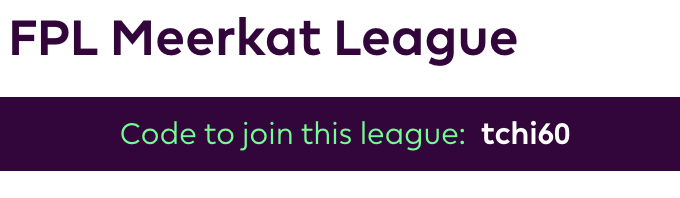
League code - tchi60
Entry closes after the Gameweek 1 deadline
Progress of who's winning both competitions will be done weekly over on my YouTube channel team selection videos!: https://t.co/DrmLY45nrz
Rule: If it's worth checking, it's worth automating.
But, some checks can't be automated.
So, here are 9 things that I look for in code reviews:
1. Robustness: Is the code secure, accessible, type-safe, and efficient?
2. Edge cases: Are error handling, validation, loading states, cancellation, and notifications implemented?
3. Naming: Are functions, files, and variables named clearly?
4. Comments: Are comments clear and used appropriately?
5. Reuse: Are we using existing packages and libraries when possible instead of creating our own? Are we extracting components and functions to eliminate repeated markup and logic? Is existing code being needlessly copy/pasted?
6. Colocation: Are related files and functions stored together?
7. Decomposition: Are we decomposing big problems into small, clear pieces?
8. Consistency: Does the code feel familiar? Does it follow our established standards, patterns, and practices?
9. Tests: Are the tests clear, atomic, fast, reliable, and comprehensive?
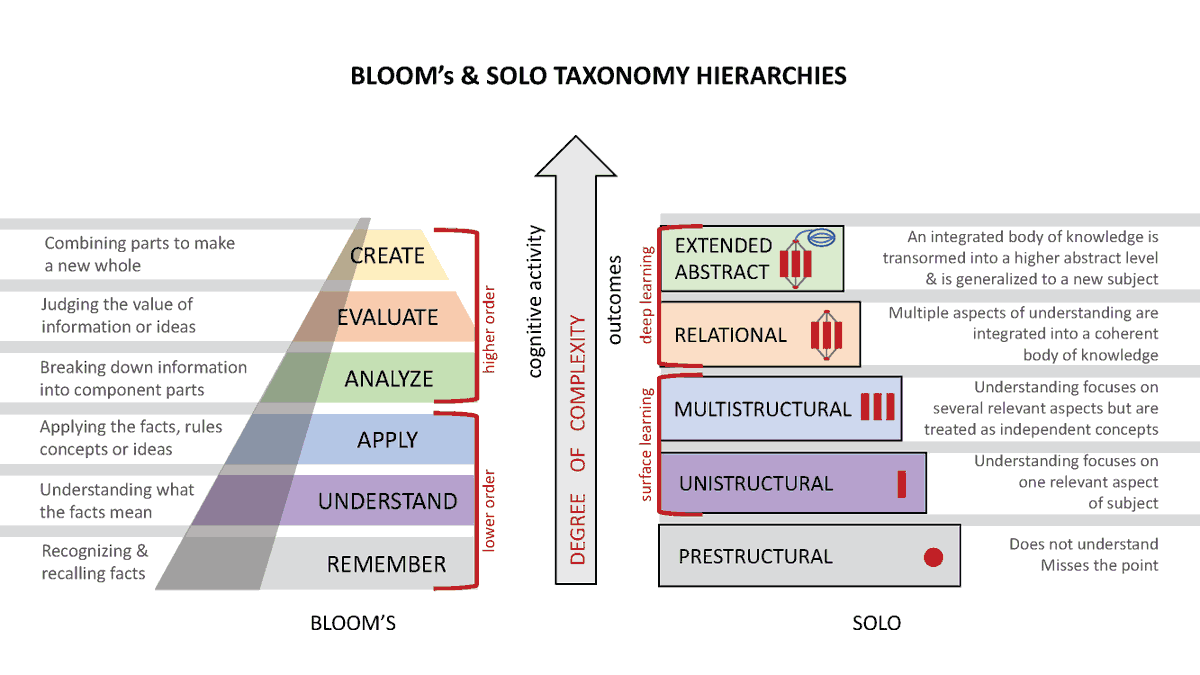
When focused on higher-order thinking, we automatically fill the lower order.
Instead of:
• rereading → use more analogy
• flashcards → map out the big picture
• rote memorization → teach it to an imaginary friend
Never confuse studying with real learning.
Nassim Taleb spends 30 hours every week reading books.
Here are 27 reading tips from @nntaleb:
1) The minute I was bored with a book or a subject I moved to another one, instead of giving up on reading altogether.
2) The trick is to be bored with a specific book, rather than with the act of reading.
3) A good book gets better at the second reading. A great book at the third. Any book not worth rereading isn’t worth reading.
4) I follow the Lindy effect as a guide in selecting what to read: books that have been around for ten years will be around for ten more; books that have been around for two millennia should be around for quite a bit of time, and so forth.
5) The reading of a single text twice is more profitable than reading two different things once.
6) A private library is not an ego-boosting appendage but a research tool.
7) Read books are far less valuable than unread ones. The library should contain as much of what you do not know as your financial means, mortgage rates, and the currently tight real-estate market allows you to put there.
8) Drink old wine. Read old books. Keep old friends.
9) Read nothing from the past one hundred years.
10) Never read a book that can be adequately summarized.
11) Never read a book you would not reread.
12) No book that can be shortened survives.
13) Books that endure don't look like good books; they are almost always very poorly written, but address fundamental topics.
14) What matters for a book is depth and relevance, which is extremely rare. Plus internal, not external coherence. Books that have them don't need the cosmetic shit.
15) When a risk taker writes a book, read it. In the case of Peter Thiel, read it twice.
16) Keep the book. Easier to remember contents just by looking at it. Often not even necessary to consult notes.
17) I don't remember what I learned in class. I remember much of what I read on my own.
18) To become a scholar, spend decades reading 30-40 h/week.
19) You will accumulate more knowledge and more books as you grow older, and the growing number of unread books on the shelves will look at you menacingly. Indeed, the more you know, the larger the rows of unread books. Let us call this collection of unread books an antilibrary.
20) I don’t read newspapers. I don’t watch television. I’m not on Facebook. I don’t care for the social networks. I’m on Twitter, but I use it only as a means to an end. I read books.
21) Books are not read by the majority because they read the Internet, which is like junk food for the mind.
22) The unread books on your shelf are like a universe of alternate possibilities waiting to be explored.
23) I divide my spirits into two categories: those I read for the pleasure of reading and those I read for the pleasure of rereading.
24) To see if a book is real, ask 10 people of different backgrounds & professions to summarize it. If the summaries are similar, the book will not survive as it can be shortened to a journal article.
The more the summaries diverge, the higher the dimensionality of the book.
25) If you want to study classical values such as courage or learn about stoicism, don’t necessarily look for classicists. One is never a career academic without a reason. Read the texts themselves: Seneca, Caesar, or Marcus Aurelius, when possible. Or read commentators on the classics who were doers themselves, such as Montaigne—people who at some point had some skin in the game, then retired to write books. Avoid the intermediary, when possible.
26) Criticism, for a book, is a truthful, unfaked badge of attention, signaling that it is not boring; and boring is the only very bad thing for a book. Consider the Ayn Rand phenomenon: her books Atlas Shrugged and The Fountainhead have been read for more than half a century by millions of people, in spite of, or most likely thanks to, brutally nasty reviews and attempts to discredit her.
27) A novel you like resembles a friend. You read it and reread it, getting to know it better. Like a friend, you accept it the way it is; you do not judge it.
There are two types of people in the world: Those who finish, and those who don’t. @aarondfrancis shares his tips on how to finish your projects. https://t.co/r9hcRtbyOu
When I audit a project, I clean up first.
1. Run cspell to fix spelling issues
2. Remove unused vars and imports
3. Remove "dead" code (commented or uncalled)
4. Fix poor naming
5. Colocate related things
After these changes, the code is easier to read and navigate.






![AbsoluteChelsea's tweet photo. To celebrate the conclusion of the 2024/25 season and #Chelsea winning the #FIFACWC, we are giving away two 2025/26 Blues shirts of your choice! 🏆
To enter:
🔹 Follow @AbsoluteChelsea
🔹 RT this post
The winners will be announced at 6pm [UK] on 17/07. Good luck! 💙 https://t.co/TC8ueVdl2O](https://pbs.twimg.com/media/Gv6UfNoXAAAb1J1.jpg)