Driven $200 million in email revenue for clients.
Partner at a 7-figure Ecommerce Email Marketing Agency. Join 100,423 marketers & get my email secrets FREE ⬇️
Writing cheat codes I wish I had at 22:
Most people use AI wrong for writing. And it's costing them hours.
They paste a prompt, get generic slop, and wonder why it sounds robotic.
Here's how we actually use AI to speed up copywriting without killing our voice:
1. Ditch typing. Just talk.
You can just speak your ideas into Wispr Flow and it transcribes them instantly.
But here's the magic:
It auto-edits as you go
Removes filler words
Adds punctuation
Basically, cleans up your rambling into clear sentences.
The thing is, your brain processes ideas faster than your fingers can type. This closes the gap. I dictated this entire post in under 3 minutes.
2. Train AI on YOUR voice first
Before asking AI to write anything, feed it 3-5 examples of your best content. Tell it: "This is my voice. Match it." Night and day difference.
3. Use AI for outlines, not drafts
Give AI your topic and ask for 5 different structures. Pick one. Then write the actual words yourself. Faster than staring at a blank page.
4. Rewrite, don't generate
Paste your rough draft. Ask AI to tighten it, cut fluff, or punch up the hook. Editing > generating.
5. Prompt with context, not commands
"Write a LinkedIn post" = garbage.
"Write a LinkedIn post for ecommerce founders about email deliverability, casual tone, 150 words" = usable.
6. Use AI to find the angle
Stuck on a topic?
Ask: "Give me 10 different angles to write about [topic]."
Pick the one that sparks something.
7. Let AI handle the low-leverage work
Subject line variations. Meta descriptions. Alt text. CTA options. Save your creative energy for the stuff that actually moves the needle.
8. Get a quick gut check
Paste your draft and ask: "What's the weakest part of this?" Not perfect feedback, but faster than waiting on a colleague.
The goal isn't to let AI write for you.
It's to remove the friction between your ideas and the page.
Save this. Try one this week.
If you write a lot, start with number 1. Wispr Flow is FREE to try: https://t.co/12n5kcxd6r
Proud to be a paid advocate for Wispr.
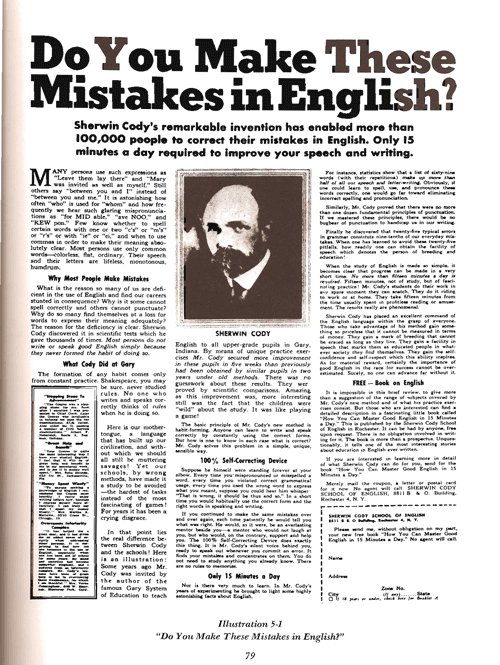
They tested two headlines. One word was different. One ran for 40 years.
Over a century ago, a copywriter named Maxwell Sackheim was trying to sell a mail-order English course. He tested headline after headline, and most of them flopped.
Then he tried: "Do you make these mistakes in English?"
It ran for 40 years. No challenger ever beat it.
Here's what's wild. They also tested: "Do you make mistakes in English?"
One word different. It failed.
The word "these" changed everything. Without it, the reader answers yes or no and moves on. With "these," they have to keep reading to find out what the mistakes are.
That one word created a question the reader couldn't answer without reading further. Your subject lines can do the same thing.
"Big sale this weekend" tells them everything. Nothing left to wonder about.
"We're pulling 3 products from the store on Friday" makes them ask which 3 and why, so they open the email.
The difference between a subject line people skip and one people click is the same thing Sackheim figured out a century ago. Give them enough to care. Hold back enough to keep them.







![ecomchasedimond's tweet photo. Writing cheat codes I wish I had at 22:
Most people use AI wrong for writing. And it's costing them hours.
They paste a prompt, get generic slop, and wonder why it sounds robotic.
Here's how we actually use AI to speed up copywriting without killing our voice:
1. Ditch typing. Just talk.
You can just speak your ideas into Wispr Flow and it transcribes them instantly.
But here's the magic:
It auto-edits as you go
Removes filler words
Adds punctuation
Basically, cleans up your rambling into clear sentences.
The thing is, your brain processes ideas faster than your fingers can type. This closes the gap. I dictated this entire post in under 3 minutes.
2. Train AI on YOUR voice first
Before asking AI to write anything, feed it 3-5 examples of your best content. Tell it: "This is my voice. Match it." Night and day difference.
3. Use AI for outlines, not drafts
Give AI your topic and ask for 5 different structures. Pick one. Then write the actual words yourself. Faster than staring at a blank page.
4. Rewrite, don't generate
Paste your rough draft. Ask AI to tighten it, cut fluff, or punch up the hook. Editing > generating.
5. Prompt with context, not commands
"Write a LinkedIn post" = garbage.
"Write a LinkedIn post for ecommerce founders about email deliverability, casual tone, 150 words" = usable.
6. Use AI to find the angle
Stuck on a topic?
Ask: "Give me 10 different angles to write about [topic]."
Pick the one that sparks something.
7. Let AI handle the low-leverage work
Subject line variations. Meta descriptions. Alt text. CTA options. Save your creative energy for the stuff that actually moves the needle.
8. Get a quick gut check
Paste your draft and ask: "What's the weakest part of this?" Not perfect feedback, but faster than waiting on a colleague.
The goal isn't to let AI write for you.
It's to remove the friction between your ideas and the page.
Save this. Try one this week.
If you write a lot, start with number 1. Wispr Flow is FREE to try: https://t.co/12n5kcxd6r
Proud to be a paid advocate for Wispr.](https://pbs.twimg.com/media/HB24UX0a8AE4PO7.jpg)