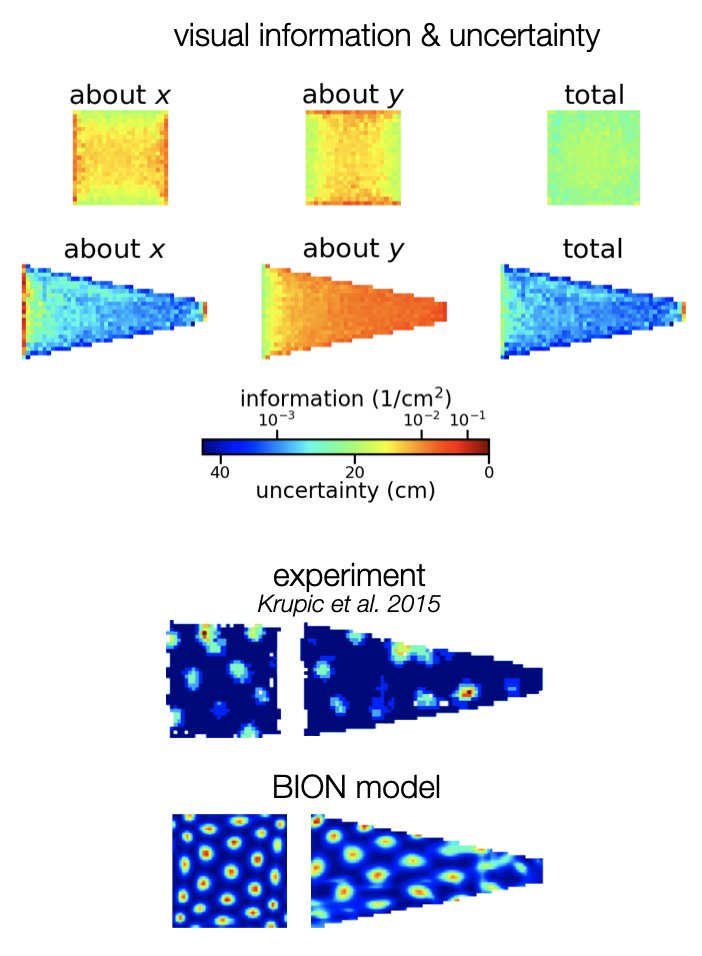
Excited to share a new #preprint with @lengyel_m & @DMWolpert that provides a normative account of “deformations” in homing & grid cell activity patterns, based on spatial uncertainty in #navigation! (1/👇) https://t.co/WCLBmKCBFz
📣Neurotweops! Oxford will soon advertise *2* positions for Neuroscience group leaders @OxfordDPAG. Due dates for applications will be in the autumn. Details to follow.
How does the brain learn probabilistic representation during #navigation, just from egocentric sensory inputs? Come to my lab's first @CosyneMeeting poster 2-019, led by Yeowon: "Uncertainty encoded in a recurrent neural network trained to predict visual input during navigation"
PhD position in my lab!
Are you interested in both natural and artificial intelligence🐭👩🦰🤖, and in learning comp neuro and reinforcement learning?
Then this can be your lab while enjoying Barcelona.
Please, see the post below, and spread the word.
@LLogiaco @jmricotta @LLogiaco - do you feel difference when you use AZERTY for French vs English? I have no problem switching between QWERTY and Korean, and I think that’s because for each “input” (syllable) there is only one output (key). If this is the case, you might find AZERTY harder w English.
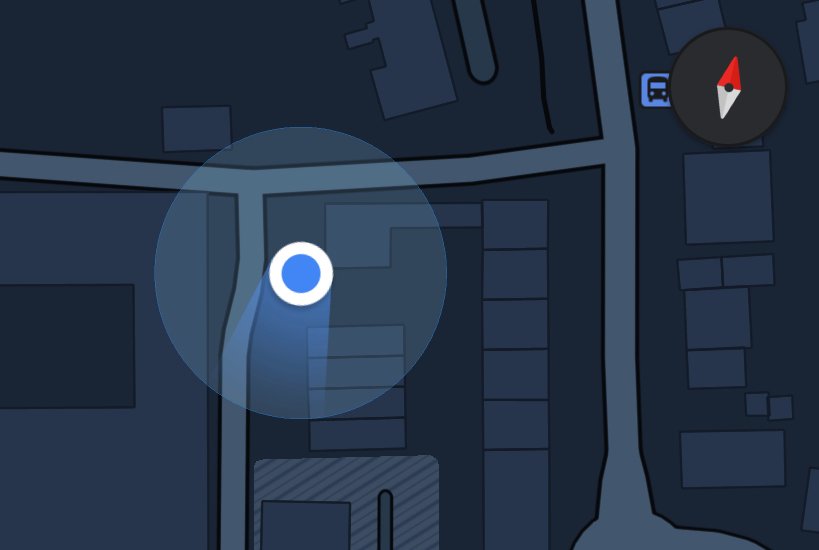
What in the pic below helps navigation? A map, sure. And a compass, of course. A blue dot that shows where you are. Noticed that blue disc around the dot? That's a representation of uncertainty. @YulKang1 explored what this means for human navigation and rodent grid cells.
We developed a Bayesian Image-computable Observer for Navigation (BION), which optimally combines noisy 1st-person view image 👁️, self-motion, and touch inputs to continually update its probabilistic belief about its location in the world (2/):
Find analytic intuitions & more results in the manuscript. Huge thanks to amazing co-authors @lengyel_m & @DMWolpert, and to everyone who has helped us along the way! (9/9) https://t.co/WCLBmKC3Q1
Excited to share a new #preprint with @lengyel_m & @DMWolpert that provides a normative account of “deformations” in homing & grid cell activity patterns, based on spatial uncertainty in #navigation! (1/👇) https://t.co/WCLBmKCBFz
Our results show that uncertainty in inferring one’s location in the world (which is not directly observable) from noisy and ambiguous egocentric sensory input plays a crucial role in spatial navigation behaviour and its neural underpinnings. (8/)
Find analytic intuitions & more results in the manuscript. Huge thanks to amazing co-authors @lengyel_m & @DMWolpert, and to everyone who has helped us along the way! (9/9) https://t.co/WCLBmKCBFz
Our results show that uncertainty in inferring one’s location in the world (which is not directly observable) from noisy and ambiguous egocentric sensory input plays a crucial role in spatial navigation behaviour and its neural underpinnings. (8/)