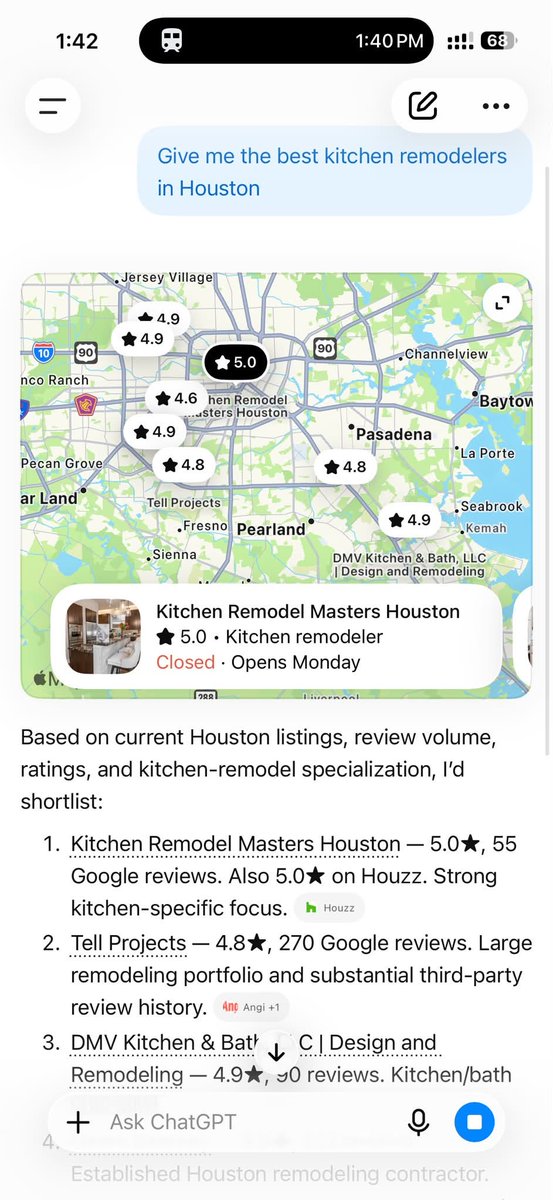
A remodeler asked me last month why ChatGPT recommends his competitor and never him.
So I showed him the exact process I use to get a business named in AI answers. (Bookmark this)
1. Pick one question where you're not showing up. Write it the way a homeowner would type it: "How much does a kitchen remodel cost in Atlanta?"
2. Ask ChatGPT and Gemini. Write down who they name and which sites they cite. Do it logged out, in an incognito window. Your own account shows you a personalized answer, not what a stranger sees.
3. Build one page that answers that exact question. Make the question the headline.
4. Give the real price range in the first two sentences. Don't make people scroll for it, and never post a price you haven't confirmed.
5. Then explain what moves the price, the steps, and a short FAQ. Make it better than whatever AI is citing right now.
6. Once it's live, link to it from 2 or 3 other pages on your site.
7. Look at the sites AI cited. Usually it's Angi, BBB, Thumbtack. Claim your free profiles there. Honestly, that's often the real gap, not your content.
8. Check again in 2 to 4 weeks. Give it 60 to 90 days before you judge it.
One thing people miss: if your website says one price and a bigger site says another, AI believes the bigger site. Keep everything matching.
One question at a time. Then repeat.
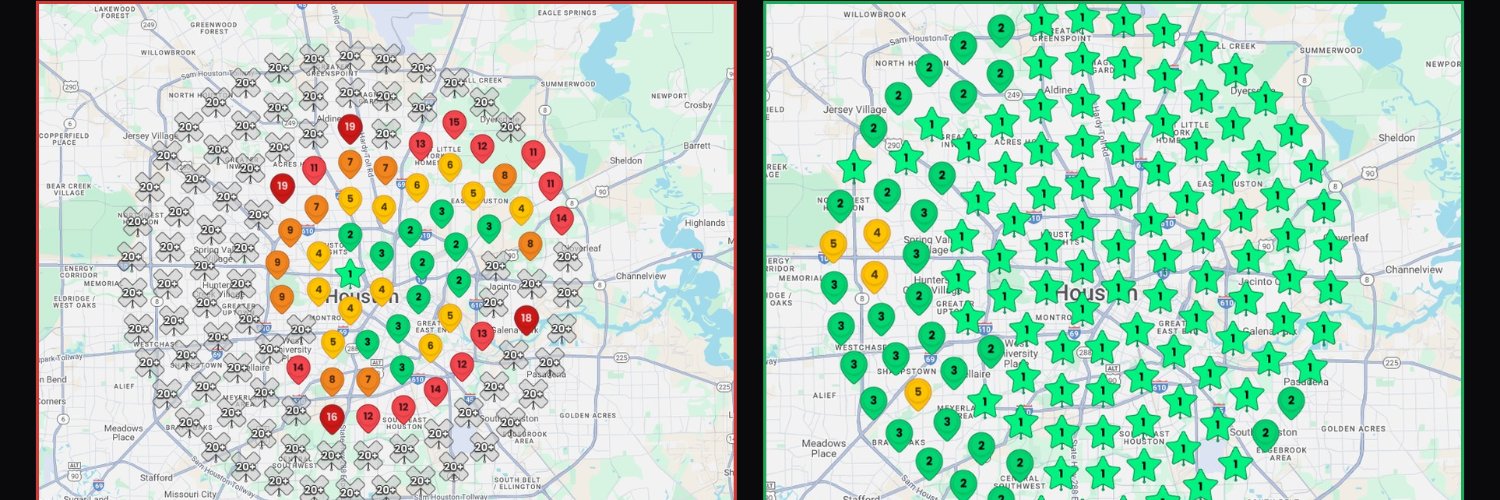
(In the image: my company)
Most local websites rank for nothing because they have one "Services" page.
Here's how I fix that: make the website a mirror of the Google Business Profile. (Bookmark this)
Local ranking comes down to proximity, trust and relevance. You can't change proximity. But you can grow the radius where you show up in the top 3 by building relevance and trust.
Relevance first. Make your website mirror your Google Business Profile.
1. Open your GBP and write down every category and every service you've listed.
2. Give each one its own page. For most local businesses that adds up to about 30 pages.
3. Link the pages the way your profile is organized. Services link up to the main pillar page. Supporting posts link back down to the service they relate to.
4. Make the heading say what people actually search. "Bathroom Remodeling in [city]" beats "Premier Bathroom Solutions."
5. Put the categories as exact-match headings on your homepage, each one linking to its page.
Why this works: Google and AI engines connect the service to your business. They stop guessing whether you really do that job.
Then trust. Get the free listings verified, join your local chamber, and add 1 to 2 real local links a month.
Fewer strong pages beat hundreds of thin ones. Build the 30 properly before you touch city pages.
Every remodeler should have one page that answers "how much does a [service] cost in [city]?"
Put the real price range in the first two sentences, then explain what moves it.
Most competitors hide prices. That's your opening, on Google and in AI answers.
Stop buying links.
Sponsor a Little League team instead.
A local chamber of commerce membership, a BBB profile, a sponsor page for a youth team. One or two real local links a month will do more for a contractor on Maps than any paid "DR 70" post.
Remodelers: your primary Google Business Profile category matters more than almost anything else you can change.
If you do kitchens and baths but your category is "General contractor," you're telling Google you do everything. That usually means ranking for nothing.