Developers say they want to learn backend development…
…but then they try to learn servers, databases, auth, APIs, Docker, cloud, and security all at once.
That’s exactly why they get stuck.
Backend gets easier when you learn it in the right order.
Here’s the roadmap I’d follow to learn backend development from zero:
This 2 hour Stanford lecture shows exactly how Stanford trains it's engineers to build AI systems. It's more practical than every Claude tutorial & prompting threads you've seen.
Bookmark & give it 2 hours, no matter what. It'll be the most productive thing you do this weekend.
Stop telling Claude: "build this"
Stop telling Claude: "write code"
Stop telling Claude: "fix this bug"
You're using a staff-level AI like a junior intern.
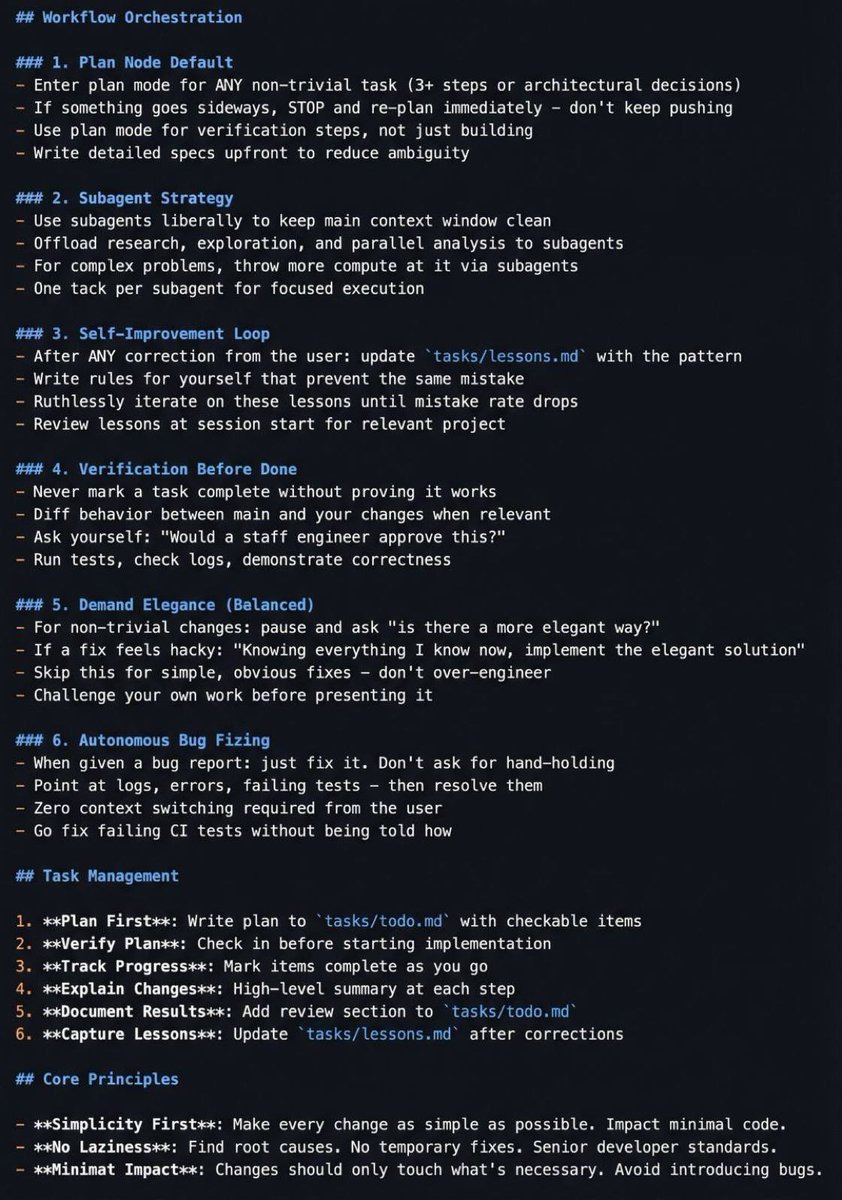
Claude performs best when you give:
• role
• constraints
• architecture expectations
• output format
• real-world context
Here are 10 production-grade Claude prompts you can copy-paste:
As a backend engineer, you should be able
to explain these concepts without Googling:
- What happens during an HTTP request lifecycle
- The difference between authentication and authorization
- Why indexes speed up reads but slow down writes
- What a database transaction actually guarantees
- How connection pooling works and why it matters
- The difference between sync and async processing
- What idempotency means and why payments need it
- How a JWT is structured and verified
How many can you explain right now?
A friend of mine walked into a backend interview feeling confident.
10 minutes in, the interviewer asked:
“What actually happens when you type a website URL and press Enter?”
He froze.
Not because it was hard… but because nobody ever explained it simply.
So here are backend interview questions explained in plain English.
Bookmark this. Retweet for others preparing.