@abuatiyyah_ In order for there to be an agreement, you'd have to find instances where imam Ahmed made similar illegitimate ta'wiil as the ashaairah. There's no evidence to suggest that. There is evidence that imam Ahmed stuck to the apparent meaning. He avoided qiyas as much as he could.
عاتبني أحد الإخوة فقال لي: إن مراد شيخ الإسلام بقوله "أكثر ما في الإقناع مخالف لنصوص أحمد" هو فيمن غلا من المتأخرين في مسائل العقيدة، ولا يقصد الشيخ أنهم خالفوا أقوال أحمد في المسائل الفقهية.
فأقول مستعينًا بالله
One of the beloved brothers reproached me and said to me: “The intent of Shaykh al-Islām in his statement, ‘Most of what is found in al-Iqnāʿ contradicts the texts of Aḥmad,’ was regarding those among the later scholars who went to extremes in matters of creed. The Shaykh did not mean that they contradicted the statements of Aḥmad in matters of fiqh.”
So I say, seeking the help of Allah:
Anyone familiar with the call of Shaykh al-Islām Muḥammad ibn ʿAbd al-Wahhāb knows that what he sought to revive was following the proof and abandoning taʿaṣṣub toward the statements of men, even the imams of the madhhabs. This is clear in works such as al-Uṣūl al-Sittah, particularly the sixth principle, and in his letters. The Najdi daʿwah strongly opposed adhering to a madhhab when clear evidence contradicted it.
That is why his great-grandson, the ʿAllāmah ʿAbd al-Laṭīf, mentioned the Shaykh’s call and what he sought to revive in his book Miṣbāḥ.
“These are his treatises and authorships. He forbids that ( meaning the obligation of following him) and is very severe in that, and he commands with sincerely following the Messenger ﷺ. He rebukes what people have accustomed to of extremism toward the opinions of the scholars and their verdicts, and placing their verdicts in the station of revealed texts.
And the Shaykh had taken a chapter regarding this topic in Kitāb al-Tawḥīd, where he says:
Whoever obeys the ulema and leaders in making ḥalāl that which Allah has made ḥarām, or making ḥarām that which Allah has made ḥalāl, then he has taken them as deities besides Allah.”
Page 143.
وهذه رسائل الشيخ ومصنفاته ينهى عن ذلك ويشدِّد فيه، ويأمر بتجريد المتابعة لرسول الله صَلَّى اللهُ عَلَيْهِ وَسَلَّم (٥)وينكر ما اعتاده الناس من الغلو في رأي العلماء واجتهادهم، وتنزيل ذلك منزلة النصوص النبويّة، وقد عقد باباً في كتاب التوحيد لهذه المسألة.
قال رحمه الله (٦) (باب من أطاع العلماء والأمراء (٧)في تحليل ما حرَّم الله أو تحريم (١) ما أحل الله فقد اتخذهم أربابا من دون الله)
كتاب مصباح الظلام في الرد على من كذب الشيخ الإمام
ونس��ه إلى تكفير أهل الإيمان وال��سلام
[عبد اللطيف آل الشيخ]
Another thing which falsifies this claim is that the books mentioned by Shaykh Ibn ʿAbd al-Wahhāb, al-Iqnāʿ and al-Muntahā, are books of fiqh and not books of ʿaqīdah. So the intent of the Shaykh when he said, “Most of that which is found in these two books is in opposition to the stated opinions of Imām Aḥmad,” could only have been referring to the stated fiqh positions, as the two books are books of fiqh in the Ḥanbalī madhhab.
And the Shaykh does not say this from a position of ignorance, as he was well acquainted with these books, having summarised the famous Ḥanbalī fiqh book, al-Inṣāf.
Also his famous student one of the imams of the najdi scholars Ḥamd ibn Nāṣir ibn ʿUthmān Āl Muʿammar has similar speech in where he says
“The fanatics of the madhhabs of the leading scholars you find them in most of the masāʾil (issues) opposing the stated views of their actual imams, but they follow the statements of the later scholars from their madhhab.”
والمتعصبون لمذاهب الأئمة تجدهم -في أكثر المسائل- قد خالفوا نصوص أئمتهم، واتبعوا أقوال المتأخرين من أهل مذهبهم،
كتاب رسائل وفتاوى الشيخ ��مد بن ناصر بن عثمان بن معمر (مطبوع ضمن مجموعة الرسائل والمسائل النجدية، الجزء الثاني)
[حمد بن ناصر آل معمر]
He goes on to explain how the later Ḥanbalīs, who claim to follow Imām Aḥmad, are actually followers of al-Ḥajjāwī, and that they only rely on the two books, al-Iqnāʿ and al-Muntahā, and do not look beyond them.
"فهؤلاء -في الحقيقة- أتباع الحجاوي وابن النجار لا أتباع الإمام أحمد."
@HarounKanj Great job Agent Kanj. You're doing our job for us, keeping people with maturidi/ashari aqeedah away from the pristine and beautiful hanbali madhab.
@paxangloceltae You are an idiot. Somehow stun slaughter whitewashes an entire history of your ancestors slaughtering animals using knives. Or do you live in some Disney fiction where a rabbit hops on over to you and whispers I hope you enjoy my meat then passes away with a smile
@TaymiFawaid@QadriMurid Arguments aside, It's pretty disgusting to see how easily he adds certain words next to God. An entire rant based on a shubhah they created. It's like making dominoes fall and crying about the mess after.
S͟h. ʿAbdullāh al-Ghunaymān said :
Many people still remain upon misguidance in this regard, adopting the Ashʿarī and Māturīdī schools, believing that this misguidance is the truth and that it is the school of Ahl al-Sunnah. They believe that the apparent meanings of the evidences in the Books of Allah and His revelation to His Messengers indicate tashbīh, and therefore they hold that these texts must be diverted from their apparent meanings.
They regard whoever believes in what the Qurʾān and Sunnah indicate according to their apparent meanings as a mushabbih and mujassim, even though sound reason and sound natural disposition [fiṭrah], free from deviation, agree with what the revelation of Allah, Most High, indicates.
For this reason, the Ashʿarīs accuse everyone who believes in Allah’s ʿulūw and His istiwāʾ over His Throne in reality, of tashbīh and tajsīm. At times, they even explicitly declare them disbelievers, as is their belief within themselves. Yet despite this, you will see many of them raising their voices and calling for agreement and harmony.
But this can never happen so long as there remains upon earth someone who believes in the truth, because there can be no agreement between guidance and misguidance, nor between truth and falsehood. And how could there be agreement with one who considers someone who believes in what the numerous clear and explicit texts indicate to be misguided and a mushabbih?
شرح كتاب التوحيد من صحيح البخاري (379)
يا طلاب العلم . .
دونكم كتاب جليل مدرسي في #أصول_الفقه في غاية النفاسة (الطبعة الأولى عام١٤٤٧هـ ) لفضيلة الشيخ الأصولي المتفنن د.أحمد بن مسفر العتيبي -وفقه الله-@ahmad24694 ؛ حجمه مناسب لغير المتخصص والراغب في الخوض في غمار هذا الفن وعلى كتاب عظيم ال��نزلة في علم الأصول مثل كتاب مختصر التحرير ومليء بالتدريبات تبارك الرحمن 👌🏼
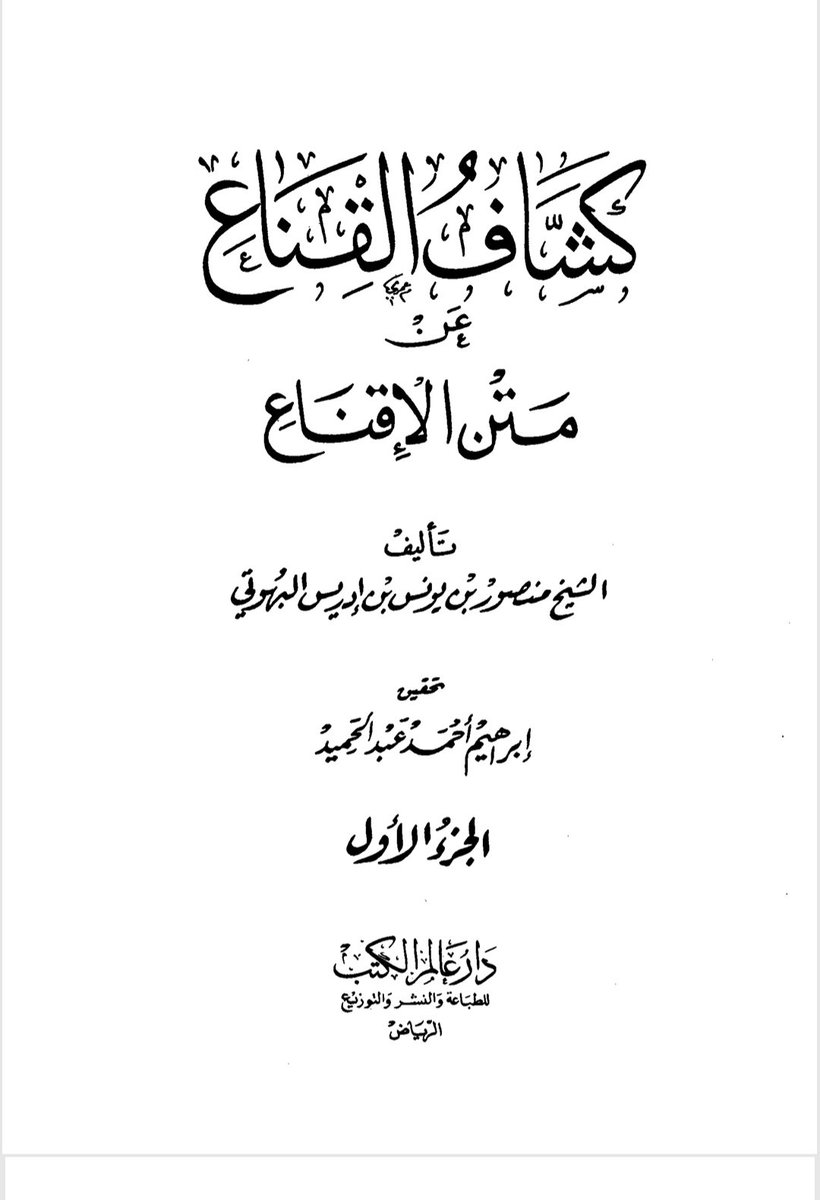
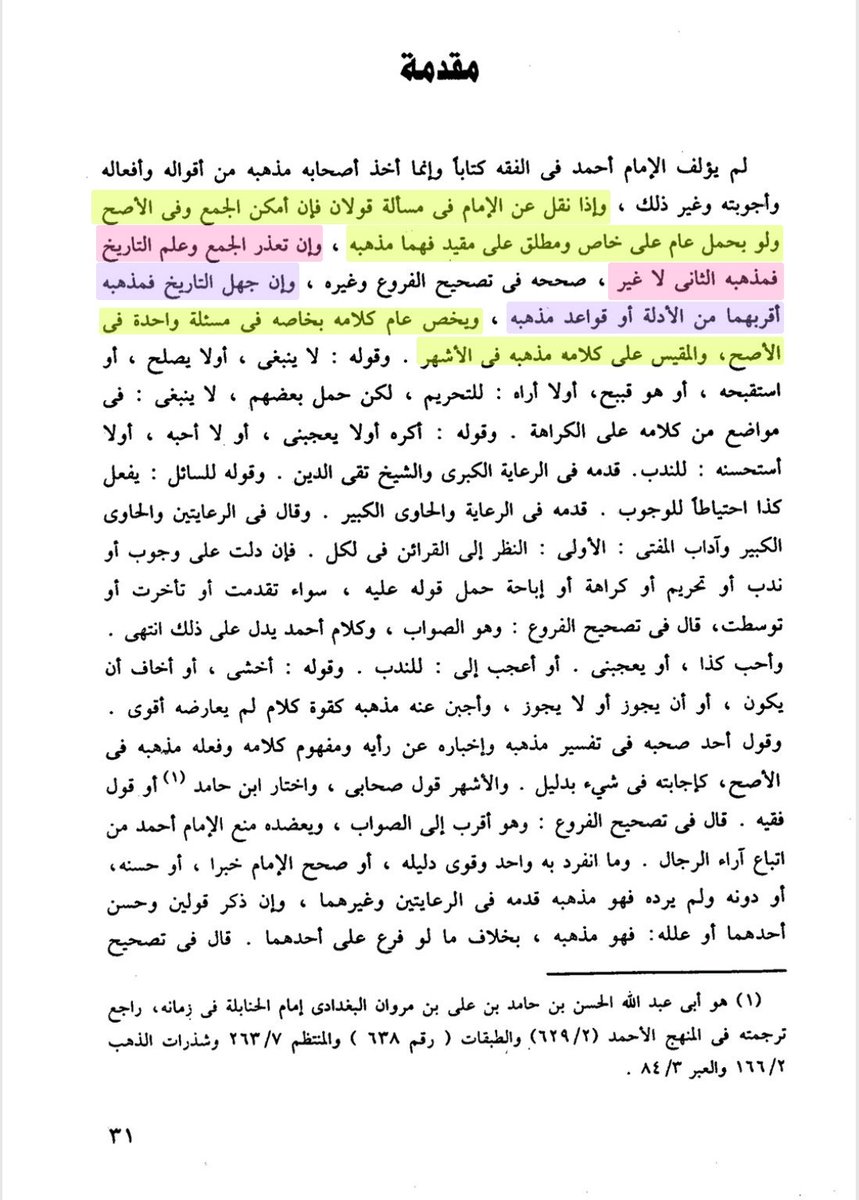
قد تعدد الراويات في المسألة الواحدة عن الإمام أحمد، فكيف حدد علماء المذهب المعتمد ؟
ذكر العلامة منصور البهوتي وقبله صاحب الإنصاف
طريقة الأصحاب في تحديد معتمد المذهب الحنبلي.




![ibn_Abidin_'s tweet photo. S͟h. ʿAbdullāh al-Ghunaymān said :
Many people still remain upon misguidance in this regard, adopting the Ashʿarī and Māturīdī schools, believing that this misguidance is the truth and that it is the school of Ahl al-Sunnah. They believe that the apparent meanings of the evidences in the Books of Allah and His revelation to His Messengers indicate tashbīh, and therefore they hold that these texts must be diverted from their apparent meanings.
They regard whoever believes in what the Qurʾān and Sunnah indicate according to their apparent meanings as a mushabbih and mujassim, even though sound reason and sound natural disposition [fiṭrah], free from deviation, agree with what the revelation of Allah, Most High, indicates.
For this reason, the Ashʿarīs accuse everyone who believes in Allah’s ʿulūw and His istiwāʾ over His Throne in reality, of tashbīh and tajsīm. At times, they even explicitly declare them disbelievers, as is their belief within themselves. Yet despite this, you will see many of them raising their voices and calling for agreement and harmony.
But this can never happen so long as there remains upon earth someone who believes in the truth, because there can be no agreement between guidance and misguidance, nor between truth and falsehood. And how could there be agreement with one who considers someone who believes in what the numerous clear and explicit texts indicate to be misguided and a mushabbih?
شرح كتاب التوحيد من صحيح البخاري (379)](https://pbs.twimg.com/media/HSw0WfuWsAAhbiA.jpg)