Super impressed with 5.6 sol. Gave the same task to grok 4.5, fable and none of them came anywhere close to making a design that looks remotely as good
anyways, keep an eye out for when this launches, 1 of many parts of the https://t.co/KvqY6usX22 stack
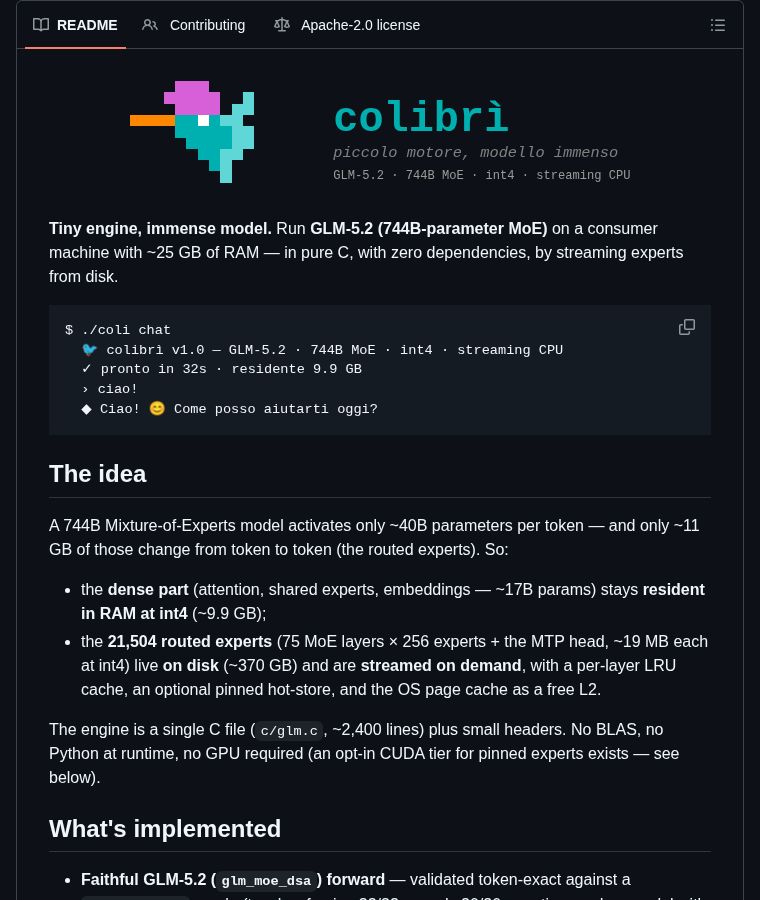
744B parameters. On a laptop. With 25GB RAM.
Colibri runs GLM-5.2 (744B MoE) in pure C with zero dependencies. The trick: only ~40B params activate per token, so it keeps the dense part resident and streams experts from disk on demand. A single 2,400-line C file. No GPU, no BLAS, no Python at runtime.
This shouldn't work. But it does.
⭐ 2.1K #AI #OpenSource
https://t.co/W8dnCQmNnL
Follow for daily dev finds 🔔
FYI: 5.6 Sol medium is better than 5.5 xhigh.
As you go higher in reasoning levels on Sol, you will get insane levels of performance, but can burn through limits much more rapidly.
We’re working on communicating this better!
I remember when at my previous company Doctrine we rewrote our frontend from AngularJS 1.7 to React. It was a huge project and a big decision. It took roughly six months and a team of talented software engineers.
That’s why the Bun rewrite is so interesting to me. Bun was ~535k lines of Zig. The rewrite produced more than 1M lines of Rust diff! But... it took only 11 days.
At peak they had around 64 agents running in parallel, across 4 worktrees, with 16 agents per workflow. It generated 6,500+ commits (wow!)
It was also a lot of work because they didn't ask "plz Code go from Zig to Rust" but they created a porting guide, a flow to analyze errors, separate adversarial agents to review diff to find mistakes etc. The human job was not to write the code but more designing and supervising the process aka "managing agents."
IMO it's a big deal. The world is full of important software stuck on old frameworks, old languages, old architectures and old security models because rewriting is too expensive and too risky.
If this methodology becomes reliable, we can move software to safer languages, better runtimes, cleaner architectures and more secure defaults much faster.
So much software run legacy COBOL and soon the transition to Rust will be easy.
I'm having a lot success using Fable xhigh as a planner/architect, using GPT 5.5 xhigh (subscription) as a coder, then Fable xhigh again as a judge. At API pricing, planning+judge costs are in the ~few dollar range compared to typical $50+ full round trips.
I've seen some others using dumber/cheaper coders, but GPT 5.5 even at xhigh compared to Fable 5 is very cheap and very fast. And GPT 5.5 is just... really good.
Still been less than 24hrs since the re-release so the longevity of this approach is unclear, but its been working really well.
SoFi just acquired Composer, a Toronto fintech, for an undisclosed amount.
Composer built one of the more interesting products in retail investing: a no code way for regular people to run hedge fund style strategies.
It's never been available to Canadians. Built in Toronto, sold to a US bank, still locked out here.
That's the pattern with Canadian fintech more than anyone wants to admit.
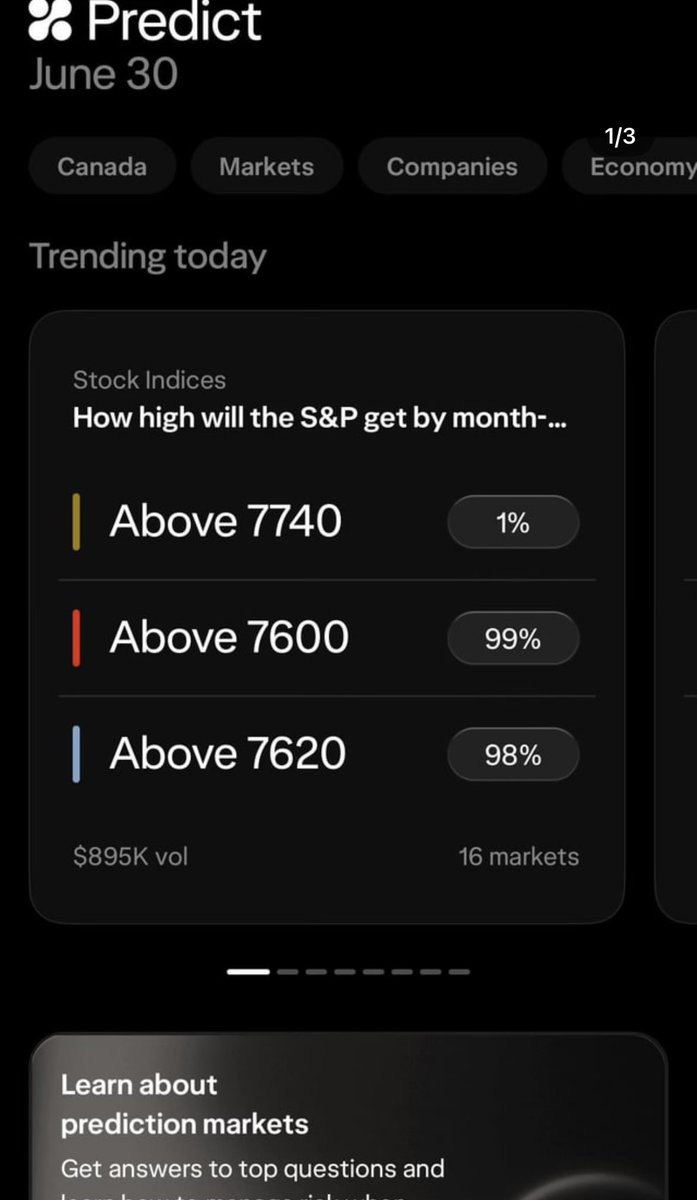
Controversial - @Wealthsimple is sending invitations out to try “Wealthsimple Predicts” its new prediction markets platform.
They note it’s a separate app entirely. Contracts are limited to economic, financial, and climate events, and all contracts are a 30 day settlement.
We’ve been impressed with GLM-5.2 and so are introducing a $9.99/month subscription to give you 2-5x discounted access to it and other open weight models like DeepSeek, Kimi, MiniMax, Mimo, Qwen.
Use it on Cline CLI & IDE with $1.99 special promo if sign up via: npm i -g cline
We’ve been impressed with GLM-5.2 and so are introducing a $9.99/month subscription to give you 2-5x discounted access to it and other open weight models like DeepSeek, Kimi, MiniMax, Mimo, Qwen.
Use it on Cline CLI & IDE with $1.99 special promo if sign up via: npm i -g cline