I’m an ICU Nurse Practitioner with over 10 years of experience keeping critically ill patients alive. I’ve managed multi-organ failure and complex ventilator cases, and seen where conventional Western medicine shines and fails.
I’m diving into plant medicine and will share what I learn. From a conventional ICU background with over 4 years as a Nurse Practitioner, I approach this clinically—focusing on evidence, what works in practice, and how it integrates with Western medicine. I use Grok for research, studies, fact-checking, and shaping posts.
Long-term goal: open a clinic offering real medical expertise and effective plant-based tools that treat the whole person without hospital politics or 7-minute visits.
Love tech, Tesla FSD, crypto, SpaceX, and learning and sharing with the community.
If you’re in plant medicine, integrative care, or tired of the current system and building something better, say hi!
@dkmitc@TSLAshareholder 😂😂 The robot can see and hear faster, already did the math for every scenario, and executed it by the time you're aware of the situation. Can’t wait for Grok 5.0 Give the Tesla control
Grounding
The Earth itself may be one of the simplest nervous-system medicines we have.
Grounding (or earthing) means making direct skin contact with the ground — bare feet on grass, soil, or sand. Research suggests the Earth’s surface electrons can enter the body and act like natural antioxidants, helping calm inflammation, normalize cortisol rhythms, improve sleep quality, and shift the autonomic nervous system toward rest-and-digest mode.
Small studies have shown measurable drops in stress hormones during sleep, better recovery after physical stress, and subjective calm. The evidence is still emerging and not all studies are large or perfectly controlled, but the practice is free, safe, and deeply intuitive.
Sometimes healing is as simple as taking your shoes off and letting the planet do what it has always done.
Sources:
• Oschman, Chevalier et al. reviews on inflammation & grounding (Journal of Inflammation Research)
• Ghaly & Teplitz 2004 cortisol/sleep study
• Practical summaries in Journal of Environmental and Public Health and related peer-reviewed work
For educational purposes only. This is not medical advice. Always talk with your primary care provider before adding any herbal supplements to check for possible interactions or contraindications. Research performed with Grok.
@elonmusk I don’t have much coding experience, but I talk to Grok about what I want to build, get my full idea laid out, and then Grok generates the prompt and instructions for “Grok Build.” It’s not perfect, but it works well.
@SawyerMerritt@Starlink@Verizon It will be interesting if they tie it into buildings current mesh systems or if there will be ground satellites capable of penetrating exterior walls?
FSD 14.3.6 came in handy today at the grocery store. It was pouring rain and several people were standing out front waiting for the rain to stop. I summoned my Model Y right to the front with no issues. It pulled into the perfect spot. The only thing that would have made it better is if it dropped me off at the front and then parked itself.
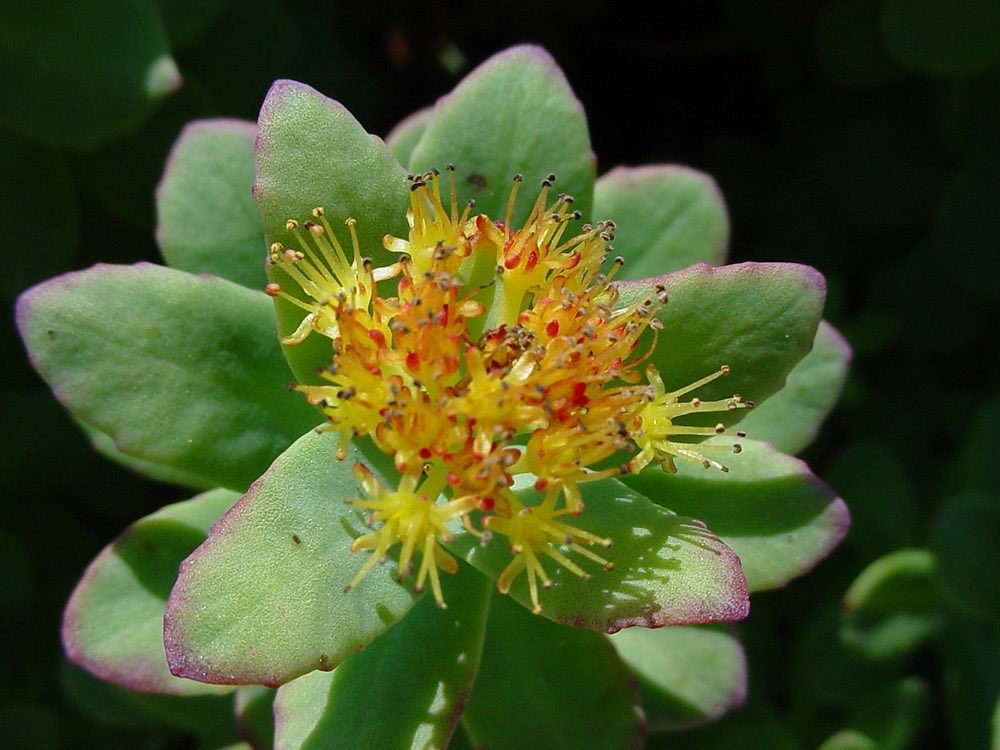
Rhodiola
The alpine adaptogen that helps the nervous system keep going when stress turns into exhaustion.
This golden-rooted plant from cold mountains has been used for centuries in Russia and Scandinavia for fatigue, mental stamina, and resilience under pressure. Modern studies back a clear signal: standardized extracts (usually 200–600 mg/day) reduce stress-related fatigue, support concentration, and help the body handle the cortisol load of demanding days. Its key compounds — rosavins and salidroside — gently modulate the stress response and cellular energy systems rather than forcing stimulation.
Where ashwagandha often feels like a steadying hand, rhodiola feels more like a clear mountain breeze when you’re running on empty. Different plant, same earth-intelligence: helping the body adapt instead of collapse.
Cool or lesser-known facts
It is one of the few true high-altitude, cold-climate adaptogens. The root has a mild rose-like scent when cut (hence “rose root”). Rosavins are the compounds that help distinguish true R. rosea from other Rhodiola species that mainly contain salidroside.
Sources worth checking:
• Reviews on anti-fatigue and stress effects (e.g., Stojcheva & others; Anghelescu 2018)
• European Medicines Agency traditional-use monograph
• NCCIH summary on Rhodiola
For educational purposes only. This is not medical advice. Always talk with your primary care provider before adding any herbal supplements to check for possible interactions or contraindications.
Research performed with Grok.
Ashwagandha
One of the clearest examples of how a plant can teach the nervous system resilience.
For thousands of years in Ayurveda this root has been called a rasayana — a rejuvenator. Modern trials keep confirming what traditional practitioners observed: standardized root extracts (usually 300–600 mg/day) reliably lower perceived stress and morning cortisol, ease mild anxiety, and support calmer sleep in stressed adults. The withanolides appear to gently rebalance the HPA axis rather than force sedation.
It’s not a quick “chill pill.” It’s more like the earth handing you a steady hand when your system is running hot. Strength that smells like a horse and grows in dry ground — pretty on-brand for resilience.
Sources to dig into:
• Systematic reviews/meta-analyses on stress & anxiety (PubMed: Arumugam 2024; Akhgarjand 2022)
• NCCIH overview on Ashwagandha
• Classic RCT: Lopresti et al. 2019 (240 mg extract)
For educational purposes only. This is not medical advice. Always talk with your primary care provider before adding any herbal supplements to check for possible interactions or contraindications.
Research performed with Grok.
Lemon balm
One of the gentlest nervous-system allies the earth offers.
Melissa officinalis — those soft, lemon-scented leaves — has been used for over two thousand years to calm a racing mind and soothe a stressed body. Modern research backs the traditional wisdom: the key compound rosmarinic acid helps raise GABA activity in the brain, producing a calm, clear state rather than heavy sedation. Clinical studies show it can ease anxiety symptoms and improve sleep quality, especially when stress is the driver.
How to work with it:
Sip a simple tea (1–2 tsp dried leaf or a handful of fresh, steeped covered) in the evening or after a long shift. Standardized extracts (often 300–600 mg) are also well studied. The same plant, applied as a cream, has evidence for helping cold sores heal faster.
This is plant medicine at its most approachable — aromatic, grounding, and evidence-supported. The earth grows medicine that speaks directly to the nervous system.
Sources to explore:
• Ghazizadeh et al. (2021) meta-analysis on anxiety & depression
• https://t.co/cIfzjDyQk5 lemon balm research summary
• European Medicines Agency traditional use monograph & clinical reviews on Melissa
For educational purposes only. This is not medical advice. Always discuss with your primary care provider before adding any herbal supplements to check for possible interactions or contraindications.
Research performed with Grok.