INDUSTRY INTERNSHIP FOR TEACHERS: THE MISSING LINK IN COMPETENCE-BASED EDUCATION.
=======
A competence-based curriculum must be supported by a competence-based teaching profession. And that requires us to rethink how teachers themselves are trained, exposed to industry and continuously developed.
Consider a teacher responsible for teaching electrical machines, including dynamos. Such a teacher should, ideally, have spent time in a factory where these machines are manufactured, assembled, tested, repaired or maintained. It is one thing to explain electromagnetic induction from a textbook. It is another to have witnessed how that principle is translated into a functioning machine, how materials are selected, how components are manufactured, how tolerances are controlled, how failures are diagnosed and how the final product is tested before entering the market.
That industrial experience fundamentally changes the teacher's ability to communicate. The teacher no longer teaches merely from the abstraction of knowledge, but from the experience of its application. The classroom becomes connected to the factory floor.
More importantly, industrial exposure gives teachers an understanding of the entire productive environment within which competence exists. They encounter production systems, equipment, labour organisation, quality control, safety requirements, costs, deadlines, commercial pressures and the consequences of poor workmanship. These are not peripheral to competence. They are part of what makes a person competent.
This is precisely why industrial internship should not be reserved for students. It should be an institutional requirement for teachers and trainers themselves. Teachers in technical and vocational education, engineering and other applied disciplines should periodically return to relevant industries, not simply as visitors on guided tours, but as participants in real production activities.
Such internships would also create a necessary feedback mechanism between education and industry. Teachers would discover where their curricula are outdated, which technologies have changed, what competencies employers actually require and which classroom practices are disconnected from productive reality.
Industry would, in turn, gain an opportunity to influence how future workers are trained.
Of course, a teacher need not have worked in every factory or manufactured every product they teach. But they must have sufficient practical exposure to understand how the knowledge they communicate functions within real productive systems.
We cannot build a competence-based education system by sending students into industry while keeping their teachers permanently in classrooms.
The competence of the teacher must precede, accompany and continuously inform the competence of the learner.
And perhaps the most important question for Uganda is no longer simply whether our teachers are qualified to teach, but whether they have sufficient experience of the productive world for which they are preparing their students.
Industry exposure does more than improve technical knowledge. It transforms how teachers communicate, the examples they use, the problems they present to learners and the picture they paint of the productive world.
And learning begins much earlier than the classroom. Children develop their aspirations by observing what adults around them actually do. When they encounter people who build, manufacture, design and solve real problems, they begin to imagine themselves doing the same.
We cannot produce a generation of competent practitioners through a teaching profession that has become detached from practice.
Competence must first exist in the teacher, be demonstrated through practice and then be transmitted to the learner.
The factory is a classroom. The construction site is a classroom. And the practising professional is an essential part of the education system.
And then come the university biometrics, designed to ensure that lecturers remain faithfully seated on campus while the industries they are supposed to understand operate elsewhere. A lecturer who spends the day in a factory acquiring practical experience risks being marked absent, while one who spends the day on campus doing absolutely nothing is officially present. We have perfected the technology for measuring attendance while remaining remarkably uninterested in measuring competence.
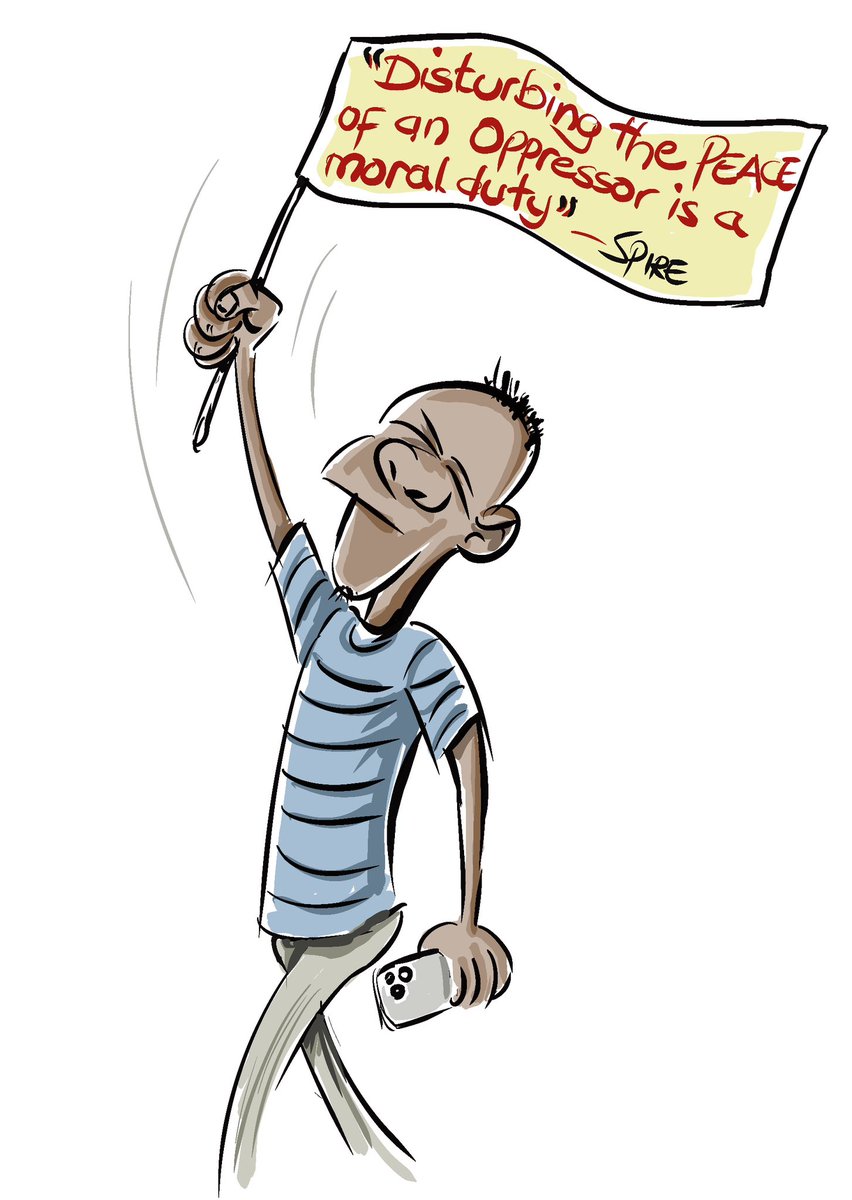
If they do not refund the 15.5m, soon I will run a REFUND THE ORPHANS mega campaign that will mobilise everyone to join me to call for justice and an end to education institutions abusing their clients. They will not get away with stealing that money. Or else, they will never have peace. I will deploy all creativity to make them as uncomfortable and unpopular as possible.
Abduction Alert 📍
Political Analyst and strategist Leonard Egesa has been abducted by military men in plain clothes in a white drone from Radio One parking. He had just finished a talk show on @AkabooziFm with @JudeBkenya.
His whereabouts are unknown at the moment. #FreeEgesa
When I was still actively a contractor, one thing we struggled with was weather forecast data.
I've developed a meteogram that gives weather insights to contractors and also gives intelligence on what activities can be done and when they can be done during the day.
Check it out
At 25-years, @HEBobiwine was a successful musician after beating the wrath of ghetto life. He even drove the most expensive car bought from his sweat while cannibal Muhoozi was ensconced in his father’s nest drinking, farting and living a sedentary lifestyle waiting for genetically modified ranks. The obese inebriated petulant curmudgeon is still in the nest at 52-years and belching balderdash on twitter while waiting for his stupid father to scoop his poop. (Okumuhehera amazi)
Bobi and I were forced into exile to eat sausages, burgers, toasts and sandwiches—food for poor people.
Those who said Aloikin Praise was disrespectful for calling Muhoozi a cabbage I am waiting for your tweets calling out Muhoozi for saying he is going to kill Sam Mugumya. Man lines have been drawn now. You are either with us or against us. No middle ground.
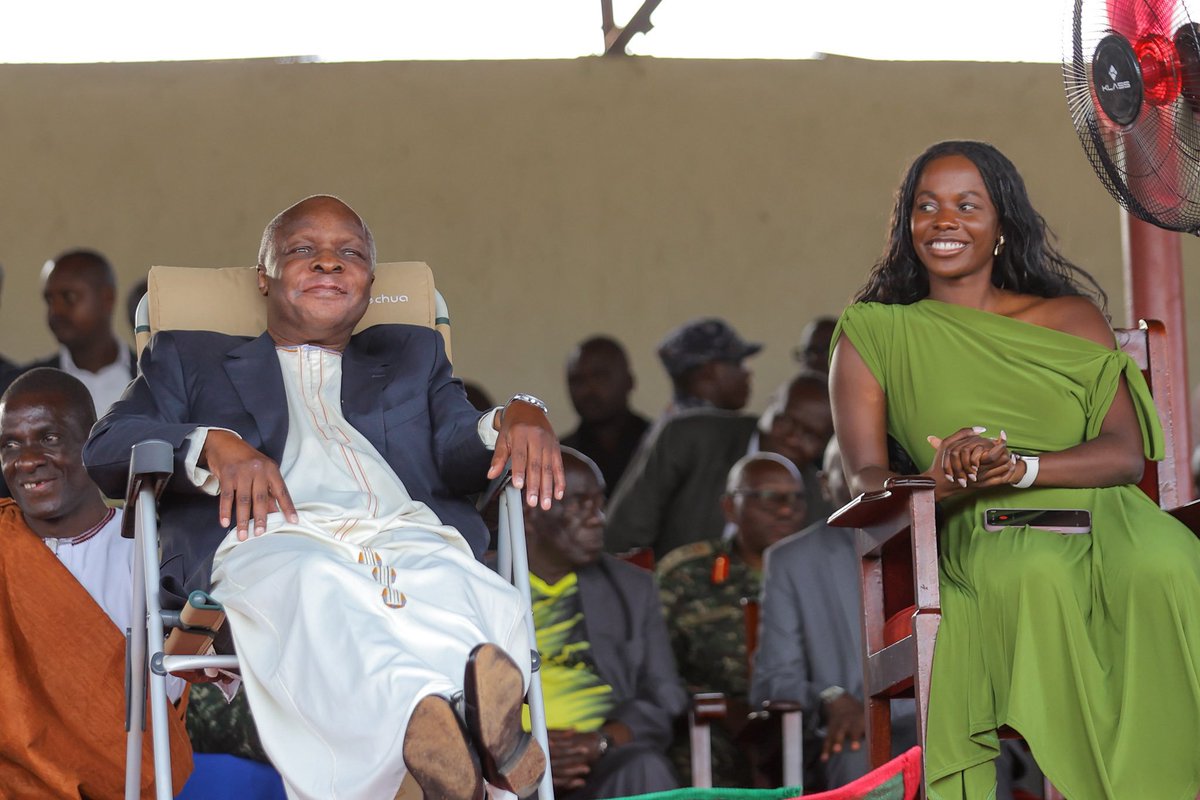
Today, we celebrate the 65th birthday of our @NUP_Ug Deputy President for Northern Uganda, Dr. Lina Zedriga Waru Abuku! Mama Lina embodies extraordinary strength, courage, and resoluteness. Her unwavering dedication to justice is a constant source of inspiration to us all. A truly blessed birthday to you, Mama. May God grant you the joy of witnessing the better, freer country for which you have made such incredible sacrifices.
Happy 65th birthday our Deputy President in charge of Northern Uganda, Dr. Lina Zedriga. We are grateful for your contribution to the struggle for a better Uganda and pray that this new chapter brings you good health and many more years of impactful service to our country.