Love cars? We've got you covered! ⚙️🚗 From vehicle models to repairs and expert tips, Superb10 Auto Body Works brings you the best of the automotive world. Watch, learn, and stay ahead! 🔥 Please kindly like, share & subscribe! 📲👇"
https://t.co/dd6Qp8B9HR
As a Muslim, one of the many reasons to work hard and build a lot of halal wealth is Da’wah!
We need a lot of money to push Da’wah through. May Allah provide for us.
Almighty. Heal and comfort us. Only You know our pain and understand our discomfort. Only You know our grief and sorrow. Only You know our loneliness and suffering. Restore us in every way and keep hope alive in our hearts. Aameen.
Almighty. Protect us from the evils all around. Grant us the strength and good patience to cope with our trials. Help us surrender to Your Decree because You know what we don’t. You know us better than we know ourselves! You know what we need. You know what’s best for us! Aameen.
Pages of the Glorius Qur'ān today, Wednesday 3/6/26, Sūrah al-'An'ām (6): 119-130, tafakkur verse 6: 120
Theme: Purify your life from pubic and private sins
{وَذَرُوا۟ ظَـٰهِرَ ٱلۡإِثۡمِ وَبَاطِنَهُۥۤۚ إِنَّ ٱلَّذِینَ یَكۡسِبُونَ ٱلۡإِثۡمَ سَیُجۡزَوۡنَ بِمَا كَانُوا۟ یَقۡتَرِفُونَ}
"And leave [i.e., desist from] what is apparent of sin and what is concealed thereof. Indeed, those who earn [blame for] sin will be recompensed for that which they used to commit".
LESSONS:
1. Islam Prohibits Both Public and Private Sins
A believer is commanded to avoid sins that are visible to people and those committed in secret. Allah's standard of righteousness is not limited to public conduct; private actions matter just as much.
2. The Heart Is as Important as the Limbs
Concealed sins include envy, arrogance, hatred, hypocrisy, evil intentions and other diseases of the heart. True piety requires purification of both outward actions and inward states.
3. Secret Sins Are Not Hidden from Allah
A person may conceal wrongdoing from family, friends and society, but nothing is hidden from Allah. Awareness of His constant watchfulness encourages sincerity and self-discipline.
4. Sin Has Consequences
The verse reminds us that those who persist in sin will be recompensed for their deeds. Divine justice ensures that no act, however small or hidden, goes unaccounted for.
5. Genuine Taqwā Requires Consistency
A righteous person strives to obey Allah both in public and in private. The true measure of character is not what one does before people, but what one does when no one is watching except Allah.
A believer should constantly ask himself:
"Am I as careful about pleasing Allah in private as I am in public?"
For success lies not merely in appearing righteous before people, but in being righteous before Allah.
May Allah purify our hearts, forgive our hidden and open sins, and make us among His sincere servants. Āmīn.
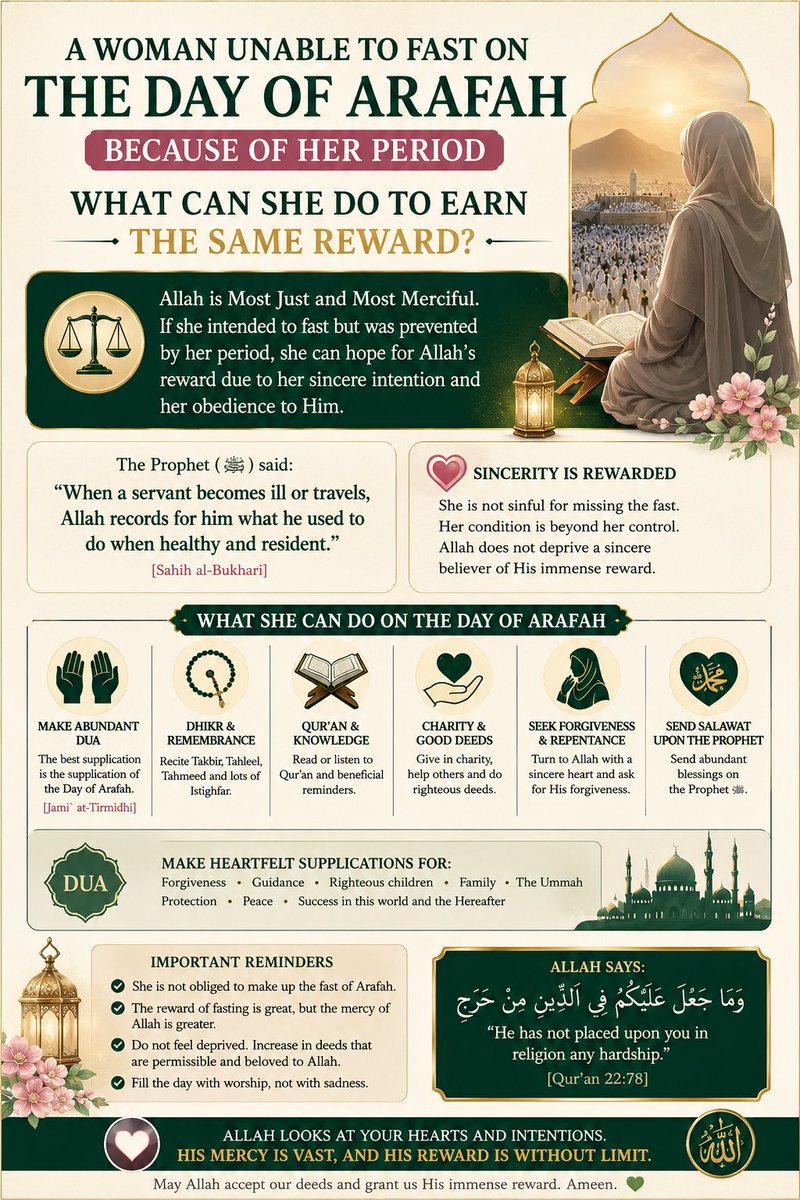
If a woman is unable to fast on the Day of ʿArafah because of menstruation, she should never feel deprived or hopeless concerning the mercy and reward of Allah. In Islam, when a believer is prevented from a righteous deed due to a genuine Sharʿī excuse beyond their control, Allah may still grant them the reward based on their sincere intention.
The Prophet Muḥammad (ṣallāLlāhu 'alayhi wa sallam) said: “When a servant becomes ill or travels, Allah records for him what he used to do when healthy and resident.” (Ṣaḥīḥ al-Bukhārī).
So if she genuinely intended to fast but was prevented by her period, she can hope for Allah’s immense reward through her sincerity and obedience.
She should increase herself in other acts of worship on the Day of ʿArafah, such as:
* abundant duʿā’,
* dhikr,
* takbīr (Allahu Akbar),
* tahlīl (lā ilāha illā Allah),
* seeking forgiveness,
* ṣalawāt upon the Prophet (ṣallāLlāhu 'alayhi wa sallam),
* charity,
* listening to Qur’ān,
* Islamic reminders,
* helping others,
* and avoiding sins.
The Day of ʿArafah is fundamentally a day of remembrance, humility, repentance and duʿā’. The Prophet (ṣallāLlāhu 'alayhi wa sallam) said: “The best supplication is the supplication of the Day of ʿArafah.” (Jāmiʿ al-Tirmidhī).
A menstruating woman can engage fully in duʿā’ and dhikr and may even spend the day more spiritually focused than some who are fasting physically.
She may repeatedly say:
Lā ilāha illaLlāhu waḥdahu lā sharīka lah, lahu al-mulku wa lahu al-ḥamd wa huwa ʿalā kulli shay’in qadīr.
She should also make heartfelt personal supplications for:
* forgiveness,
* guidance,
* family,
* the Ummah,
* peace,
* righteous children,
* protection,
* and success in this world and the Hereafter.
Allah is Most Just and Most Merciful. He does not punish a woman for something He Himself created as part of her natural condition, nor does He deprive sincere believers of His mercy because of circumstances beyond their control.
You will always think N2m will solve your problems until you make N2m. You will think traveling abroad will solve your financial problems until you start living abroad.
You will struggle from getting student visa to looking for a good job, permanent residency, worrying about mortgages, insurance premiums, taxes and stuff,even though you might be more comfortable than when you where in your home country.
When you’re single, you will think marriage will remove loneliness until you get married.
The future and goals are deceptive.
They appear as final solutions to life’s struggles. But they’re mere junctions in the long, complex journey we’re into on earth.
Life is in phases…. but struggle is constant. No matter the money, passport or location, everyone is battling pains per time.
Nothing will take away all struggles. You can only get NEW struggles. Our wish and prayers is that the new struggle should be less brutal than the former, but we must have some discomfort.
It’s an existential principle.
Orderliness is a fantasy, chaos is the rule of nature.
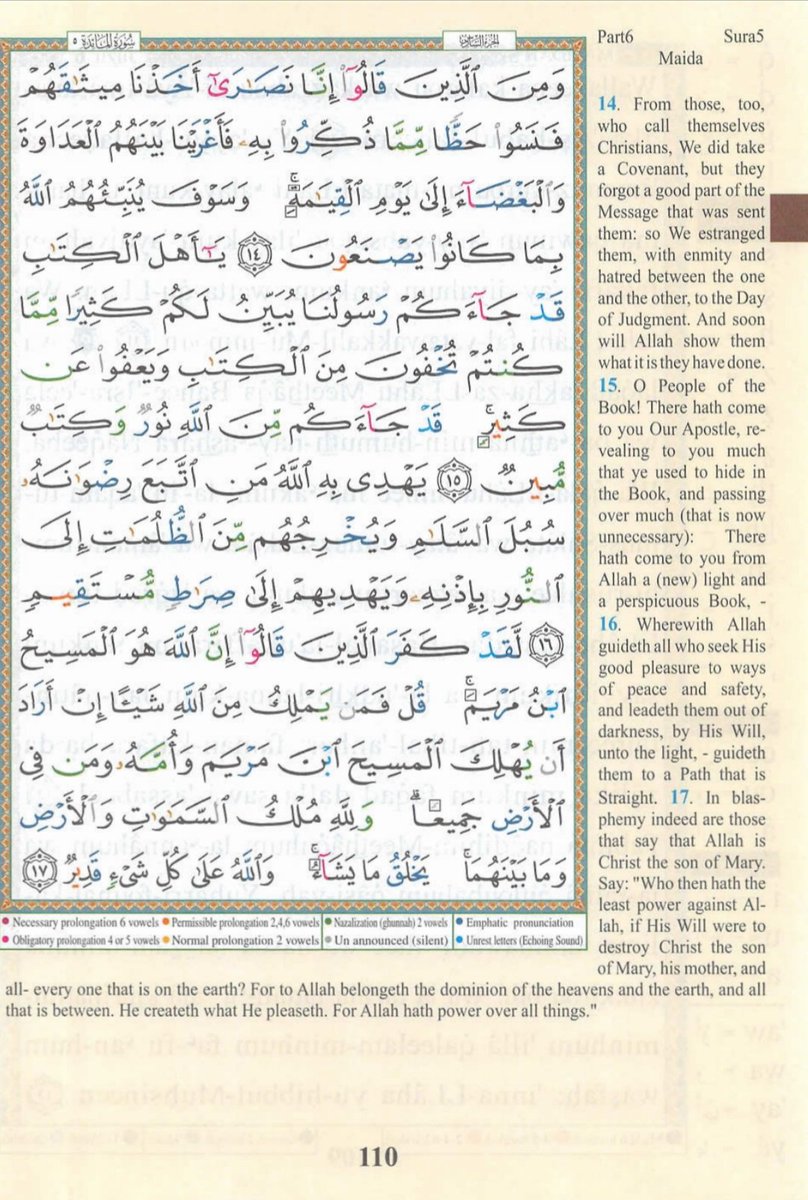
Pages of the Glorius Qur'ān today, Sunday 17/5/26, Sūrah an-Nisā' (4): al-Mā'idah (5): 10-17, tafakkur verse 5: 17
Theme: The Absolute Oneness, Sovereignty, and Supreme Power of Allāh
{لّقَدۡ كَفَرَ ٱلَّذِینَ قَالُوۤا۟ إِنَّ ٱللَّهَ هُوَ ٱلۡمَسِیحُ ٱبۡنُ مَرۡیَمَۚ قُلۡ فَمَن یَمۡلِكُ مِنَ ٱللَّهِ شَیۡـًٔا إِنۡ أَرَادَ أَن یُهۡلِكَ ٱلۡمَسِیحَ ٱبۡنَ مَرۡیَمَ وَأُمَّهُۥ وَمَن فِی ٱلۡأَرۡضِ جَمِیعࣰاۗ وَلِلَّهِ مُلۡكُ ٱلسَّمَـٰوَ ٰتِ وَٱلۡأَرۡضِ وَمَا بَیۡنَهُمَاۚ یَخۡلُقُ مَا یَشَاۤءُۚ وَٱللَّهُ عَلَىٰ كُلِّ شَیۡءࣲ قَدِیرࣱ}
"They have certainly disbelieved who say that Allāh is Christ, the son of Mary. Say, Then who could prevent Allāh at all if He had intended to destroy Christ, the son of Mary, or his mother or everyone on the earth? And to Allāh belongs the dominion of the heavens and the earth and whatever is between them. He creates what He wills, and Allāh is over all things competent".
LESSONS:
1. Tawḥīd Is the Foundation of Faith: The verse strongly emphasizes that only Allāh deserves worship. No prophet, saint, or created being should ever be elevated to the level of divinity. Pure monotheism is the essence of Islām.
2. Prophet ʿĪsā (Jesus) Is a Noble Messenger, Not God: Islām honours ʿĪsā greatly as one of the greatest Messengers of Allāh, born miraculously to Maryam, yet he remains a servant of Allāh who depends entirely upon Him.
3. Allāh Alone Possesses Absolute Power: The rhetorical question in the verse teaches that no one can resist the will of Allāh. Life, death, creation, and destruction are entirely under His control.
4. Everything in Existence Belongs to Allāh: The heavens, the earth, and everything between them belong solely to Allāh. Human beings are merely caretakers and servants within His dominion, not independent owners or rivals to Him.
5. Miracles Do Not Make Someone Divine: The miraculous birth of ʿĪsā (AS) does not make him God. Allāh creates however He wills, and extraordinary miracles are signs of His power, not proofs of the divinity of His creation.
O Allāh, keep us firm upon pure monotheism, make our hearts sincere for You alone, grant us the ability to follow Your Prophets and Messengers rightly, and do not let our hearts deviate after You have guided us. Bestow upon us mercy from Yourself; indeed, You are the Bestower. Āmīn 🤲
My name is Zainab Osiberu, I'm seeking entry-level roles in Customer care and Admin support.
I'm a teacher with 10 years of experience in online and offline teaching.
I'm a professional piercer.
I'm currently unemployed and seeking remote, hybrid and on-site roles or any means of making money.
Please repost my employer might be on your TL.
Pages of the Glorius Qur'ān today, Saturday 16/5/26, Sūrah an-Nisā' (4): al-Mā'idah (5): 3-9, tafakkur verse 5: 3
Theme: The perfection of Islam and the sanctity of lawful consumption.
{حُرِّمَتۡ عَلَیۡكُمُ ٱلۡمَیۡتَةُ وَٱلدَّمُ وَلَحۡمُ ٱلۡخِنزِیرِ وَمَاۤ أُهِلَّ لِغَیۡرِ ٱللَّهِ بِهِۦ وَٱلۡمُنۡخَنِقَةُ وَٱلۡمَوۡقُوذَةُ وَٱلۡمُتَرَدِّیَةُ وَٱلنَّطِیحَةُ وَمَاۤ أَكَلَ ٱلسَّبُعُ إِلَّا مَا ذَكَّیۡتُمۡ وَمَا ذُبِحَ عَلَى ٱلنُّصُبِ وَأَن تَسۡتَقۡسِمُوا۟ بِٱلۡأَزۡلَـٰمِۚ ذَ ٰلِكُمۡ فِسۡقٌۗ ٱلۡیَوۡمَ یَىِٕسَ ٱلَّذِینَ كَفَرُوا۟ مِن دِینِكُمۡ فَلَا تَخۡشَوۡهُمۡ وَٱخۡشَوۡنِۚ ٱلۡیَوۡمَ أَكۡمَلۡتُ لَكُمۡ دِینَكُمۡ وَأَتۡمَمۡتُ عَلَیۡكُمۡ نِعۡمَتِی وَرَضِیتُ لَكُمُ ٱلۡإِسۡلَـٰمَ دِینࣰاۚ فَمَنِ ٱضۡطُرَّ فِی مَخۡمَصَةٍ غَیۡرَ مُتَجَانِفࣲ لِّإِثۡمࣲ فَإِنَّ ٱللَّهَ غَفُورࣱ رَّحِیمࣱ}
"Prohibited to you are dead animals, blood, the flesh of swine, and that which has been dedicated to other than Allāh, and [those animals] killed by strangling or by a violent blow or by a head-long fall or by the goring of horns, and those from which a wild animal has eaten, except what you [are able to] slaughter [before its death], and those which are sacrificed on stone altars, and [prohibited is] that you seek decision through divining arrows. That is grave disobedience. This day those who disbelieve have despaired of [defeating] your religion; so fear them not, but fear Me. This day I have perfected for you your religion and completed My favor upon you and have approved for you Islām as religion. But whoever is forced by severe hunger with no inclination to sin - then indeed, Allāh is Forgiving and Merciful".
LESSONS:
1. Islam regulates what we consume. A Muslim’s food must be lawful, pure, and connected to obedience to Allāh.
2. Life and death belong to Allāh. Animals dedicated to other than Allāh or killed through cruelty and improper means are forbidden.
3. Islam rejects superstition. Seeking decisions through divining arrows or similar practices contradicts trust in Allāh.
4. The religion is complete. Islam does not need addition, distortion, or replacement; Allāh has perfected it for guidance.
5. Necessity has mercy. When a person is forced by severe hunger without desire to sin, Allāh’s forgiveness and mercy remain open.
O Allāh, keep us firm upon Islām, bless us with lawful provision, protect us from doubtful and forbidden things, and complete Your favour upon us in this world and the Hereafter. Āmīn.
Yorùbá land stands out as a remarkable example of religious coexistence, mutual respect, and peaceful human relations among people of different faiths. Across generations, Muslims, Christians, and adherents of traditional beliefs have lived side by side with an understanding that faith is ultimately a matter of personal conviction and freedom of choice. Families, communities, and social institutions have often maintained cordial relationships despite religious differences, demonstrating that diversity does not have to produce hostility. This atmosphere of tolerance has become one of the defining strengths of Yorùbá society.
What distinguishes the land is not the confusion or merging of religions into one indistinct practice, nor the simultaneous observance of multiple faiths by individuals as though religious commitments are meaningless. Rather, it is the maturity of the people to recognise and respect the right of others to hold different beliefs while remaining firmly committed to their own convictions. A Muslim remains a Muslim, a Christian remains a Christian, and practitioners of indigenous traditions maintain their identities, yet they coexist with civility, neighbourliness, and shared cultural values.
The Yorùbá worldview historically appreciates social harmony, family bonds, communal responsibility, and respect for human dignity. These values have helped prevent religious disagreement from destroying social cohesion. It is therefore common to find families with members of different faiths who still maintain strong ties of love and responsibility. Religious identity is acknowledged without necessarily turning it into a cause for hatred, violence, or social fragmentation. This balance between conviction and coexistence is one of the great lessons Yorùbá land offers to the wider world.
At the same time, tolerance should never be mistaken for the absence of religious principles or seriousness. Respecting another person’s freedom of belief does not require abandoning one’s own faith, compromising doctrines, or treating all religious teachings as identical. Genuine tolerance is rooted in confidence, wisdom, justice, and good character. It allows people to disagree theologically while still cooperating socially and living peacefully together.
In an age where religious and ethnic tensions continue to threaten many societies, Yorùbá land remains a powerful reminder that people can uphold their beliefs with dignity while extending respect and humanity to others. The beauty of the land lies in its culture of peaceful coexistence, not in religious confusion; in mutual understanding, not in the erasure of faith identities; and in the preservation of harmony without sacrificing conviction.
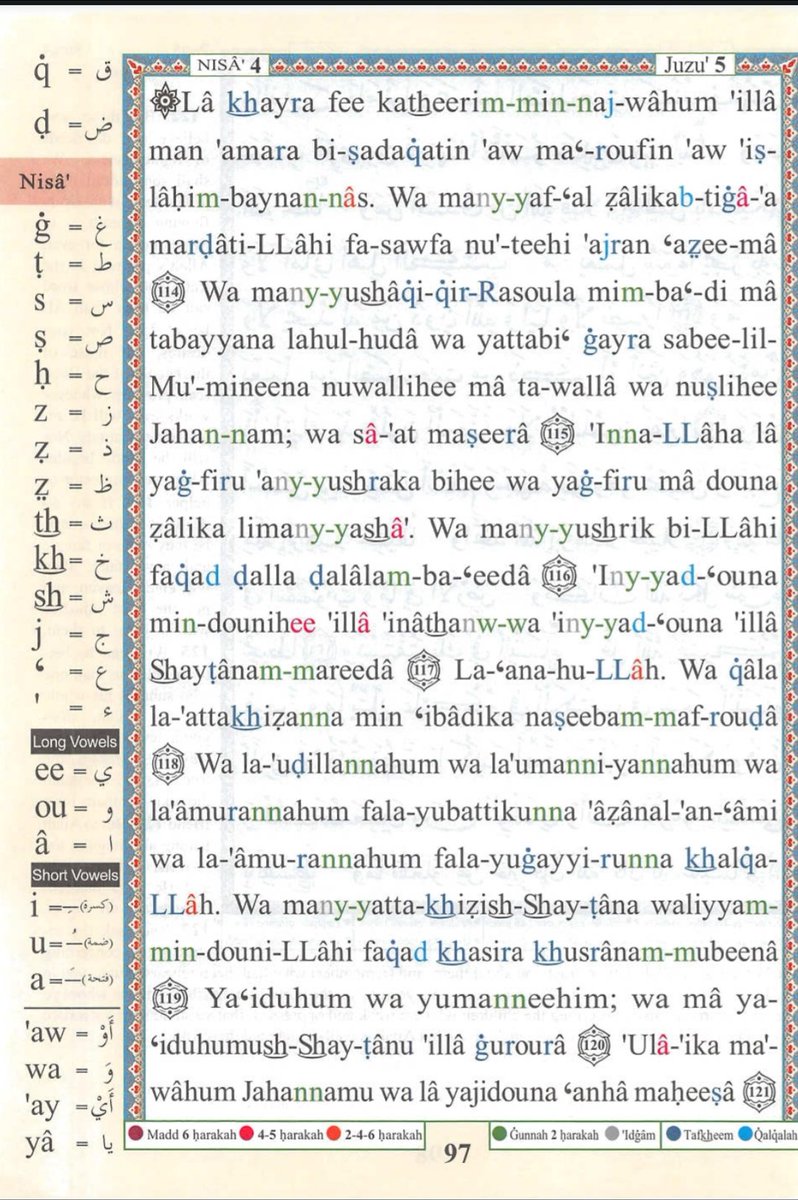
Pages of the Glorius Qur'ān today, Monday 11/5/26, Sūrah an-Nisā' (4): 114-127, tafakkur verse 4: 115
Theme: There is a Great Danger in Rejecting Divine Guidance and the Path of the Believers
{وَمَن یُشَاقِقِ ٱلرَّسُولَ مِنۢ بَعۡدِ مَا تَبَیَّنَ لَهُ ٱلۡهُدَىٰ وَیَتَّبِعۡ غَیۡرَ سَبِیلِ ٱلۡمُؤۡمِنِینَ نُوَلِّهِۦ مَا تَوَلَّىٰ وَنُصۡلِهِۦ جَهَنَّمَۖ وَسَاۤءَتۡ مَصِیرًا}
"And whoever opposes the Messenger after guidance has become clear to him and follows other than the way of the believers - We will give him what he has taken and drive him into Hell, and evil it is as a destination".
LESSONS:
1. Guidance Must Be Followed Once It Becomes Clear: Allāh emphasizes that accountability increases after truth has been clarified. Ignorance is not equal to deliberate rejection. Once a person recognizes the truth of the Qur’ān and Sunnah, persistence in rebellion becomes spiritually dangerous.
2. Obedience to the Messenger Is Essential: The verse shows that following the Prophet Muḥammad is not optional for believers. Loving him requires obedience to his teachings, character, and guidance in worship, ethics, and dealings.
3. The Unity of the Believers Matters: Allāh mentions “the way of the believers” alongside obedience to the Messenger. This highlights the importance of remaining connected to the sound scholarly tradition and the united body of Muslims rather than isolating oneself through arrogance, extremism, or baseless innovations.
4. Persistent Rejection Hardens the Heart: The statement “We will give him what he has taken” indicates that when people stubbornly insist on misguidance, Allāh may leave them to the path they insist upon. This is a frightening consequence of repeated rejection of truth.
5. Hellfire Is the Ultimate Consequence of Deliberate Defiance: The verse ends with a severe warning about Jahannam. It reminds believers never to become proud over knowledge, sectarian identity, or personal opinions. Salvation lies in sincerity, humility, repentance, and adherence to revelation.
O Allāh, show us the truth as truth and grant us the ability to follow it. Show us falsehood as falsehood and grant us the ability to avoid it. Do not make us among those who oppose Your Messenger (ṣallāLlāhu 'alayhi wa sallam). Āmīn.
Pages of the Glorius Qur'ān today, Sunday 3/5/26, Sūrah an-Nisā' (4): 20-26, tafakkur verse 4: 23
Theme: Divine Regulation of Family Life for Moral Purity, Social Stability, and Preservation of Human Dignity
{حُرِّمَتۡ عَلَیۡكُمۡ أُمَّهَـٰتُكُمۡ وَبَنَاتُكُمۡ وَأَخَوَ ٰتُكُمۡ وَعَمَّـٰتُكُمۡ وَخَـٰلَـٰتُكُمۡ وَبَنَاتُ ٱلۡأَخِ وَبَنَاتُ ٱلۡأُخۡتِ وَأُمَّهَـٰتُكُمُ ٱلَّـٰتِیۤ أَرۡضَعۡنَكُمۡ وَأَخَوَ ٰتُكُم مِّنَ ٱلرَّضَـٰعَةِ وَأُمَّهَـٰتُ نِسَاۤىِٕكُمۡ وَرَبَـٰۤىِٕبُكُمُ ٱلَّـٰتِی فِی حُجُورِكُم مِّن نِّسَاۤىِٕكُمُ ٱلَّـٰتِی دَخَلۡتُم بِهِنَّ فَإِن لَّمۡ تَكُونُوا۟ دَخَلۡتُم بِهِنَّ فَلَا جُنَاحَ عَلَیۡكُمۡ وَحَلَـٰۤىِٕلُ أَبۡنَاۤىِٕكُمُ ٱلَّذِینَ مِنۡ أَصۡلَـٰبِكُمۡ وَأَن تَجۡمَعُوا۟ بَیۡنَ ٱلۡأُخۡتَیۡنِ إِلَّا مَا قَدۡ سَلَفَۗ إِنَّ ٱللَّهَ كَانَ غَفُورࣰا رَّحِیمࣰا}
"Prohibited to you [for marriage] are your mothers, your daughters, your sisters, your father's sisters, your mother's sisters, your brother's daughters, your sister's daughters, your [milk] mothers who nursed you, your sisters through nursing, your wives' mothers, and your step-daughters under your guardianship [born] of your wives unto whom you have gone in. But if you have not gone in unto them, there is no sin upon you. And [also prohibited are] the wives of your sons who are from your [own] loins, and that you take [in marriage] two sisters simultaneously, except for what has already occurred. Indeed, Allāh is ever Forgiving and Merciful".
LESSONS:
1. Sanctity and Protection of Family Structure: Islam places the family at the centre of moral life. By prohibiting marriage to close relatives such as mothers, daughters, and sisters, Allāh preserves the natural bonds of love, respect, and care within the family. These relationships are meant to remain pure, free from any form of exploitation or confusion. This ensures emotional stability and moral clarity within the household.
2. Recognition of Emotional and Social Boundaries: The prohibition extends beyond blood ties to include relations through marriage (in-laws) and breastfeeding. This teaches that relationships are not only biological but also social and emotional. Islam acknowledges the depth of human connection and protects it by setting clear boundaries that prevent harm, jealousy, and moral corruption.
3. The Seriousness of Marital Responsibility: The condition regarding step-daughters, linked to consummation of marriage, highlights that marriage in Islam is not a casual contract. It carries deep legal and moral consequences. Once a marriage is consummated, new permanent family bonds are established, and these must be respected with full responsibility.
4. Preservation of Lineage (Ḥifẓ al-Nasab): By forbidding marriage to certain categories, Islam protects lineage from confusion. Knowing one’s ancestry is a fundamental right in Islam. This aligns with the higher objectives of the Sharīʿah (Maqāṣid), where preserving lineage is essential for identity, inheritance, and social order.
5. Balance Between Law and Mercy: The verse concludes with: “Indeed, Allāh is ever Forgiving and Merciful.” This reminds us that while the laws are firm, Allāh’s mercy encompasses past actions done in ignorance before revelation. Islam does not burden people retroactively but provides a path of correction with compassion and forgiveness.
O Allāh, preserve our families, bless for us our fathers and mothers, our spouses and our offspring, and make our homes places of purity, love, and mercy. Āmīn.


![IdrisAOni1's tweet photo. Pages of the Glorius Qur'ān today, Wednesday 3/6/26, Sūrah al-'An'ām (6): 119-130, tafakkur verse 6: 120
Theme: Purify your life from pubic and private sins
{وَذَرُوا۟ ظَـٰهِرَ ٱلۡإِثۡمِ وَبَاطِنَهُۥۤۚ إِنَّ ٱلَّذِینَ یَكۡسِبُونَ ٱلۡإِثۡمَ سَیُجۡزَوۡنَ بِمَا كَانُوا۟ یَقۡتَرِفُونَ}
"And leave [i.e., desist from] what is apparent of sin and what is concealed thereof. Indeed, those who earn [blame for] sin will be recompensed for that which they used to commit".
LESSONS:
1. Islam Prohibits Both Public and Private Sins
A believer is commanded to avoid sins that are visible to people and those committed in secret. Allah's standard of righteousness is not limited to public conduct; private actions matter just as much.
2. The Heart Is as Important as the Limbs
Concealed sins include envy, arrogance, hatred, hypocrisy, evil intentions and other diseases of the heart. True piety requires purification of both outward actions and inward states.
3. Secret Sins Are Not Hidden from Allah
A person may conceal wrongdoing from family, friends and society, but nothing is hidden from Allah. Awareness of His constant watchfulness encourages sincerity and self-discipline.
4. Sin Has Consequences
The verse reminds us that those who persist in sin will be recompensed for their deeds. Divine justice ensures that no act, however small or hidden, goes unaccounted for.
5. Genuine Taqwā Requires Consistency
A righteous person strives to obey Allah both in public and in private. The true measure of character is not what one does before people, but what one does when no one is watching except Allah.
A believer should constantly ask himself:
"Am I as careful about pleasing Allah in private as I am in public?"
For success lies not merely in appearing righteous before people, but in being righteous before Allah.
May Allah purify our hearts, forgive our hidden and open sins, and make us among His sincere servants. Āmīn.](https://pbs.twimg.com/media/HJ3RXI0WwAAJnkV.jpg)
![IdrisAOni1's tweet photo. Pages of the Glorius Qur'ān today, Wednesday 3/6/26, Sūrah al-'An'ām (6): 119-130, tafakkur verse 6: 120
Theme: Purify your life from pubic and private sins
{وَذَرُوا۟ ظَـٰهِرَ ٱلۡإِثۡمِ وَبَاطِنَهُۥۤۚ إِنَّ ٱلَّذِینَ یَكۡسِبُونَ ٱلۡإِثۡمَ سَیُجۡزَوۡنَ بِمَا كَانُوا۟ یَقۡتَرِفُونَ}
"And leave [i.e., desist from] what is apparent of sin and what is concealed thereof. Indeed, those who earn [blame for] sin will be recompensed for that which they used to commit".
LESSONS:
1. Islam Prohibits Both Public and Private Sins
A believer is commanded to avoid sins that are visible to people and those committed in secret. Allah's standard of righteousness is not limited to public conduct; private actions matter just as much.
2. The Heart Is as Important as the Limbs
Concealed sins include envy, arrogance, hatred, hypocrisy, evil intentions and other diseases of the heart. True piety requires purification of both outward actions and inward states.
3. Secret Sins Are Not Hidden from Allah
A person may conceal wrongdoing from family, friends and society, but nothing is hidden from Allah. Awareness of His constant watchfulness encourages sincerity and self-discipline.
4. Sin Has Consequences
The verse reminds us that those who persist in sin will be recompensed for their deeds. Divine justice ensures that no act, however small or hidden, goes unaccounted for.
5. Genuine Taqwā Requires Consistency
A righteous person strives to obey Allah both in public and in private. The true measure of character is not what one does before people, but what one does when no one is watching except Allah.
A believer should constantly ask himself:
"Am I as careful about pleasing Allah in private as I am in public?"
For success lies not merely in appearing righteous before people, but in being righteous before Allah.
May Allah purify our hearts, forgive our hidden and open sins, and make us among His sincere servants. Āmīn.](https://pbs.twimg.com/media/HJ3RXH9WMAA4p_D.jpg)
![IdrisAOni1's tweet photo. Pages of the Glorius Qur'ān today, Wednesday 3/6/26, Sūrah al-'An'ām (6): 119-130, tafakkur verse 6: 120
Theme: Purify your life from pubic and private sins
{وَذَرُوا۟ ظَـٰهِرَ ٱلۡإِثۡمِ وَبَاطِنَهُۥۤۚ إِنَّ ٱلَّذِینَ یَكۡسِبُونَ ٱلۡإِثۡمَ سَیُجۡزَوۡنَ بِمَا كَانُوا۟ یَقۡتَرِفُونَ}
"And leave [i.e., desist from] what is apparent of sin and what is concealed thereof. Indeed, those who earn [blame for] sin will be recompensed for that which they used to commit".
LESSONS:
1. Islam Prohibits Both Public and Private Sins
A believer is commanded to avoid sins that are visible to people and those committed in secret. Allah's standard of righteousness is not limited to public conduct; private actions matter just as much.
2. The Heart Is as Important as the Limbs
Concealed sins include envy, arrogance, hatred, hypocrisy, evil intentions and other diseases of the heart. True piety requires purification of both outward actions and inward states.
3. Secret Sins Are Not Hidden from Allah
A person may conceal wrongdoing from family, friends and society, but nothing is hidden from Allah. Awareness of His constant watchfulness encourages sincerity and self-discipline.
4. Sin Has Consequences
The verse reminds us that those who persist in sin will be recompensed for their deeds. Divine justice ensures that no act, however small or hidden, goes unaccounted for.
5. Genuine Taqwā Requires Consistency
A righteous person strives to obey Allah both in public and in private. The true measure of character is not what one does before people, but what one does when no one is watching except Allah.
A believer should constantly ask himself:
"Am I as careful about pleasing Allah in private as I am in public?"
For success lies not merely in appearing righteous before people, but in being righteous before Allah.
May Allah purify our hearts, forgive our hidden and open sins, and make us among His sincere servants. Āmīn.](https://pbs.twimg.com/media/HJ3RXBgXwAAb8JG.jpg)




![IdrisAOni1's tweet photo. Pages of the Glorius Qur'ān today, Saturday 16/5/26, Sūrah an-Nisā' (4): al-Mā'idah (5): 3-9, tafakkur verse 5: 3
Theme: The perfection of Islam and the sanctity of lawful consumption.
{حُرِّمَتۡ عَلَیۡكُمُ ٱلۡمَیۡتَةُ وَٱلدَّمُ وَلَحۡمُ ٱلۡخِنزِیرِ وَمَاۤ أُهِلَّ لِغَیۡرِ ٱللَّهِ بِهِۦ وَٱلۡمُنۡخَنِقَةُ وَٱلۡمَوۡقُوذَةُ وَٱلۡمُتَرَدِّیَةُ وَٱلنَّطِیحَةُ وَمَاۤ أَكَلَ ٱلسَّبُعُ إِلَّا مَا ذَكَّیۡتُمۡ وَمَا ذُبِحَ عَلَى ٱلنُّصُبِ وَأَن تَسۡتَقۡسِمُوا۟ بِٱلۡأَزۡلَـٰمِۚ ذَ ٰلِكُمۡ فِسۡقٌۗ ٱلۡیَوۡمَ یَىِٕسَ ٱلَّذِینَ كَفَرُوا۟ مِن دِینِكُمۡ فَلَا تَخۡشَوۡهُمۡ وَٱخۡشَوۡنِۚ ٱلۡیَوۡمَ أَكۡمَلۡتُ لَكُمۡ دِینَكُمۡ وَأَتۡمَمۡتُ عَلَیۡكُمۡ نِعۡمَتِی وَرَضِیتُ لَكُمُ ٱلۡإِسۡلَـٰمَ دِینࣰاۚ فَمَنِ ٱضۡطُرَّ فِی مَخۡمَصَةٍ غَیۡرَ مُتَجَانِفࣲ لِّإِثۡمࣲ فَإِنَّ ٱللَّهَ غَفُورࣱ رَّحِیمࣱ}
"Prohibited to you are dead animals, blood, the flesh of swine, and that which has been dedicated to other than Allāh, and [those animals] killed by strangling or by a violent blow or by a head-long fall or by the goring of horns, and those from which a wild animal has eaten, except what you [are able to] slaughter [before its death], and those which are sacrificed on stone altars, and [prohibited is] that you seek decision through divining arrows. That is grave disobedience. This day those who disbelieve have despaired of [defeating] your religion; so fear them not, but fear Me. This day I have perfected for you your religion and completed My favor upon you and have approved for you Islām as religion. But whoever is forced by severe hunger with no inclination to sin - then indeed, Allāh is Forgiving and Merciful".
LESSONS:
1. Islam regulates what we consume. A Muslim’s food must be lawful, pure, and connected to obedience to Allāh.
2. Life and death belong to Allāh. Animals dedicated to other than Allāh or killed through cruelty and improper means are forbidden.
3. Islam rejects superstition. Seeking decisions through divining arrows or similar practices contradicts trust in Allāh.
4. The religion is complete. Islam does not need addition, distortion, or replacement; Allāh has perfected it for guidance.
5. Necessity has mercy. When a person is forced by severe hunger without desire to sin, Allāh’s forgiveness and mercy remain open.
O Allāh, keep us firm upon Islām, bless us with lawful provision, protect us from doubtful and forbidden things, and complete Your favour upon us in this world and the Hereafter. Āmīn.](https://pbs.twimg.com/media/HIaPH1qXYAAnSG0.jpg)
![IdrisAOni1's tweet photo. Pages of the Glorius Qur'ān today, Saturday 16/5/26, Sūrah an-Nisā' (4): al-Mā'idah (5): 3-9, tafakkur verse 5: 3
Theme: The perfection of Islam and the sanctity of lawful consumption.
{حُرِّمَتۡ عَلَیۡكُمُ ٱلۡمَیۡتَةُ وَٱلدَّمُ وَلَحۡمُ ٱلۡخِنزِیرِ وَمَاۤ أُهِلَّ لِغَیۡرِ ٱللَّهِ بِهِۦ وَٱلۡمُنۡخَنِقَةُ وَٱلۡمَوۡقُوذَةُ وَٱلۡمُتَرَدِّیَةُ وَٱلنَّطِیحَةُ وَمَاۤ أَكَلَ ٱلسَّبُعُ إِلَّا مَا ذَكَّیۡتُمۡ وَمَا ذُبِحَ عَلَى ٱلنُّصُبِ وَأَن تَسۡتَقۡسِمُوا۟ بِٱلۡأَزۡلَـٰمِۚ ذَ ٰلِكُمۡ فِسۡقٌۗ ٱلۡیَوۡمَ یَىِٕسَ ٱلَّذِینَ كَفَرُوا۟ مِن دِینِكُمۡ فَلَا تَخۡشَوۡهُمۡ وَٱخۡشَوۡنِۚ ٱلۡیَوۡمَ أَكۡمَلۡتُ لَكُمۡ دِینَكُمۡ وَأَتۡمَمۡتُ عَلَیۡكُمۡ نِعۡمَتِی وَرَضِیتُ لَكُمُ ٱلۡإِسۡلَـٰمَ دِینࣰاۚ فَمَنِ ٱضۡطُرَّ فِی مَخۡمَصَةٍ غَیۡرَ مُتَجَانِفࣲ لِّإِثۡمࣲ فَإِنَّ ٱللَّهَ غَفُورࣱ رَّحِیمࣱ}
"Prohibited to you are dead animals, blood, the flesh of swine, and that which has been dedicated to other than Allāh, and [those animals] killed by strangling or by a violent blow or by a head-long fall or by the goring of horns, and those from which a wild animal has eaten, except what you [are able to] slaughter [before its death], and those which are sacrificed on stone altars, and [prohibited is] that you seek decision through divining arrows. That is grave disobedience. This day those who disbelieve have despaired of [defeating] your religion; so fear them not, but fear Me. This day I have perfected for you your religion and completed My favor upon you and have approved for you Islām as religion. But whoever is forced by severe hunger with no inclination to sin - then indeed, Allāh is Forgiving and Merciful".
LESSONS:
1. Islam regulates what we consume. A Muslim’s food must be lawful, pure, and connected to obedience to Allāh.
2. Life and death belong to Allāh. Animals dedicated to other than Allāh or killed through cruelty and improper means are forbidden.
3. Islam rejects superstition. Seeking decisions through divining arrows or similar practices contradicts trust in Allāh.
4. The religion is complete. Islam does not need addition, distortion, or replacement; Allāh has perfected it for guidance.
5. Necessity has mercy. When a person is forced by severe hunger without desire to sin, Allāh’s forgiveness and mercy remain open.
O Allāh, keep us firm upon Islām, bless us with lawful provision, protect us from doubtful and forbidden things, and complete Your favour upon us in this world and the Hereafter. Āmīn.](https://pbs.twimg.com/media/HIaPHv1WAAAVM4X.jpg)
![IdrisAOni1's tweet photo. Pages of the Glorius Qur'ān today, Saturday 16/5/26, Sūrah an-Nisā' (4): al-Mā'idah (5): 3-9, tafakkur verse 5: 3
Theme: The perfection of Islam and the sanctity of lawful consumption.
{حُرِّمَتۡ عَلَیۡكُمُ ٱلۡمَیۡتَةُ وَٱلدَّمُ وَلَحۡمُ ٱلۡخِنزِیرِ وَمَاۤ أُهِلَّ لِغَیۡرِ ٱللَّهِ بِهِۦ وَٱلۡمُنۡخَنِقَةُ وَٱلۡمَوۡقُوذَةُ وَٱلۡمُتَرَدِّیَةُ وَٱلنَّطِیحَةُ وَمَاۤ أَكَلَ ٱلسَّبُعُ إِلَّا مَا ذَكَّیۡتُمۡ وَمَا ذُبِحَ عَلَى ٱلنُّصُبِ وَأَن تَسۡتَقۡسِمُوا۟ بِٱلۡأَزۡلَـٰمِۚ ذَ ٰلِكُمۡ فِسۡقٌۗ ٱلۡیَوۡمَ یَىِٕسَ ٱلَّذِینَ كَفَرُوا۟ مِن دِینِكُمۡ فَلَا تَخۡشَوۡهُمۡ وَٱخۡشَوۡنِۚ ٱلۡیَوۡمَ أَكۡمَلۡتُ لَكُمۡ دِینَكُمۡ وَأَتۡمَمۡتُ عَلَیۡكُمۡ نِعۡمَتِی وَرَضِیتُ لَكُمُ ٱلۡإِسۡلَـٰمَ دِینࣰاۚ فَمَنِ ٱضۡطُرَّ فِی مَخۡمَصَةٍ غَیۡرَ مُتَجَانِفࣲ لِّإِثۡمࣲ فَإِنَّ ٱللَّهَ غَفُورࣱ رَّحِیمࣱ}
"Prohibited to you are dead animals, blood, the flesh of swine, and that which has been dedicated to other than Allāh, and [those animals] killed by strangling or by a violent blow or by a head-long fall or by the goring of horns, and those from which a wild animal has eaten, except what you [are able to] slaughter [before its death], and those which are sacrificed on stone altars, and [prohibited is] that you seek decision through divining arrows. That is grave disobedience. This day those who disbelieve have despaired of [defeating] your religion; so fear them not, but fear Me. This day I have perfected for you your religion and completed My favor upon you and have approved for you Islām as religion. But whoever is forced by severe hunger with no inclination to sin - then indeed, Allāh is Forgiving and Merciful".
LESSONS:
1. Islam regulates what we consume. A Muslim’s food must be lawful, pure, and connected to obedience to Allāh.
2. Life and death belong to Allāh. Animals dedicated to other than Allāh or killed through cruelty and improper means are forbidden.
3. Islam rejects superstition. Seeking decisions through divining arrows or similar practices contradicts trust in Allāh.
4. The religion is complete. Islam does not need addition, distortion, or replacement; Allāh has perfected it for guidance.
5. Necessity has mercy. When a person is forced by severe hunger without desire to sin, Allāh’s forgiveness and mercy remain open.
O Allāh, keep us firm upon Islām, bless us with lawful provision, protect us from doubtful and forbidden things, and complete Your favour upon us in this world and the Hereafter. Āmīn.](https://pbs.twimg.com/media/HIaPHbvXoAAaDPt.jpg)


![IdrisAOni1's tweet photo. Pages of the Glorius Qur'ān today, Sunday 3/5/26, Sūrah an-Nisā' (4): 20-26, tafakkur verse 4: 23
Theme: Divine Regulation of Family Life for Moral Purity, Social Stability, and Preservation of Human Dignity
{حُرِّمَتۡ عَلَیۡكُمۡ أُمَّهَـٰتُكُمۡ وَبَنَاتُكُمۡ وَأَخَوَ ٰتُكُمۡ وَعَمَّـٰتُكُمۡ وَخَـٰلَـٰتُكُمۡ وَبَنَاتُ ٱلۡأَخِ وَبَنَاتُ ٱلۡأُخۡتِ وَأُمَّهَـٰتُكُمُ ٱلَّـٰتِیۤ أَرۡضَعۡنَكُمۡ وَأَخَوَ ٰتُكُم مِّنَ ٱلرَّضَـٰعَةِ وَأُمَّهَـٰتُ نِسَاۤىِٕكُمۡ وَرَبَـٰۤىِٕبُكُمُ ٱلَّـٰتِی فِی حُجُورِكُم مِّن نِّسَاۤىِٕكُمُ ٱلَّـٰتِی دَخَلۡتُم بِهِنَّ فَإِن لَّمۡ تَكُونُوا۟ دَخَلۡتُم بِهِنَّ فَلَا جُنَاحَ عَلَیۡكُمۡ وَحَلَـٰۤىِٕلُ أَبۡنَاۤىِٕكُمُ ٱلَّذِینَ مِنۡ أَصۡلَـٰبِكُمۡ وَأَن تَجۡمَعُوا۟ بَیۡنَ ٱلۡأُخۡتَیۡنِ إِلَّا مَا قَدۡ سَلَفَۗ إِنَّ ٱللَّهَ كَانَ غَفُورࣰا رَّحِیمࣰا}
"Prohibited to you [for marriage] are your mothers, your daughters, your sisters, your father's sisters, your mother's sisters, your brother's daughters, your sister's daughters, your [milk] mothers who nursed you, your sisters through nursing, your wives' mothers, and your step-daughters under your guardianship [born] of your wives unto whom you have gone in. But if you have not gone in unto them, there is no sin upon you. And [also prohibited are] the wives of your sons who are from your [own] loins, and that you take [in marriage] two sisters simultaneously, except for what has already occurred. Indeed, Allāh is ever Forgiving and Merciful".
LESSONS:
1. Sanctity and Protection of Family Structure: Islam places the family at the centre of moral life. By prohibiting marriage to close relatives such as mothers, daughters, and sisters, Allāh preserves the natural bonds of love, respect, and care within the family. These relationships are meant to remain pure, free from any form of exploitation or confusion. This ensures emotional stability and moral clarity within the household.
2. Recognition of Emotional and Social Boundaries: The prohibition extends beyond blood ties to include relations through marriage (in-laws) and breastfeeding. This teaches that relationships are not only biological but also social and emotional. Islam acknowledges the depth of human connection and protects it by setting clear boundaries that prevent harm, jealousy, and moral corruption.
3. The Seriousness of Marital Responsibility: The condition regarding step-daughters, linked to consummation of marriage, highlights that marriage in Islam is not a casual contract. It carries deep legal and moral consequences. Once a marriage is consummated, new permanent family bonds are established, and these must be respected with full responsibility.
4. Preservation of Lineage (Ḥifẓ al-Nasab): By forbidding marriage to certain categories, Islam protects lineage from confusion. Knowing one’s ancestry is a fundamental right in Islam. This aligns with the higher objectives of the Sharīʿah (Maqāṣid), where preserving lineage is essential for identity, inheritance, and social order.
5. Balance Between Law and Mercy: The verse concludes with: “Indeed, Allāh is ever Forgiving and Merciful.” This reminds us that while the laws are firm, Allāh’s mercy encompasses past actions done in ignorance before revelation. Islam does not burden people retroactively but provides a path of correction with compassion and forgiveness.
O Allāh, preserve our families, bless for us our fathers and mothers, our spouses and our offspring, and make our homes places of purity, love, and mercy. Āmīn.](https://pbs.twimg.com/media/HHXr_5Xb0AAc7aW.jpg)
![IdrisAOni1's tweet photo. Pages of the Glorius Qur'ān today, Sunday 3/5/26, Sūrah an-Nisā' (4): 20-26, tafakkur verse 4: 23
Theme: Divine Regulation of Family Life for Moral Purity, Social Stability, and Preservation of Human Dignity
{حُرِّمَتۡ عَلَیۡكُمۡ أُمَّهَـٰتُكُمۡ وَبَنَاتُكُمۡ وَأَخَوَ ٰتُكُمۡ وَعَمَّـٰتُكُمۡ وَخَـٰلَـٰتُكُمۡ وَبَنَاتُ ٱلۡأَخِ وَبَنَاتُ ٱلۡأُخۡتِ وَأُمَّهَـٰتُكُمُ ٱلَّـٰتِیۤ أَرۡضَعۡنَكُمۡ وَأَخَوَ ٰتُكُم مِّنَ ٱلرَّضَـٰعَةِ وَأُمَّهَـٰتُ نِسَاۤىِٕكُمۡ وَرَبَـٰۤىِٕبُكُمُ ٱلَّـٰتِی فِی حُجُورِكُم مِّن نِّسَاۤىِٕكُمُ ٱلَّـٰتِی دَخَلۡتُم بِهِنَّ فَإِن لَّمۡ تَكُونُوا۟ دَخَلۡتُم بِهِنَّ فَلَا جُنَاحَ عَلَیۡكُمۡ وَحَلَـٰۤىِٕلُ أَبۡنَاۤىِٕكُمُ ٱلَّذِینَ مِنۡ أَصۡلَـٰبِكُمۡ وَأَن تَجۡمَعُوا۟ بَیۡنَ ٱلۡأُخۡتَیۡنِ إِلَّا مَا قَدۡ سَلَفَۗ إِنَّ ٱللَّهَ كَانَ غَفُورࣰا رَّحِیمࣰا}
"Prohibited to you [for marriage] are your mothers, your daughters, your sisters, your father's sisters, your mother's sisters, your brother's daughters, your sister's daughters, your [milk] mothers who nursed you, your sisters through nursing, your wives' mothers, and your step-daughters under your guardianship [born] of your wives unto whom you have gone in. But if you have not gone in unto them, there is no sin upon you. And [also prohibited are] the wives of your sons who are from your [own] loins, and that you take [in marriage] two sisters simultaneously, except for what has already occurred. Indeed, Allāh is ever Forgiving and Merciful".
LESSONS:
1. Sanctity and Protection of Family Structure: Islam places the family at the centre of moral life. By prohibiting marriage to close relatives such as mothers, daughters, and sisters, Allāh preserves the natural bonds of love, respect, and care within the family. These relationships are meant to remain pure, free from any form of exploitation or confusion. This ensures emotional stability and moral clarity within the household.
2. Recognition of Emotional and Social Boundaries: The prohibition extends beyond blood ties to include relations through marriage (in-laws) and breastfeeding. This teaches that relationships are not only biological but also social and emotional. Islam acknowledges the depth of human connection and protects it by setting clear boundaries that prevent harm, jealousy, and moral corruption.
3. The Seriousness of Marital Responsibility: The condition regarding step-daughters, linked to consummation of marriage, highlights that marriage in Islam is not a casual contract. It carries deep legal and moral consequences. Once a marriage is consummated, new permanent family bonds are established, and these must be respected with full responsibility.
4. Preservation of Lineage (Ḥifẓ al-Nasab): By forbidding marriage to certain categories, Islam protects lineage from confusion. Knowing one’s ancestry is a fundamental right in Islam. This aligns with the higher objectives of the Sharīʿah (Maqāṣid), where preserving lineage is essential for identity, inheritance, and social order.
5. Balance Between Law and Mercy: The verse concludes with: “Indeed, Allāh is ever Forgiving and Merciful.” This reminds us that while the laws are firm, Allāh’s mercy encompasses past actions done in ignorance before revelation. Islam does not burden people retroactively but provides a path of correction with compassion and forgiveness.
O Allāh, preserve our families, bless for us our fathers and mothers, our spouses and our offspring, and make our homes places of purity, love, and mercy. Āmīn.](https://pbs.twimg.com/media/HHXr_plbMAALGwI.jpg)
![IdrisAOni1's tweet photo. Pages of the Glorius Qur'ān today, Sunday 3/5/26, Sūrah an-Nisā' (4): 20-26, tafakkur verse 4: 23
Theme: Divine Regulation of Family Life for Moral Purity, Social Stability, and Preservation of Human Dignity
{حُرِّمَتۡ عَلَیۡكُمۡ أُمَّهَـٰتُكُمۡ وَبَنَاتُكُمۡ وَأَخَوَ ٰتُكُمۡ وَعَمَّـٰتُكُمۡ وَخَـٰلَـٰتُكُمۡ وَبَنَاتُ ٱلۡأَخِ وَبَنَاتُ ٱلۡأُخۡتِ وَأُمَّهَـٰتُكُمُ ٱلَّـٰتِیۤ أَرۡضَعۡنَكُمۡ وَأَخَوَ ٰتُكُم مِّنَ ٱلرَّضَـٰعَةِ وَأُمَّهَـٰتُ نِسَاۤىِٕكُمۡ وَرَبَـٰۤىِٕبُكُمُ ٱلَّـٰتِی فِی حُجُورِكُم مِّن نِّسَاۤىِٕكُمُ ٱلَّـٰتِی دَخَلۡتُم بِهِنَّ فَإِن لَّمۡ تَكُونُوا۟ دَخَلۡتُم بِهِنَّ فَلَا جُنَاحَ عَلَیۡكُمۡ وَحَلَـٰۤىِٕلُ أَبۡنَاۤىِٕكُمُ ٱلَّذِینَ مِنۡ أَصۡلَـٰبِكُمۡ وَأَن تَجۡمَعُوا۟ بَیۡنَ ٱلۡأُخۡتَیۡنِ إِلَّا مَا قَدۡ سَلَفَۗ إِنَّ ٱللَّهَ كَانَ غَفُورࣰا رَّحِیمࣰا}
"Prohibited to you [for marriage] are your mothers, your daughters, your sisters, your father's sisters, your mother's sisters, your brother's daughters, your sister's daughters, your [milk] mothers who nursed you, your sisters through nursing, your wives' mothers, and your step-daughters under your guardianship [born] of your wives unto whom you have gone in. But if you have not gone in unto them, there is no sin upon you. And [also prohibited are] the wives of your sons who are from your [own] loins, and that you take [in marriage] two sisters simultaneously, except for what has already occurred. Indeed, Allāh is ever Forgiving and Merciful".
LESSONS:
1. Sanctity and Protection of Family Structure: Islam places the family at the centre of moral life. By prohibiting marriage to close relatives such as mothers, daughters, and sisters, Allāh preserves the natural bonds of love, respect, and care within the family. These relationships are meant to remain pure, free from any form of exploitation or confusion. This ensures emotional stability and moral clarity within the household.
2. Recognition of Emotional and Social Boundaries: The prohibition extends beyond blood ties to include relations through marriage (in-laws) and breastfeeding. This teaches that relationships are not only biological but also social and emotional. Islam acknowledges the depth of human connection and protects it by setting clear boundaries that prevent harm, jealousy, and moral corruption.
3. The Seriousness of Marital Responsibility: The condition regarding step-daughters, linked to consummation of marriage, highlights that marriage in Islam is not a casual contract. It carries deep legal and moral consequences. Once a marriage is consummated, new permanent family bonds are established, and these must be respected with full responsibility.
4. Preservation of Lineage (Ḥifẓ al-Nasab): By forbidding marriage to certain categories, Islam protects lineage from confusion. Knowing one’s ancestry is a fundamental right in Islam. This aligns with the higher objectives of the Sharīʿah (Maqāṣid), where preserving lineage is essential for identity, inheritance, and social order.
5. Balance Between Law and Mercy: The verse concludes with: “Indeed, Allāh is ever Forgiving and Merciful.” This reminds us that while the laws are firm, Allāh’s mercy encompasses past actions done in ignorance before revelation. Islam does not burden people retroactively but provides a path of correction with compassion and forgiveness.
O Allāh, preserve our families, bless for us our fathers and mothers, our spouses and our offspring, and make our homes places of purity, love, and mercy. Āmīn.](https://pbs.twimg.com/media/HHXr_mhaoAIXcRI.jpg)




![IdrisAOni1's tweet photo. Pages of the Glorius Qur'ān today, Wednesday 3/6/26, Sūrah al-'An'ām (6): 119-130, tafakkur verse 6: 120
Theme: Purify your life from pubic and private sins
{وَذَرُوا۟ ظَـٰهِرَ ٱلۡإِثۡمِ وَبَاطِنَهُۥۤۚ إِنَّ ٱلَّذِینَ یَكۡسِبُونَ ٱلۡإِثۡمَ سَیُجۡزَوۡنَ بِمَا كَانُوا۟ یَقۡتَرِفُونَ}
"And leave [i.e., desist from] what is apparent of sin and what is concealed thereof. Indeed, those who earn [blame for] sin will be recompensed for that which they used to commit".
LESSONS:
1. Islam Prohibits Both Public and Private Sins
A believer is commanded to avoid sins that are visible to people and those committed in secret. Allah's standard of righteousness is not limited to public conduct; private actions matter just as much.
2. The Heart Is as Important as the Limbs
Concealed sins include envy, arrogance, hatred, hypocrisy, evil intentions and other diseases of the heart. True piety requires purification of both outward actions and inward states.
3. Secret Sins Are Not Hidden from Allah
A person may conceal wrongdoing from family, friends and society, but nothing is hidden from Allah. Awareness of His constant watchfulness encourages sincerity and self-discipline.
4. Sin Has Consequences
The verse reminds us that those who persist in sin will be recompensed for their deeds. Divine justice ensures that no act, however small or hidden, goes unaccounted for.
5. Genuine Taqwā Requires Consistency
A righteous person strives to obey Allah both in public and in private. The true measure of character is not what one does before people, but what one does when no one is watching except Allah.
A believer should constantly ask himself:
"Am I as careful about pleasing Allah in private as I am in public?"
For success lies not merely in appearing righteous before people, but in being righteous before Allah.
May Allah purify our hearts, forgive our hidden and open sins, and make us among His sincere servants. Āmīn.](https://pbs.twimg.com/media/HJ3RXJyW0AET5O0.jpg)

![IdrisAOni1's tweet photo. Pages of the Glorius Qur'ān today, Saturday 16/5/26, Sūrah an-Nisā' (4): al-Mā'idah (5): 3-9, tafakkur verse 5: 3
Theme: The perfection of Islam and the sanctity of lawful consumption.
{حُرِّمَتۡ عَلَیۡكُمُ ٱلۡمَیۡتَةُ وَٱلدَّمُ وَلَحۡمُ ٱلۡخِنزِیرِ وَمَاۤ أُهِلَّ لِغَیۡرِ ٱللَّهِ بِهِۦ وَٱلۡمُنۡخَنِقَةُ وَٱلۡمَوۡقُوذَةُ وَٱلۡمُتَرَدِّیَةُ وَٱلنَّطِیحَةُ وَمَاۤ أَكَلَ ٱلسَّبُعُ إِلَّا مَا ذَكَّیۡتُمۡ وَمَا ذُبِحَ عَلَى ٱلنُّصُبِ وَأَن تَسۡتَقۡسِمُوا۟ بِٱلۡأَزۡلَـٰمِۚ ذَ ٰلِكُمۡ فِسۡقٌۗ ٱلۡیَوۡمَ یَىِٕسَ ٱلَّذِینَ كَفَرُوا۟ مِن دِینِكُمۡ فَلَا تَخۡشَوۡهُمۡ وَٱخۡشَوۡنِۚ ٱلۡیَوۡمَ أَكۡمَلۡتُ لَكُمۡ دِینَكُمۡ وَأَتۡمَمۡتُ عَلَیۡكُمۡ نِعۡمَتِی وَرَضِیتُ لَكُمُ ٱلۡإِسۡلَـٰمَ دِینࣰاۚ فَمَنِ ٱضۡطُرَّ فِی مَخۡمَصَةٍ غَیۡرَ مُتَجَانِفࣲ لِّإِثۡمࣲ فَإِنَّ ٱللَّهَ غَفُورࣱ رَّحِیمࣱ}
"Prohibited to you are dead animals, blood, the flesh of swine, and that which has been dedicated to other than Allāh, and [those animals] killed by strangling or by a violent blow or by a head-long fall or by the goring of horns, and those from which a wild animal has eaten, except what you [are able to] slaughter [before its death], and those which are sacrificed on stone altars, and [prohibited is] that you seek decision through divining arrows. That is grave disobedience. This day those who disbelieve have despaired of [defeating] your religion; so fear them not, but fear Me. This day I have perfected for you your religion and completed My favor upon you and have approved for you Islām as religion. But whoever is forced by severe hunger with no inclination to sin - then indeed, Allāh is Forgiving and Merciful".
LESSONS:
1. Islam regulates what we consume. A Muslim’s food must be lawful, pure, and connected to obedience to Allāh.
2. Life and death belong to Allāh. Animals dedicated to other than Allāh or killed through cruelty and improper means are forbidden.
3. Islam rejects superstition. Seeking decisions through divining arrows or similar practices contradicts trust in Allāh.
4. The religion is complete. Islam does not need addition, distortion, or replacement; Allāh has perfected it for guidance.
5. Necessity has mercy. When a person is forced by severe hunger without desire to sin, Allāh’s forgiveness and mercy remain open.
O Allāh, keep us firm upon Islām, bless us with lawful provision, protect us from doubtful and forbidden things, and complete Your favour upon us in this world and the Hereafter. Āmīn.](https://pbs.twimg.com/media/HIaPH62XAAAGPSm.jpg)


![IdrisAOni1's tweet photo. Pages of the Glorius Qur'ān today, Sunday 3/5/26, Sūrah an-Nisā' (4): 20-26, tafakkur verse 4: 23
Theme: Divine Regulation of Family Life for Moral Purity, Social Stability, and Preservation of Human Dignity
{حُرِّمَتۡ عَلَیۡكُمۡ أُمَّهَـٰتُكُمۡ وَبَنَاتُكُمۡ وَأَخَوَ ٰتُكُمۡ وَعَمَّـٰتُكُمۡ وَخَـٰلَـٰتُكُمۡ وَبَنَاتُ ٱلۡأَخِ وَبَنَاتُ ٱلۡأُخۡتِ وَأُمَّهَـٰتُكُمُ ٱلَّـٰتِیۤ أَرۡضَعۡنَكُمۡ وَأَخَوَ ٰتُكُم مِّنَ ٱلرَّضَـٰعَةِ وَأُمَّهَـٰتُ نِسَاۤىِٕكُمۡ وَرَبَـٰۤىِٕبُكُمُ ٱلَّـٰتِی فِی حُجُورِكُم مِّن نِّسَاۤىِٕكُمُ ٱلَّـٰتِی دَخَلۡتُم بِهِنَّ فَإِن لَّمۡ تَكُونُوا۟ دَخَلۡتُم بِهِنَّ فَلَا جُنَاحَ عَلَیۡكُمۡ وَحَلَـٰۤىِٕلُ أَبۡنَاۤىِٕكُمُ ٱلَّذِینَ مِنۡ أَصۡلَـٰبِكُمۡ وَأَن تَجۡمَعُوا۟ بَیۡنَ ٱلۡأُخۡتَیۡنِ إِلَّا مَا قَدۡ سَلَفَۗ إِنَّ ٱللَّهَ كَانَ غَفُورࣰا رَّحِیمࣰا}
"Prohibited to you [for marriage] are your mothers, your daughters, your sisters, your father's sisters, your mother's sisters, your brother's daughters, your sister's daughters, your [milk] mothers who nursed you, your sisters through nursing, your wives' mothers, and your step-daughters under your guardianship [born] of your wives unto whom you have gone in. But if you have not gone in unto them, there is no sin upon you. And [also prohibited are] the wives of your sons who are from your [own] loins, and that you take [in marriage] two sisters simultaneously, except for what has already occurred. Indeed, Allāh is ever Forgiving and Merciful".
LESSONS:
1. Sanctity and Protection of Family Structure: Islam places the family at the centre of moral life. By prohibiting marriage to close relatives such as mothers, daughters, and sisters, Allāh preserves the natural bonds of love, respect, and care within the family. These relationships are meant to remain pure, free from any form of exploitation or confusion. This ensures emotional stability and moral clarity within the household.
2. Recognition of Emotional and Social Boundaries: The prohibition extends beyond blood ties to include relations through marriage (in-laws) and breastfeeding. This teaches that relationships are not only biological but also social and emotional. Islam acknowledges the depth of human connection and protects it by setting clear boundaries that prevent harm, jealousy, and moral corruption.
3. The Seriousness of Marital Responsibility: The condition regarding step-daughters, linked to consummation of marriage, highlights that marriage in Islam is not a casual contract. It carries deep legal and moral consequences. Once a marriage is consummated, new permanent family bonds are established, and these must be respected with full responsibility.
4. Preservation of Lineage (Ḥifẓ al-Nasab): By forbidding marriage to certain categories, Islam protects lineage from confusion. Knowing one’s ancestry is a fundamental right in Islam. This aligns with the higher objectives of the Sharīʿah (Maqāṣid), where preserving lineage is essential for identity, inheritance, and social order.
5. Balance Between Law and Mercy: The verse concludes with: “Indeed, Allāh is ever Forgiving and Merciful.” This reminds us that while the laws are firm, Allāh’s mercy encompasses past actions done in ignorance before revelation. Islam does not burden people retroactively but provides a path of correction with compassion and forgiveness.
O Allāh, preserve our families, bless for us our fathers and mothers, our spouses and our offspring, and make our homes places of purity, love, and mercy. Āmīn.](https://pbs.twimg.com/media/HHXsAOUa0AEIkMV.jpg)


