A wallet's on-chain history is completely public, but understanding what that data actually means is the hard part.
This is where @zerufinance changes the game.
Instead of forcing you to decipher every single swap, stake, or loan, ZSCORE condenses your entire history into a single score.
It evaluates meaningful behavior, not just raw transaction spam. By turning raw wallet activity into actionable behavioral intelligence, Zeru brings true context to Web3 identity.
You can now track your zScore across major block explorers, claim Zaps, and climb the Hall of Fame.
It turns quiet on-chain consistency into measurable reputation. A high transaction count alone doesn't prove credibility.
Consistent, real participation is what actually matters. @zerufinance makes on-chain reputation clear, simple, and undeniable.
Sleep like a log, earn like a boss! @sleepagotchi turns your nightly sleep into real crypto rewards, NFTs, and custom digital rooms. Make money by sleeping well.
Powered by @NucleusCodes
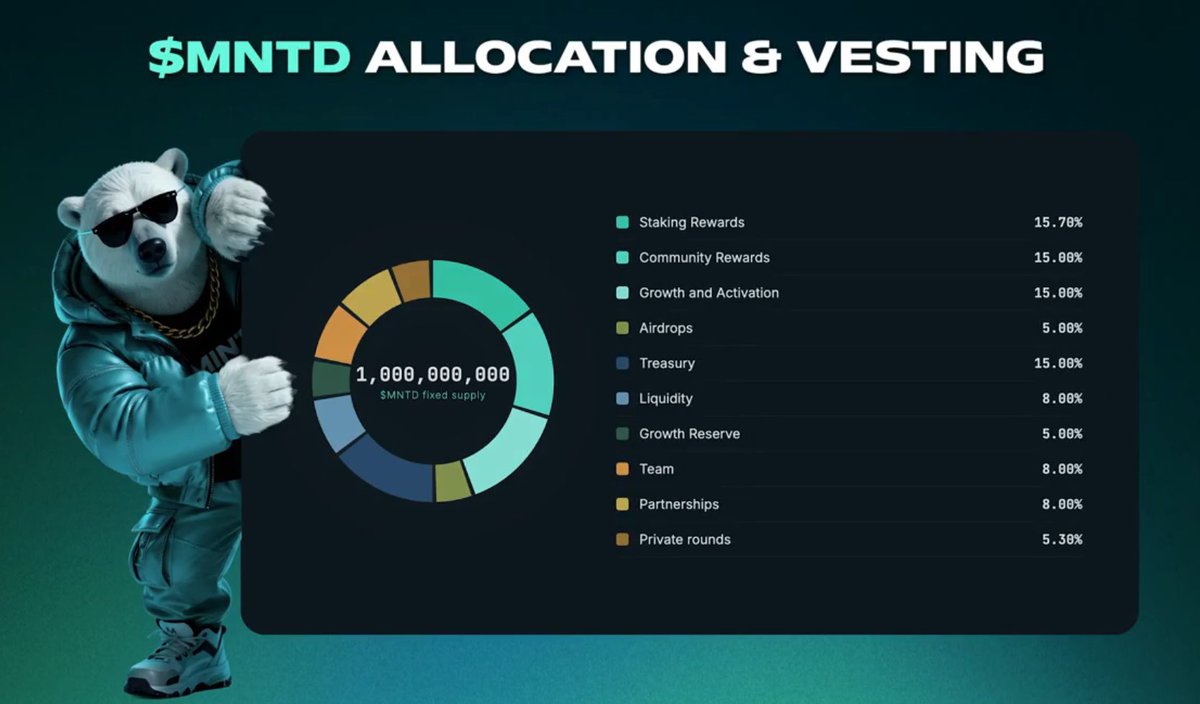
I went back to look at how @PlayOnMint plans to distribute its 1 billion tokens and one detail stood out not every allocation enters the market on the same schedule.
Staking rewards work differently from a traditional token unlock.
The rewards are assigned to pools but tokens only reach the market as users actually earn them.
Other allocations follow a longer distribution timeline with the community allocation spread across 36 months and linked to participation rather than a single release date.
I can see why that approach is interesting.
Instead of putting a large amount of supply into circulation at a predetermined moment distribution becomes tied to how the platform is actually used.
But i am not sure that timing alone solves the bigger problem.
If participation grows quickly rewards can still accumulate in ways that affect future selling pressure. a slower release schedule changes when tokens arrive not necessarily what holders decide to do with them.
The membership system adds another layer to this.
Users can spend tokens to upgrade their membership unlocking higher multipliers for things like transaction fee rebates and daily activity rewards.
That creates a reason to use the token inside the ecosystem rather than treating it purely as something to hold or sell.
Still the real question is whether those benefits remain worthwhile as the number of participants grows.
I think token distribution and actual utility need to work together. a carefully planned allocation can help but long term demand depends on whether people have a reason to keep coming back.
@PlayOnMint has outlined the ownership distribution in its Whitepaper so i am interested in how the membership levels translate into practical benefits.
One thing i did like to clarify though.
Does the status ranking table show the exact staking requirement for all seven membership levels or are some of the thresholds explained elsewhere in the documentation?