RL is useless... except if you want super-human perf on games, control, LLMs, chip design, rideshare matching, 5G, and more!
It's also an area where you can make major progress with very few resources. Join PufferAI's open source efforts at discord gg/puffer or DM me!
🎓LLM Course
This is such a beautiful and comprehensive resource on LLMs.
It includes notebooks, key references, and roadmaps.
There is something to learn for everyone. For students, researchers, and practitioners.
The Prompt Engineering Guide is also referenced, which is cool to see.
One observation as I was reviewing the references is how much hard work the ML community dedicates toward open and high-quality education. This resource does a great job of organizing all those incredible LLM educational resources that exist out there.
One topic I would add is LLMOps. But to be fair, the majority of the topics are roughly covered in the LLM Engineer Roadmap.
Highly recommended!
And last but not least, many thanks to @maximelabonne for releasing this excellent resource. 👏
Yes, I only came to realise that a few years back… many things that most people deem as so “important” are actually so insignificant, compared to the true opportunity and purpose of your life. You just need the wits and guts to realise that when it comes.
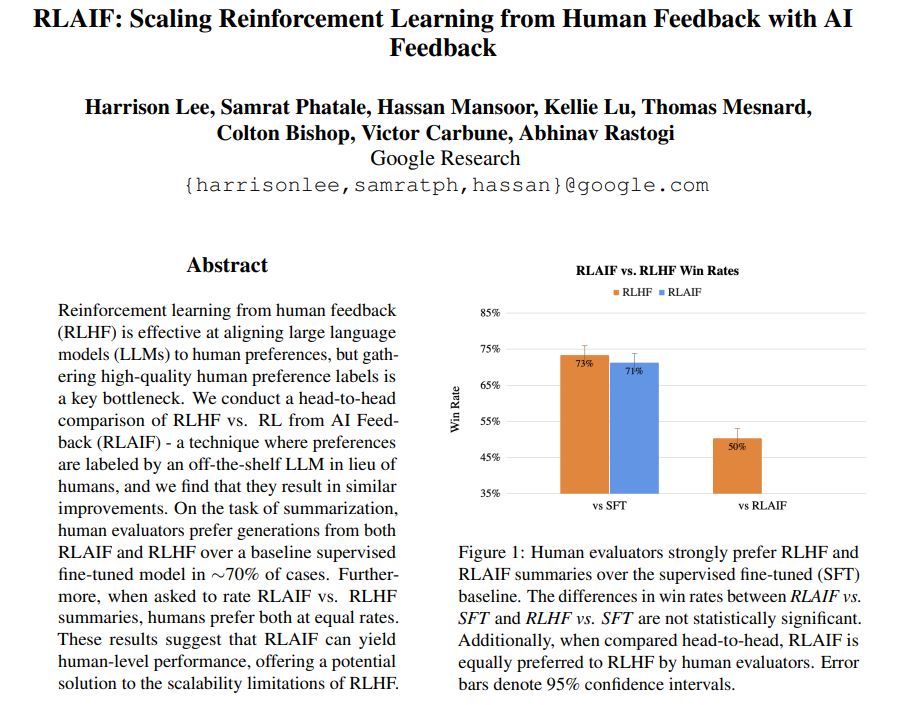
RLAIF: Scaling Reinforcement Learning from Human Feedback with AI Feedback
Shows that RLAIF can produce comparable improvements to RLHF without depending on human annotators
https://t.co/5GaNmp4EbD
Interested in the NeurIPS 2023 LLM Efficiency Challenge or just training your custom LLM on 1 GPU?
Wrote a new quickstart guide to get started in ~5 min: https://t.co/UDwhnDstA3
If there's interest, also happy to write an article w. research directions to explore. Let me know!
📚 Back from ICML with a summary of Graph ML papers! Latest about Graph Transformers, Theory, Generative Models, Geometry, Materials and Proteins, a few cool applications, and extra photos from Hawaii to make it less boring 🙂
https://t.co/wzt9eaogLM
Open Problems and Fundamental Limitations of Reinforcement Learning from Human Feedback
paper page: https://t.co/vJHkg8dce0
Reinforcement learning from human feedback (RLHF) is a technique for training AI systems to align with human goals. RLHF has emerged as the central method used to finetune state-of-the-art large language models (LLMs). Despite this popularity, there has been relatively little public work systematizing its flaws. In this paper, we (1) survey open problems and fundamental limitations of RLHF and related methods; (2) overview techniques to understand, improve, and complement RLHF in practice; and (3) propose auditing and disclosure standards to improve societal oversight of RLHF systems. Our work emphasizes the limitations of RLHF and highlights the importance of a multi-faceted approach to the development of safer AI systems.
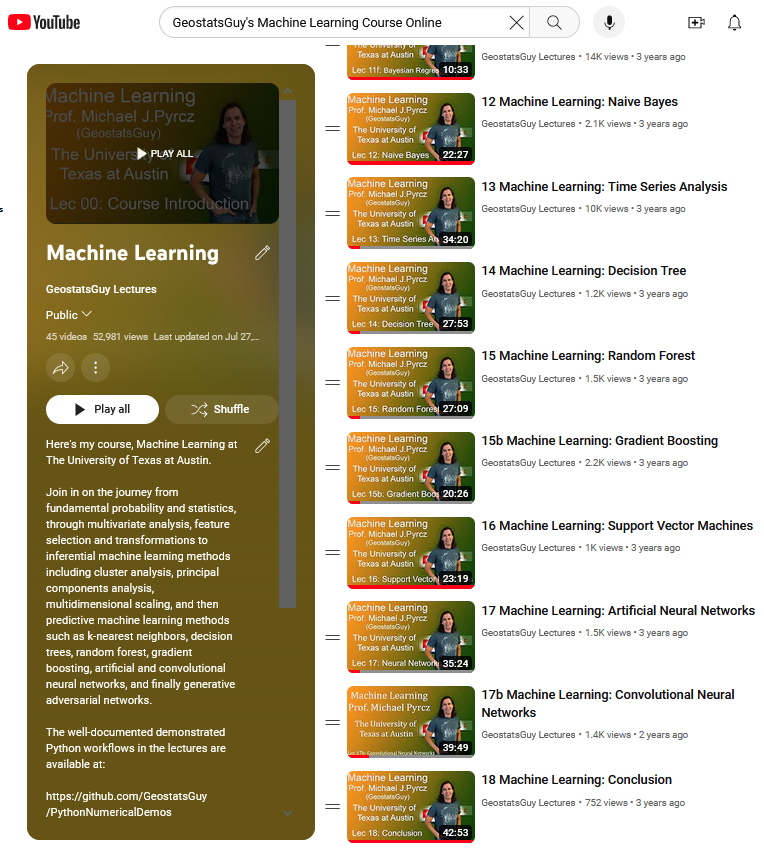
Did you know that I share my entire super-accessible, university #MachineLearning course online?
Recorded lectures, with 100s of #Python code walk-throughs, interactive dashboards to explore concepts & models, and well-documented, best-practice demonstrations.
Join me on #YouTube @ https://t.co/8qozH1pPFc ∀. #DataScience #DataAnalytics
Secrets of RLHF in LLMs
Interesting report taking a closer look at RLHF and exploring the inner workings of PPO.
Good read if you are interested in RLHF LLMs.
Code repo included too!
paper: https://t.co/GnRel8rJpF
code: https://t.co/ndorMJfYkF
LLM Powered Autonomous Agents
This is an incredible overview of LLM-powered autonomous agent systems. Includes case studies and proof-of-concept examples.
https://t.co/5I3tdVZEBh
Top-k retrieval is standard in LLM RAG systems - but it may miss important context ⚠️
You can augment top-k by exploiting relationships in knowledge graphs to fetch additional context 💡✨
We have an new guide on this (s/o @wey_gu)! https://t.co/ZJb02TORFX
GNNs and atomic coordinates paving the way in protein conformational landscape prediction 🧬📊. @Stanford#CS224W students Leah Reeder & Xun Tang use GNNs to predict protein structures, creating potential impacts on fields of drug discovery.
https://t.co/MYGNaR5n2X
@PyG_Team
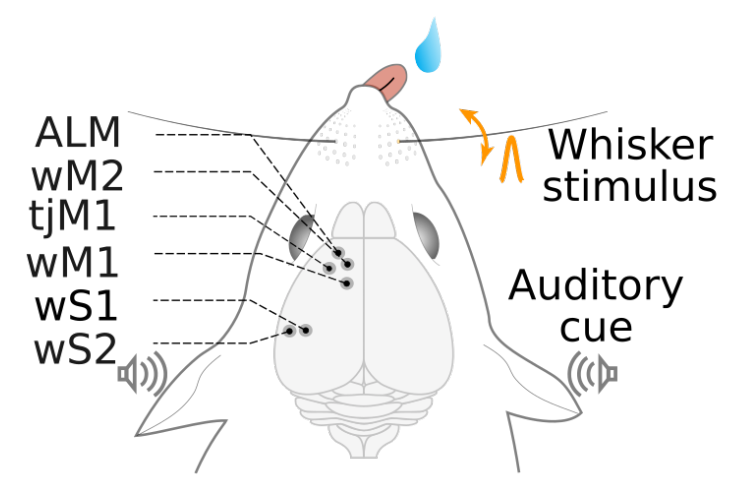
Pre-print: machine learning for neuroscience
We build interpretable biological network reconstructions from electrode recordings with ML and optimal transport.
Towards models of mechanisms driving behavior, we focus on single-trial neural activity and trial variability 1/6
When the computer scientist Shang-Hua Teng taught a discrete theorem called Sperner’s Lemma, his student Kyle Burke was inspired to turn it into a board game. https://t.co/eutXXtRpZz
You can play Burke’s version of the game here: https://t.co/HitHOdMTcS
This is the Casa Comalat in Barcelona, one of the most beautiful Art Nouveau buildings in the world.
And, once upon a time, it was modern architecture...
Excited to share a simple Google Colab notebook that connects Falcon-7B-Instruct by @TIIuae with @langchain! You can run it even on a free plan!
https://t.co/Zsl54fDJQn