I offer discounts to a cool new line of products that are made in the USA.They provide electrical protection for your home & auto from lightning & EMP events.
@SunWeatherMan My home has EMP Shields & kept power, unless generator quietly kicked on while sleeping.
I was getting alerts quite frequently from the Carrington App throughout the night, before I went to bed, regarding the escalating solar storm activity.
In December 2009, Abergele Hospital in North Wales witnessed one of the strangest coincidences ever reported.
A 77-year-old retired policeman named Geraint Woolford, from Llandudno, was admitted for a hip replacement.
Soon after, another man was placed in the neighboring bed. He was 52, from Ruthin, also a retired policeman, also there for surgery, and his name was also Geraint Woolford.
The two men had never met before. They were not related. After checking family history and public records, it was reported that they were the only two people in Britain with that exact name.
The similarities continued. Both had served in the police, both had links to local Conservative Clubs, and both had grandfathers connected to horse training in North Wales. Their daughters even knew each other through work.
For hospital staff, it became a serious double-checking challenge. Every medication, chart, and operation had to be confirmed carefully so the right Geraint Woolford received the right treatment. Thankfully, both men got the correct operations.
The older Woolford joked with nurses every time they approached him, asking, “Are you sure that’s for me?”
What began as a hospital stay turned into a once-in-a-million meeting between two strangers with the same rare name, same former profession, same region, and neighboring hospital beds.
A mother seal gives birth and believes her baby is gone.
Then what happens is nothing less than a miracle.
Pup moves and she realizes the pup is alive... and her joy is unforgettable.
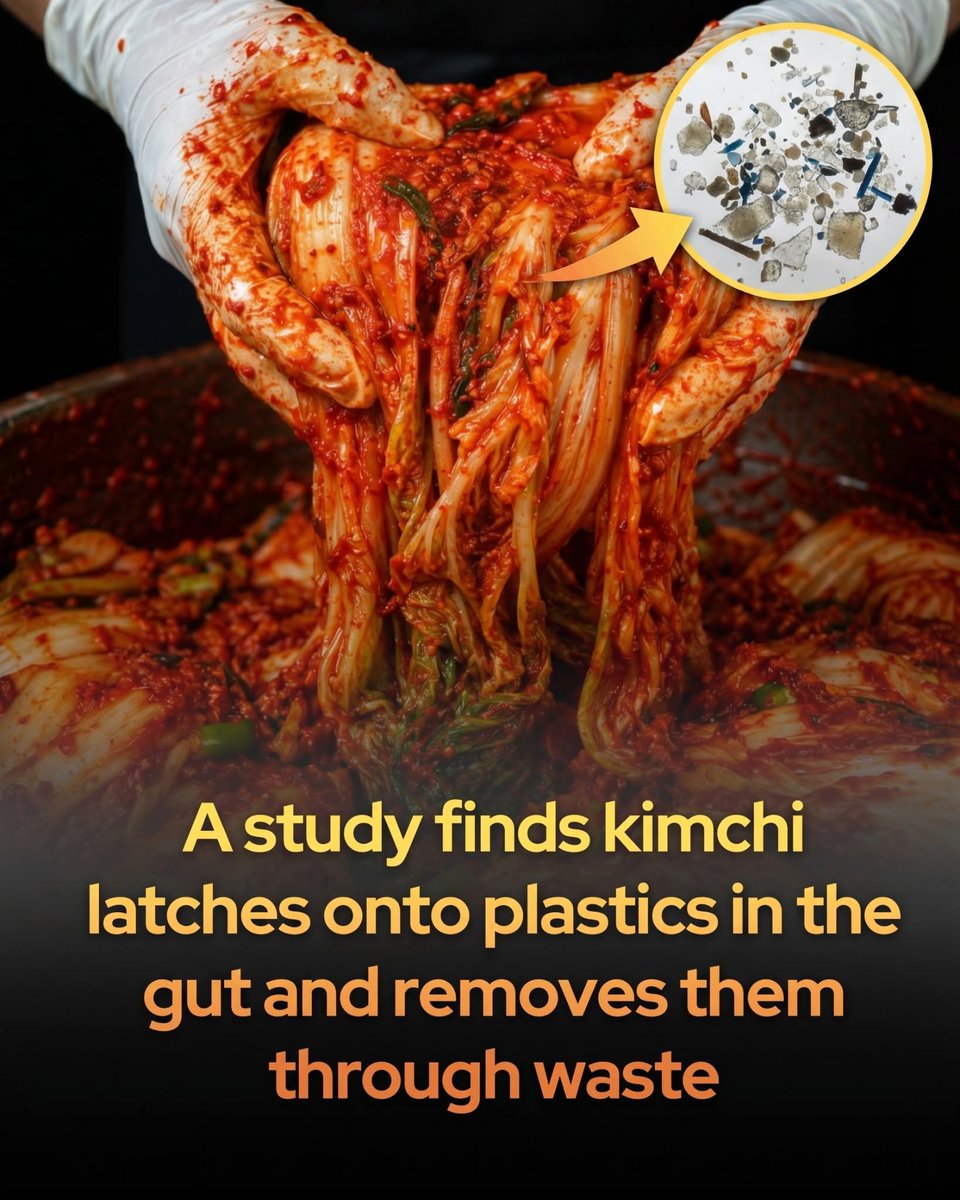
Kimchi shown to remove plastics from the body before they can spread to organs.
A probiotic bacterium isolated from traditional Korean kimchi could act as a microscopic shield against the rising threat of nanoplastic pollution.
Researchers in South Korea have discovered that Leuconostoc mesenteroides CBA3656, a lactic acid bacterium found in fermented kimchi, possesses a unique ability to bind to nanoplastics���plastic particles smaller than 1 micrometer that can easily cross intestinal walls and accumulate in vital organs like the brain and kidneys.
In simulated laboratory environments designed to mimic the harsh, fluid conditions of the human digestive tract, this specialized strain maintained a 57% binding efficiency to polystyrene nanoplastics, far outperforming standard reference strains which dropped to a mere 3% efficiency. To test these findings in vivo, scientists administered the kimchi-derived probiotic to germ-free mice exposed to nanoplastics. The treated mice successfully excreted more than twice the volume of plastic particles in their feces compared to the control group, demonstrating that the bacteria can effectively capture and escort these synthetic contaminants out of the digestive system before they migrate into deeper tissues.
The biological mechanisms were observed strictly within controlled laboratory cultures and mouse models, meaning further clinical trials are required to confirm if eating standard commercial kimchi yields identical protective effects in the human gut. Nevertheless, the study provides a foundational framework for developing food-derived probiotics engineered to combat systemic plastic ingestion. As global concern over microplastic contamination in drinking water and food supplies reaches unprecedented levels, utilizing natural, fermentation-born microbes offers a highly promising, biocompatible strategy for mitigating the long-term toxicological risks associated with daily environmental plastic exposure.
Reference
Han, S., Kim, J., Lee, H., & Park, S. (2026). Efficient biosorption of nanoplastics by food-derived lactic acid bacterium. Bioresource Technology, 418, 131450.
This is how cork is harvested,
The Quercus suber (the cork oak) is the primary source of cork used for many products including wine bottle stoppers
Bark can be stripped without permanent damage and is regenerated about 12 times during the tree’s life