Hello everyone! I am back on X.
I deactivated my account as things got busier, but my leave exceeded the 30-day limit and my account was deleted.
I will be posting again very soon.
Y-DNA haplogroups of Tajiks from Tajikistan and Uzbekistan (Pamiri and Yaghnobi excluded)
This chart is mainly based on academic data and samples collected by the Tajik DNA FTDNA project. If you can want more Tajik samples sponsored please also donate to their project. The sample size is n=170.
Tajik DNA project: https://t.co/7wae2GmiKz
The haplogroup composition is diverse, encompassing lineages associated not only with Central Asia but also with West Asia, Anatolia, Southeast Europe (including L1b, E1b, C1a, much of J2a, R1b-Z2103, and G2a), as well as South and East Asia. Despite this diversity, many lineages likely still derive from ancient Iron Age Central Asian and South-Central Asian ancestry, especially those belonging to J2a-Z7700, R1a-Z93, R2a, Q2b, Q1b and R1b-FTB1.
@HemdadArwandi ancestry should still be comprised of local, Perside-speaking Khuzistani mountaineers and incoming Kurdish tribesmen from Syria (as alluded to by Ari) based on the evidence at hand.
@HemdadArwandi The distinction being made is slightly confusing since the Kermanis are mentioned among the Kurdish tribes of Fars in the 10th century. I think they require more investigation.
While they could have potentially contributed to Luri ethnogenesis the bulk of the latter's ->
@KurdiCompendium A thousand tanks to @RumetAlxas for the sponsorship!
FTDNA kit: IN134404
All Kurds who took FTDNA should join the Kurdish DNA project.
https://t.co/pTYbGHGfFH
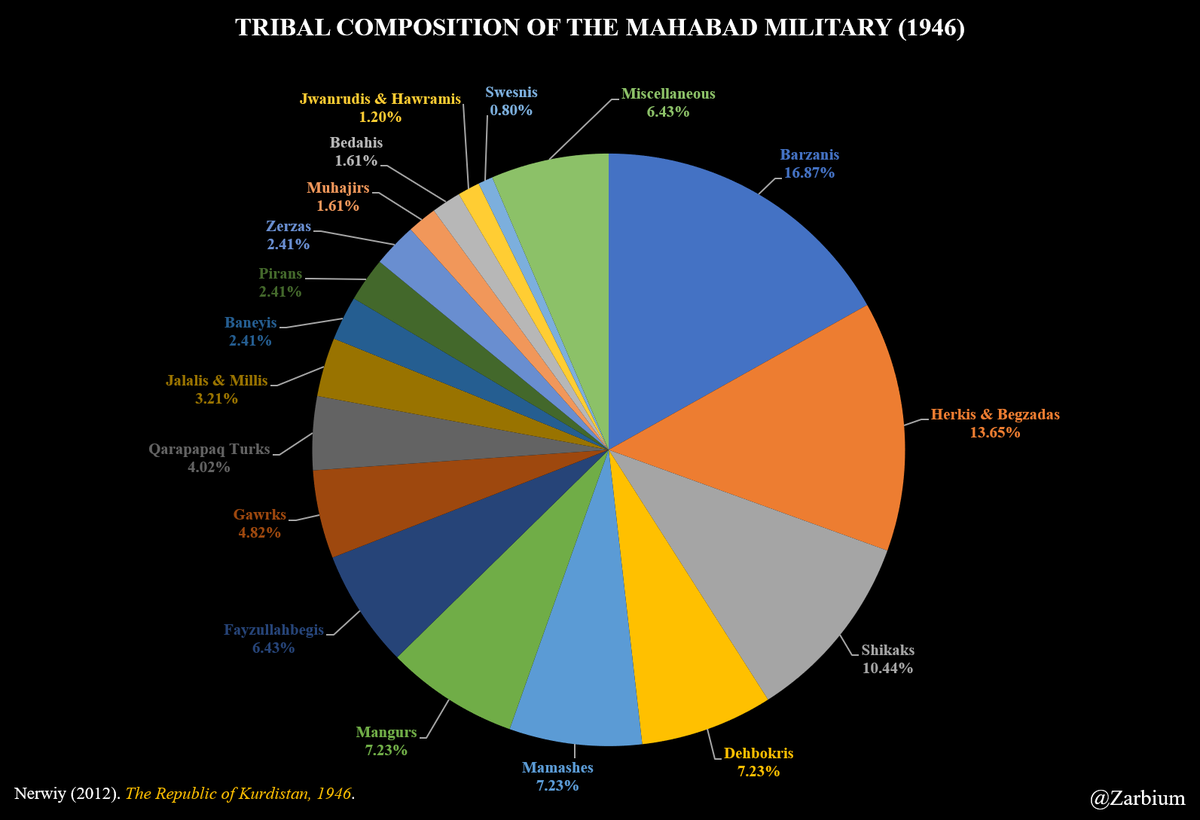
The descendants of the prominent Herkî chieftain Fetah Axa fall under the patrilineal Y-DNA lineage E-Y4972 > Y88875 (FT133616) > Y290746 > FTB17071 > FTB17310, a subclade under E-L791. Unlike most haplogroup E clades among Kurds, E-L791 doesn't appear to be Semitic driven in root. No notable ancient samples exist on this lineage, but based on clade diversity one can speculate E-L791's origin in Late Chalcolithic Mesopotamia. The time of recent common ancestor between the Sûrçî sample and the Herkî is currently pending. It should be noted not all sections of Sûrçî belong to this line, and probably not the Herkî either.
The tested individual, @Zarbium, belongs to the Mala Îsa clan, which is the traditional chiefly clan of the Herkîs in historical Soran. He is a descendant of the chieftain Fetah Axa (c. 1903-1969), one of the most renowned chiefs from the Herkî tribe. Members of the Mala Îsa clan are highly active in the region's politics and were historically involved both directly and indirectly in multiple Kurdish uprisings, including those of Simko Axa Şikak and Mustafa Barzanî. Some chieftains from the clan include Fetah Axa, Simko's close ally Xûrşîd Axa, Pro-Peshmerga chief Es'ed Axa, former Peshmerga commander Ekrem Axa, Mişîr Axa and the current leader Mehmûd Axa.
Together with the Mala Îsa, the Mala Hacî Axa who are the traditional leaders of the Herkîs in Behdînan should also fall under this Y-DNA lineage, alongside the Mala Zahêr and Kurê Reş clans, as these four clans constitute the Tuxima Xezalê group descended from the 18th century chief Badîn Axa. They belong to the Mendan branch of the tribe.
The Herkî are a large, Kurmanji-speaking tribal confederation native to the border area between Iraq, Iran and Turkey. They were among the last nomadic Kurdish tribes of the region, pasturing west of Lake Urmia in the summer and around the Great Zab river in the winter. The formerly nomadic Herkîs are divided into three branches: Mendan, Sîdan and Serhatî. Traditionally semi-nomadic, village-dwelling Herkîs are known as Binecî and have mostly become part of the Barzan confederation. The Herkî have played various roles in the region's recent history.
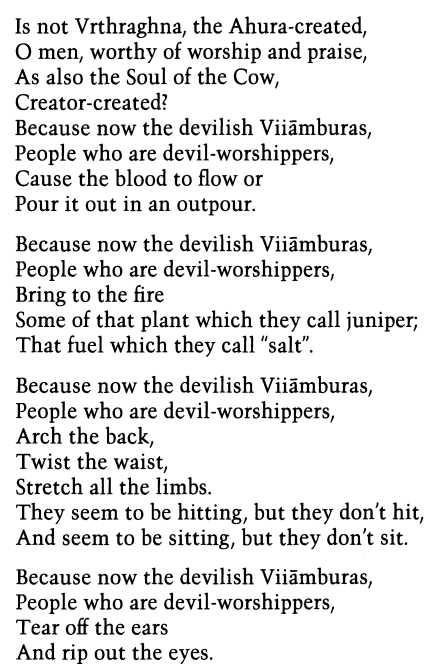
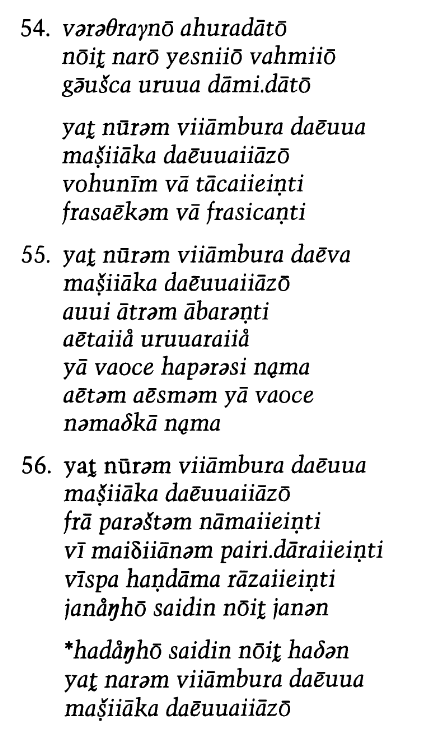
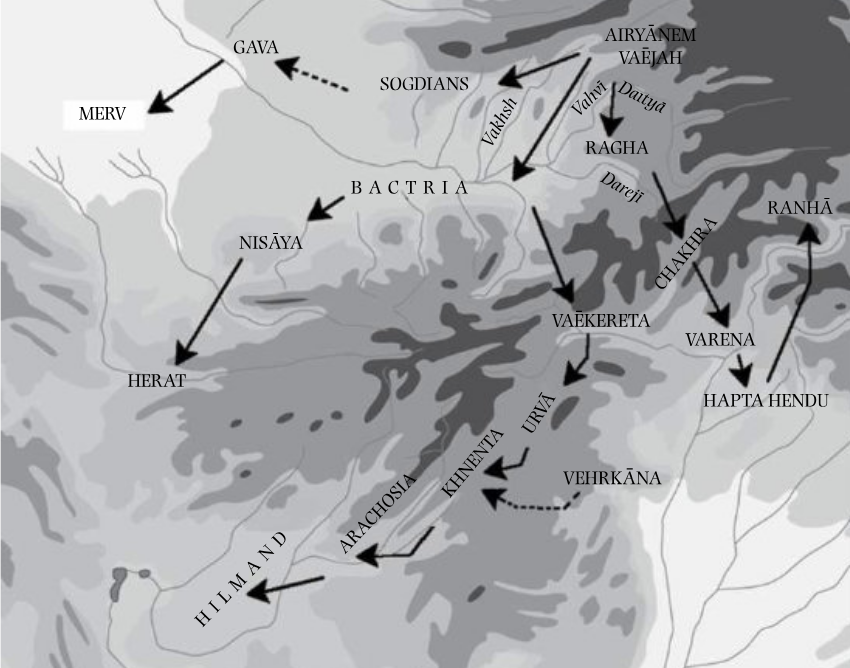
Wahrām Yašt 54 - 56 describes heretical Viiāmburas abiding by religious norms eerily reminiscent of the Peristani complex:
1. Juniper sacrality
2. worship of gods demonic to Avestans
3. Shamanic contortionism and flailing
4. pouring of blood directly as an oblation
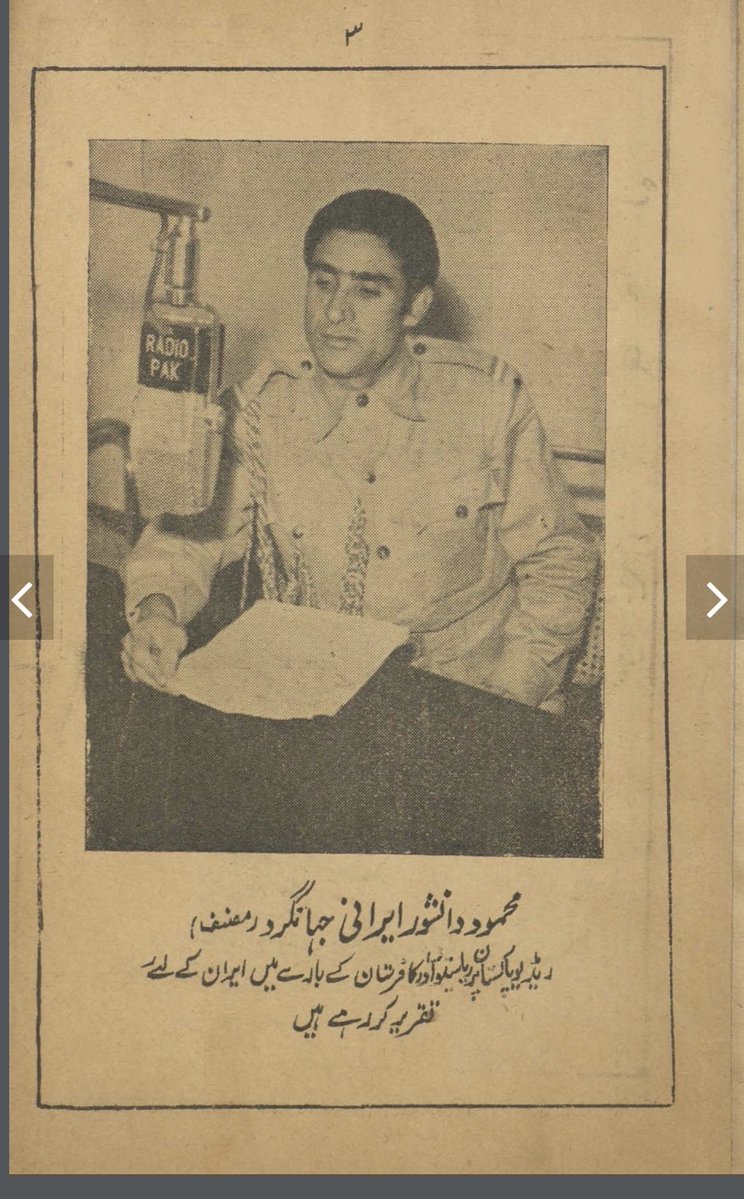
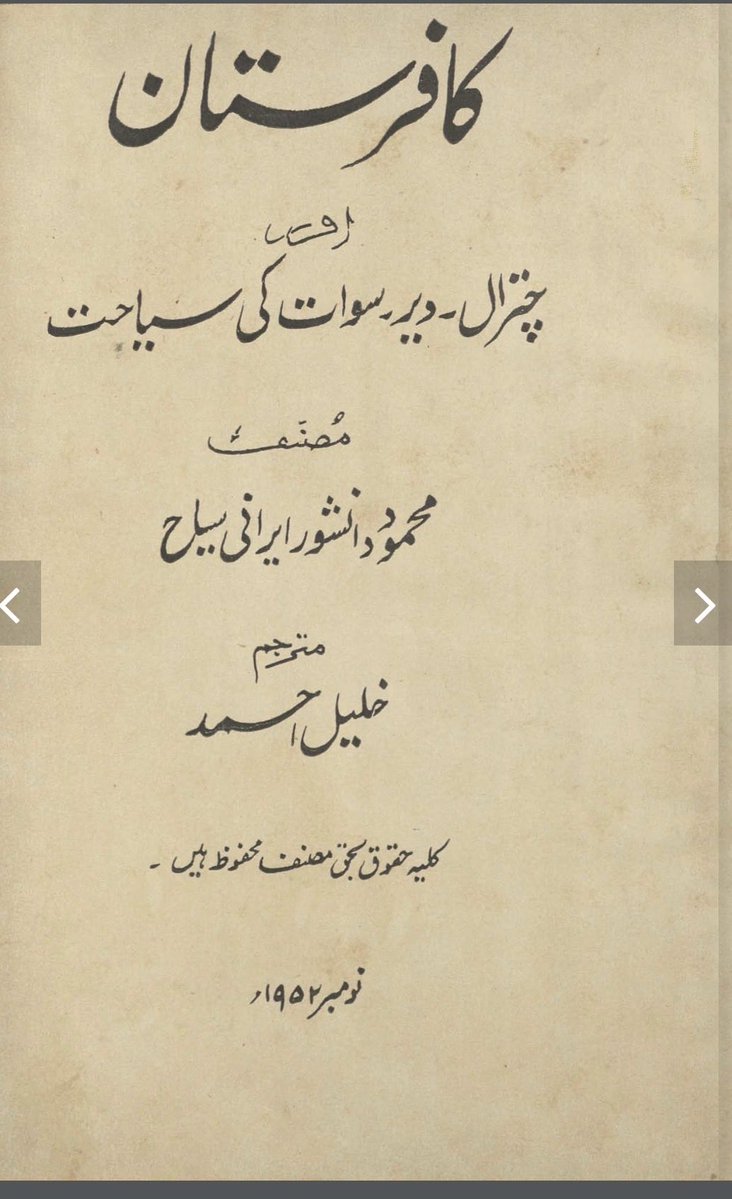
An Iranian traveler visited Pakistan in 1951, met Noon Meem Rashid at Peshawar Radio, and jokingly said you guys declare everyone kafir over small matters.
Rashid in return told him about a less-known region called Kafiristan.
That’s the story of this 1952 travelogue of Kalash
Q2-L275 is a widespread pan–Indo-Iranian Y-DNA lineage. However, West Iranic groups like Kurds tend to show higher frequencies of Q2a , whereas East Iranics, Dardics and Indo-Gangetic Indo-Aryans carry more Q2b. Q2a is still present among these eastern groups and Q2b in West Iranics as well, but at lower frequencies. These Q2b clades orginate from a BMAC–IAMC sphere of Bronze Age South-Central Asia, with different branches being assimilated and spread alongside expanding Indo-Iranian Andronovo-derived populations at early stages of their ethnogenesis.
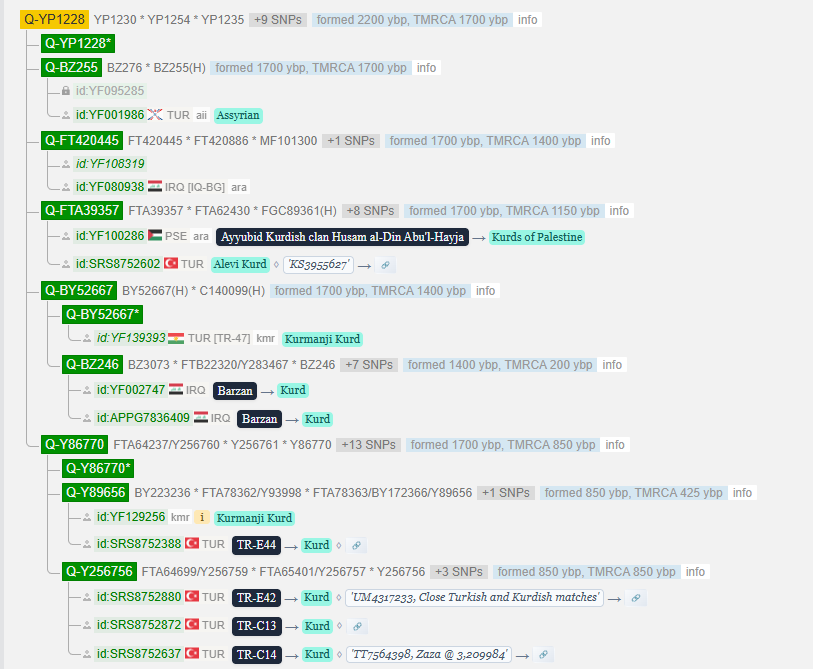
The Y-DNA lineage of the Sheikhs of Barzan, who are currently the ruling family of Iraqi Kurdistan, as confirmed by Darvan Mansour Barzani, belongs to Q-L245 and almost certainly falls under the YP1228 > BZ246 mutation, as members from Barzan area also belong to this line. Darvan is the son of Mansour, who is the son of Masoud, who is the son of Mustafa Barzani.
This lineage is downstream of WSHG > BMAC/IAMC > Iron Age Iranians of South-Central Asia > Iranians of the Plateau > Kurds. The wider Kurdish mutational cluster is currently placed around 280 CE.
A notable historical Kurdish figure who also belongs to this wider Kurdish Q-YP1228 dating back to 280 CE cluster (though not under the later Barzani-specific mutation) is Husam al-Din Abu'l-Hayja, who was one of Saladin’s Ispahsalars (major general), commanding the Ayyubid Kurdish elite Mihraniyya cavalry corps during the Third Crusade. He later became a lord of Jerusalem following the Battle of Hattin. Find more about him here:
https://t.co/NJzMnZIG7M
Unimaginably important read. Local Kurdish rule over parts of Media in the Parthian and subsequent Sassanid periods provides backing and explanation for the earlier expansion of Proto-/Early Southern Kurdish-speakers and their relationship with local Goranic-speaking communities.
Thread: Origin of Pashtun Big Y-700 Clades
In this thread, we present the currently available Big Y/WGS Y-DNA results for Pashtuns and discuss the presumed ethno-linguistic and/or geographic origin of the identified haplogroups.
The current sample size is n = 196. Many of these samples were sponsored by our project, while others come from academic datasets such as the HGDP and other published projects. As our dataset grows, some of these classifications may change, since additional sampling will likely provide a better understanding of the origin and distribution of individual lineages.
Iron Age Iranic
This category includes lineages that we believe arrived in Pashtunistan and the Indo-Iranian borderlands after roughly 1500 BCE, either with early Iranic pastoralists or through later Iranic migrations from Iran and Central Asia. These lineages often cluster with Kurds, Central Asian Tajiks, Iranians, and/or Jewish populations, with shared paternal ancestry dating to after 2000 BCE. The largest lineage in this category is R1a-YP1123, which alone accounts for about 33% of the Pashtun Y-DNA sample.
Iron Age Suleimani (Arachosia – Indus)
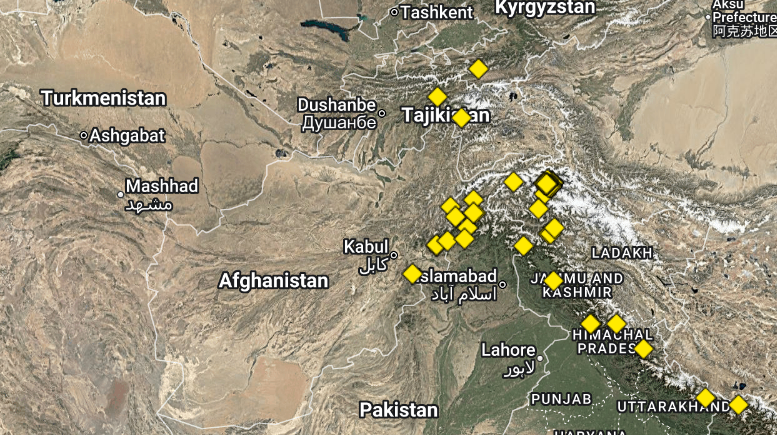
This category consists of lineages that we believe were already present in the Suleiman Mountains and surrounding parts of Pashtunistan before the arrival of Iranic-speaking groups. They likely represent a mixture of different Bronze Age populations, including early (possibly Vedic) Indo-Aryans, as well as potential Dravidian or other non-Indo-European groups. Some lineages may also reflect more recent admixture from Indic populations living between the Suleiman Mountains and the Indus Valley. With improved sampling of both Pashtuns and South Asian populations, it may become possible to distinguish different Indo-Aryan layers within this category. Representative lineages include R1a-L657, R1a-Y47, Q1b-L717, and probably L1a2-Y17950.
Dardic (Hindukush – Gandhara)
This category mainly includes lineages that appear to be associated with Dardic, Nuristani, and possibly Burushaski-speaking populations of the Hindukush and Gandhara. While there may be some overlap with the Iron Age Suleimani category, these lineages generally form distinct subclades that differ from those more commonly found among southern Indic populations. Typical examples include several subclades of Q2b-Y1150.
Hellenic / West Asian
This category includes lineages that we believe originated in Mesopotamia, Anatolia, and possibly southeastern Europe, including Greece. Among Pashtuns, they are more commonly found in families claiming Sayyid descent or among groups outside the traditional tribal structure. Various G2a lineages are representative of this category. In general it seems that Hellenic and Mesopotamian/Anatolian lineages were and are much more common in Central Asia than what is often assumed (But they are absent in Kalash and Nuristani who often are claimed to be the descendants of Greeks)
Sino-Tibetan
At present, this category is represented by a single Wanetsi Pashtun who has been tested with Big Y-700. However, Big Y-700 testing has also been ordered for two additional Pashtuns who likely belong to the same broader category. Interestingly, lineages of probable Sino-Tibetan origin appear to be more common among Pashtuns than East Asian lineages that can be clearly linked to Proto-Turkic or Proto-Mongolic ancestry.
Saka–Turkic
This category is currently represented by a single Ghilzai Stanikzai Pashtun carrying the R1a-S23592 lineage, which appears to have a Scythian (Saka) origin and was likely carried by Turkic speakers.
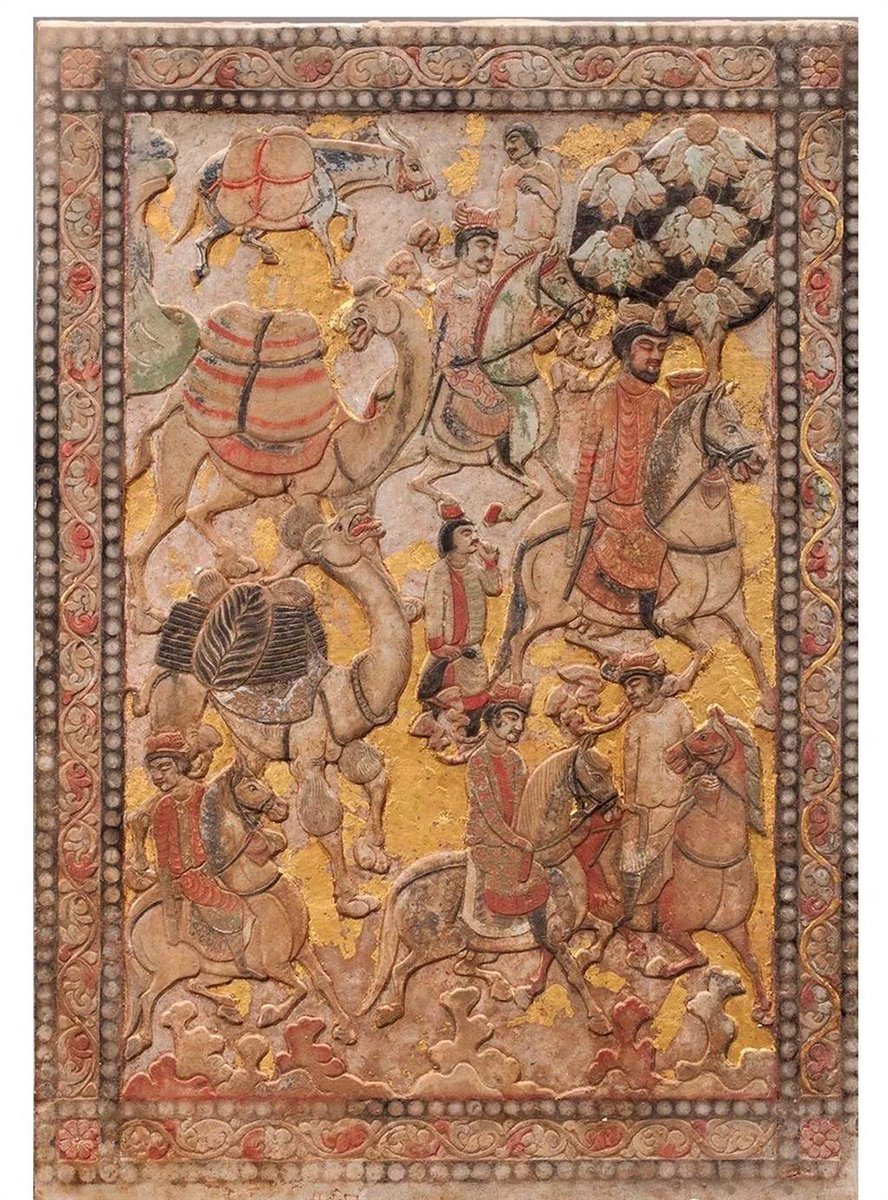
Tomb of Sogdian man, An Bei: sadly it was looted. Part of base (1-2) is now at Tang West Market Museum, Xi'an, China. 4 panels are in private collection, Macau. Some other panels in unknown location(s)
"The History of Hossein the Kurd", a manuscript in the Persian language. Matenadaran, Yerevan, Armenia, 19th century.
Hossein the Kurd is the main character of the adventure epic "The Tale of Hossein the Kurd of Shabistar", popular in the Middle East. The story takes place in Iran during the reign of the powerful Shah Abbas I the Great (late 16th - early 17th century) of the Safavid dynasty.
Hossein the Kurd is a legendary warrior and folk hero who, along with his fellow ayyars (medieval volunteer fighters and protectors of the poor), performs heroic deeds, fights the Shah's enemies (the Uzbeks and the Ottomans), and restores justice.
Scholar and Mamlūk bureaucrat, Al-ʿUmarī (d. 1349):
"As for the armies of the Georgians, they are the champions of the religion of the Cross, and among them are found courage and valor. It is said: 'Among the Muslims, the Kurds; among the Christians, the Georgians.'"
ʿAjāʾib al-Makhlūqāt wa-Gharāʾib al-Mawjūdāt (عجائب المخلوقات وغرائب الموجودات, The Wonders of Creation and the Oddities of Existence) by Zakariyyāʾ al-Qazwīnī. The work describes the heavens, the earth, animals, angels, jinn, and the order of creation in Islamic cosmology.
Lineages like R1a-L657 and Q1b-L717 ended up in south-central Pashtun tribes through the assimilation of pre-Iranic pastoralists, living in Loy Kandahar and Loya Paktia region, by incoming Iranic-speaking pastoralists. Their interaction would form the Proto-Pashtun identity.
Assuming such process of interaction occurred in the past would not be implausible, as the presence of non-Pashtuns within Pashtun pastoral camps has been documented in modern ethnographic studies of Pashtun pastoral society.
RY6-Z29135 presently has a TMRCA of 300 BC with Punjabi, Tajik and Pashtun samples, so the lineage could have become Iranic-associated some time after this.
The timeline with Q1b-L717 is a bit unclear as it isn’t as well-tested. The non-Pashtun samples (3x Baloch/Brahui, 1x Chinese Dungan, 1x Gujjar) under the L717 Pashtun branches are from during the medieval big boom of Pashtun tribal expansion, so they represent recently assimilated lines and aren’t useful to understand dynamics of earlier pre-Islamic times.
There is currently one Kurd sample basal to the Lodi-Nasar Q1b branch at 1350 BC but that too is nested amongst a larger branch at 1700 BC with parallel branches from Kashmir to Bangladesh.