The complete deep origins of 328 Kurdish patrilineal lineages that have been sponsored or purchased through Whole Genome Sequencing (30x or higher), or through Y-700 and equivalent STR-based testing. The following also includes Kurdish samples sequenced through scientific studies to the level of 30x WGS or higher. It does not include haplogroups sequenced to anything below this high level of sequencing, therefore excluding the majority of scientific studies conducted only at Y-17 level, since we require Y-700 level testing.
Based on the current data it can be ascertained that the clear plurality of the founding father population among the Kurds belong to Iron Age Iranians (circa 1500–1000 BCE), who were a hybridised population between Andronovans and local South Central Asian cultures like the BMAC. Most notably the Yaz culture, which scholarship and academics attribute to the rise of the Zoroastrian religion and the rapid militarisation of Iranian society, experienced a massive expansion phase. The so-called "West Iranian peoples" are a syncretised population from these early Iron Age Iranians from Central Asia who moved into the Zagros and plateau and encountered a myriad of different cultures, most notably the Elamites, including populations that were also quite freshly integrating into the Zagros, like the Semitic peoples who were already penetrating deep into the Zagros since the Middle Bronze Age (attested as far as Anshan, the Elamite capital). It is from this milieu that the first attestation of Kurds can reliably be found, dating back to Eratosthenes of Cyrene, who was born in the Ptolemaic Kingdom and was likely relying on an Achaemenid source. Kurds are first attested in the province of Persis in south-west Iran. Indeed, this is what we expect via comparative linguistic studies at the dialectal level. A North-West Iranian language living in a core Persian hub, prior to expansion out of south-west Iran into what is now Kurdistan sometime around the Sassanian era.
Based on the modern haplogroup distribution of Kurds it is quite apparent that the strongest and oldest layers of non-Iron Age Iranian paternal ancestry is in fact attributable to Semites, and not what most people expect, which is various indigenous Zagrosian populations. Typically the Semitic lineages among Kurds date back to around the Achaemenid era. In general there seems to be an influx of Semitic speakers into the Iranian plateau during the Achaemenid period. Based on haplogroup data there is not a single clear case of an indigenous remnant Zagrosian lineage among the Kurds that precedes the Bronze Age. Despite this, 9% is plausibly attributed to some type of local LC Meso and/or Zagrosian populations. The first Kurdish tribes would be comprised of a Semitic, an Iron Age SCA Iranian, and a localised plateau population. Interestingly there is a probable Seleucid Greek founder-effect lineage among modern Kurds that dates a few hundred years after the attestation of the first Kurdish tribes. The overwhelming majority of the remaining lineages I have not mentioned here have mutations attributable to post-Islamic assimilations, which includes the vast majority of the Armenian highland haplogroups, all Oghuz Turkic lines, among many others. Comparing Kurdish autosomal data against haplogroups, it is exceedingly clear that the Iron Age Iranian haplogroups among Kurds have huge male-biased selection. This means the Iranian lineages were the most socially dominant group among the Kurds, who reproduced more than other segments of the population. This makes sense since Kurds are an Iranian ethnic derived population, in a patrilineal based society.
Unfortunately the data disproportionately includes Zaza and Kurmanji speakers who come from Berferati (the most western parts of Kurdistan) speaking regions, since these are the regions that generate the most diaspora. Sponsoring Kurdish clades all across the Kurdistan region is of heavy priority right now. A major issue right now is that the vast majority of DNA kits that are being sponsored are not being used and are being sent back to the labs, despite the fact that these kits cost $449 for a single test. Please DO NOT ask for sponsorship if you are going to waste hard-earned money. This is just shameless and disrespectful of the highest order. If you have gotten your DNA sequenced, you must join a relevant DNA project to secure traceability of where we are sourcing this information from. We encourage you to include all relevant details like tribe, place of birth of paternal ancestors, etc.
There are some indications that the first Iranian confederations to settle in the western plateau were not initially Zoroastrian. These include the theophoric name Agnu-parnu (*Agni-farnah-), the total absence of Western Iranian lands from Young Avestan geography and the ->
Complete Kurdish history before the Islamic age (reupload because I mistakenly didn't screenshot my commentary I had written on the Kār-Nāmag). As stated previously, any connection to Corduene/Carduchi/etc, is not listed here given that it is not only unlikely, but entirely unfeasible to be connected with Kurds, and is rejected by modern academic consensus. Furthermore, while it is true that Kurds were not defined as a distinct ethnic group within this period, it is certainly true that the Kurds were a distinct tribal confederation within the Iranian ethno-religious framework. Only direct historical attestations are included here.
Holy war is one of the core structural features of Zoroastrianism. 27.1% of the requested boons in the Yashts are petitions for victory in battle against the worshippers of the Daevas (+those who stood outside the Zoroastrian fold). It is not only defensive in nature, but has a clear offensive dimension as well. Zoroastrianism has a clear concept of sacred violence against religious others.
This militant orientation has deep roots. The society into which Zoroaster was born was one of pastoralist tribal groups, in which violence was organised around cattle raiding, tribal feuds, grazing grounds, honour and revenge killing, among others. Priestly figures of the Aryan world, sanctified this activity through rites and rituals, lending cosmic legitimacy to what was essentially inter-tribal predation. Zoroaster's reformation did not abolish this violent impulse of his society. He redirected it in a religious prism. As the Airya identity fusing with Zoroastrian faith, produced a firm ethno-religious community that united the tribes, to conduct organised and structured violence on a much larger scale.
"Give him strength and victory! Give him welfare in cattle and bread!" thus said Zarathustra to the young king Vîstâspa. "Give him a great number of male children, praisers and chiefs in assemblies, who smite and are not smitten, who smite at one stroke their enemies, who smite at one stroke their foes, ever in joy and ready to help." ~ Drvasp Yt.9. 25–26.
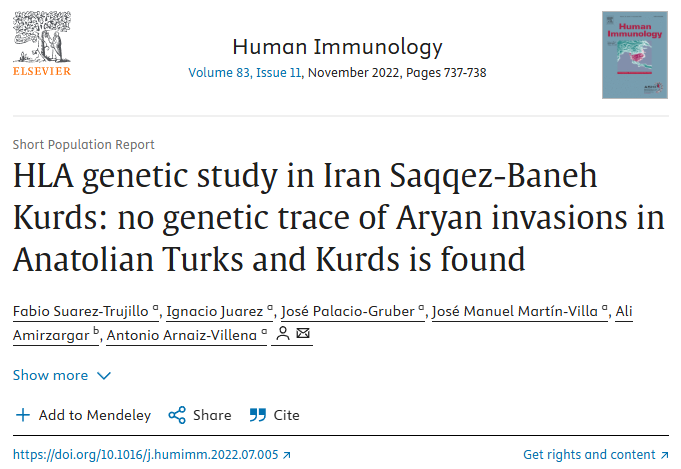
This paper draws a conclusion that no Aryan ancestry can be found in Kurds, based on HLA based ancestry assignment. A outdated technique which was refuted over 20 years ago by one of the great founders of modern genetics as a science, L. L. Cavalli Sforza. Many others should be noted here too such as Alberto Piazza and Neil Risch. It is pretty ridiculous that this was published in 2022, especially since L. L. Cavalli Sforza is no longer even alive, and almost no genetic paper these days ever use this technique. This is the second paper I have reviewed on Kurdish genetics that is of terrible quality, and I will eventually get through them all.
HLA can only be used for immunological purposes, such as determining transplant compatibility, for example. While it is obvious that Proto Iranian ancestry among Kurds is only about 10 percent, assuming that this ancestry arrived uninterrupted into modern Kurdistan without several waves of admixture is absurd, such as from the BMAC culture, among many others, which are also shared with other West Iranian ethnicities. The medieval ancestors of Kurds were indistinguishable from other mainland Iranians of the Iranian plateau, whom modern Kurds have strong continuity with.
Ignoring the fact that HLA genes are not proper markers of ancestry, any allele frequency comparisons with other populations will have large statistical uncertainties due to the sample size being 60. The HLA region represents a single genomic locus, as all these genes are closely linked on chromosome 6, so effectively this study examines a very narrow slice of the genome. Every serious population genetic study instead uses hundreds of thousands of markers across the genome, for example SNP arrays or whole genomes, to obtain an accurate picture of ancestry.
It is well documented that HLA loci have experienced balancing selection, maintaining multiple alleles due to pathogens. Different populations can converge on similar HLA allele frequencies if they faced similar diseases, even if they are not recently related. As one genetic commentary notes, using results from the analysis of a single marker, particularly one likely to have undergone selection, for the purpose of reconstructing genealogies is unreliable and unacceptable practice in population genetics. For example, an earlier HLA study by the same group claimed that Greeks were genetically most similar to Ethiopians and other Sub Saharan Africans. This can not be taken seriously in any capacity.
Numerous other fictitious claims are made in this paper, such as the Hittite language not being Indo European but rather probably another Dene Caucasian one, and Kurds being descended from the Halaf Culture back in 6000 BCE, among many others are not even worth addressing as only the likes of Soran Hamarash could take value in these Disneyland fairytale narratives. Attempting to remove Kurds from west Iranians is pseudo-science, as Kurds emerged deep within an Iranian milieu within the last millennia and a half which can be examined genetically, linguistically, culturally, and otherwise without any dispute. I strongly doubt this statement made in the paper "The authors declare that they have no known competing financial interests or personal relationships that could have appeared to influence the work reported in this paper."
Either they are severely incompetent, or they have been paid off by malicious actors.
The Y-DNA samples at Bakr Awa, representing populations in Lullubum and Zamua, are just one part of a much larger phenomenon, which indicates that the Zagros Mountains were subject to extensive population settlements during the Bronze and Iron Ages from peoples further west and north of the Zagros, before any Iranians arrived on the Plateau.
Modern Kurds who reside in these same regions have far more eastern lineages, which is obviously reflective of their ancestral Iranian settlement in these lands, who were ultimately rooted in migrations from south-central Asia onto the Plateau. The modern ethnic distributions of these haplogroups have no presence among Iranians or Kurds that is not directly tied to having a modern Armenian paternal ancestor.
Prior to the bulk of these samples at Bakr Awa, there had been massive settlements from the Kura-Araxes culture, which expanded out of the Armenian Highlands into the Zagros. This is the ultimate origin of the two G2b samples that are KAC-derived, but who were absorbed into the incoming populations of the region.
One of the samples has an exceedingly rare, in modern populations, steppe-derived lineage from the Catacomb culture, or possibly even the Lola culture.
The expansion of Hurrians from upper Mesopotamia, accompanied by waves of Semites deriving from the Levant, represents the most important lineages among the samples at Bakr Awa.
@Vertaris21@hindujewfreind2 You can convert to Zoroastrianism. You are thinking about Parsis in India who don’t allow converts, because they didn’t want Hindus to dilute their religion.
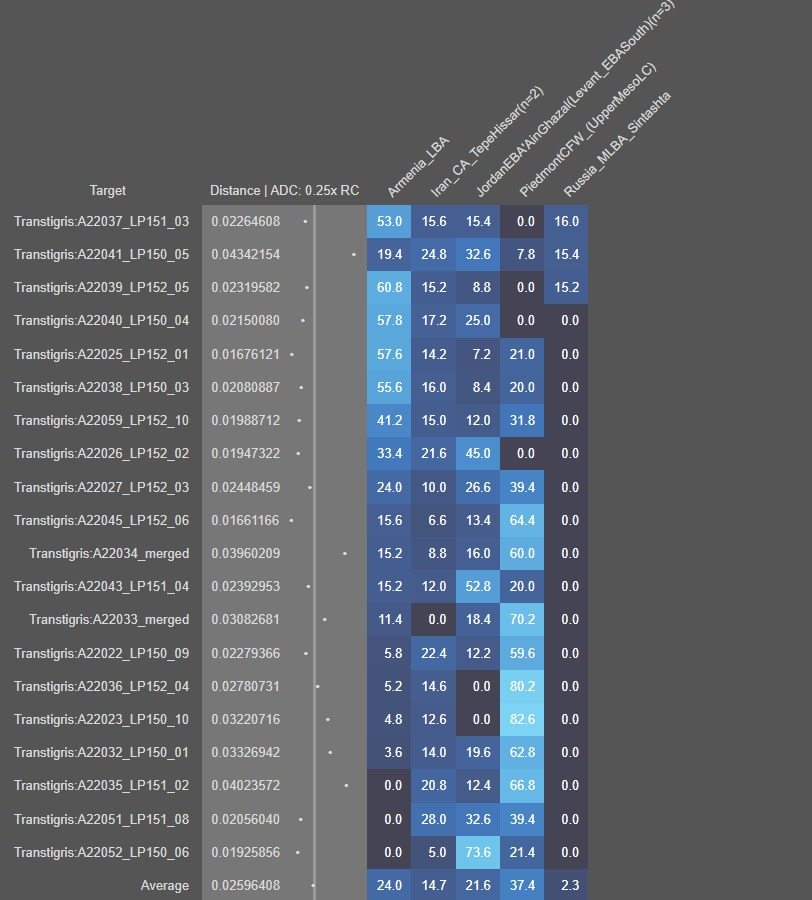
Brand new genetic samples in and around the Lullubi Kingdom from the Bronze and Iron Ages located at Bakr Awa in the Sulaymaniyah Governorate of the Kurdistan Regional Government in Iraq. The genetic samples are highly heterogeneous and can be categorised into 4 distinct genetic groups: a local Chaff-Faced Ware type profile, which likely signifies the oldest layers of ancestry in the region, and three categories that can be considered intrusive groups, namely a Semitic type profile, a Western Grey Ware type profile, and some type of high-steppe outliers.
Given the profiles below, it can be said this region experienced quite drastic demographic replacement throughout the course of the kingdom, even before the arrival of Iranians onto the Plateau. Three samples seemingly pick up Sintashta ancestry as a source, but it's not clear whether that is because they require extra steppe ancestry that is defaulting into the Sintashta category, or whether they have actual descent from Indo-Iranians. The steppe ancestry in these samples by and large comes from migrations down the Caucasus, and not from Indo-Iranians.
Unfortunately, as of now, we do not have proper genetic samples for late Chalcolithic Mesopotamia, which makes it hard to gauge just how much of this type of ancestry is present in these samples. The CFW source used here is already Semitic-admixed, which isn't ideal, but no proper alternative exists.
The genetic heritage of these samples in modern populations is not particularly relevant. What is relevant, however, is more broadly the types of migrations that were generally occurring in the Middle East around that time. Western Grey Ware samples artificially plot near Iranian speakers due to the fact that the combination of Hissar + Arm BA + Semitic ancestries in WGW is roughly equivalent to Sintashta + BMAC + Meso + Arm BA, which has accumulated independently. Modern Iranians should have some level of WGW ancestry, but it isn't especially relevant.
To learn more about Western Grey Ware, check out the following two posts:
https://t.co/N62FiiPqPF
https://t.co/QgQalIMoMz
Gutians aren’t Indo European. Archaeologically they came from the north east Iran Grey wares. The Hissar type ancestry could be through them.
As for Kassites, it’s very speculative regarding how much II influence they had:
> Early impact of an immigrating Indo-Iranian group is suggested by a small, but linguistically and culturally significant, number of terms. These include šuriias “sun god,” Old Indo-Aryan *sūrya, and the personal nameAbi-rattaš, with Indo-Iranian *ratha“chariot,” which reflects the new technology of warfare. Otherwise the linguistic affiliation of these peoples is uncertain.
The complete deep origins of 328 Kurdish patrilineal lineages that have been sponsored or purchased through Whole Genome Sequencing (30x or higher), or through Y-700 and equivalent STR-based testing. The following also includes Kurdish samples sequenced through scientific studies to the level of 30x WGS or higher. It does not include haplogroups sequenced to anything below this high level of sequencing, therefore excluding the majority of scientific studies conducted only at Y-17 level, since we require Y-700 level testing.
Based on the current data it can be ascertained that the clear plurality of the founding father population among the Kurds belong to Iron Age Iranians (circa 1500–1000 BCE), who were a hybridised population between Andronovans and local South Central Asian cultures like the BMAC. Most notably the Yaz culture, which scholarship and academics attribute to the rise of the Zoroastrian religion and the rapid militarisation of Iranian society, experienced a massive expansion phase. The so-called "West Iranian peoples" are a syncretised population from these early Iron Age Iranians from Central Asia who moved into the Zagros and plateau and encountered a myriad of different cultures, most notably the Elamites, including populations that were also quite freshly integrating into the Zagros, like the Semitic peoples who were already penetrating deep into the Zagros since the Middle Bronze Age (attested as far as Anshan, the Elamite capital). It is from this milieu that the first attestation of Kurds can reliably be found, dating back to Eratosthenes of Cyrene, who was born in the Ptolemaic Kingdom and was likely relying on an Achaemenid source. Kurds are first attested in the province of Persis in south-west Iran. Indeed, this is what we expect via comparative linguistic studies at the dialectal level. A North-West Iranian language living in a core Persian hub, prior to expansion out of south-west Iran into what is now Kurdistan sometime around the Sassanian era.
Based on the modern haplogroup distribution of Kurds it is quite apparent that the strongest and oldest layers of non-Iron Age Iranian paternal ancestry is in fact attributable to Semites, and not what most people expect, which is various indigenous Zagrosian populations. Typically the Semitic lineages among Kurds date back to around the Achaemenid era. In general there seems to be an influx of Semitic speakers into the Iranian plateau during the Achaemenid period. Based on haplogroup data there is not a single clear case of an indigenous remnant Zagrosian lineage among the Kurds that precedes the Bronze Age. Despite this, 9% is plausibly attributed to some type of local LC Meso and/or Zagrosian populations. The first Kurdish tribes would be comprised of a Semitic, an Iron Age SCA Iranian, and a localised plateau population. Interestingly there is a probable Seleucid Greek founder-effect lineage among modern Kurds that dates a few hundred years after the attestation of the first Kurdish tribes. The overwhelming majority of the remaining lineages I have not mentioned here have mutations attributable to post-Islamic assimilations, which includes the vast majority of the Armenian highland haplogroups, all Oghuz Turkic lines, among many others. Comparing Kurdish autosomal data against haplogroups, it is exceedingly clear that the Iron Age Iranian haplogroups among Kurds have huge male-biased selection. This means the Iranian lineages were the most socially dominant group among the Kurds, who reproduced more than other segments of the population. This makes sense since Kurds are an Iranian ethnic derived population, in a patrilineal based society.
Unfortunately the data disproportionately includes Zaza and Kurmanji speakers who come from Berferati (the most western parts of Kurdistan) speaking regions, since these are the regions that generate the most diaspora. Sponsoring Kurdish clades all across the Kurdistan region is of heavy priority right now. A major issue right now is that the vast majority of DNA kits that are being sponsored are not being used and are being sent back to the labs, despite the fact that these kits cost $449 for a single test. Please DO NOT ask for sponsorship if you are going to waste hard-earned money. This is just shameless and disrespectful of the highest order. If you have gotten your DNA sequenced, you must join a relevant DNA project to secure traceability of where we are sourcing this information from. We encourage you to include all relevant details like tribe, place of birth of paternal ancestors, etc.