Your job as a trader is not to make money on every trade.
Your job is to make good decisions over and over again until the money becomes a byproduct.
A good decision is entering only when your setup is there.
A good decision is knowing where you’re wrong before you enter.
A good decision is cutting the trade when that level breaks, even when your ego wants to “give it more room.”
A good decision is not averaging down on a loser just because you don’t want to accept the loss.
A good decision is keeping the loss small enough that you can still think clearly on the next trade.
Because one small loss won’t ruin you.
But one emotional decision can undo weeks of discipline.
The goal isn’t to avoid losses.
The goal is to make sure your losses come from the plan, not from panic, hope, or ego.
Most people tell themselves they can't do something. They give up and settle. But that's not how I am. If I see someone else succeeding, I think, "If he can do it, why can't I?" - Phil Goedeker @Tradestl 16/n https://t.co/b9PLYapuJD
Remember, trading isn’t about money.
Its about implementing a process day in and day out just like any other career or business endeavor.
You need to have an orderly way of conducting business and that would remove all psychological hurdles you may encounter.
Trading is funny and fun till it’s not. The script can flip so fast. You can spiral worse than you thought. This is a business at the end of the day. The traders who treat it like a business will be more stable. The traders who play the game will make more when things are working and lose more when things aren’t working.
Filling my script again. Locking in profits.
Every single day we must live and work with a sense of urgency.
An urgency to be our best TODAY!
An urgency to be our happiest TODAY!
An urgency to take the actions necessary TODAY to live the life we want TOMORROW!
Working under me was like bootcamp. We were going to do everything in our power to all make it to the other side of the learning curve.
That meant giving your all every single day from the second you walked in to the office to the second you left. No phone, no Netflix, just productive focus.
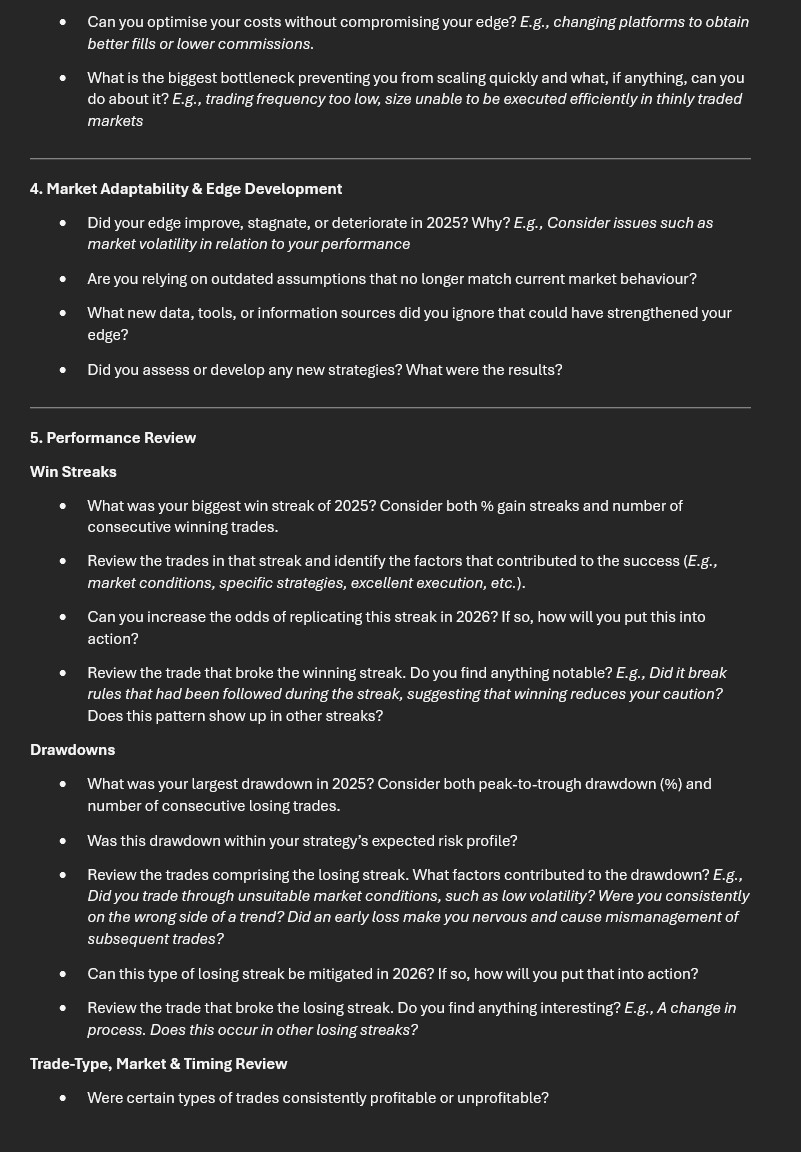
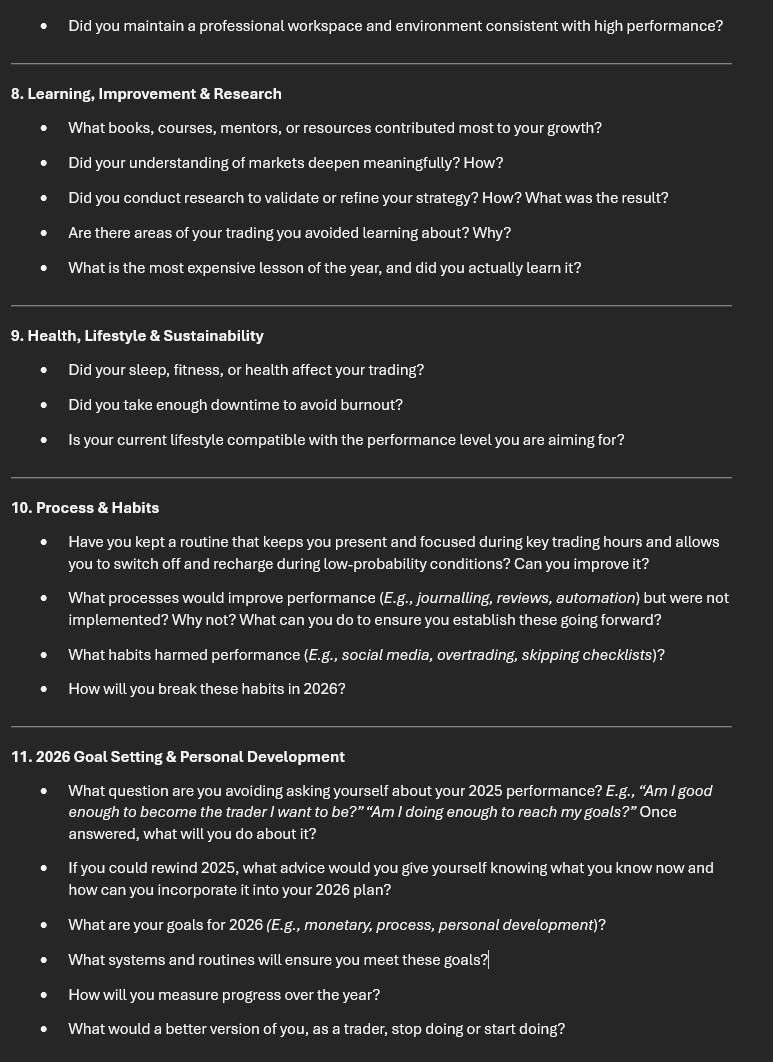
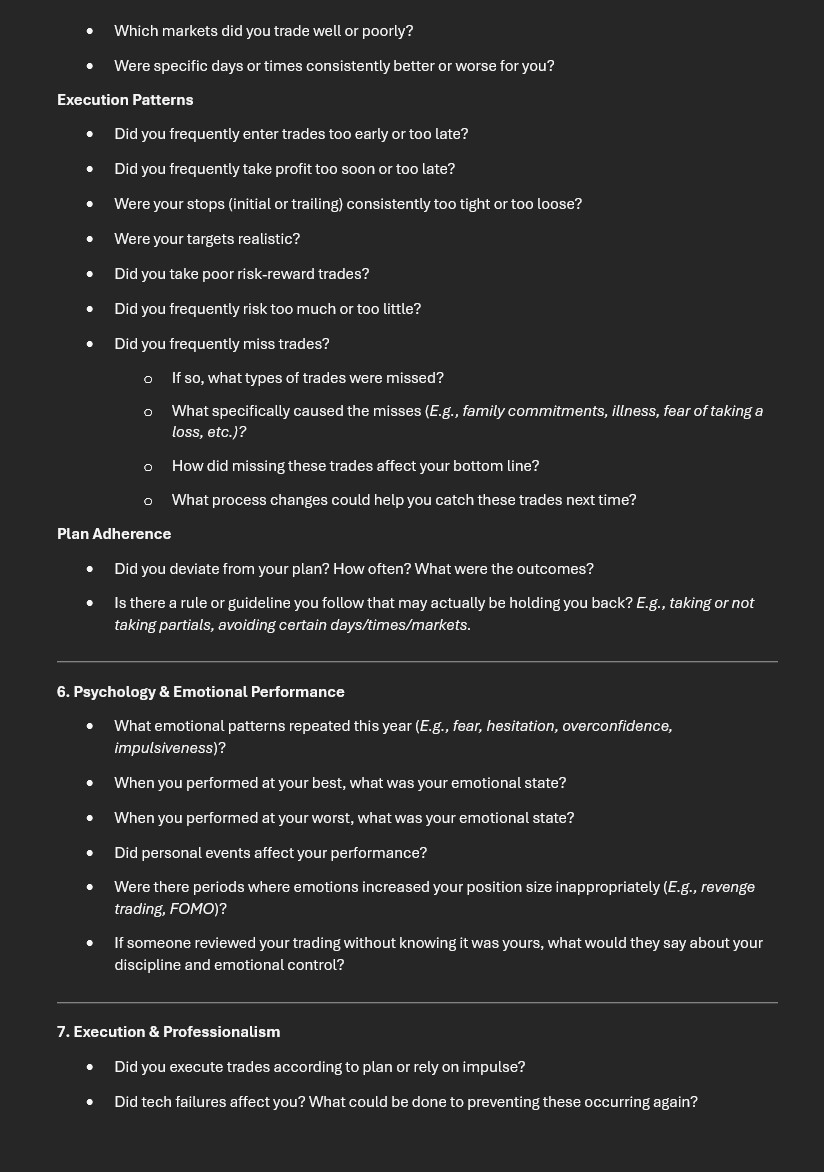
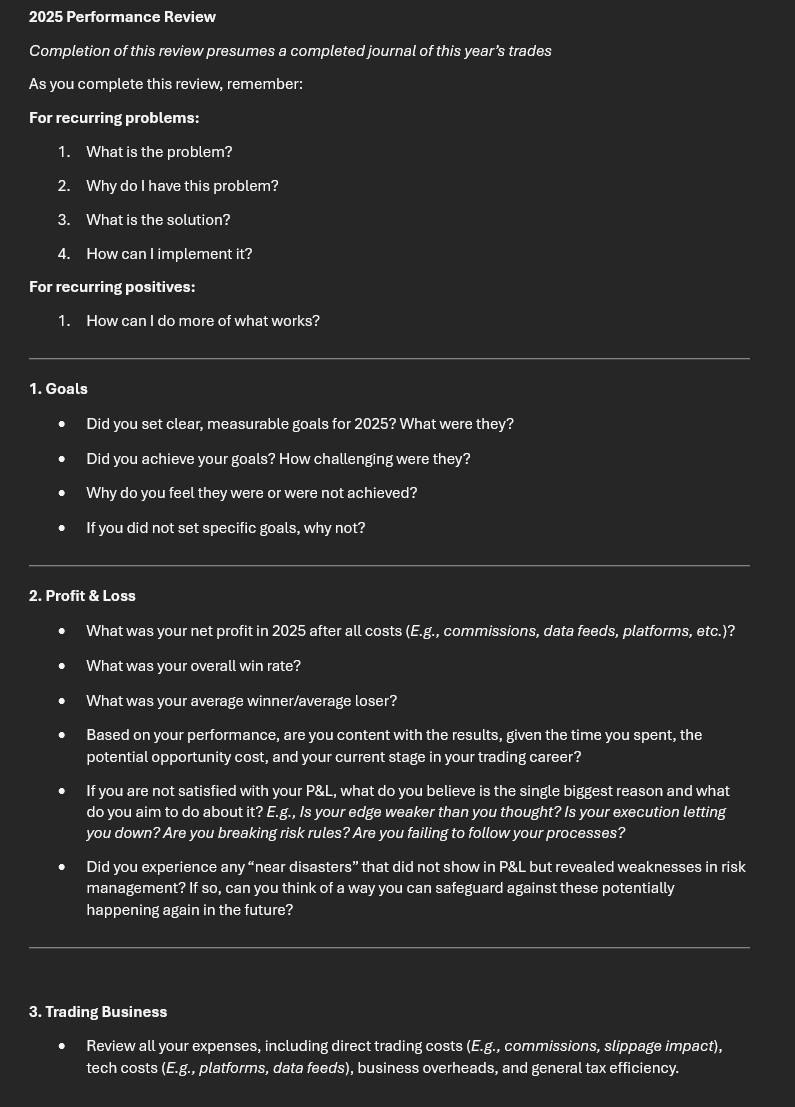
A traders year-end review comes down to three questions: What worked well? What didn’t? What's next?
Here is a structured 2025 Trading Performance Review for a deep dive into key issues including: edge decay, execution, psychology and more.
PDF: https://t.co/ifL2IbOkns
Learning how price moves and where opportunities lie is one thing.
Training your mind to stay calm and execute fearlessly in every situation is another entirely.
You need both skills to make it in this business.
Most screeners for small cap stocks are useless
Wrong floats. Outdated data. Generic filters that catch nothing.
So we built one from scratch with manual audits and powerful filters.
Here are a few filters we use to find high probability runners🧵
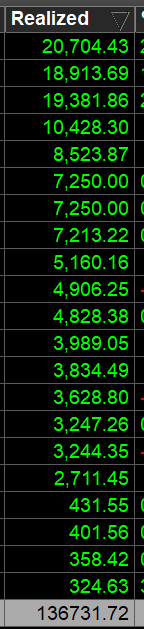
When you review your year, you likely have 20% of stocks contribute to greater than 80% of your gains - the Pareto 80/20 rule.
Oftentimes, 3-5 names gave you most of your gains.
This is just evidence that staying patient and waiting for the big opportunities is important.
It will also lead to less frustration.
Whenever I look at this in my own trading my top 20% of trades are around 80% of my profits AT BEST. Over many periods my top 20% of trades are actually worth more than my total PnL over that same period meaning I’m giving back gains most of the time.
Less is more.
Trading is a game of contradiction and paradox.
You end up winning more by trading less. Your biggest gains come from the few moments you’re actually selective. Patience quietly builds your account while impatience burns it down. Discipline feels like a cage until you realize it’s the only path to freedom. You learn to grow by first learning how to protect. Confidence comes not from being right, but from admitting when you’re wrong. You size up only after mastering the humility of sizing down. Consistency appears the moment you stop forcing trades. The true edge shows up when you stop trying to outsmart the market and start reacting to what’s actually there. The more you try to control the market, the faster it reminds you who’s in charge. Everything feels slow—until the compounding kicks in and changes everything.
And finally… profitability doesn’t come from doing more, it comes from finally respecting the parts of trading you can’t control. That’s when it clicks.