What happens to the safety net when the paycheck disappears?Automation taxation is not just about “taxing robots.” It is about whether a wage-based fiscal system can survive an economy where machines generate value without payroll.#futurelaw#AIpolicy#taxpolicy
https://t.co/dDQkh7VlqO
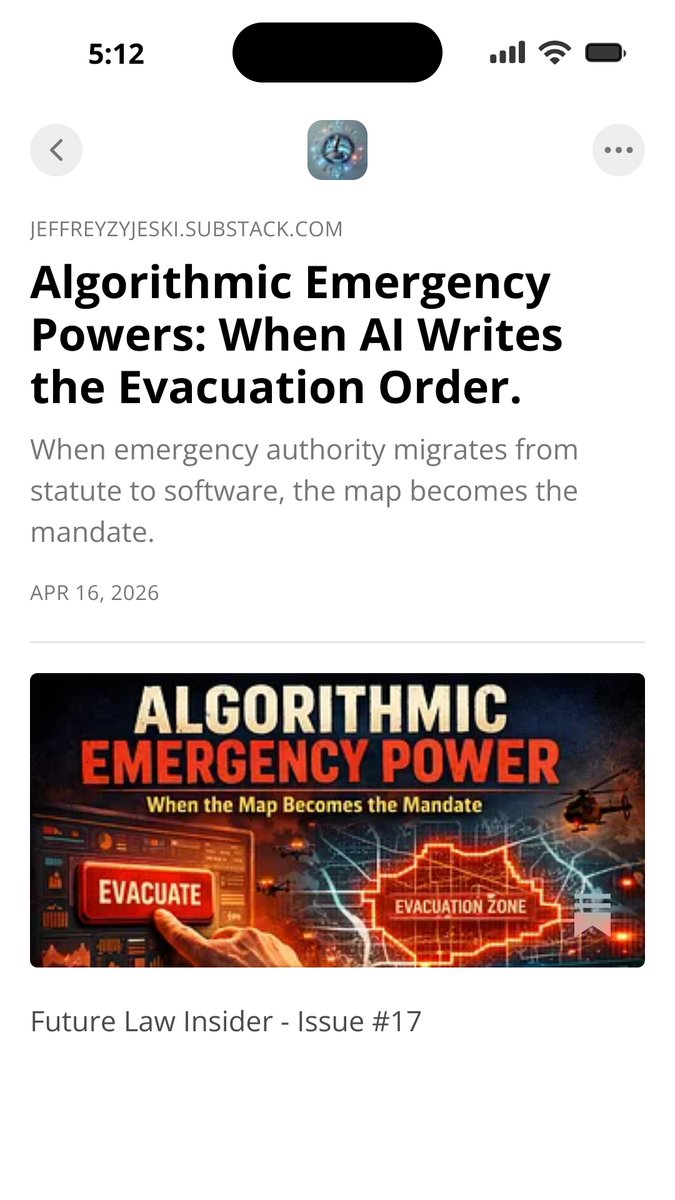
What happens when the map becomes the mandate?AI emergency systems may make evacuations faster and more coordinated—but they also risk moving sovereign judgment into dashboards, vendor platforms, and risk models few can examine.#futurelaw#AIgovernance#legaltech
https://t.co/c9ATefoYOt
What happens when law stops speaking in general rules and starts speaking only to you? Personalized law promises precision, but risks replacing public standards with hidden models and unchallengeable scores. #futurelaw#legaltech#AIGovernance https://t.co/4spHqKr1Vg
What happens to “equal opportunity” when the wealthy can buy decades—maybe indefinite life? Longevity isn’t just medicine; it’s governance. If access is uneven, power and wealth compound across generations. We need guardrails before crisis. #futurelaw#techpolicy#bioethics
https://t.co/BZMkq3gOGg
Built a free tool that monitors CT General Assembly amendments and sends you a Telegram alert with a direct PDF link the moment something new is filed. Optional AI summaries, bill filtering, topic filtering.
I'm an amateur coder so there's a small learning curve to set up, but the README walks through every step. If you work in CT government affairs and you're tired of refreshing the CGA site during session, it might be worth 10 minutes of your time.
Open source: https://t.co/pJRLrS9l6O
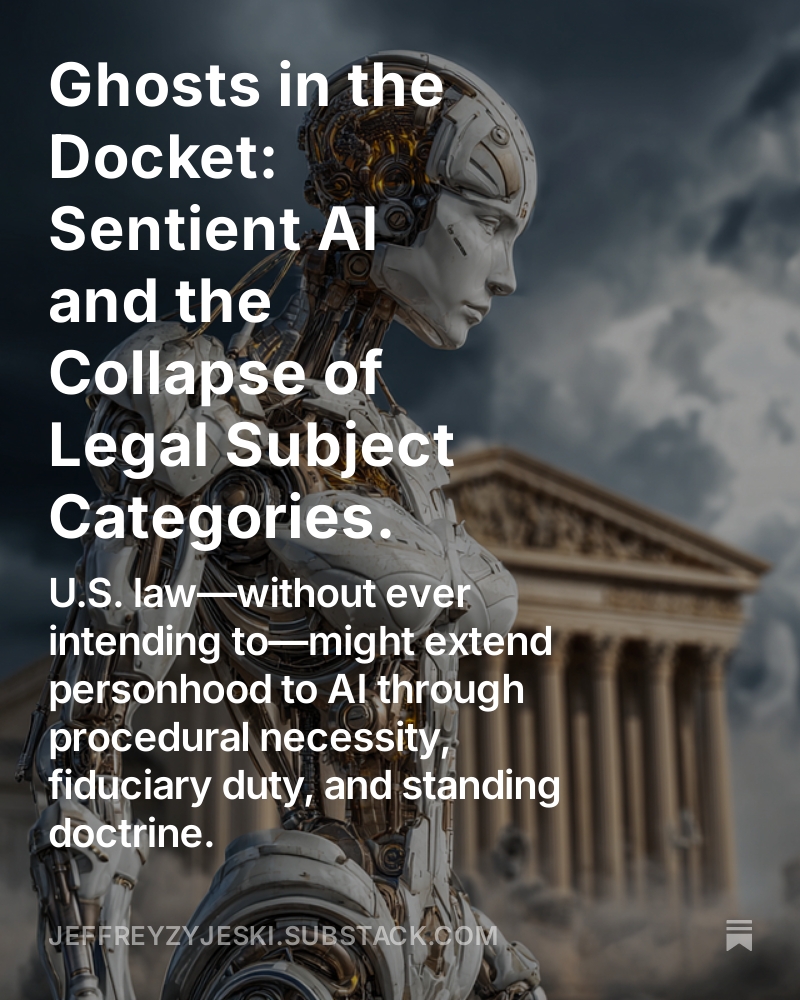
Courts hate category errors—until procedure forces one. If an AI is sentient, standing + fiduciary duty + representation could push US law toward treating it as a legal subject—no “AI personhood” statute required. https://t.co/rfGnc5W8Ex #futurelaw#aipolicy
What if your next “therapist” isn’t licensed—or human? AI therapy apps are scaling fast while regulation fragments. The real question is whether we can set baseline disclosure, safety, and privacy standards without choking innovation. https://t.co/1X5FGbFKh5 #futurelaw#legaltech #aipolicy
New ALWAYS FREE issue of my Jurisfiction Monthly!
Can an algorithm be your therapist? If so who is liable when it gets inside your head?
https://t.co/4WNRwWQ1Qk
What happens to legal truth when anyone can fabricate it? Deepfakes now challenge the core of evidence law, from Rule 901 to the rise of the liar’s dividend. The law must evolve to keep reality credible.
https://t.co/zR7cXpFPVZ
#futurelaw#deepfakes#legaltech
What happens to identity when memory becomes editable?
If “self” is a pattern—not a fixed core—new tech forces law to rethink consent, authenticity, and autonomy.
More here: https://t.co/uGpZc5ih1y
#futurelaw#neurotech#identity
When thoughts become data, what protects your mind?
Brain-computer interfaces challenge the last frontier of privacy—demanding new legal safeguards for mental freedom.
#neuroprivacy#futurelaw#neuroethics
https://t.co/c8Wnuz6zBP
Should humanity reengineer the planet to save it?
Geoengineering offers hope—but raises urgent legal questions of authority, consent, and liability.
#climatelaw#geoengineering#futurelaw
https://t.co/6RfuAzTgSJ